

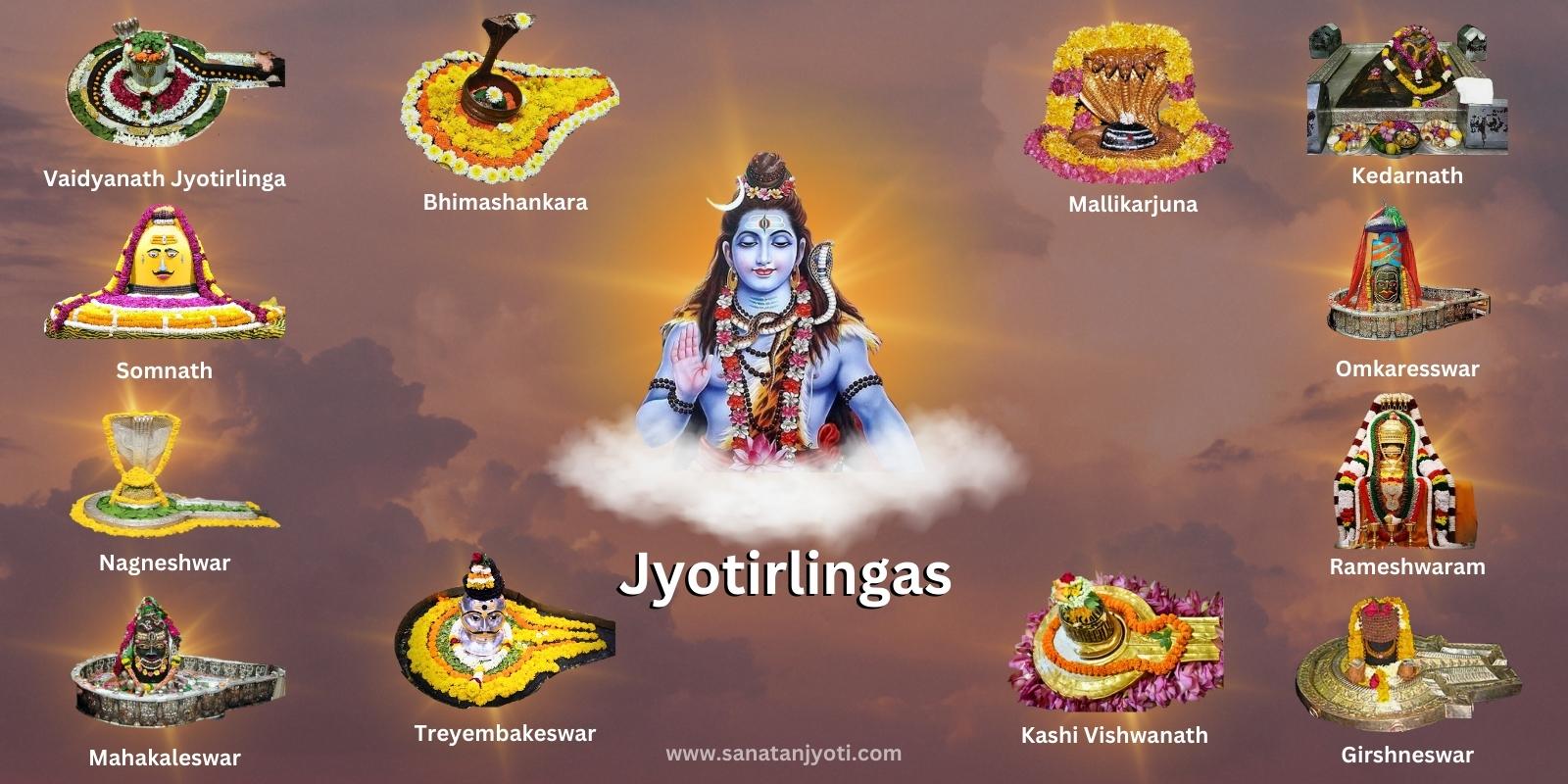
What Are Jyotirlingas?
All sacred pilgrimage places are believed to be filled with the divine presence of the Shiva Linga. Countless Shivlings are worshipped, remembered, and meditated upon across these holy places, and all of them are considered manifestations of Lord Shiva Himself. None of them are separate from Shiva.
To bless all beings, Lord Shiva is believed to exist in the form of the Linga across the three worlds - among gods, demons, and humans alike. For the welfare of all living beings, Lord Shiva established many divine Lingas at sacred pilgrimage sites and other holy places.
It is believed that wherever devotees remembered Lord Shambhu with true devotion, He manifested Himself and chose to reside there permanently. For the benefit of humanity, Lord Shiva manifested countless forms of Lingas and worshipping them is believed to grant spiritual blessings and divine fulfillment.
Although the forms of Lingas and Upalingas are said to be infinite, the Shiva Purana mentions 12 principals Jyotirlingas where Lord Shiva is believed to have manifested Himself for the welfare of gods, sages, saints, and humanity.
What Is the Difference Between a Jyotirlinga and a Regular Shivlinga?
According to Hindu religious beliefs, all Shivlings are considered sacred forms of Lord Shiva. However, Jyotirlingas are regarded as especially divine because Lord Shiva is believed to have manifested Himself there in the form of divine light (Jyoti).
It is believed that wherever devotees worshipped Lord Shiva with complete faith and devotion, He appeared and established Himself at that very place. This is why the twelve Jyotirlingas are considered extremely sacred and spiritually significant and visiting them is believed to help devotees attain divine blessings and liberation (moksha).
Dwadash Jyotirlinga Stotram
This sacred shloka is traditionally recited to remember the names of all twelve Jyotirlingas of Lord Shiva:
Saurashtre Somnatham Cha Srisaile Mallikarjunam ।
Ujjayinyam Mahakalam Omkare Parameshwaram ॥
Kedaram Himavatprishte Dakinyam Bhimashankaram ।
Varanasyam Cha Vishvesham Tryambakam Gautamitate ॥
Vaidyanatham Chitabhumau Nagesham Darukavane ।
Setubandhe Cha Ramesham Ghushmesham Tu Shivalaye ॥
This revered hymn is believed to spiritually connect devotees with the divine blessings of all twelve Jyotirlingas through remembrance and devotion.
If you wish to explore various Vedic rituals, their spiritual significance, traditional procedures, and religious beliefs in detail: -
You can also explore comprehensive information related to Vedic Anushthans and sacred rituals.
Names and Locations of the 12 Jyotirlingas
1. Somnath Jyotirlinga – Gujarat
The Somnath Jyotirlinga is located in the Saurashtra region of Gujarat and is considered the first Jyotirlinga among the twelve. According to religious beliefs, Chandra Dev (the Moon God) performed intense penance to please Lord Shiva, after which Lord Shiva manifested here as Somnath Jyotirlinga.
If you want to explore the story of Somnath Jyotirlinga, the curse of the Moon God, and Lord Shiva’s divine blessings:-You can also read the detailed article on Somnath Jyotirlinga.
2. Mallikarjuna Jyotirlinga – Andhra Pradesh
Mallikarjuna Jyotirlinga is situated on the Shri Shail Mountain on the banks of the Krishna River in Andhra Pradesh. It is also known as the “Kailash of the South.” The divine presence of both Lord Shiva and Goddess Parvati is believed to reside here.
If you want to learn about the mythology of Mallikarjuna Jyotirlinga, the significance of Shri Shaila mountain, and the divine presence of Shiva and Parvati:-You can also read the detailed article on Mallikarjuna Jyotirlinga.
3. Mahakaleshwar Jyotirlinga – Ujjain
Mahakaleshwar Jyotirlinga is located in the city of Ujjain in Madhya Pradesh. This Jyotirlinga is considered a symbol of Lord Shiva’s Mahakal form and is believed to grant liberation (moksha) to devotees.
If you wish to know about the origin story of Mahakaleshwar Jyotirlinga, the famous Bhasma Aarti, and the spiritual importance of Ujjain:-You can also read the detailed article on Mahakaleshwar Jyotirlinga.
4. Omkareshwar Jyotirlinga – Madhya Pradesh
Omkareshwar Jyotirlinga is located on Shivapuri Island in the middle of the Narmada River in Khandwa district, Madhya Pradesh. Two sacred Shivlings, Omkareshwar and Amareshwar, are worshipped here.
If you want to know about the story of Omkareshwar Jyotirlinga, the spiritual significance of the Narmada River, and the Om-shaped island:-You can also read the detailed article on Omkareshwar Jyotirlinga.
5. Kedarnath Jyotirlinga – Uttarakhand
Kedarnath Jyotirlinga is situated in the Himalayan region of Uttarakhand. According to religious beliefs, Lord Shiva manifested here after being pleased by the penance of Nar and Narayan, the incarnations of Lord Vishnu.
If you wish to explore the story of Kedarnath Jyotirlinga, its connection with the Pandavas, and the spiritual significance of this Himalayan shrine:-You can also read the detailed article on Kedarnath Jyotirlinga.
6. Bhimashankar Jyotirlinga – Maharashtra
Bhimashankar Jyotirlinga is located in the Sahyadri mountain range of Maharashtra. It is believed that Lord Shiva took the form of Bhimashankar here to protect His devotees from evil forces.
If you want to learn about the legend of Bhimashankar Jyotirlinga, the destruction of demon Bhima, and Lord Shiva’s divine manifestation:-You can also read the detailed article on Bhimashankar Jyotirlinga.
7. Kashi Vishwanath Jyotirlinga – Varanasi
Kashi Vishwanath Jyotirlinga is located in Varanasi, Uttar Pradesh. According to religious beliefs, Lord Shiva Himself made Kashi a sacred city that grants liberation (moksha) and manifested here in the form of Vishwanath.
If you want to explore the story of Kashi Vishwanath Jyotirlinga, the spiritual mystery of Kashi, and its connection with moksha:-You can also read the detailed article on Kashi Vishwanath Jyotirlinga.
8. Trimbakeshwar Jyotirlinga – Maharashtra
Trimbakeshwar Jyotirlinga is situated near Nashik in Maharashtra on the banks of the Godavari River. It is believed that Lord Shiva appeared here after being pleased by the penance of Sage Gautama.
If you wish to know about the story of Trimbakeshwar Jyotirlinga, Sage Gautama’s penance, and the origin of the Godavari River:-You can also read the detailed article on Trimbakeshwar Jyotirlinga.
9. Vaidyanath Jyotirlinga – Jharkhand
Vaidyanath Jyotirlinga is located in Deoghar, Jharkhand. According to a mythological legend, Ravana was carrying the Shivling to Lanka, but by the divine will of Lord Shiva, it became permanently established at this sacred place.
If you want to know about Ravana’s intense penance, the manifestation of Vaidyanath Jyotirlinga, and the significance of the Panchshool:-You can also read the detailed article on Vaidyanath Jyotirlinga.
10. Nageshwar Jyotirlinga – Gujarat
Nageshwar Jyotirlinga is located near Dwarka in Gujarat. This Jyotirlinga is especially believed to be associated with relief from Sarpa Dosha and negative planetary influences.
If you want to learn about the story of Nageshwar Jyotirlinga, the demoness Daruka, and the spiritual significance of serpent-related doshas:-You can also read the detailed article on Nageshwar Jyotirlinga.
11. Rameshwaram Jyotirlinga – Tamil Nadu
Rameshwaram Jyotirlinga is situated in Ramanathapuram district of Tamil Nadu. According to religious beliefs, Lord Shri Ram worshipped Lord Shiva here before beginning his journey to Lanka.
If you want to know about the story of Rameshwar Jyotirlinga established by Lord Shri Ram, the significance of Ram Setu, and the spiritual importance of Shiva devotion:-You can also read the detailed article on Rameshwar Jyotirlinga.
12. Grishneshwar Jyotirlinga – Maharashtra
Grishneshwar Jyotirlinga is located in the Aurangabad district of Maharashtra. It is believed that Lord Shiva manifested here as a Jyotirlinga after being pleased with the deep devotion of His devotee Ghushma.
If you want to know about Ghushma’s deep devotion to Lord Shiva, the sacred Shivalaya pond, and the manifestation story of Ghushmeshwar Jyotirlinga:-You can also read the detailed article on Ghushmeshwar Jyotirlinga.
Religious Significance of the 12 Jyotirlingas
In Sanatan Dharma, the darshan, worship, and remembrance of the twelve Jyotirlingas are considered extremely sacred and spiritually rewarding. Religious beliefs state that visiting these holy Jyotirlingas helps devotees attain peace of mind, freedom from sins, and the divine blessings of Lord Shiva.
Many devotees take a spiritual vow to visit all 12 Jyotirlingas at least once in their lifetime. It is believed that worshipping these sacred shrines with devotion and faith helps open the path toward spiritual liberation (moksha).
Frequently Asked Questions
1. Which are the 12 Jyotirlingas?
The 12 Jyotirlingas are Somnath, Mallikarjuna, Mahakaleshwar, Omkareshwar, Kedarnath, Bhimashankar, Kashi Vishwanath, Trimbakeshwar, Vaidyanath, Nageshwar, Rameshwaram, and Grishneshwar.
2. Which is considered the first Jyotirlinga?
Somnath Jyotirlinga is considered the first among the twelve Jyotirlingas.
3. What is the difference between a Jyotirlinga and a Shivlinga?
Jyotirlingas are believed to be self-manifested divine forms of Lord Shiva, while a Shivlinga is a symbolic form used for the worship of Lord Shiva.
4. Which is the most famous Jyotirlinga?
Kashi Vishwanath, Mahakaleshwar, and Kedarnath Jyotirlingas are considered among the most famous and spiritually significant Jyotirlingas.
5. What is the significance of visiting the 12 Jyotirlingas?
According to religious beliefs, visiting the 12 Jyotirlingas helps devotees attain peace of mind, freedom from sins, spiritual blessings, and the divine grace of Lord Shiva.