
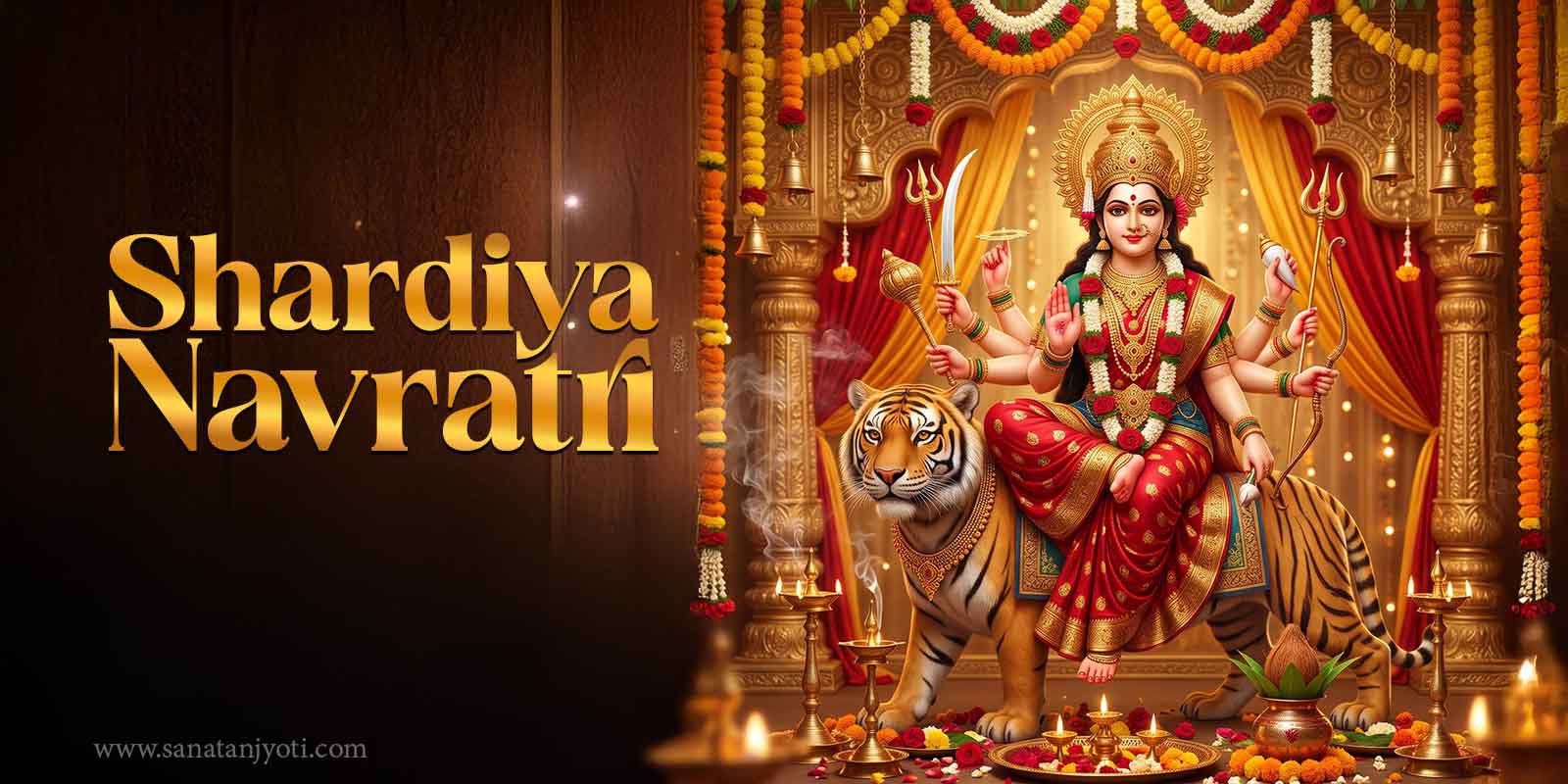
When Is Shardiya Navratri in 2026?
Sharadiya Navratri 2026 will begin on Sunday, October 11, 2026, and conclude on Monday, October 19, 2026, with Maha Navami. On the first day of Navratri, devotees will perform Ghatasthapana and worship Maa Shailputri. Over the following nine days, they will worship the nine forms of Goddess Durga. Durga Ashtami will be observed on October 18, Mahanavami on October 19, and Vijayadashami and Durga Visarjan on October 20.
Shardiya Navratri is an important festival dedicated to Shakti, devotion, spiritual practice and inner purification. During these nine days, devotees observe Vrat according to their faith and family traditions, recite the Durga Saptashati and worship Maa Durga.
This article covers the dates of Shardiya Navratri 2026, the auspicious Ghatasthapana Muhurat, the daily worship schedule, the nine forms of Goddess Durga, Ashtami and Navami, Kanya Pujan, Puja Vidhi, Vrat rules and religious significance.
Shardiya Navratri 2026: Dates and Timings
Shardiya Navratri 2026 will begin on October 11 and continue until October 20. Devotees will worship the different forms of Maa Durga over nine days, followed by the celebration of Vijayadashami.
• Shardiya Navratri Begins: Sunday, October 11, 2026
• Ghatasthapana: Sunday, October 11, 2026
• Durga Ashtami: Sunday, October 18, 2026
• Mahanavami: Monday, October 19, 2026
• Vijayadashami and Durga Visarjan: Tuesday, October 20, 2026
According to religious tradition, Devi worship begins with Ghatasthapana on the first day of Navratri. On the ninth day, devotees worship Maa Siddhidatri, and Vijayadashami is celebrated the following day.
When Is Ghatasthapana During Shardiya Navratri 2026?
Ghatasthapana during Shardiya Navratri 2026 will be performed on Sunday, October 11. Also known as Kalash Sthapana, it is an important ritual that marks the beginning of Navratri.
Auspicious Ghatasthapana Muhurat
• First auspicious timing: 6:32 AM to 10:28 AM
• Second auspicious timing: 12:02 PM to 12:48 PM
The Ghatasthapana Muhurat may vary by location and local Panchang. Confirm the timing for your city before performing the Puja.
To learn about the complete Vedic procedure, Puja Samagri and religious significance of Kalash Sthapana, read: Ghatasthapana Vidhi
Nine Days of Worship During Shardiya Navratri 2026
Each day Shardiya Navratri is dedicated to one form of Goddess Durga. The following is the nine-day schedule and information about the Goddess worshipped on each day.
October 11, 2026 – Pratipada: Maa Shailputri Puja
On the first day of Navratri, devotees worship Maa Shailputri. She is regarded as the daughter of the Himalayas and the first form of Goddess Durga.
October 12, 2026 – Dwitiya: Maa Brahmacharini Puja
On the second day, devotees worship Maa Brahmacharini. Her form is associated with penance, self-discipline, spiritual practice and determination.
October 13, 2026 – Tritiya: Maa Chandraghanta Puja
On the third day, devotees worship Maa Chandraghanta. She is considered a symbol of courage, strength and velour.
October 14, 2026 – Chaturthi: Maa Kushmanda Puja
On the fourth day, devotees worship Maa Kushmanda. According to religious beliefs, her form is associated with the creation of the universe and cosmic energy.
October 15, 2026 – Panchami: Maa Skandamata Puja
On the fifth day, devotees worship Maa Skandamata, who is revered as the mother of Lord Kartikeya, also known as Skanda.
October 16, 2026 – Shashthi: Maa Katyayani Puja
On the sixth day, devotees worship Maa Katyayani. She is regarded as a powerful form of Goddess Durga.
October 17, 2026 – Saptami: Maa Kalaratri Puja
On the seventh day, devotees worship Maa Kalaratri. Although her form is considered fierce, devotees also worship her as a benevolent Goddess who works for the welfare of her devotees.
October 18, 2026 – Ashtami: Maa Mahagauri Puja
On the eighth day, devotees worship Maa Mahagauri. Many families also perform Kanya Pujan and offer food to young girls on the occasion of Durga Ashtami.
October 19, 2026 – Navami: Maa Siddhidatri Puja
On the ninth day, devotees worship Maa Siddhidatri, the ninth form of Navdurga. Many families perform Kanya Pujan, conduct a Havan and conclude their Navratri Vrat on this day.
October 20, 2026 – Vijayadashami and Durga Visarjan
Vijayadashami is an important festival celebrated after Navratri. In many places, devotees immerse the idol of Maa Durga on this day and celebrate victory according to their religious traditions.
What Is Shardiya Navratri?
Shardiya Navratri is a major nine-day festival in Sanatan Dharma. It is observed during the autumn season, beginning on Pratipada of the Shukla Paksha in the month of Ashwin. During these nine days, devotees worship the nine forms of Goddess Durga. The festival symbolises Shakti, devotion, spiritual practice and the victory of good over evil.
Shardiya Navratri is celebrated differently across various regions of India. In North India, Durga Puja, Vrat, Ramlila and Vijayadashami hold special significance. In eastern India, including West Bengal, Durga Puja is celebrated on a grand scale.
To learn more about the four types of Navratri, Puja Vidhi, Vrat rules and religious significance, read: Navratri
Shardiya Navratri Puja Vidhi
During Shardiya Navratri, devotees worship Maa Durga according to their faith and family traditions. The general Puja Vidhi is as follows:
1. Bathing and cleanliness: Take a bath in the morning and clean the Puja area and home temple.
2. Prepare the Puja platform: Cover the platform with clean red cloth or another suitable cloth according to your tradition. Place an idol or picture of Maa Durga on it.
3. Perform Ghatasthapana: On the first day of Navratri, establish the Kalash according to the local Panchang and the prescribed ritual.
4. Light a lamp: Light a Deepak in the Puja area, meditate on Maa Durga and take a Sankalp to perform the Puja.
5. Offer Puja Samagri: Offer flowers, Akshat, Roli, Kumkum, fruits, sweets and Naivedya to the Goddess.
6. Recite Mantras and Stotras: According to your faith, recite the Durga Saptashati, Devi Kavach, Argala Stotra or Durga Mantras.
7. Perform Aarti: Conclude the Puja by performing Maa Durga's Aarti and offering prayers according to your faith.
The timing and method of worship on each day of Navratri may be followed according to local traditions.
Shardiya Navratri Puja Samagri
The following items are generally used for Shardiya Navratri Puja:
• Idol or picture of Maa Durga
• Puja platform and red cloth
• Kalash and water
• Gangajal
• Mango leaves
• Coconut
• Barley seeds and an earthen pot
• Mauli (sacred thread) and Janeu
• Roli, Akshat and Kumkum
• Turmeric and sandalwood paste
• Red flowers and a flower garland
• Dhoop, Deepak, Ghee and Camphor
• Fruits and sweets
• Betel leaves and betel nuts
• Cloves and cardamom
• Copper vessel
• Conch shell and bell
• A lamp for Akhand Jyoti, if it is part of your tradition
Puja Samagri may vary according to family customs, region and worship practices. It is helpful to arrange all the necessary items before performing Ghatasthapana.
Which Nine Goddesses Are Worshipped During Shardiya Navratri 2026?
The nine forms of Maa Durga worshipped during Navratri are collectively known as Navdurga. Each form is believed to have its own religious and spiritual significance.
1. Maa Shailputri: The first form of Navdurga, regarded as the daughter of the Himalayas.
2. Maa Brahmacharini: Represents penance, self-discipline and spiritual practice.
3. Maa Chandraghanta: Associated with courage, strength and velour.
4. Maa Kushmanda: Associated with creation and energy.
5. Maa Skandamata: Worshipped as the mother of Lord Skanda.
6. Maa Katyayani: Represents strength and courage.
7. Maa Kalaratri: Associated with the destruction of negativity and the welfare of devotees.
8. Maa Mahagauri: Symbolises peace, purity and serenity.
9. Maa Siddhidatri: The ninth form of Navdurga, worshipped as the Goddess who bestows Siddhis and blessings.
These nine forms are worshipped over the nine days of Navratri. Devotees meditate on the Goddess associated with each day, chant Mantras and perform Puja.
When Are Durga Ashtami and Mahanavami During Shardiya Navratri 2026?
According to the day-wise schedule provided in the source, Durga Ashtami will be observed on Sunday, October 18, and Mahanavami on Monday, October 19, 2026.
On Durga Ashtami, devotees worship Maa Mahagauri. Many families perform Kanya Pujan, offer food to young girls and conduct a Havan. On Mahanavami, devotees worship Maa Siddhidatri. In some traditions, Kanya Pujan and the conclusion of the Navratri Vrat also take place on this day.
Follow the local Panchang and your family traditions to determine the appropriate time for Kanya Pujan.
When Should You Perform Kanya Pujan During Shardiya Navratri 2026?
Kanya Pujan during Navratri is particularly associated with Ashtami and Navami. Devotees honour young girls as manifestations of Devi Shakti and offer them food.
Some families perform Kanya Pujan on Ashtami, while others follow this tradition on Navami. After the Puja, gifts or useful items may be offered to the girls according to one's means.
Before choosing October 18 or 19 for Kanya Pujan, consult the local Panchang. The appropriate day and timing may vary according to the Tithi, Muhurat and family traditions.
Religious Significance of Shardiya Navratri
Shardiya Navratri is regarded as a major festival dedicated to the worship of Devi Shakti. During these nine days, devotees worship the different forms of Maa Durga and pray for courage, self-discipline, peace and spiritual growth.
According to religious beliefs, Puja, Vrat, Mantra chanting, charity and Seva hold special significance during Navratri. The festival encourages people to practise self-reflection, discipline and devotion.
Vijayadashami is celebrated after Shardiya Navratri. In religious traditions, the festival is associated with Goddess Durga's victory over Mahishasura and Lord Shri Ram's victory over Ravana. For this reason, Vijayadashami is regarded as a symbol of the victory of good over evil.
What Is the Difference Between Shardiya Navratri and Chaitra Navratri?
Both Chaitra Navratri and Shardiya Navratri are dedicated to the worship of the nine forms of Maa Durga, but they are observed during different seasons.
• Chaitra Navratri falls during spring and concludes in connection with Ram Navami.
• Shardiya Navratri is observed during autumn and is followed by Vijayadashami.
• Both festivals include traditions such as Ghatasthapana, Devi worship, Vrat and Mantra chanting.
To learn about the dates of Chaitra Navratri, Ghatasthapana Muhurat, Puja Vidhi for the nine Goddesses and religious significance, read: Chaitra Navratri 2027
What Is Gupt Navratri, and How Is It Different from Shardiya Navratri?
Gupt Navratri refers to the two Navratri observances held during Magha and Ashadha. It is generally associated with spiritual practice, Mantra chanting and the worship of the ten Mahavidyas. Its methods of worship and spiritual practices may differ from those followed during the more widely celebrated Navratri festivals.
To learn about Gupt Navratri Puja Vidhi, the worship of the ten Mahavidyas, its rules and religious significance, read: Gupt Navratri
Rituals Performed During Shardiya Navratri
During Shardiya Navratri, devotees perform various religious rituals according to their faith, family traditions and means. The main rituals include:
1. Ghatasthapana or Kalash Sthapana
2. Lighting the Akhand Jyoti
3. Worshipping the nine forms of Maa Durga
4. Reciting the Durga Saptashati
5. Reciting the Devi Kavach, Argala Stotra and Keelak
6. Chanting Durga Mantras
7. Performing Kanya Pujan on Ashtami or Navami
8. Conducting Havan and performing Aarti
9. Singing Bhajans and performing Kirtan
10. Donating to people in need
For guidance on the procedure for a specific ritual, you may consult an Acharya who is knowledgeable about your tradition.
Shardiya Navratri Vrat and Rules
During Shardiya Navratri, devotees observe Vrat according to their faith, health and family traditions. Some observe a fast for all nine days, while others fast on the first and last days or on Ashtami and Navami.
The following practices are generally observed during the Vrat:
• Keep the Puja area and home clean.
• Worship Maa Durga according to your tradition.
• Follow a Sattvic diet and maintain a disciplined daily routine.
• Recite the Durga Saptashati or Devi Mantras according to your faith.
• Perform Kanya Pujan on Ashtami or Navami according to your tradition.
• Help people in need according to your means.
• Avoid strict fasting if you have health concerns.
Vrat rules are not the same in every region. It is advisable to observe the fast while considering your family traditions and health.
What Should You Do During Shardiya Navratri?
• Keep the Puja area clean.
• Perform Ghatasthapana at an appropriate Muhurat.
• Remember and worship the nine forms of Maa Durga.
• Observe Vrat according to your faith.
• Recite the Durga Saptashati, Devi Stotras or Mantras.
• Perform Kanya Pujan on Ashtami or Navami.
• Donate to people in need according to your means.
• Maintain cleanliness and devotion during Puja.
• Respect your family's religious traditions.
What Should You Avoid During Shardiya Navratri?
• Do not neglect cleanliness during Puja.
• Try to avoid actions that go against your religious traditions.
• Avoid anger, lying and unnecessary disputes.
• Do not neglect your health while observing Vrat.
• Do not disrespect another person's worship practices or beliefs.
• Avoid making rigid claims about Puja and Vrat rules without proper knowledge.
Religious practices should be followed with devotion, discernment and consideration of one's abilities.
Frequently Asked Questions About Shardiya Navratri 2026
1. When will Shardiya Navratri 2026 begin?
Shardiya Navratri 2026 will begin on Sunday, October 11. Devotees will worship the nine forms of Maa Durga over nine days, followed by Vijayadashami on October 20.
2. When is Ghatasthapana during Shardiya Navratri 2026?
Ghatasthapana will be performed on Sunday, October 11, 2026. The first auspicious timing is from 6:32 AM to 10:28 AM, and the second is from 12:02 PM to 12:48 PM.
3. When is Durga Ashtami during Shardiya Navratri 2026?
Durga Ashtami will be observed on Sunday, October 18, 2026. Devotees worship Maa Mahagauri on this day.
4. When is Mahanavami during Shardiya Navratri 2026?
Mahanavami will be observed on Monday, October 19, 2026. Devotees worship Maa Siddhidatri on this day. Many families also perform Kanya Pujan and Havan.
5. When will Shardiya Navratri 2026 conclude?
The nine-day worship of Goddess Durga will conclude with Navami on October 19. The following day, Tuesday, October 20, 2026, devotees will observe Vijayadashami and follow the tradition of Durga Visarjan.
6. Which Goddesses are worshipped during the nine days of Shardiya Navratri?
Devotees worship Maa Shailputri, Maa Brahmacharini, Maa Chandraghanta, Maa Kushmanda, Maa Skandamata, Maa Katyayani, Maa Kalaratri, Maa Mahagauri and Maa Siddhidatri.
7. When is Kanya Pujan performed during Shardiya Navratri?
Kanya Pujan is generally performed on Durga Ashtami or Mahanavami. The appropriate date and time should be determined according to the local Panchang and family traditions.
8. Why is Ghatasthapana performed during Shardiya Navratri?
Ghatasthapana is an important ritual marking the beginning of Navratri. Also known as Kalash Sthapana, it is associated with invoking Devi Shakti and commencing the Navratri Puja.
9. What is the difference between Shardiya Navratri and Chaitra Navratri?
Chaitra Navratri falls during spring and is associated with the conclusion of Ram Navami. Shardiya Navratri is observed during autumn and is followed by Vijayadashami.
10. What is the difference between Shardiya Navratri and Gupt Navratri?
Shardiya Navratri is widely observed through the worship of the nine forms of Maa Durga. Gupt Navratri, in many traditions, is associated with the spiritual worship of the ten Mahavidyas and specialised spiritual practices.
11. Which scriptures should be recited during Shardiya Navratri?
Devotees may recite the Durga Saptashati, Devi Kavach, Argala Stotra, Keelak or Maa Durga's Mantras according to their faith and traditions. For guidance on a specific recitation, consult a qualified Acharya.
Shardiya Navratri 2026 will begin on October 11. During this festival, devotees will follow religious traditions such as worshipping the nine forms of Maa Durga, performing Ghatasthapana, observing Vrat, chanting Mantras and performing Kanya Pujan. Durga Ashtami will be observed on October 18, Mahanavami on October 19 and Vijayadashami on October 20.
This festival offers an opportunity to deepen devotion, practise spiritual discipline and express reverence for Devi Shakti. Puja, Vrat and other rituals should be performed according to family traditions and the local Panchang.
If you need guidance on Ghatasthapana, Durga Puja, Vrat or any specific religious ritual during Shardiya Navratri: -You can seek personalised advice from our experts through a free consultation.