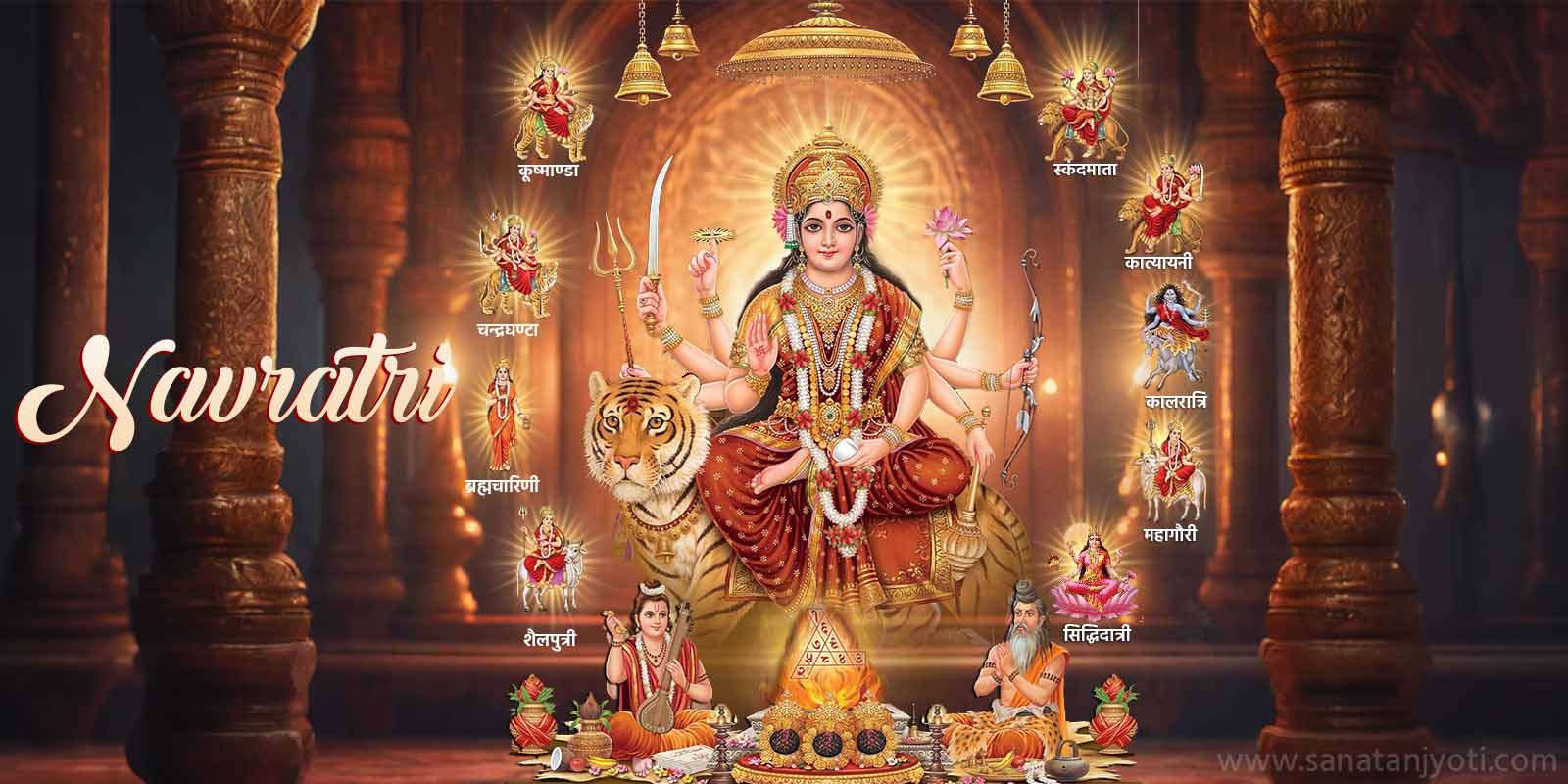
Navratri is one of the major religious festivals in Sanatan Dharma. During these nine days, devotees worship the different forms of Goddess Durga. There are four Navratris in a year, of which Chaitra Navratri and Sharad Navratri are considered especially important. Ram Navami is celebrated on the ninth day of Chaitra Navratri, while Vijayadashami is celebrated after Sharad Navratri.
When is Navratri in 2026? When will Chaitra Navratri and Sharad Navratri begin? What is the auspicious time for Ghatasthapana? Which forms of Goddess Durga are worshipped during the nine days? This article provides complete information about the dates, Ghatasthapana timings, puja vidhi, nine forms of Goddess Durga, fasting, religious significance and other important details related to Navratri 2026.
When is Navratri in 2026?
In 2026, Chaitra Navratri will begin on March 19 and continue until March 27, 2026. Sharad Navratri will begin on October 11 and continue until October 20, 2026.
The dates, Ghatasthapana timings and other details of both Navratris are given separately below.
Chaitra Navratri 2026: Date and Time
Chaitra Navratri begins: March 19, 2026, Thursday
Pratipada Tithi begins: March 19, 2026, at 6:54 AM
Pratipada Tithi ends: March 20, 2026, at 4:53 AM
Chaitra Navratri 2026 Ghatasthapana Auspicious Timings
• March 19, 2026: 6:51 AM to 8:07 AM
• March 19, 2026: 11:50 AM to 12:38 PM
Chaitra Navratri 2026 Day-Wise Schedule
• March 19, Thursday – Pratipada, worship of Maa Shailputri and Ghatasthapana
• March 20, Friday – Dwitiya, worship of Maa Brahmacharini
• March 21, Saturday – Tritiya, worship of Maa Chandraghanta
• March 22, Sunday – Chaturthi, worship of Maa Kushmanda
• March 23, Monday – Panchami, worship of Maa Skandamata
• March 24, Tuesday – Shashthi, worship of Maa Katyayani
• March 25, Wednesday – Saptami, worship of Maa Kalaratri
• March 26, Thursday – Ashtami, worship of Maa Mahagauri
• March 27, Friday – Navami, worship of Maa Siddhidatri and Navratri Paran
To learn more about Chaitra Navratri, including its dates, Ghatasthapana Muhurat, worship of the nine forms of Goddess Durga, fasting rules, and religious significance, read: [Chaitra Navratri].
Sharad Navratri 2026: Date and Time
Sharad Navratri: October 11, 2026, Sunday, to October 20, 2026, Tuesday
Sharad Navratri 2026 Ghatasthapana
Ghatasthapana Date: October 11, 2026, Sunday
Ghatasthapana Auspicious Timings
• October 11, 2026: 6:32 AM to 10:28 AM
• October 11, 2026: 12:02 PM to 12:48 PM
Sharad Navratri 2026 Day-Wise Schedule
• October 11 – Pratipada, worship of Maa Shailputri
• October 12 – Dwitiya, worship of Maa Brahmacharini
• October 13 – Tritiya, worship of Maa Chandraghanta
• October 14 – Chaturthi, worship of Maa Kushmanda
• October 15 – Panchami, worship of Maa Skandamata
• October 16 – Shashthi, worship of Maa Katyayani
• October 17 – Saptami, worship of Maa Kalaratri
• October 18 – Ashtami, worship of Maa Mahagauri
• October 19 – Navami, worship of Maa Siddhidatri
• October 20 – Vijayadashami and Durga Visarjan
Nine Forms of Goddess Durga Worshipped During Navratri
During the nine days of Navratri, devotees worship nine different forms of Goddess Durga. These forms are collectively known as Navdurga.
The nine forms are:
These forms of Goddess Durga are worshipped with devotion and faith during Navratri. According to religious belief, worshipping the different forms of the Goddess brings spiritual and religious benefits to devotees.
According to tradition, Goddess Durga appeared as Adishakti, the primordial divine power, at the beginning of creation. The gods worshipped and prayed to her. Pleased with their devotion, the Goddess blessed them for their welfare. This belief is associated with the tradition of celebrating Chaitra and Sharad Navratri.
What is Navratri?
There are four Navratris in a year. They are known as Magha Navratri, Chaitra Navratri, Ashadha Navratri and Sharad Navratri. Chaitra and Sharad Navratri are considered especially important, while Magha and Ashadha Navratri are also known as Gupt Navratri. To learn more about Gupt Navratri, including its Puja Vidhi, the worship of the Ten Mahavidyas, religious practices, rules, and spiritual significance, read: [Gupt Navratri].
During Chaitra Navratri, devotees worship different forms of Goddess Durga, and the ninth day is celebrated as Ram Navami. According to religious belief, Lord Rama was born on this day.
The ninth day of Sharad Navratri is celebrated as Mahanavami, followed by Vijayadashami on the tenth day.
According to religious beliefs, Goddess Durga defeated Mahishasura on Vijayadashami. The day is also associated with the traditional story of Lord Rama defeating Ravana. Thus, Navratri is an important festival associated with Shakti, devotion and the victory of good over evil.
When is Vijayadashami 2026? What is the Vijay Muhurat and when will Ravana Dahan take place? For complete information: -Read our detailed Vijayadashami 2026 article.
Navratri Puja Vidhi
During Chaitra and Sharad Navratri, devotees worship the different forms of Goddess Durga with faith and devotion. Rituals may vary from one region, family and tradition to another. Therefore, devotees may follow their family and local traditions while performing Navratri puja.
Generally, on the first day of Navratri, the place of worship is cleaned and a Kalash or Ghata is established. Devotees then meditate on Goddess Durga and perform her worship.
According to their tradition, devotees offer flowers, rice, roli, sandalwood, incense, lamps, fruits and other offerings to the Goddess.
The different forms of Goddess Durga are worshipped during the nine days. Devotees may also recite Durga Saptashati, Devi prayers and mantras, and take part in bhajans and kirtans.
Importance of Fasting During Navratri
According to religious belief, worshipping Goddess Durga during Navratri is considered especially beneficial. Therefore, many devotees worship the Goddess and observe fasts according to their ability and family traditions.
Fasting is considered a form of spiritual practice. It is believed that worshipping Goddess Durga helps remove negative thoughts and encourages positive energy. Devotees also associate Navratri fasting with mental peace and spiritual strength.
Those who observe a fast should consider their physical ability and family tradition while deciding how strictly to observe it.
What Should You Do During Navratri?
• Take a bath every day and wear clean clothes.
• Worship the form of Goddess Durga associated with each day with devotion.
• Take a fasting vow according to your ability.
• Recite the mantras and prayers of Goddess Durga.
• Read Durga Saptashati or other religious texts related to the Goddess.
• Keep your home and place of worship clean.
• Donate to people in need according to your ability.
• Perform Kanya Puja on Ashtami or Navami according to your tradition.
• Try to maintain a sattvic and disciplined lifestyle during Navratri.
What Should You Avoid During Navratri?
• Do not insult or criticize others.
• Avoid anger, dishonesty and unnecessary disputes.
• Do not observe puja or fasting only for show.
• Do not observe a fast that is too difficult for your physical condition.
• Keep the home and place of worship clean.
• Avoid tamasic food and inappropriate behavior.
Fasting and worship rules may differ among families and traditions. Therefore, it is appropriate to follow the practices of your own tradition.
What Can You Eat During Navratri?
Devotees who observe Navratri fasts may have phalahar or sattvic, fasting-friendly food according to their family tradition. Fruits, milk and other foods permitted during fasting are commonly consumed.
As with Ekadashi, food rules during Navratri may differ among families and religious traditions. Therefore, devotees should choose food according to their family tradition and physical capacity.
Significance of Chaitra and Sharad Navratri
Both Chaitra Navratri and Sharad Navratri are important festivals dedicated to the worship of Goddess Durga. Ram Navami is associated with Chaitra Navratri, while Vijayadashami follows Sharad Navratri.
During Chaitra Navratri, devotees worship the different forms of Goddess Durga. It is traditionally believed that this worship strengthens mental and spiritual power and helps fulfil spiritual aspirations.
During Sharad Navratri, devotees worship the different forms of the Goddess and seek her blessings for happiness, prosperity and fulfilment of their wishes.
Both Navratris are considered important festivals that connect devotees with strength, devotion and positivity.
Major Festivals Associated with Navratri
Ram Navami
Ram Navami is celebrated on the ninth day of Chaitra Navratri. According to religious belief, Lord Rama was born on this day.
Mahanavami
The ninth day of Sharad Navratri is celebrated as Mahanavami. On this day, devotees worship the Siddhidatri form of Goddess Durga.
Vijayadashami
Vijayadashami is celebrated on the tenth day after Sharad Navratri. It is considered a symbol of the victory of good over evil.
Durga Visarjan
At the end of Sharad Navratri, devotees perform the worship of Goddess Durga and, according to their tradition, carry out the immersion ceremony.
To know the Navratri dates, Ghatasthapana Muhurat and auspicious timings for your city: -Check our detailed Panchang.
Frequently Asked Questions About Navratri 2026
1.When is Navratri in 2026?
In 2026, Chaitra Navratri will be observed from March 19 to March 27, while Sharad Navratri will be observed from October 11 to October 20.
2.When will Chaitra Navratri 2026 begin?
Chaitra Navratri 2026 will begin on March 19, 2026, Thursday.
3.When will Sharad Navratri 2026 begin?
Sharad Navratri 2026 will begin on October 11, 2026, Sunday.
4.When is Ghatasthapana performed during Navratri?
Ghatasthapana is performed on the first day of Navratri, during Pratipada Tithi. In 2026, Chaitra Navratri Ghatasthapana will be performed on March 19, while Sharad Navratri Ghatasthapana will be performed on October 11.
5.Which forms of Goddess Durga are worshipped during the nine days of Navratri?
The nine forms worshipped during Navratri are Maa Shailputri, Maa Brahmacharini, Maa Chandraghanta, Maa Kushmanda, Maa Skandamata, Maa Katyayani, Maa Kalaratri, Maa Mahagauri and Maa Siddhidatri.
6.What is the difference between Chaitra and Sharad Navratri?
Chaitra Navratri is associated with the beginning of the Hindu New Year in many traditions, and Ram Navami is celebrated on its ninth day. During Sharad Navratri, Mahanavami is observed on the ninth day, followed by Vijayadashami on the tenth day.
7.Why do people fast during Navratri?
According to religious belief, fasting and worshipping Goddess Durga during Navratri help reduce negativity and promote spiritual strength and positive energy.
8.What should you eat during Navratri fasting?
Devotees who observe fasts may have fruits and other sattvic, fasting-friendly foods according to their family tradition. Food rules may vary between families and religious traditions.
9.What should you avoid during Navratri?
During Navratri, devotees are traditionally advised to avoid anger, criticism, dishonesty and unnecessary disputes. Fasting and worship should be performed with devotion and according to one's physical ability.
Navratri is an important festival dedicated to Goddess Durga and the worship of divine feminine power. Among the four Navratris observed during the year, Chaitra and Sharad Navratri have special religious significance. Chaitra Navratri is associated with Ram Navami, while Sharad Navratri is followed by Vijayadashami.
For nine days, devotees worship the different forms of Goddess Durga and may observe fasting, prayer, mantra chanting and meditation. The way Navratri is observed may vary according to family, regional and religious traditions.