
Durga Ashtami holds special religious significance during the sacred festival of Navratri. Both Chaitra Navratri and Sharadiya Navratri include Ashtami Tithi, when devotees worship the eighth form of Goddess Durga, Maa Maha Gauri.
On this day, devotees worship the Goddess with faith and devotion. Many families also perform Kanya Pujan, Kanya Bhoj, Havan and Devi prayers as part of their religious traditions.
When is Durga Ashtami 2026? How should Maa Maha Gauri be worshipped? What bhog should be offered? What is the significance of Kanya Pujan? And why is Durga Ashtami important? This article provides detailed information about the date, puja vidhi, bhog, Kanya Pujan and religious significance of Durga Ashtami.
When is Durga Ashtami 2026?
Durga Ashtami 2026 will be observed on Monday, October 19, 2026.
This will be the Ashtami Tithi of Sharadiya Navratri. On this day, devotees specially worship the eighth form of Goddess Durga, Maa Maha Gauri.
Devotees may also follow traditions such as Kanya Pujan, Kanya Bhoj, Havan and recitation of the Durga Saptashati.
For complete information about Chaitra and Sharadiya Navratri, the nine days of worship and the nine forms of Goddess Durga: -Read our detailed Navratri article.
Mahanavami will be observed on Tuesday, October 20, 2026.
Durga Ashtami is observed during both Chaitra Navratri and Sharadiya Navratri, but the dates change every year according to the Panchang.
To know the exact Ashtami Tithi and auspicious puja timings according to your city: -Check the detailed Panchang.
Durga Ashtami and Maa Maha Gauri
Both Chaitra and Sharadiya Navratri are dedicated to the worship of the nine forms of Goddess Durga.
Maa Maha Gauri is the eighth form of Goddess Durga, which is why she is specially worshipped on Ashtami Tithi.
The nine forms of Goddess Durga and the ten Mahavidyas are considered different forms and aspects of Adi Shakti. Maa Maha Gauri is also regarded as the consort of Lord Shiva.
According to religious tradition, Goddess Parvati was born in the house of King Himalaya. She performed severe penance to attain Lord Shiva as her husband.
According to belief, her body became very weak because of her intense penance. Lord Shiva was pleased with her devotion, and after her penance was completed, her appearance became extremely fair. Because of her radiant and fair appearance, she came to be known as Maha Gauri.
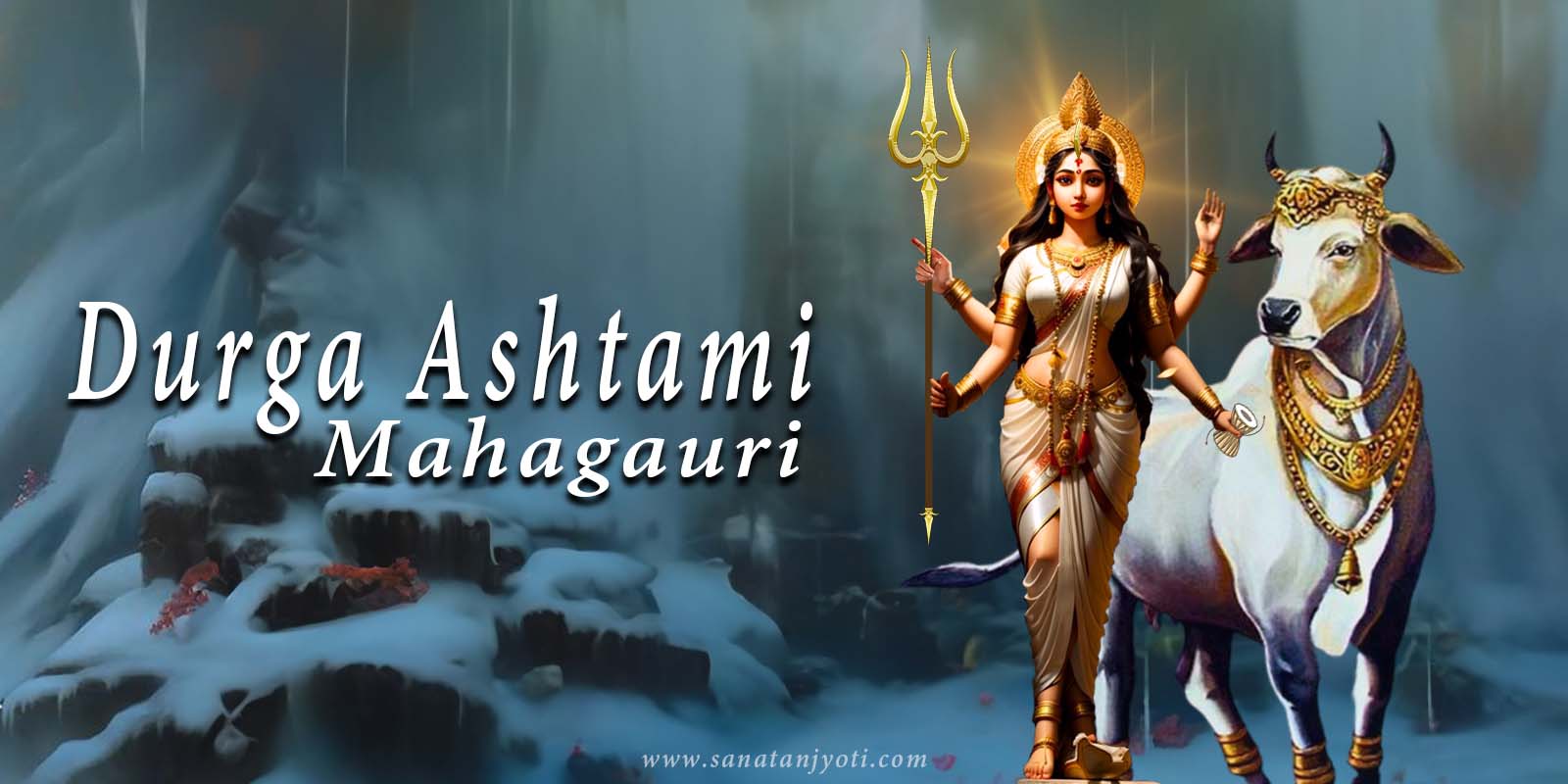
Maa Maha Gauri is described as having a fair or white complexion. Her clothes and ornaments are also traditionally described as white.
Her vehicle is Vrishabha, or the bull, which is also associated with Lord Shiva.
Her upper right hand is shown in the Abhaya Mudra, while one of her lower hands holds a trident. Her upper left hand holds Lord Shiva's damaru, or small drum. Because she holds the damaru, she is also known by the name Shiva.
Her lower left hand is shown in the Varada Mudra, and she is traditionally depicted seated peacefully on a bull.
Religious Significance of Durga Ashtami
Worshipping Maa Maha Gauri on Durga Ashtami is considered especially significant. Devotees worship her with faith and pray for happiness, good fortune, peace and prosperity.
According to religious beliefs, worshipping Maa Maha Gauri helps devotees overcome sins and gain spiritual merit. Her blessings are also traditionally associated with happiness in married life, growth in business and prosperity.
Maa Maha Gauri is regarded as a powerful and benevolent form of Goddess Durga. Devotees worship her according to their faith and seek her blessings.
Durga Ashtami Puja Vidhi
Wake up in the morning and perform daily rituals to become pure and start the worship by cleaning the place of worship. Sitting at the place of worship, first meditate on Goddess Gauri and pray for your happiness and good fortune.
After this worship them properly. Mahagauri, the eighth form of Goddess Durga, is very fond of Mogra flower. In such a situation, the seeker should offer this flower at the feet of Mata on this day. Along with this, offer coconut, sweets and laddu to the Mata. Because coconut is considered to be the most favorite offering of the mother.
If you can recite 13 chapters of Durga Saptashati every day methodically then it is very good and very fruitful. But if there is shortage of time then these 13 chapters can be recited or listened to throughout the nine days as per your convenience.
But chanting 108 names of Mother Goddess every day is very important and fruitful. While chanting the names of the mother, one should also understand the meaning of her names. By doing this the Mata becomes very happy and bestows blessings on the worshiper to attain happiness, prosperity, and success in life.
The 108 names of Mata Jagadamba are as follows.
1- Om Sati Namah, 2- Om Sadhvi Namah, 3- Om Bhavapreeta Namah (one who has love for Lord Shiva), 4- Om Bhavani Namah, 5- Om Bhavamochani Namah (one who frees from worldly bondage), 6- Om Arya Namah, 7- Om Durga Namah, 8- Om Jaya Namah, 9- Om Aadya Namah, 10 - Om Trinetra Namah,
11 - Om Shuldharini Namah, 12- Om Pinakdharini Namah, 13 - Om Chitra Namah, 14- Om Chandaghanta Namah (one who makes bell sounds with a loud voice) , 15- Om Mahatapa Namah (one who performs heavy penance), 16- Om Man Namah (power of contemplation), 17- Om Buddhi Namah (power of understanding), 18- Om Ahankara Namah (shelter of egoism), 19- Om Chittarupa Namah, 20- Om Chita Namah, 21- Om Chiti Namah (Consciousness),
22- Om Sarvamantramayi Namah, 23- Om Satta Namah (Sat-Swaroopi), 24- Om Satyanand Swarupini Namah, 25- Om Ananta Namah (Whose form has no end), 26- Om Bhavini Namah. (the one who gives birth to all), 27- Om Bhavya Namah (worthy of feeling and meditation), 28- Om Bhavya Namah (well-being), 29- Om Abhavya Namah (there is nothing more grand than this), 30 – Om Sadamaati Namah, 31- Om Shambhavi Namah (Shivpriya), 32- Om Devmata Namah, 33- Om Chinta Namah, 34- Om Ratnapriya Namah, 35- Om Sarvavidya Namah, 36- Om Dakshakanya Namah, 37- Om Dakshayagyavinashini Namah, 38- Om Aparna Namah (at the time of penance One who does not even eat leaves), 39- Om Anekvarna Namah (of many colours), 40- Om Patala Namah (of red colour), 41- Om Patlavati Namah (one who wears roses or red flowers),
42- Om Pattambarparidhana Namah (one who wears silk clothes), 43- Om Kalmanjiranjini Namah (one who is happy wearing the sweet-sounding Manjira), 44- Om Ameyavikrama Namah (one who has limitless bravery) ), 45- Om Krura Namah (harsh towards demons), 46- Om Sundari Namah, 47- Om Surasundari Namah, 48 Om Vanadurga Namah, 49- Om Matangi Namah, 50 - Om Matangmunipujita Namah, 51- Om Brahmi Namah,
52- Om Maheshwari Namah, 53- Om Aindri Namah, 54- Om Kaumari Namah, 55- Om Vaishnavi Namah, 56- Om Chamunda Namah, 57- Om Varahi Namah, 58- Om Lakshmi Namah, 59- Om Purushakriti Namah, 60- Om Vimala Namah, 61- Om Utkarshini Namah,
62- Om Gyana Namah, 63- Om Kriya Namah, 64- Om Nitya Namah, 65- Om Buddhida Namah, 66- Om Bahula Namah, 67- Om Bahulprema Namah, 68- Om Sarvavahanavahana Namah, 69- Om Nishumbha-Shumbhahanni Namah, 70- Om Mahishasurmardini Namah, 71- Om Madhukatbhahantri Namah, 72- Om Chandamundavinashini Namah, 73- Om Sarvasuravinasha Namah, 74- Om Sarvadanavghatini Namah, 75- Om Sarvashastramayi Namah, 76- Om Satya Namah. , 77- Om Sarvastradharini Namah, 78- Om Anekastrahasta Namah, 79- Om Anekastradharini Namah, 80- Om Kumari Namah, 81- Om Ekakanya Namah, 82- Om Kaishori Namah, 83- Om Yuvti Namah, 84- Om Yati Namah, 85- Om Aprudha Namah, 86- Om Pruddha Namah, 87- Om Vriddhamata Namah, 88- Om Balprada Namah, 89- Om Mahodari Namah, 90- Om Muktkeshi Namah, 91- Om Ghorrupa Namah, 92- Om Mahabala Namah, 93- Om Agnijwala. Namah, 94- Om Raudramukhi Namah, 95- Om Kalratri Namah, 96- Om Tapaswini Namah, 97- Om Narayani Namah, 98- Om Bhadrakali Namah, 99- Om Vishnumaya Namah, 100 - Om Jalodari Namah, 101 - Om Shivduti Namah, 102 - Om Karali Namah, 103 - Om Ananta Namah (destructionlessness), 104- Om Parameshwari Namah, 105- Om Katyayani Namah, 106 - Om Savitri Namah, 107 - Om Pratyaksha Namah, 108- Om Brahmavadini Namah.
The Mata is pleased with the devotion of her devotees and not with the show, therefore, whatever we do as per our capacity, we should offer it to the Mata with full devotion and do not be even the slightest bit egoistic and constantly keep in mind that we all are dedicated to Mata’s child.
Maa Durga is the form of Shakti who pervades every particle in the entire world. She is the same Yog Nindra who pervades the heart of Lord Vishnu who has put even Maha Vishnu in deep sleep. This Goddess is in the form of intelligence in all living beings.
This same Goddess is present in all living beings in the form of sleep, this same Goddess is present in all living beings in the form of hunger, this same Goddess is present in all living beings in the form of shadow, this same Goddess is present in all living beings in the form of Shakti.
This same goddess is present in all living beings in the form of thirst, this same goddess is present in all living beings in the form of forgiveness, this same goddess is present in all living beings in the form of shame, this same goddess is present in all living beings in the form of peace.
This Goddess is present in all living beings in the form of Kanti (brightness). This same Goddess is present in all living beings in the form of faith. This same Goddess is present in all living beings in the form of Lakshmi. This same Goddess is present in all living beings in the form of instinct.
This same Goddess is present in all living beings in the form of memory. This same Goddess is present in the form of satisfaction in all beings, this same Goddess is present in the form of mercy in all beings, this same Goddess is present in the form of mother in all beings, this same Goddess is present in the form of illusion in all beings.
This same Goddess is present everywhere, in every particle, this same Goddess is present in the entire world in the form of consciousness, in all living beings, this same Goddess is auspicious, welfare and destroyer of all obstacles. Therefore, the power that is getting all the work done in the entire world is Maa Durga.
Navratri Puja is a nine-day festival of various forms of Goddess Durga. In these days, small girls are considered as the form of Mata.
During the entire Navratri festival, it is very fruitful and auspicious to feed these girls in the form of Durga and donate their favorite things or things as per one's capacity.
During the Navratri festival, it is auspicious to feed and donate food to the girls for all nine days, but if you are short of time and cannot feed the girls every day, then donate food and items to the girls on any day of the nine days.
This tradition has been going on since ancient times and it also has great social importance. This means that Sanatan society has always considered men and women equal. According to Sanatan Dharma, male power is completely useless without female power.
A woman plays a more important role in the upliftment of her family than a man plays in the upliftment of a family or lineage. Thus, this festival shows the importance of women in the society and the importance of the girl child in the house.
To learn more about Chaitra Navratri 2027, including its dates, Ghatasthapana Muhurat, nine days of worship, Durga Ashtami, Ram Navami, and fasting rules, read: [Chaitra Navratri 2027].
Durga Ashtami During Chaitra and Sharadiya Navratri
Durga Ashtami is observed during both Chaitra Navratri and Sharadiya Navratri.
On Ashtami Tithi during both Navratris, devotees worship Maa Maha Gauri. In many places, Kanya Pujan is also performed.
However, puja methods and religious customs may differ between families and regions.
The Ashtami dates of Chaitra and Sharadiya Navratri change every year. Therefore, the Panchang should be consulted to find the correct date for a particular year.
In 2026, Durga Ashtami during Sharadiya Navratri will be observed on Monday, October 19.
To know the dates of Chaitra and Sharadiya Navratri, Ashtami and Navami, and auspicious timings according to your city: -Check the detailed Panchang.
Durga Saptashati Recitation on Durga Ashtami
Reciting or listening to the Durga Saptashati on Durga Ashtami is considered an important part of Goddess worship.
If a devotee is able to recite all 13 chapters of the Durga Saptashati every day, it may be done with faith and devotion. If there is not enough time, devotees may recite or listen to it during the nine days of Navratri according to their convenience and tradition.
Devotees may also chant the names of Goddess Durga with devotion. Understanding the meaning of the names while chanting them can make the spiritual practice more meaningful.
Durga Ashtami and the Form of Maa Mahagauri
In Shardiya or Chaitra Navratri, Maa Durga is worshiped in the form of Mahagauri Mata. The 9 forms and 10 Mahavidhyaen of Maa Durga are all parts and forms of Adishakti, but Mahagauri always resides with Lord Shiva as his consort. Goddess Parvati was born in the house of King Himalaya.
At the age of eight, he started remembering the events of her previous life. From then onwards she started doing severe penance to get Lord Shiva as her swami. Because of rigorous penance, Goddess Parvati attained great glory due to which she was named Mahagauri.
Mahagauri's complexion is Gaur i.e., white and her clothes and jewelery are also white in colour. Mother's vehicle is Vrishabha (bull), which is also the vehicle of Lord Shiva. The upper right hand of the mother is in Abhayamudra and the lower hand holds a trident, the symbol of Durga Shakti. Mahagauri has Shiva's Damru in her left upper hand.
Mata is also known as Shivaa because of holding Damru. The lower hand of the mother is in Varamudra giving protection to her devotees and the Mata always remains seated on the Taurus in a calm posture.
By worshiping Mahagauri Mata in the eighth form of Adishakti Maa Durga, one gets freedom from all planetary defects. By worshiping Maa Gauri, married life becomes happy and business increases. Wealth and prosperity increases.
Her power is infallible and always virtuous and fruitful. By worshiping Mahagauri, all the sins of the worshiper are destroyed, and he becomes a partaker of inexhaustible virtue. After the puja, it is very auspicious to perform Kanya Puja at home on Ashtami Tithi. However, some people perform Kanya Puja on Navami Tithi.
But worshiping and donating girls on the day of Ashtami is considered auspicious. In Kanya Puja, worshiping, feasting and giving donations to 9 girls is very auspicious, but if you are not able to get 9 girls then it is very important to worship at least two girls.
After offering coconut on the day of Ashtami, the same coconut is distributed as Prasad to girls and other devotees. And for the feast of girls, the prasad of halwa-puri, vegetable and black gram is very good. Even if all these things are not arranged, you can give food and donations to the girls as per your devotion.
Importance of Kanya Pujan During Navratri
Throughout Navratri, there is a tradition of respecting young girls as symbolic forms of the Goddess. Kanya Pujan expresses devotion and respect toward feminine power.
Serving food to girls and giving them useful items according to one's ability is considered an auspicious practice during Navratri.
If it is not possible to perform Kanya Pujan every day, families may perform it on any suitable day according to their convenience and family tradition.
This tradition carries both religious and social significance. It reminds us of the importance of respecting women and recognizing their contribution to families and society.
What to Do on Durga Ashtami?
On Durga Ashtami, devotees may follow these practices according to their faith and ability:
• Worship Maa Maha Gauri.
• Recite or listen to the Durga Saptashati.
• Chant the names and mantras of Goddess Durga.
• Offer flowers and bhog to the Goddess.
• Perform Kanya Pujan and Kanya Bhoj.
• Donate food or useful items to people in need.
• Pray for the happiness and peace of the family.
• Take a resolution to give up anger, greed, ego and negative thoughts.
What Not to Do on Durga Ashtami?
Maintaining devotion and respect during Durga Ashtami is considered important. Therefore:
• Do not insult anyone during the puja.
• Avoid anger, arguments and negative behavior.
• Do not show disrespect toward deities.
• Do not perform puja or rituals only for display.
• Do not perform rituals that go against your family or religious traditions.
• Avoid ego and pride while performing puja or making donations.
Spiritual Message of Durga Ashtami
Goddess Durga represents Shakti, or divine power, which is believed to exist in every living being in some form.
Durga Ashtami reminds us that along with external worship, we should also recognize the strength and consciousness within ourselves.
Overcoming anger, greed, attachment, ego and negative thoughts can be seen as an important spiritual message of Goddess worship.
When a person tries to overcome these negative qualities, the mind becomes calmer and purer. This inner purification can deepen the spiritual purpose of worshipping the Goddess.
Frequently Asked Questions About Durga Ashtami 2026
1. When is Durga Ashtami 2026?
Durga Ashtami 2026 will be observed on Monday, October 19, 2026.
2. Which Goddess is worshipped on Durga Ashtami?
On Durga Ashtami, devotees worship Maa Maha Gauri, the eighth form of Goddess Durga.
3. Is Durga Ashtami observed during both Chaitra and Sharadiya Navratri?
Yes. Durga Ashtami is observed on Ashtami Tithi during both Chaitra Navratri and Sharadiya Navratri. The dates change every year according to the Panchang.
4. Why is Kanya Pujan performed on Durga Ashtami?
According to religious tradition, young girls are respected and worshipped as symbolic forms of the Goddess. Kanya Pujan is a way of expressing respect and devotion toward feminine power.
5. What bhog should be offered to Maa Maha Gauri on Durga Ashtami?
Devotees may offer coconut, barfi and laddus to Maa Maha Gauri according to their tradition. During Kanya Bhoj, girls may be served halwa, puri, vegetables and kala chana.
6. What puja should be performed on Durga Ashtami?
Devotees may worship Maa Maha Gauri, perform aarti, chant mantras, recite or listen to the Durga Saptashati and perform Kanya Pujan according to their family tradition.
Durga Ashtami is an important festival observed during both Chaitra Navratri and Sharadiya Navratri. On this day, devotees worship the eighth form of Goddess Durga, Maa Maha Gauri, with faith and devotion.
Kanya Pujan, Kanya Bhoj, donations, Durga Saptashati recitation and chanting the names of the Goddess are among the major religious traditions associated with this day.
Durga Ashtami 2026 will be observed on Monday, October 19. Devotees can worship Maa Maha Gauri according to their faith, ability and family traditions and pray for happiness, peace, good fortune and prosperity.