When Is Maha Navami 2026?
Maha Navami 2026 will be observed on Monday, October 19. It is an important day of Sharad Navratri, when devotees worship Maa Siddhidatri, the ninth form of Goddess Durga. According to the provided Panchang, Ashtami Tithi will end at 10:52 AM on October 19, followed by the beginning of Navami Tithi at 10:53 AM. This year, both Maha Ashtami Puja and Maha Navami Puja will be performed on Monday, October 19. On this day, devotees perform religious rituals such as worshipping Maa Durga, Havan, Mantra chanting and Kanya Pujan.
What Is the Religious Significance of Maha Navami?
Maha Navami is an important festival dedicated to the worship of Goddess Durga, divine power and devotion. On the ninth day of Sharad Navratri, devotees worship Maa Siddhidatri. According to religious beliefs, Maa Siddhidatri blesses her devotees with spiritual accomplishments, knowledge and spiritual growth.
On this day, many devotees conclude their Navratri worship with Havan, Kanya Pujan and Maa Durga's Aarti. Some traditions also prescribe the recitation of Durga Saptashati and special worship rituals on Maha Navami.
To learn more about the nine days of Navratri worship, the nine forms of Goddess Durga and the rules for observing the fast, read: [Navratri].
Which Goddess Is Worshipped on Maha Navami?
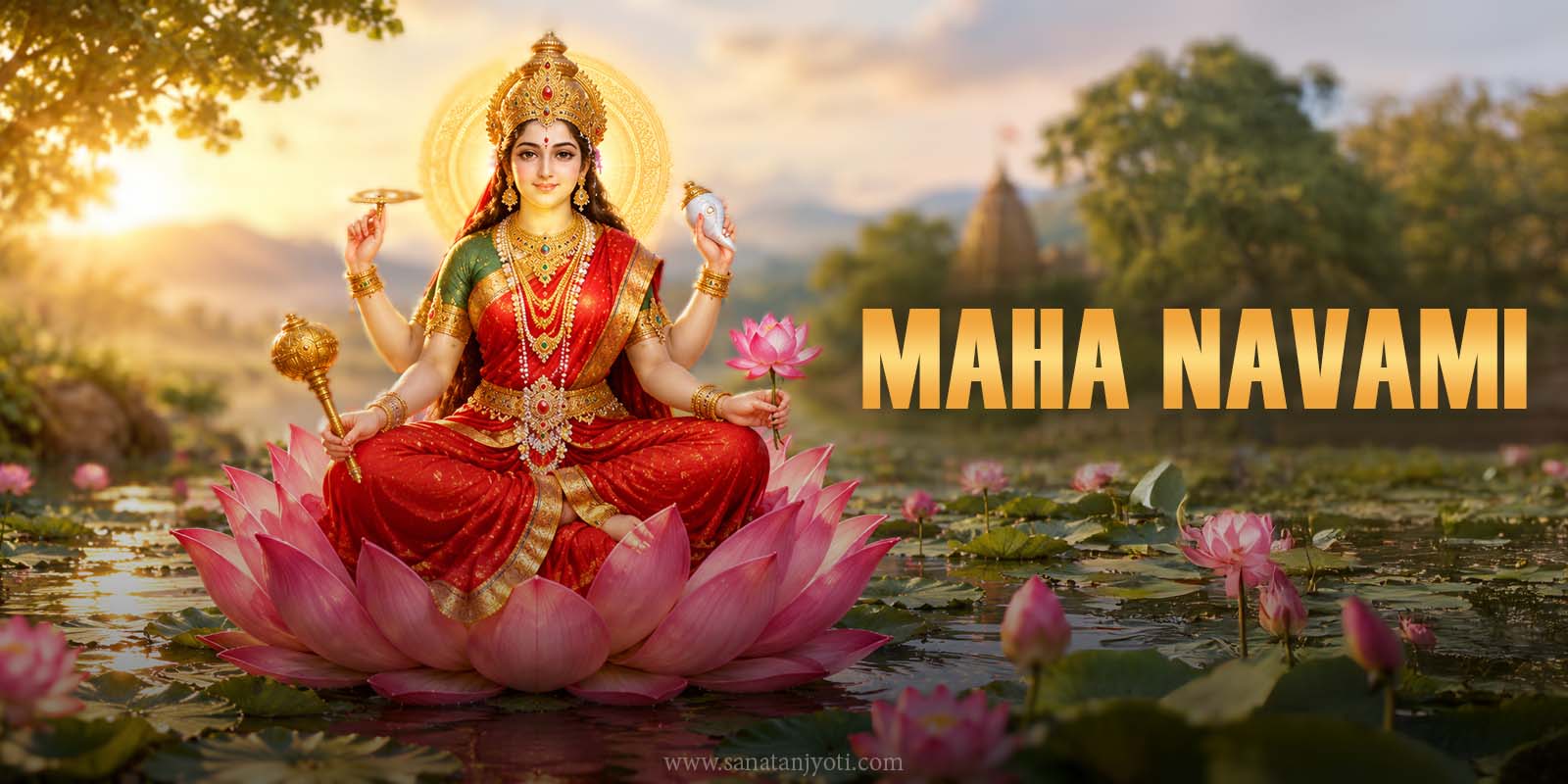
On the ninth day of Navratri, devotees worship Maa Siddhidatri, the ninth form of Goddess Durga. She is regarded as the Goddess who bestows spiritual accomplishments, known as Siddhis. In religious depictions, Maa Siddhidatri is shown seated on a lotus and having four arms.
Devotees offer flowers, fruits, incense, lamps and Naivedya to Maa Siddhidatri while praying for happiness, peace, prosperity and spiritual growth. Mantras dedicated to Maa Durga are also chanted, followed by Aarti.
To learn more about Maa Siddhidatri's divine form, Puja Vidhi, Mantras and religious significance, read: [The Divine Form of Maa Siddhidatri].
When Are Maha Ashtami and Maha Navami in 2026?
Maha Ashtami and Maha Navami will both be observed on Monday, October 19, 2026. According to the provided Panchang, Ashtami Tithi will end on the morning of October 19, and Navami Tithi will begin shortly afterward. Therefore, the worship for both festivals will take place on the same day.
• Ashtami Tithi Begins: October 18, 2026, at 8:29 AM
• Ashtami Tithi Ends: October 19, 2026, at 10:52 AM
• Navami Tithi Begins: October 19, 2026, at 10:53 AM
• Navami Tithi Ends: October 20, 2026, at 12:51 PM
• Maha Ashtami Puja: Monday, October 19, 2026
• Maha Navami Puja: Monday, October 19, 2026
Special worship of Maa Durga and Sandhi Puja are considered significant on Maha Ashtami, while Maha Navami is associated with the worship of Maa Siddhidatri, Havan and Kanya Pujan. The Puja Muhurat and sequence of rituals may vary according to the local Panchang and regional traditions.
To check the Puja date, auspicious Muhurat and other Panchang details for your city, visit the [SanatanJyoti Panchang].
What Is the Puja Vidhi for Maha Navami?
On Maha Navami, devotees worship Maa Durga according to their family and regional traditions. The general Puja Vidhi is as follows.
1. Take a Bath and Make a Sankalp in the Morning
Take a bath in the morning and wear clean clothes. Clean the Puja area, light a lamp in front of Maa Durga and take a Sankalp to perform the worship with devotion.
2. Worship Maa Siddhidatri
Offer flowers, Akshat (unbroken rice grains), fruits, incense, a lamp and Naivedya to Maa Siddhidatri. Red or other auspicious flowers may be offered according to your faith and tradition.
3. Chant Mantras and Recite Durga Saptashati
Chant Mantras are dedicated to Maa Durga. You may also recite Durga Saptashati according to your religious tradition. Maintain correct pronunciation and devotion while reciting the text.
4. Perform Kanya Pujan
Many families perform Kanya Pujan on Maha Navami. Young girls are honoured as manifestations of the Goddess. According to tradition, they are offered food and given fruits, Dakshina or gifts.
5. Perform Havan and Aarti
After the Puja, Havan may be performed according to your tradition and means. Finally, perform Maa Durga's Aarti and pray for the happiness, peace and well-being of your family.
6. Distribute Prasad
After completing the worship, distribute the Prasad offered to the Goddess among family members and other devotees. The Puja Vidhi may differ according to regional and family traditions.
Significance of Reciting Durga Saptashati on Maha Navami
Durga Saptashati is a well-known religious scripture, also associated with Devi Mahatmya. It describes the glory and power of Maa Durga and her victory over demons. During Navratri, many devotees worship Maa Durga by reciting Durga Saptashati.
On Maha Navami, devotees may also recite Durga Saptashati, chant Mantras and offer prayers to the Goddess according to their traditions. Religious beliefs regard this recitation as an important way to worship divine power and express devotion to the Goddess.
If you wish to arrange a traditional Durga Saptashati recitation on Maha Navami or during Navratri, you can learn more here: [Durga Saptashati Path].
Why Is Kanya Pujan Performed on Maha Navami?
Kanya Pujan is one of the major religious traditions associated with Navratri. Young girls are honoured as symbols of divine feminine power. Many families perform Kanya Pujan on Ashtami or Maha Navami.
On this occasion, girls are offered food and may receive Dakshina, fruits or gifts according to the family's means. The central sentiment behind Kanya Pujan is respect for feminine power, devotion and service.
Families may decide the number of girls, the food offerings and the Puja Vidhi according to their traditions. Rather than limiting the ritual to a single set of rules, it should be performed with devotion and respect.
What Is the Connection Between Maha Navami and Sharad Navratri?
Maha Navami is an important day during the final phase of Sharad Navratri. During these nine days, devotees worship the nine forms of Goddess Durga. On Navami, Maa Siddhidatri is worshipped, and many devotees conclude their Navratri rituals with Havan and Kanya Pujan.
Navratri traditions may vary across regions. In many places, Vijayadashami is celebrated after Navami, while the sequence of rituals in some worship traditions may differ according to the Tithi.
What Is the Difference Between Chaitra Navratri and Sharad Navratri?
In Hindu tradition, Chaitra Navratri and Sharad Navratri are both major festivals dedicated to the worship of Maa Durga. Chaitra Navratri is observed during the Hindu month of Chaitra, while Sharad Navratri is observed during Ashwin. Both festivals involve the worship of the nine forms of Maa Durga, fasting, Mantra chanting and religious rituals.
In many traditions, Chaitra Navratri concludes with Ram Navami, whereas Vijayadashami is celebrated after Sharad Navratri.
To learn about the dates of Chaitra Navratri, Ghatasthapana, the worship of the nine Goddesses and fasting rituals, read: [Chaitra Navratri 2027].
What Is Gupt Navratri?
Gupt Navratri is a festival associated with the worship of Goddess Shakti. During this period, some practitioners perform Mantra chanting, meditation and special spiritual practices according to their traditions. Worship of the ten Mahavidyas is also considered significant during Gupt Navratri.
Compared with Sharad Navratri and Chaitra Navratri, spiritual practices during Gupt Navratri are more private and focused on spiritual discipline in many traditions. The rules may vary according to the practitioner's tradition and the guidance of their Guru.
To learn more about Gupt Navratri, the ten Mahavidyas and the rules for Puja and spiritual practices, read: [Gupt Navratri].
How Is Maha Navami Celebrated in Bengal?
Durga Puja holds special cultural and religious significance in West Bengal and among Bengali communities. On Maha Navami, traditions such as special worship of Maa Durga, Pushpanjali, Bhog and Aarti are observed. Large numbers of devotees visit Puja pandals to seek the Goddess's blessings.
In Bengal's Durga Puja traditions, Maha Navami is also associated with the religious belief in Goddess Durga's victory over Mahishasura. The sequence of worship and rituals is determined according to the local Panchang and Bengali traditions.
To learn more about Maha Navami Puja Vidhi, traditions and religious significance in Bengal, read: [Bengal Maha Navami].
Mantras of Maa Durga for Maha Navami
On Maha Navami, devotees chant Mantras to offer prayers to Maa Durga and Maa Siddhidatri. These Mantras may be recited during worship according to one's faith and family traditions.
Popular Mantra of Maa Durga
Om Dum Durgayai Namah.
Popular Mantra of Maa Siddhidatri
Om Devi Siddhidatryai Namah.
While chanting Mantras, keep your mind calm and meditate on Maa Durga. For guidance on pronunciation and the number of repetitions, you may follow your tradition or seek advice from a qualified Acharya.
What Should You Do on Maha Navami?
• Take a bath in the morning and perform Puja while maintaining cleanliness.
• Worship Maa Siddhidatri and Maa Durga.
• Recite Durga Saptashati or chant Mantras according to your tradition.
• Perform Kanya Pujan according to your family's Ashtami or Navami tradition.
• Donate food, clothes or other items according to your means.
• Maintain respect, service and harmony within your family and society.
What Should You Avoid on Maha Navami?
Follow the rules for Puja and fasting according to your family traditions. If you have doubts about religious practices, seek guidance from a reliable Panchang or a qualified Acharya.
• Maintain cleanliness and devotion during worship.
• Do not disrespect the religious traditions of others.
• Consider your physical condition and capacity when observing a fast.
• Follow fire-safety precautions while performing Puja or Havan.
• If you are unsure about religious rules, seek guidance from a reliable Panchang or a qualified Acharya.
Frequently Asked Questions About Maha Navami
1. When Is Maha Navami in 2026?
Maha Navami will be observed on Monday, October 19, 2026. According to the provided Panchang, Navami Tithi will begin at 10:53 AM on October 19 and end at 12:51 PM on October 20.
2. Why Will Maha Ashtami and Maha Navami Be Observed on the Same Day in 2026?
According to the provided Panchang, Ashtami Tithi will end at 10:52 AM on October 19, and Navami Tithi will begin at 10:53 AM. Therefore, both Maha Ashtami Puja and Maha Navami Puja will be performed on Monday, October 19, 2026.
3. Which Goddess Is Worshipped on Maha Navami?
On the ninth day of Navratri, devotees worship Maa Siddhidatri, the ninth form of Goddess Durga.
4. Is Kanya Pujan Performed on Maha Navami?
Yes, many families perform Kanya Pujan on Maha Navami. In some traditions, it is performed on Ashtami. The appropriate day may be determined according to family traditions and the local Panchang.
5. Can Durga Saptashati Be Recited on Maha Navami?
Yes, devotees may recite Durga Saptashati on Maha Navami according to their religious traditions. A qualified Acharya can provide guidance on the recitation method and Sankalp.
6. Are Maha Navami and Durga Navami the Same?
Maha Navami is commonly known as Durga Navami as well. It is a festival associated with the worship of Goddess Durga on the Navami Tithi of Navratri.
7. Is Vijayadashami Celebrated After Maha Navami?
In many traditions, Vijayadashami is celebrated after Maha Navami. In 2026, Vijayadashami falls on October 20. The timing for concluding Puja and fasting should be checked according to the local Panchang and tradition.
Maha Navami is an occasion to express devotion through the worship of Maa Durga, Mantra chanting, Havan and Kanya Pujan. If you need guidance on Puja Vidhi, Durga Saptashati recitation or rituals according to your family traditions, you may consult an experienced Acharya.
For questions related to Maha Navami and Navratri worship, [Get a Free Consultation].