

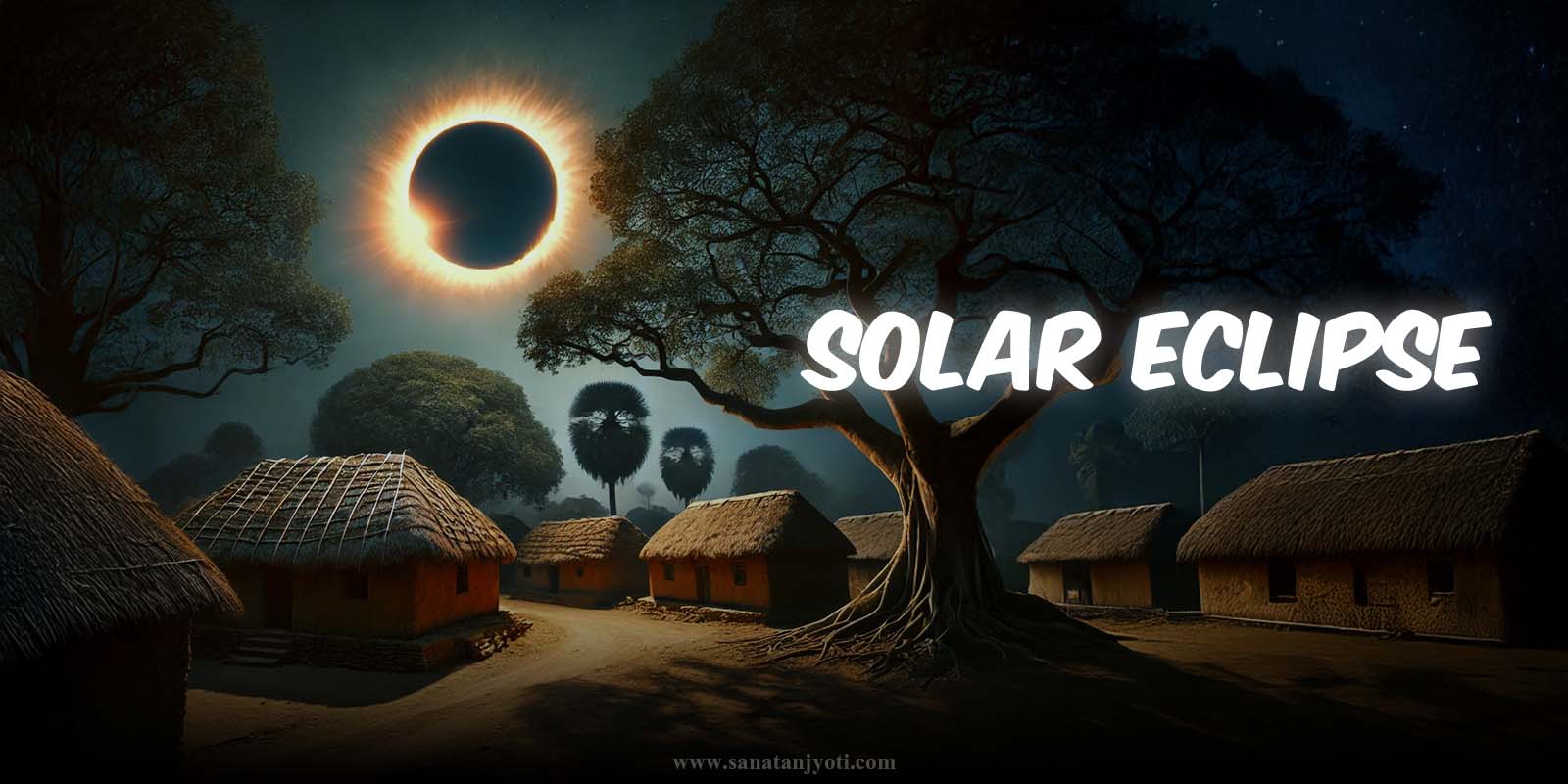
What Is a Solar Eclipse?
A Solar Eclipse is an astronomical event that occurs when the Moon comes between the Sun and the Earth, blocking the Sun's light from reaching some part of the Earth either completely or partially. In simple terms, when the Sun, Moon and Earth come into such an alignment that the Moon blocks sunlight from reaching the Earth, the event is called a Solar Eclipse. Pasted text
The Earth revolves around the Sun, while the Moon revolves around the Earth. During these movements, a situation can occur in which the Sun, Moon and Earth come approximately in a straight line. At this point, the Moon's shadow falls on the Earth, and some or all of the Sun may no longer be visible.
A Solar Eclipse is a natural astronomical phenomenon. During a Solar Eclipse, parts of the sky may appear darker during the daytime. The effect depends on the type of eclipse and the extent to which the Sun appears covered from a particular location.
To check the dates of solar and lunar eclipses, Sutak Kaal, and other important Panchang details, visit: [SanatanJyoti Panchang].
How Does a Solar Eclipse Occur?
To understand a Solar Eclipse, it is important to understand the positions of the Sun, Earth and Moon.
The Sun is the primary star of our solar system, and the Earth revolves around the Sun. The Moon, meanwhile, revolves around the Earth. When the Moon comes between the Sun and the Earth and its shadow falls on the Earth's surface, a Solar Eclipse occurs.
However, a Solar Eclipse does not occur on every New Moon. This is because the Moon's orbit is slightly tilted relative to the plane of the Earth's orbit around the Sun. Therefore, during most New Moons, the Moon passes slightly above or below the Sun from our viewpoint.
A Solar Eclipse occurs when the Moon is positioned in such a way that its shadow falls on the Earth.
How Many Types of Solar Eclipses Are There?
Solar Eclipses are mainly classified as total, partial and annular. Under certain special circumstances, a hybrid Solar Eclipse can also occur.
1. Total Solar Eclipse
A Total Solar Eclipse occurs when the Moon completely covers the bright visible portion of the Sun.
In this situation, the Moon can completely cover the Sun's photosphere. In the small region of the Earth where a total eclipse is visible, the daytime sky may become significantly dark for a short period.
2. Partial Solar Eclipse
When the Moon covers only a portion of the Sun, it is called a Partial Solar Eclipse.
In this situation, part of the Sun remains visible while the other part is hidden behind the Moon.
3. Annular Solar Eclipse
When the Moon comes in front of the Sun but its apparent size is smaller than that of the Sun, it cannot completely cover the Sun's photosphere.
As a result, a bright ring may appear around the Moon. This is called an Annular Solar Eclipse.
4. Hybrid Solar Eclipse
A Hybrid Solar Eclipse is a rare type of Solar Eclipse in which the appearance of the eclipse can differ from different locations on Earth. From some places, it may appear as a Total Solar Eclipse, while from others, it may appear as an Annular Solar Eclipse.
What Is the Relationship Between a Solar Eclipse and New Moon?
A Solar Eclipse is possible only around the New Moon, because this is when the Moon is positioned between the Sun and the Earth.
However, a Solar Eclipse does not occur on every New Moon. This is because the Moon's orbit is tilted relative to the plane of the Earth's orbit.
Therefore, a Solar Eclipse is visible only when the alignment of the Sun, Moon and Earth is suitable during the New Moon.
To learn about Amavasya dates, religious significance, Puja Vidhi, and fasting traditions, read: [Amavasya].
What Precautions Should Be Taken During a Solar Eclipse?
Looking directly at the Sun with the naked eye during a Solar Eclipse can damage the eyes. Therefore, it is important to follow proper safety measures when observing a Solar Eclipse.
Keep the following points in mind while viewing a Solar Eclipse:
• Do not look directly at the Sun with the naked eye.
• Use certified solar viewing glasses or an appropriate solar filter to observe the Solar Eclipse.
• Ordinary sunglasses should not be considered a safe option for viewing a Solar Eclipse.
• Avoid looking at the Sun through a camera, binoculars or telescope without an appropriate solar filter.
• Children should be supervised carefully while viewing a Solar Eclipse.
• Religious activities or Mantra Japa may be performed during the eclipse according to one's religious tradition.
Important: Eye-safety precautions during a Solar Eclipse are scientifically important. Looking directly at the Sun should not be considered safe solely on the basis of religious beliefs.
What Is the Sutak Period During a Solar Eclipse?
In Hindu religious traditions, the Sutak period is observed before a Solar Eclipse. According to many Panchang traditions, Sutak is considered to begin several hours before the Solar Eclipse.
According to religious beliefs, certain activities are considered prohibited during the Sutak period, and different traditions prescribe specific rules regarding Puja, entering temples, eating food and other activities.
The duration of the Sutak period and the rules associated with it may vary according to religious traditions and Panchang calculations. Therefore, for information about the Sutak period of a particular Solar Eclipse, it is advisable to consult the Panchang applicable to the relevant location.
What Should Be Done During a Solar Eclipse?
According to religious beliefs, the following practices may be performed during a Solar Eclipse:
• Chant Mantras.
• Practice meditation and Sadhana.
• Perform Puja according to your religious tradition.
• Remember and worship Surya Dev.
• Follow the tradition of taking a bath after the eclipse ends.
• Donate to people in need.
• Perform Shraddha or charity according to your family and religious tradition.
There may be differences among different sects and traditions regarding the religious practices performed during an eclipse.
What Should Not Be Done During a Solar Eclipse?
According to religious beliefs, certain activities are considered prohibited during a Solar Eclipse. These primarily include:
• Looking directly at the Sun without proper eye protection.
• Performing activities that are prohibited according to one's religious tradition.
• Violating prescribed rules related to food during the Sutak period in traditions that observe it.
• Ignoring the rules of Puja or Sadhana.
• Using a camera, binoculars or telescope to view the Solar Eclipse without proper protection.
A person may follow religious rules according to their own tradition and beliefs, while scientific eye-safety guidelines should be followed by everyone.
What Are the Beliefs About Eating Food During a Solar Eclipse?
Different religious traditions have different beliefs regarding food during a Solar Eclipse. Some traditions advise avoiding food during the Sutak period.
Some families follow specific religious practices regarding food and other edible items. For example, some people traditionally place Tulsi leaves or Kusha grass in food.
These beliefs should be understood as religious traditions. From a scientific perspective, there is no general scientific basis for the belief that ordinary food becomes poisonous solely because of a Solar Eclipse.
What Should Be Done After a Solar Eclipse?
According to religious traditions, after a Solar Eclipse ends, people traditionally take a bath, clean the Puja area and use fresh water.
Some families also follow the tradition of purifying the house and worshipping their deities after the eclipse.
After an eclipse, religious practices may be followed according to one's family and regional traditions.
Religious Significance of a Solar Eclipse
In Hinduism, the Sun is regarded as an important deity and a life-giving force. For this reason, a Solar Eclipse is also considered a significant event from a religious perspective.
According to religious beliefs, Mantra Japa, meditation, charity and Sadhana are given special importance during an eclipse. Some traditions consider Japa and charity performed during the eclipse period especially meritorious.
However, individuals may follow these religious beliefs according to their faith and traditions.
Why Is Mantra Japa Performed During a Solar Eclipse?
According to religious beliefs, Mantra Japa and meditation are given special importance during a Solar Eclipse. During this period, a person may chant Surya Mantras, the Gayatri Mantra or the Mantra of their Ishta Dev according to their faith.
From a religious perspective, the purpose of Mantra Japa is considered to be focusing the mind and engaging in spiritual Sadhana.
What Is the Significance of Charity During a Solar Eclipse?
Hindu religious traditions mention the practice of giving charity during an eclipse or after the eclipse ends. A person may donate food, clothes, money or other useful items according to their means.
The religious significance of charity is also associated with compassion, service and helping people in need.
Frequently Asked Questions About Solar Eclipses
1. What is a Solar Eclipse?
A Solar Eclipse occurs when the Moon comes between the Sun and the Earth and blocks the Sun's light from reaching the Earth either completely or partially.
2. How does a Solar Eclipse occur?
When the positions of the Sun, Moon and Earth align in such a way that the Moon comes between the Sun and the Earth and its shadow falls on the Earth, a Solar Eclipse occurs.
3. How many types of Solar Eclipses are there?
The main types are Total, Partial and Annular Solar Eclipses. Under rare circumstances, a Hybrid Solar Eclipse can also occur.
4. Does a Solar Eclipse occur on every New Moon?
No. A Solar Eclipse does not occur on every New Moon because the Moon's orbit is tilted relative to the plane of the Earth's orbit.
5. Why should a Solar Eclipse not be viewed with the naked eye?
Looking directly at the Sun can damage the retina of the eyes. Therefore, certified solar viewing glasses or an appropriate solar filter should be used while viewing a Solar Eclipse.
6. What is the Sutak period of a Solar Eclipse?
In Hindu religious traditions, a period before a Solar Eclipse is known as the Sutak period. Its duration and rules are determined according to the relevant Panchang and religious tradition.
7. What is considered auspicious to do during a Solar Eclipse?
According to religious beliefs, Mantra Japa, meditation, Sadhana and charity are considered auspicious during a Solar Eclipse.
8. What should not be done during a Solar Eclipse?
According to religious beliefs, certain activities are considered prohibited during the Sutak and eclipse periods. From a scientific perspective, one should especially avoid looking directly at the Sun without proper eye protection.
9. What should be done after a Solar Eclipse?
According to religious traditions, people traditionally take a bath, purify the Puja area and use fresh water after the eclipse ends.
10. What is the difference between a Solar Eclipse and a Lunar Eclipse?
A Solar Eclipse occurs when the Moon comes between the Sun and the Earth, whereas a Lunar Eclipse occurs when the Earth comes between the Sun and the Moon and the Earth's shadow falls on the Moon.
A Solar Eclipse is an important astronomical event in which the Moon comes between the Sun and the Earth and blocks the Sun's light from reaching the Earth either completely or partially. It can occur in Total, Partial and Annular forms, while a Hybrid Solar Eclipse is possible under rare circumstances.
Solar Eclipses are viewed from both scientific and religious perspectives. From a scientific perspective, it is essential to observe a Solar Eclipse safely, while Hindu religious traditions describe various practices related to the Sutak period, Mantra Japa, meditation, charity and Puja.
To learn more about how a lunar eclipse occurs, its dates, Sutak Kaal, religious beliefs, and rules related to worship and rituals, read: [Chandra Grahan].