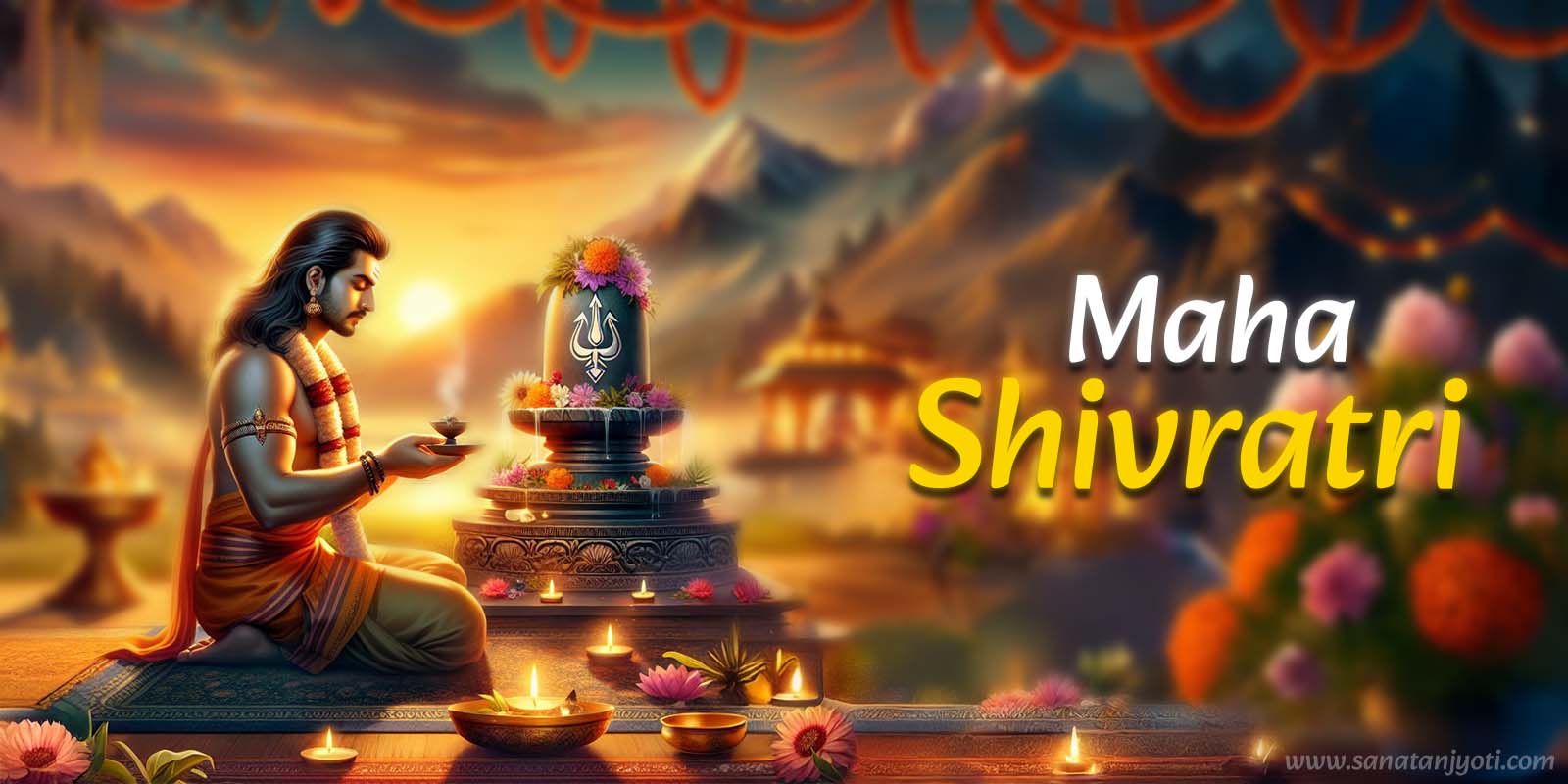
Maha Shivratri 2027 will be observed on Saturday, March 6. It is one of the major Hindu festivals dedicated to Lord Shiva and is celebrated on Chaturdashi Tithi of Krishna Paksha in the month of Phalguna.
On this day, devotees observe a Vrat, perform Abhishekam of Lord Shiva and worship Him, chant Mantras and remain awake during the four Prahars of the night. In 2027, the Chaturdashi Tithi will prevail from 12:04 PM on March 6 to 1:47 PM on March 7, while the four Prahar Puja timings are given from 6:00 PM to 6:00 AM.
Maha Shivratri is one of the most important and sacred festivals dedicated to Lord Shiva. Although Shivratri is observed every month on Chaturdashi Tithi of Krishna Paksha, known as Masik Shivratri, the Shivratri occurring during Krishna Paksha of the month of Phalguna (February–March) holds special significance. This festival is considered especially fruitful and is known as Maha Shivratri.
Maha Shivratri is considered especially significant for performing Rudrabhishek. If you wish to perform Rudrabhishek with proper rituals and seek the grace and blessings of Lord Shiva: -You can get information about the Rudrabhishek Anushthan here and also book the Anushthan.
Significance of Shivratri in the Skanda Purana
The Skanda Purana mentions that observing a Shivratri Vrat and having Darshan of Lord Shiva are rare and considered highly meritorious. It is said that only through the accumulated merits of a hundred crore births does a person get the opportunity to worship Lord Shankara with Bilva leaves.
It is also stated that the merit obtained by bathing in the Ganga for ten thousand years can be attained simply by worshipping Lord Shankara with Bilva leaves once. Fasting and worship on this day are said to provide greater merit than a hundred Yajnas. The merit gained by offering even one Bilva leaf to the Shivling on Maha Shivratri is considered incomparable to any other act in the three worlds.
Story of Maha Shivratri
The story of Maha Shivratri holds great importance in Hindu mythology. It is believed that on this sacred night, Lord Shiva performed the Tandava, the cosmic dance representing creation, preservation and destruction. According to another traditional story, Lord Shiva and Goddess Parvati were married on this night, symbolizing the union of Shiva and Shakti.
Devotees also believe that worshipping Lord Shiva on this sacred night can help one receive Moksha and divine blessings.
Benefits of Observing Maha Shivratri
Participating in the rituals of Maha Shivratri is traditionally associated with several spiritual and physical benefits:
• Purification of negative energy: Devotional practices are believed to purify the mind and surroundings.
• Prosperity in the family: The blessings of Lord Shiva are believed to bring happiness and peace to the family.
• Destruction of sins: Worship of Lord Shiva is traditionally believed to help remove sins accumulated over many births.
• Inner peace: Connecting with divine energy is believed to bring peace.
• Health benefits: Fasting on this day is traditionally associated with detoxification of the body and renewal of energy.
• Marital happiness: The Vrat is considered auspicious for both married and unmarried devotees. It is particularly believed that unmarried women and men who observe the Shivratri Vrat may receive its benefits and favorable opportunities for marriage may arise sooner.
Maha Shivratri Muhurat 2027
• Date: March 6, 2027, Saturday
• Chaturdashi Tithi Begins: March 6, 12:04 PM
• Chaturdashi Tithi Ends: March 7, 1:47 PM
Maha Shivratri Puja Muhurat — March 6, 2027
• Pradosh Kaal (First Prahar): 6:00 PM to 9:00 PM
• Triyama Kaal (Second Prahar): 9:00 PM to 12:00 midnight
• Nishitha Kaal (Third Prahar): 12:00 midnight to 3:00 AM
• Ushakaal/Brahma Muhurat (Fourth Prahar): 3:00 AM to 6:00 AM
• Vrat Parana: After sunrise on March 7
Maha Shivratri Puja Vidhi
Performing Maha Shivratri Puja with devotion and precision is believed to enhance its spiritual benefits. Lord Shiva is worshipped according to special rituals on this day. Following the prescribed Puja Vidhi is traditionally believed to invite the blessings of Lord Shiva. The complete Puja Vidhi is presented below in a step-by-step and structured manner:
1. Vrat and Daily Rituals
• Have one meal on Trayodashi.
• Observe a complete fast on Chaturdashi and visit a Shiva temple after taking a bath.
2. Mandala and Kalash Sthapana
• Prepare a sacred Mandala and place a Kalash at its center.
• Place idols of Goddess Parvati and Lord Shiva on the Kalash.
• Perform Puja using Bilva leaves, roots and tubers, Naivedya and Gangajal.
3. Night Vigil and Puja
• Perform separate Puja during each of the four Prahars of the night.
• Remain awake through the night with Bhajan-Kirtan, devotional songs and dance.
4. Morning Puja and Homa
• Worship Lord Shiva again in the morning.
• Perform Havan (Homa) according to the prescribed rituals.
5. Feeding Acharyas and Charity
• Feed Acharyas and people in need.
• Donate according to your capacity.
• Offer clothes and ornaments to Ritviks and Acharyas.
6. Cow Donation to the Acharya
• Donate a cow along with a calf.
• Place the idol along with the Kalash on the back of a bull and offer it to the Acharya.
7. Prayer
At the end of the Puja, pray to Lord Shiva:
Prayer:
Devadeva Mahadeva Sharanagata Vatsala,
Vratenanena Devesha Kripam Kuru Mamopari.
Maya Bhaktyanusarena Vratam Etat Kritam Shiva,
Nyunam Sampurnatam Yatu Prasadat Tava Shankara.
Ajnanad Yadi Va Jnanaj Japapujadikam
Kritam Tadastu Kripaya Safalam Tava Shankara.
8. Pushpanjali and Conclusion
• Offer Pushpanjali to Lord Shiva.
• Conclude the Puja with Namaskar and prayer.
Popular Shiva Mantras for Maha Shivratri
• Mahamrityunjaya Mantra: A powerful chant traditionally associated with health and protection.
• Shiva Panchakshara Mantra: A sacred five-syllable Mantra glorifying the name of Lord Shiva.
Maha Shivratri Vrat
Observing a fast on Maha Shivratri is considered highly auspicious. Devotees either abstain from food and water or follow a strict Sattvic diet:
• Eat fruits, nuts and milk-based foods.
• Avoid grains, pulses and non-vegetarian food.
• Spend the day in prayer, Japa and meditation.
Fasting is traditionally believed to not only detoxify the body but also align the mind and soul with divine energy.
Maha Shivratri Prasad
On the sacred festival of Maha Shivratri, one of the simplest and most devotional ways to please Lord Shiva is to offer Bhog with love and devotion. Special dishes and sweets believed to be dear to Lord Shiva are offered on this day. Here are some of the special Bhog items that are traditionally offered to the Shivling:
1. Kheer: Delicious Kheer made with rice and Makhana.
2. Panjiri: Prepared with roasted flour, nuts and sugar.
3. Barfi: Pure homemade Khoya Barfi.
4. Panchamrit: A mixture of milk, curd, ghee, honey and sugar.
5. Halwa: Sacred Prasad prepared from semolina, gram flour or wheat flour.
Ingredients for Prasad:
• Dry fruits
• Jaggery
• Milk and milk-based sweets
• Honey
• Ghee
Special Dishes for Maha Shivratri
Devotees observing the Vrat consume simple and Sattvic foods such as:
• Sabudana Kheer
• Sweet potatoes
• Fruits and nuts
• Coconut water
• Milk-based dishes
These foods help maintain energy throughout the day and are considered suitable for the spiritual nature of the festival.
What to Do and What Not to Do on Maha Shivratri?
What to Do:
• Observe the Vrat with faith and devotion.
• Stay awake at night and meditate throughout the night.
• Offer Bilva leaves to the Shivling, which is considered highly auspicious.
• Chant Mantras and meditate upon the different forms of Lord Shiva, completely dedicating your mind to Him.
What Not to Do:
• Avoid consuming Tamasic foods.
• Stay away from negative thoughts to maintain mental peace.
• Do not neglect cleanliness and discipline during the rituals.
Duration of Maha Shivratri Puja
Maha Shivratri Puja is traditionally performed during the four Prahars of the night. Each Prahar has its own significance, and performing Puja according to the prescribed rituals during all four Prahars is believed to invite the grace of Lord Shiva.
Step-by-step spiritual practice and devotion throughout all four Prahars not only seek the blessings of Lord Shiva but are also traditionally believed to bring happiness, peace and positive energy into the devotee's life.
Chanting and remembering the thousand names of Lord Shiva on Maha Shivratri holds special religious significance. If you wish to perform Shiva Sahasranama Anushthan according to the prescribed rituals and seek the grace and blessings of Lord Shiva: -You can get information about the Shiva Sahasranama Anushthan here and also book the Anushthan.
1. Why Is Fasting Observed on Shivratri?
Maha Shivratri fasting has special religious and traditional significance. According to mythological beliefs, Goddess Parvati and Lord Shiva were married on this day. Goddess Parvati pleased Lord Shiva through intense penance and fasting. Following this tradition, devotees observe a fast to please Lord Shiva and seek His blessings.
From a traditional health perspective, fasting is also associated with cleansing the body, supporting well-being and bringing peace to the mind. It is believed to help establish spiritual harmony between the mind and soul.
2. Who Is Shiva in Sanatana Dharma?
In Sanatana Dharma, Shiva is regarded as the deity who performs the role of the “Destroyer” within the Trimurti—Brahma, Vishnu and Mahesh. Lord Shiva is regarded as the force of dissolution and renewal in creation. He is known as Mahadev, meaning the God of Gods.
Shiva is formless and infinite. He is not only regarded as the deity of destruction but is also a symbol of Yoga, meditation, detachment and spiritual knowledge.
Shiva is also known as Bholenath, reflecting His simple and compassionate nature. He is traditionally believed to become pleased with the devotion of His devotees and bless them. His worship and meditation are not only associated with material well-being but also with inner peace and Moksha.
3. In Which Forms Is Shiva Depicted?
Shiva is depicted in various forms, such as:
• Nataraja: The cosmic dancer.
• Ardhanarishvara: Half male and half female, symbolizing the union of Shiva and Shakti.
• Lingam: A symbol of the formless aspect of Shiva.
4. Who Are the Members of Lord Shiva's Family?
The family of Lord Shiva includes:
• Parvati: His Ardhangini.
• Ganesha: His son, regarded as the remover of obstacles.
• Kartikeya: His son and the God associated with war.
• Nandi: His vehicle and a symbol of Dharma.
6. What Is Shiva's Vehicle and How Is It Worshipped?
Nandi, the sacred bull who is Lord Shiva's vehicle, is regarded as a symbol of Dharma and devotion. Nandi is not worshipped separately; rather, during the worship of Lord Shiva, Nandi is also worshipped with devotion as part of the Shiva family.
The idol of Nandi placed in front of the Shivling holds special significance for devotees. Sacred offerings made to Lord Shiva, such as water, Bilva leaves, Dhatura and Prasad, are also offered to Nandi.
Nandi is regarded as a symbol of unwavering devotion and service to Lord Shiva. His presence inspires devotees to follow the path of meditation, devotion and Dharma.
7. What Is the Significance of Shiva's Third Eye?
Shiva's third eye is described as the seat of Tamas Guna and is regarded as a symbol of knowledge and insight. It represents the destruction of evil and ignorance and also opens the path toward spiritual knowledge.
8. How to Perform Maha Shivratri Puja at Home?
To perform Maha Shivratri Puja at home:
• Set up an altar for Lord Shiva.
• Perform the Puja according to your customs and traditions.
• Perform Abhishekam with milk, water, honey and other appropriate substances.
• Offer Bilva leaves, fruits and flowers.
• Chant Mantras and meditate upon the different forms of Lord Shiva.
9. What Is the Timing of Maha Shivratri Puja?
On Maha Shivratri 2027, Puja can be performed during all four Prahars of the night on March 6. During the first Prahar, Puja can be performed from 6:00 PM to 9:00 PM during Pradosh Kaal. During the second Prahar, it can be performed from 9:00 PM to 12:00 midnight. The third Prahar is the Nishitha Kaal, from 12:00 midnight to 3:00 AM, while the fourth Prahar falls during Ushakaal/Brahma Muhurat, from 3:00 AM to 6:00 AM.
The Maha Shivratri Vrat Parana will be performed after sunrise on March 7.
10. How Many Times Is Puja Performed on Shivratri?
Traditionally, Maha Shivratri Puja is performed during the four Prahars (periods) of the night:
1. Pradosh Kaal – First Prahar of the night
2. Triyama Kaal – Second Prahar of the night
3. Nishitha Kaal – Third Prahar of the night
4. Ushakaal/Brahma Muhurat – Fourth Prahar of the night
11. Which Flowers Should Be Offered to Lord Shiva?
The flowers and sacred offerings considered especially auspicious for Lord Shiva include:
• Bilva Patra
• Aparajita
• Dhatura
• Madar
• Shami flowers