
When is Kojagara Puja in 2026?
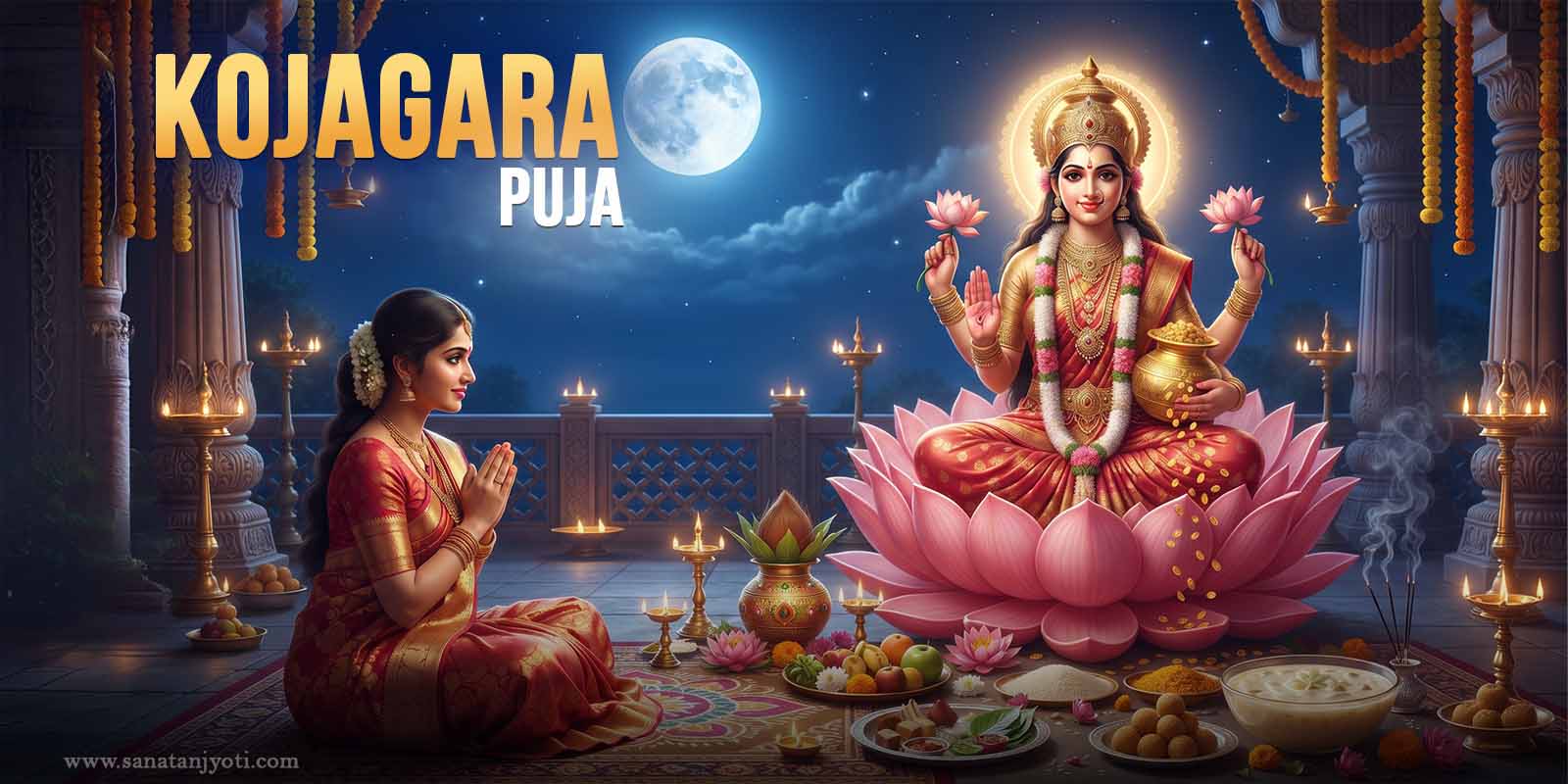
Kojagara Puja 2026 will be observed on Sunday, October 25. This Puja is performed on the night of Ashwin Shukla Purnima, also known as Kojagari Purnima or Sharad Purnima, to worship Goddess Lakshmi. There is a tradition of staying awake at night and worshipping Goddess Lakshmi on this day. According to religious beliefs, Goddess Lakshmi visits the Earth on the night of Kojagara and blesses devotees who stay awake and worship her with happiness and prosperity.
In 2026, Purnima Tithi will begin at approximately 11:58 AM on October 25 and continue until around 9:43 AM on October 26. The Nishita period for Kojagara Puja may vary depending on the location.
For information about Purnima dates, Vrats and their religious significance throughout the year: -Read the detailed article on Purnima.
What Is Kojagara Puja?
Kojagara Puja is an important festival associated with the worship of Goddess Lakshmi on the night of Ashwin Purnima. It is also known as Kojagari Puja, Kojagara Vrat and Kojagari Lakshmi Puja.
The word “Kojagara” is generally associated with the phrase “Ko Jagrati?”, meaning “Who is awake?” This is why there is a tradition of staying awake during the night. According to religious beliefs, Goddess Lakshmi visits the Earth at night and blesses devotees who remain awake and worship her with devotion.
The festival is particularly significant in West Bengal, Odisha and Assam. In Bengal, it holds special importance as Kojagari Lakshmi Puja.
What Is the Shubh Muhurat for Kojagara Puja 2026?
The Nishita period is considered especially important for Kojagara Puja.
Kojagara Puja: Sunday, October 25, 2026
Nishita Puja Time: 11:42 PM to 12:33 AM
Purnima Tithi Begins: October 25, 11:58 AM
Purnima Tithi Ends: October 26, 9:43 AM
Puja timings may vary slightly from city to city because of differences in sunset, midnight and other local calculations. Therefore, it is advisable to check the Panchang according to your location.
Why Is Kojagara Puja Celebrated?
The main purpose of Kojagara Puja is to worship Goddess Lakshmi and pray for wealth, happiness, prosperity and good fortune. Religious traditions give special importance to night vigil and Lakshmi Puja on the night of Ashwin Purnima.
According to belief, Goddess Lakshmi visits the Earth on this night and observes who is awake and worshipping her. Because of this belief, devotees stay awake at night, light lamps and worship Goddess Lakshmi.
What Is the Connection Between Kojagara Puja and Sharad Purnima?
Kojagara Puja is associated with the night of Ashwin Purnima, which is known as Sharad Purnima in many parts of India. The religious rituals and names associated with this Full Moon may vary across different regions.
In many places, Sharad Purnima is associated with Moon worship, Kheer and night vigil, while in West Bengal and nearby regions, Kojagari Lakshmi Puja holds special significance on the same night.
What Is the Puja Vidhi for Kojagara Puja?
The Puja Vidhi for Kojagara Puja may vary according to regional traditions and family customs. Generally, the house and Puja area are cleaned first.
After this, an idol or image of Goddess Lakshmi is installed, and the Puja area is decorated with lamps, flowers and other Puja Samagri. Devotees take a bath, wear clean clothes and take a Sankalp before Goddess Lakshmi.
Lord Ganesha and Goddess Lakshmi are then worshipped. Flowers, Akshat, Chandan, incense, lamps, fruits, sweets and Naivedya are offered to the Goddess. Devotees chant Lakshmi Mantras and perform Aarti.
Staying awake at night and meditating on the Goddess is also an important part of this festival.
How to Worship Goddess Lakshmi During Kojagara Puja?
When performing Kojagara Puja at home, clean the Puja area and place an idol or picture of Goddess Lakshmi. Light a Diya and worship Lord Ganesha first.
Offer a lotus or other available flowers, Akshat, Chandan, incense, Diya, fruits and sweets to Goddess Lakshmi. According to your faith and family tradition, you may recite Shri Suktam, Lakshmi Stotra or Lakshmi Mantras.
Finally, perform Aarti of Goddess Lakshmi and have Prasad with family members. If night vigil is part of your tradition, you may spend the night singing Bhajans, chanting Mantras and remembering the Goddess.
Why Is Night Vigil Observed During Kojagara Puja?
One of the most important traditions of Kojagara Puja is staying awake at night. The name “Kojagara” is associated with the religious belief of “Who is awake?”
According to belief, Goddess Lakshmi visits the Earth on the night of Kojagara and blesses devotees who remain awake. Therefore, instead of sleeping, devotees spend the night worshipping the Goddess, singing Bhajans, chanting Mantras and engaging in other religious activities.
Why Is Kheer Prepared During Kojagara Puja?
On the night of Sharad Purnima and Kojagara, Kheer or milk-based Prasad is considered especially significant in many regions. According to tradition, milk or Kheer is kept under the moonlight at night and later consumed as Prasad.
However, the way this tradition is followed may vary among different regions and families. Therefore, it may be observed according to local customs.
What Is Offered During Kojagara Puja?
The following items may generally be used during the worship of Goddess Lakshmi:
• Lotus or other flowers
• Akshat
• Chandan
• Incense and Diya
• Fruits
• Sweets
• Kheer or milk-based Prasad
• Naivedya
• Paan and Supari
• Kalash
• Other Lakshmi Puja Samagri
The Puja Samagri may vary according to family and regional traditions.
What Is the Religious Significance of Kojagara Puja?
Kojagara Puja is primarily associated with seeking the blessings of Goddess Lakshmi for happiness, prosperity and abundance. Religious beliefs give special importance to night vigils and Lakshmi worship on this night.
In some traditions, Kojagara Vrat is associated with prosperity, good health and family happiness. Traditions associated with the Skanda Purana also mention the glory and significance of this Vrat.
What Is the Kojagara Vrat Katha?
A popular story associated with Kojagara Vrat mentions a poor Brahmin named Valit. According to the story, he lived in the region of Magadha. He was learned and followed religious practices but was extremely poor financially.
The story states that through the observance of Kojagara Vrat and the worship of Goddess Lakshmi, prosperity entered his life. For this reason, the Vrat is associated with the removal of poverty and the seeking of Goddess Lakshmi's blessings.
Which Mantras Should Be Chanted During Kojagara Puja?
Devotees may chant Lakshmi Mantras according to their faith and tradition. A commonly recited Mantra is:
Om Shreem Mahalakshmyai Namah.
Devotees may also recite Shri Suktam, Lakshmi Stotra and other Vedic Mantras.
If you wish to perform Lakshmi Puja through a specific Anushthan or Vedic procedure, it is advisable to perform the Puja under the guidance of a qualified Acharya.
What Should Be Donated During Kojagara Puja?
On the occasion of Kojagara Puja, devotees may donate food, clothes, grains or other useful items to people in need according to their capacity.
In the Sanatan tradition, charity is considered a meritorious act, and helping people in need during festivals has been a longstanding practice.
What Is the Difference Between Kojagara Puja and Diwali Lakshmi Puja?
Both occasions are associated with the worship of Goddess Lakshmi, but their religious contexts are different.
Kojagara Puja is performed on the night of Ashwin Purnima, whereas Diwali Lakshmi Puja is performed on Kartik Amavasya. In Bengal, Kojagari Lakshmi Puja holds special significance and is counted among the major Lakshmi Puja traditions of the region.
For complete information about Diwali 2026 date, Lakshmi Puja, Shubh Muhurat and Puja Vidhi: -Read the detailed Diwali article.
What Should You Do on Kojagara Puja 2026?
On Kojagara Puja, devotees can begin the day by taking a bath and maintaining cleanliness. In the evening, they can prepare the Puja area and worship Goddess Lakshmi.
At night, devotees may chant Lakshmi Mantras, sing Bhajans, recite Shri Suktam and observe night vigil. According to their tradition, they may prepare Kheer or other Naivedya and offer it to the Goddess.
Donating to people in need according to one's capacity and praying for happiness and prosperity in the family is also considered in keeping with the spirit of this festival.
Frequently Asked Questions About Kojagara Puja 2026
1. When is Kojagara Puja 2026?
Kojagara Puja will be observed on Sunday, October 25, 2026. It is performed on the night of Ashwin Shukla Purnima.
2. Which Goddess Is Kojagara Puja Dedicated To?
Kojagara Puja is primarily dedicated to Goddess Lakshmi and is performed to seek wealth, happiness, prosperity and good fortune.
3. Are Kojagara Puja and Kojagari Puja the Same?
Yes. Kojagara Puja, Kojagari Puja and Kojagari Lakshmi Puja are commonly used names for the same festival. The name and some Puja traditions may vary by region.
4. Why Is It Considered Important to Stay Awake at Night During Kojagara Puja?
According to religious belief, Goddess Lakshmi visits the Earth on this night and blesses devotees who remain awake. This belief is the reason behind the tradition of night vigils.
5. Why Is Kheer Kept During Kojagara Puja?
In many regions, milk or Kheer is kept under the moonlight at night and later consumed as Prasad.
6. Are Kojagara Puja and Sharad Purnima Celebrated on the Same Day?
In many regions, Ashwin Purnima is celebrated as Sharad Purnima, while the same Full Moon night is observed as Kojagara/Kojagari Puja. However, the Puja Vidhi and prominence of the rituals may vary according to regional traditions.
The most important traditions of Kojagara Puja include Goddess Lakshmi worship, night vigil, Mantra Japa, Bhajans and offering Prasad. The Puja Vidhi and rituals may vary according to regional traditions.
If you wish to receive personalized astrological guidance regarding Puja, Anushthan or Shubh Muhurat according to your birth chart: -You can consult our astrologer.