
On the Amavasya Tithi of the Kartik month, worshipping Maa Kali is considered especially significant. Kali Puja 2026 will be celebrated on Sunday, November 8.
According to Panchang, the Kartik Amavasya Tithi will begin on November 8, 2026, at 11:29 AM and will continue until 12:33 PM on November 9. Kali Puja is performed during the Amavasya night, and the Nishita Kaal is considered especially significant for the worship.
Kali Puja is a major festival dedicated to the worship of Maa Kali, in which devotees worship her fierce and powerful form. According to religious beliefs, Maa Kali is associated with the destruction of evil and negative forces and the protection of devotees. Kali Puja is celebrated on a particularly grand scale in West Bengal.
When is Kali Puja 2026?
Kali Puja 2026 will be celebrated on Sunday, November 8. The Kartik Amavasya Tithi will be observed on this day, and Maa Kali will be worshipped at night. The Amavasya Tithi will begin on November 8 at 11:29 AM and end on November 9 at 12:33 PM.
Kali Puja and Diwali are both observed around the same Amavasya Tithi, but their worship traditions may vary from one region to another. In many places, Maa Lakshmi and Lord Ganesha are worshipped on Diwali evening, while in West Bengal and some Eastern Indian traditions, worshipping Maa Kali during the Amavasya night is the primary ritual.
What Does Maa Kali Look Like?
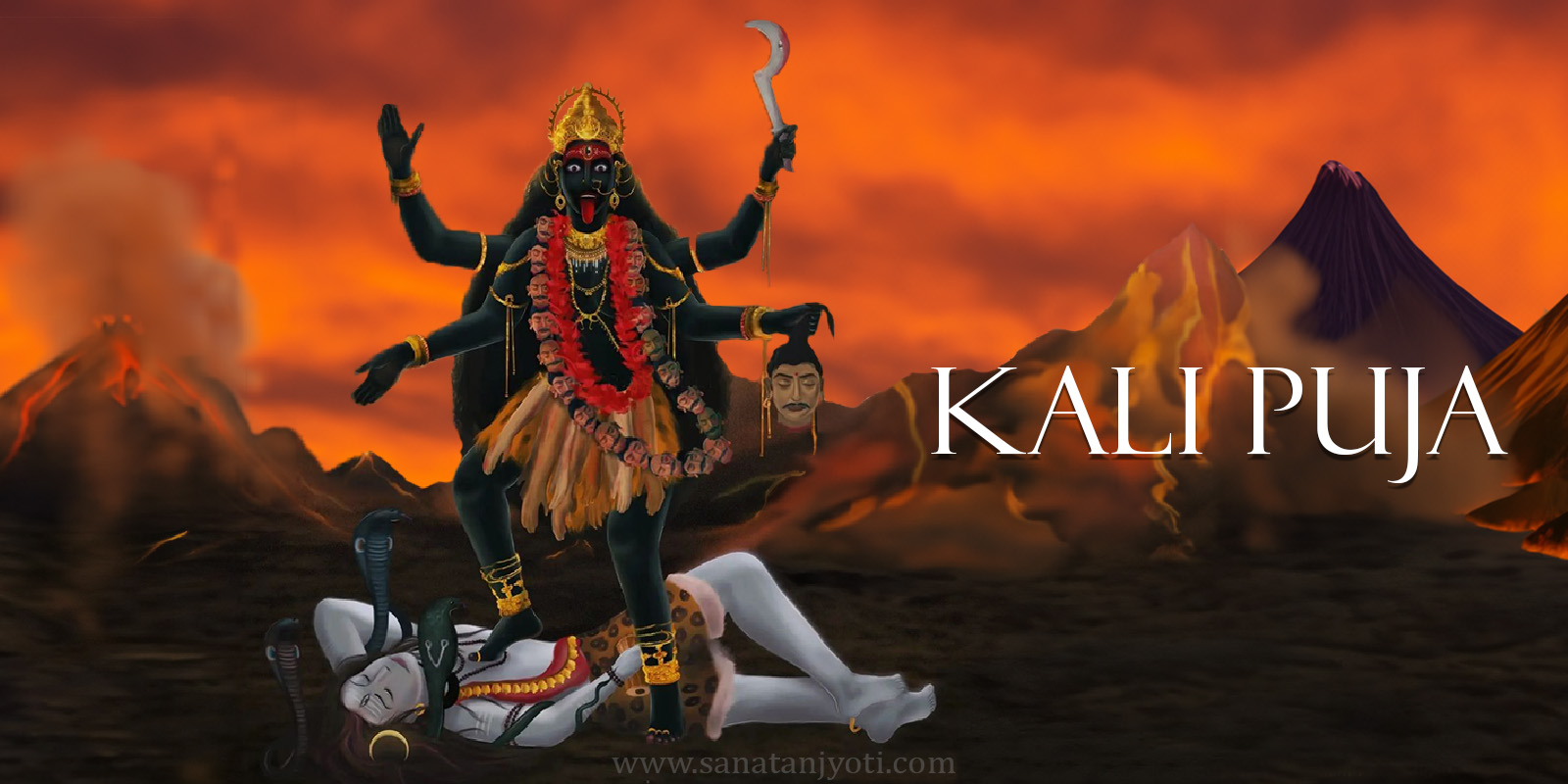
Maa Kali is worshipped as one of the most powerful and fierce manifestations of Shakti. Her form is considered a symbol of the destruction of ignorance, evil and demonic forces. For devotees, this form of Goddess is not merely associated with fear, but also represents strength, courage, protection and victory over negativity.
The fierce form of Maa Kali and her symbolic association with Lord Shiva are particularly well known. In religious traditions, her form is understood through stories associated with the Goddess’s immense power and the circumstances that ultimately bring that power under control.
Why Did Maa Kali Take a Fierce Form?
Different religious traditions contain various stories associated with the manifestation of Maa Kali. A famous story in the Devi Mahatmya describes the demon Raktabeej. According to the belief, every drop of Raktabeej’s blood that fell to the ground gave rise to another demon.
During the battle, Goddess Kali prevented Raktabeej’s blood from falling to the ground and defeated him. In this way, the Goddess brought an end to the demon’s growing power and freed the gods from fear.
Other well-known stories associated with Maa Kali also describe the killing of Chanda and Munda. In these stories, the fierce form of the Goddess is associated with the destruction of evil and demonic forces.
Important: It is not correct to directly identify Maa Kali as the seventh form of Navdurga. The seventh form of Navdurga is Maa Kalaratri. Maa Kali and Maa Kalaratri are both associated with fierce forms of the Goddess, but they have distinct identities in religious traditions.
Where Is Kali Puja Celebrated?
Kali Puja is particularly popular in West Bengal. It is also observed in Tripura, Assam, Odisha, Jharkhand and other parts of India, where various religious traditions associated with Maa Kali and Kali Puja can be seen.
On the occasion of Kali Puja, special events are organised at temples and Puja pandals. In many places, grand idols of the Goddess are installed, followed by special Puja, Aarti and religious rituals during the Amavasya night.
Along with regular worship, some traditions also involve Tantric Sadhana and special mantras during Kali Puja. Tantric Sadhana is different from regular household worship, and it is traditionally considered important to perform such practices under the guidance of a qualified Guru or Acharya.
Kali Puja Vidhi
The Puja Vidhi for Maa Kali may differ according to different traditions and regions. For a general household, Puja, the following steps can be followed:
1. First, clean the Puja area and place a picture or idol of Maa Kali.
2. Light a lamp at the Puja place and meditate on the Goddess.
3. Keep red flowers, hibiscus, incense, a lamp, Akshat, Sindoor, fruits, sweets, coconut and other Puja Samagri.
4. Offer flowers and other Puja materials to Maa Kali according to your tradition.
5. Offer Bhog to the Goddess according to your Admiration and family tradition.
6. Chant the mantra of Maa Kali and perform the Goddess’s Aarti.
7. At the end of the Puja, pray for the happiness, peace, protection and well-being of the family.
8. After completing the Puja, distribute Prasad among family members and other devotees.
The Puja Samagri and Puja Vidhi for Kali Puja may vary according to local and family traditions. Therefore, for any specific ritual, it is considered appropriate to follow your family tradition or the guidance of a qualified Acharya.
Mantra for Maa Kali Puja
Different mantras are used in the worship of Maa Kali according to different traditions and schools of worship. The following mantra is commonly chanted during Devi worship:
Om Aim Hreem Kleem Chamundayai Vichche.
The mantra should be chanted with Admiration and proper pronunciation. If you are undertaking a specific Tantric Sadhana or ritual Sankalp, it is considered appropriate to perform the practice only under the guidance of a qualified Guru or Acharya.
What Bhog Should Be Offered to Maa Kali During Kali Puja?
The tradition of offering Bhog during Kali Puja may vary according to regional and family religious traditions. In many places, Khichdi, rice, dal, vegetables, sweets and other traditional Prasad are offered to the Goddess.
Bhog should always be offered to Maa Kali according to your family and local worship traditions. Devotees who follow the tradition of offering Sattvic Bhog may prepare Prasad according to their beliefs.
What Is the Significance of the Kali Puja Night?
Kali Puja is closely associated with the Amavasya night. On this day, the Goddess is worshipped at night, and the Nishita Kaal is considered particularly significant.
This night-time worship is associated with the form of the Goddess that represents the destruction of darkness, fear and negative forces. For this reason, lamps, mantra chanting, meditation and worship of the Goddess hold a special place in Kali Puja.
Religious Significance of Maa Kali Puja
According to religious beliefs, worshipping Maa Kali is associated with developing courage and inner strength and seeking protection from negative forces. Devotees pray to the Goddess for strength to overcome fear, obstacles and difficult circumstances in life.
Maa Kali is also considered a symbol of the destruction of evil and demonic forces. Therefore, the worship of Maa Kali focuses on the ideas of strength, protection and victory over negativity.
In some religious traditions, worship of Maa Kali is also associated with spiritual remedies related to Shani, Rahu and Ketu. However, specific rituals for planetary peace may vary according to an individual’s birth chart and religious tradition.
What Should You Do on Kali Puja?
On the day of Kali Puja, devotees may perform the following activities according to their Admiration and family traditions:
• Clean the house and Puja area.
• Install an idol or picture of Maa Kali.
• Light a lamp and incense and meditate on the Goddess.
• Offer red hibiscus or other flowers.
• Chant the mantras of the Goddess.
• Offer Bhog according to your tradition.
• Perform Maa Kali’s Aarti and recite prayers.
• Donate food or other essential items to people in need.
• Pray for the happiness, peace and protection of the family.
What Is the Connection Between Kali Puja and Diwali?
Both Kali Puja and Diwali are associated with the Kartik Amavasya. In many regions, Lakshmi-Ganesha Puja is performed during Diwali, while in West Bengal and some other Eastern Indian traditions, Maa Kali is worshipped prominently on the night of the same Amavasya.
Thus, the same Amavasya occasion is associated with different religious traditions in different regions.
Message of Kali Puja
The form of Maa Kali is not considered merely a symbol of fierceness. It also conveys the message of the victory of Dharma over Adharma, positivity over negativity, and courage over fear.
Worshipping Maa Kali inspires devotees to overcome their inner fears, ego and negative thoughts and move forward on the path of truth and Dharma.
Kali Puja 2026 will be celebrated on Sunday, November 8. It is a major festival dedicated to the worship of Maa Kali during the night of Kartik Amavasya. During Kali Puja, devotees worship the fierce and powerful form of the Goddess and pray to her for blessings of protection, strength, courage and well-being.
The Puja Vidhi, mantras and Bhog associated with Kali Puja may vary according to different regions and traditions. Therefore, before performing any specific ritual or Tantric Sadhana, it is considered appropriate to seek guidance from a qualified Acharya or Guru.
Do you have any questions about Maa Kali Puja Vidhi, mantras, religious significance or any specific ritual?
Get a free consultation with our Acharya Ji today and find answers to your questions.