
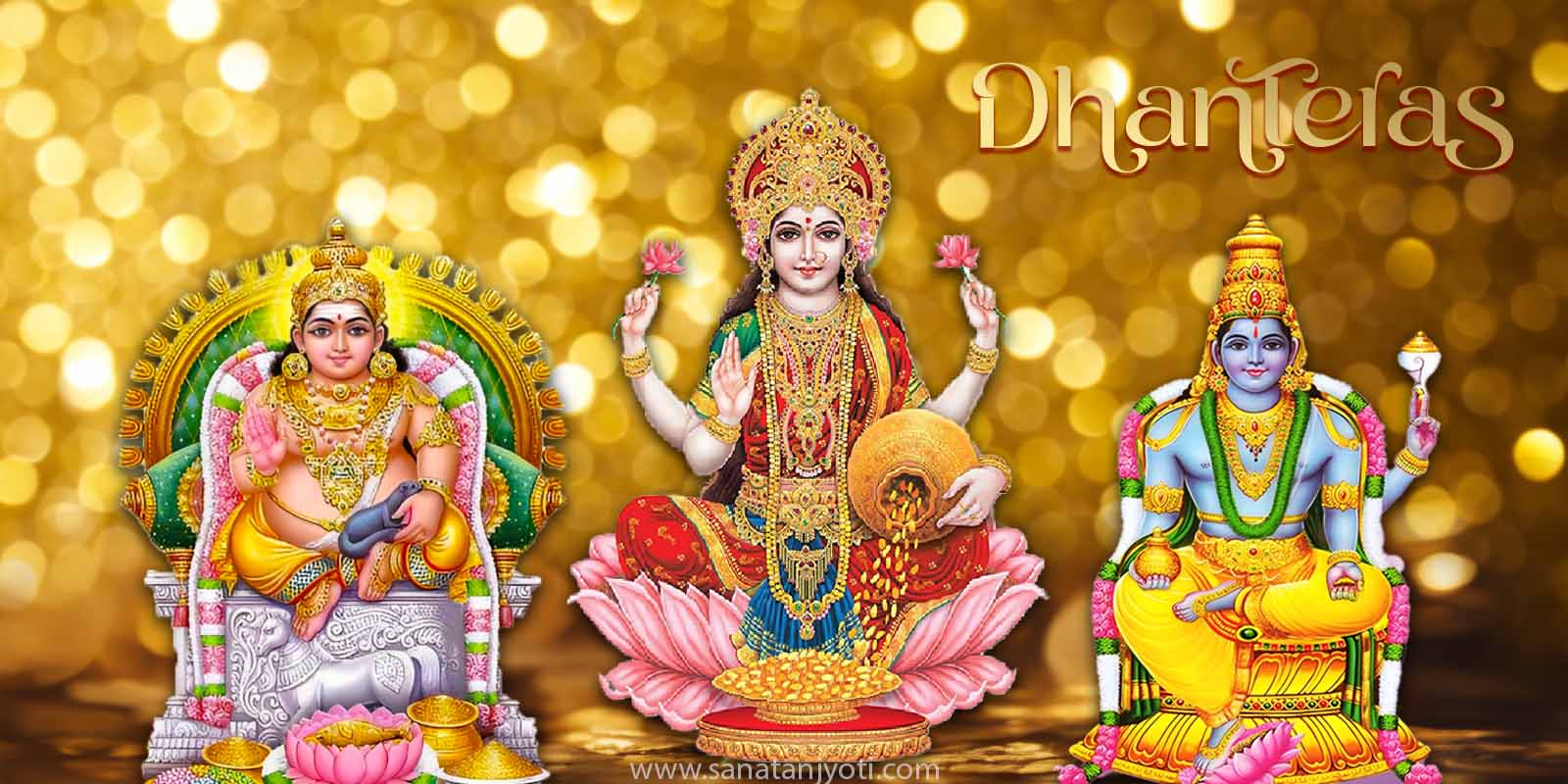
Dhanteras is mainly associated with the worship of Lord Dhanvantari, Goddess Lakshmi, and Lord Kuber. On this day, people perform puja with prayers for health, happiness, prosperity, and wealth. The tradition of buying new items, utensils, gold, silver, and other useful things according to one’s needs is also followed in many families on Dhanteras.
If you want to know when Dhanteras 2026 is, what the auspicious Dhanteras Muhurat is, whom to worship on this day, what is considered auspicious to buy, the Dhanteras Puja Vidhi, Puja Samagri, mantras, story, the significance of lighting lamps, and what to do and avoid on Dhanteras, this article provides complete information about Dhanteras.
When is Dhanteras 2026?
Dhanteras, also known as Dhantrayodashi, is one of the major festivals associated with Diwali. It is considered the beginning of the Diwali celebrations. This festival is observed on the Trayodashi Tithi of the Krishna Paksha of the Kartik month. In 2026, Dhanteras will be celebrated on Friday, November 6.
Dhanteras 2026 Date and Auspicious Muhurat
Dhanteras Festival Date: November 6, 2026, Friday
• Auspicious Muhurat for Dhanteras Puja (Vrishabha Lagna): 07:01 P.M to 08:57 P.M
• Trayodashi Tithi Begins: November 6, 2026, at 10:33 A.M
• Trayodashi Tithi Ends: November 7, 2026, at 10:49 A.M
It is important to know the auspicious time according to your location for Puja, shopping, and other religious activities on Dhanteras. For the exact local Muhurat: -It is advisable to select your location and check the Panchang.
Why is Dhanteras Celebrated?
According to religious beliefs, Dhanteras is associated with the appearance of Lord Dhanvantari during the Samudra Manthan. It is believed that Lord Dhanvantari appeared during the churning of the ocean carrying a pot of Amrit. This is why Dhanteras is also associated with health, Ayurveda, and well-being.
Lord Dhanvantari is regarded as the physician of the Devas. Therefore, there is a tradition of worshipping him on this day and praying for good health and well-being.
Dhanteras is not associated only with health but also with wealth and prosperity. For this reason, many families and business establishments also worship Goddess Lakshmi and Lord Kuber on this day.
Which Gods and Goddesses are Worshipped on Dhanteras?
Puja traditions on Dhanteras may differ among families and regions. In general, Lord Dhanvantari, Goddess Lakshmi, and Lord Kuber are considered especially important for worship on this day.
Worship of Lord Dhanvantari
Lord Dhanvantari is regarded as the deity associated with Ayurveda and medicine. On Dhanteras, devotees worship him and pray for health, well-being, and long life.
Worship of Goddess Lakshmi
Goddess Lakshmi is regarded as the Goddess of wealth, prosperity, and abundance. On Dhanteras, devotees worship Goddess Lakshmi and pray for happiness, prosperity, and auspiciousness in the home.
If you want to know more about Vedic Puja for Goddess Lakshmi on Dhanteras and the related religious rituals, you can, according to your needs: -Receive free guidance from our experienced Vedic Acharyas.
Worship of Lord Kuber
Lord Kuber is regarded as the deity associated with wealth and prosperity. On Dhanteras, Lord Kuber is especially worshipped with prayers for wealth and financial prosperity.
Dhanteras 2026 Puja Vidhi
On Dhanteras, there is a tradition of worshipping Lord Dhanvantari, Goddess Lakshmi, Lord Kuber, and Lord Ganesha. Before the Puja, the home and Puja area should be cleaned, and the preparations should be made with devotion. The Puja Vidhi may vary according to family and regional traditions.
1. Clean and Decorate the Home
Clean your home thoroughly before Dhanteras. Pay special attention to the Puja area, main entrance, kitchen, and the place where money or valuables are kept.
You can make a Rangoli at the main entrance and decorate it with lamps. In religious traditions, a clean and beautiful environment is associated with auspiciousness and positivity.
2. Prepare the Puja Area
Spread a red or yellow cloth on a clean platform. Then place the idols or pictures of Lord Dhanvantari, Goddess Lakshmi, Lord Kuber, and Lord Ganesha.
Arrange all the required Puja Samagri in advance so that you do not face any difficulty during the Puja.
3. Perform the Puja at the Auspicious Time
Dhanteras Puja is generally performed during the Pradosh Kaal. However, the exact auspicious Puja Muhurat may vary according to location, so it is advisable to check the Puja time according to the Panchang for your city.
4. Light the Lamps
Light a ghee or oil lamp at the Puja area. According to family traditions, lamps may also be placed at the main entrance, Puja area, kitchen, place where money is kept, and near the Tulsi plant.
The tradition of performing Yam Deepdan on the evening of Dhanteras is also followed in many families.
5. Worship Lord Dhanvantari, Goddess Lakshmi, Lord Kuber, and Lord Ganesha
Begin the Puja by remembering Lord Ganesha. Then worship Lord Dhanvantari, Goddess Lakshmi, and Lord Kuber with devotion.
According to your tradition, the following items may be offered during the Puja:
• Roli and Akshat
• Chandan
• Flowers and garlands
• Incense and lamp
• Gangajal or pure water
• Fruits
• Sweets
• Naivedya
After this, offer Bhog to the deities according to your devotion and family tradition.
6. Bhog on Dhanteras
Different offerings may be made to different deities according to tradition. For example:
• Lord Dhanvantari: Milk, ghee, fruits, or Satvik Naivedya
• Goddess Lakshmi: Kheer, sweets, fruits, etc.
• Lord Kuber: White or Satvik sweets
• Lord Ganesha: Durva, Modak, or Laddoo
It is advisable to follow local and family traditions when preparing Bhog.
7. Chant Mantras and Perform Aarti
During the Puja, devotees may chant mantras dedicated to Lord Dhanvantari, Goddess Lakshmi, Lord Kuber, and Lord Ganesha.
After this, perform Aarti with all family members and pray to God for health, happiness, peace, prosperity, and the well-being of the family.
8. Donate and Perform Acts of Charity
Donating according to one’s faith and ability is considered auspicious on Dhanteras. You can donate food, clothes, sweets, lamps, or other useful items to people in need.
The purpose of donation should be to express a spirit of service and charity.
Importance of Buying a Broom on Dhanteras
Buying a new broom on Dhanteras is a tradition followed by many families. In religious beliefs, a broom is associated with cleanliness in the home, while cleanliness is considered a symbol of auspiciousness.
If this is a family tradition, the new broom may be offered turmeric, Kumkum, and Akshat during the Puja and then kept in the home. In some places, there is also a tradition of removing the old broom from the house after this occasion.
Along with a broom, the tradition of buying gold, silver, metal utensils, jewellery, and other useful items according to one’s needs is also followed on Dhanteras. It is advisable to make purchases according to your needs and financial capacity.
What is Considered Auspicious to Buy on Dhanteras?
Dhanteras is considered an important occasion for shopping. According to religious traditions, bringing a new item into the home on this day is considered auspicious.
According to their needs and budget, people may buy the following items:
• Gold and silver
• Silver coins
• Copper or other metal utensils
• Jewellery
• Useful household items
• Vehicles or other necessary items
Traditions about what should be purchased may vary among different families and regions.
Tradition of Buying Coriander on Dhanteras
The tradition of buying whole coriander seeds and bringing them home on Dhanteras is also followed in some regions. It is considered a folk belief associated with wealth and prosperity.
Some families offer coriander during the Puja and later keep it in the place where food grains or wealth are stored. This tradition may vary according to region and family.
Importance of Yam Deepdan on Dhanteras
The tradition of lighting a lamp in the name of Yamraj on the evening of Dhanteras is known as Yam Deepdan. In many families, a lamp is lit outside the main entrance of the house, facing the south direction, with prayers to Yamraj for the happiness, peace, and safety of the family.
According to religious belief, Yam Deepdan is associated with freedom from the fear of untimely death and prayers for the well-being of the family.
Lord Dhanvantari Mantra
Devotees may chant the following mantra while remembering Lord Dhanvantari on Dhanteras:
Om Dhanvantaraye Namah॥
Devotees may worship Lord Dhanvantari and chant this mantra according to their tradition and faith. Lord Dhanvantari is regarded as the deity associated with Ayurveda and well-being.
Kuber Mantra on Dhanteras
Lord Kuber is also worshipped on Dhanteras with prayers for wealth and prosperity. According to tradition, the following mantra may be chanted:
Om Shreem Hreem Kleem Shreem Kleem Vitteshwaraya Namah॥
Devotion and concentration are considered important while chanting the mantra.
Spiritual Significance of Dhanteras
From a religious perspective, Dhanteras inspires us to maintain not only external cleanliness but also positive thoughts and good conduct in life.
• Cleaning the home is considered a symbol of cleanliness and auspiciousness.
• A lamp is considered a symbol of light and positivity.
• Worship of Lord Dhanvantari is associated with prayers for health and well-being.
• Worship of Goddess Lakshmi is associated with the feeling of prosperity and auspiciousness.
• Yam Deepdan is a religious tradition associated with safety and prayers for well-being.
• Charity and acts of service encourage a spirit of service and compassion.
What Benefits are Believed to Come from Worshipping on Dhanteras?
According to religious beliefs, performing Puja, lighting lamps, and giving donations with devotion on Dhanteras is associated with auspiciousness and positivity in life. The main religious activities performed on this day are associated with the following intentions:
Health and Well-being: Lord Dhanvantari is worshipped with prayers for good health and well-being.
Wealth and Prosperity: Goddess Lakshmi and Lord Kuber are worshipped with prayers for financial prosperity, happiness, and peace.
Good Fortune and Auspiciousness: Lighting lamps and performing religious Puja are associated with creating an auspicious atmosphere at home.
Family Safety: Yam Deepdan is associated with prayers for the well-being of the family and freedom from the fear of untimely death.
Spiritual Peace: Activities such as Puja, mantra chanting, charity, and service can encourage a positive and devotional way of life.
What Should You Do on Dhanteras?
According to your family tradition and ability, you may do the following on Dhanteras:
• Clean the home and Puja area.
• Worship Lord Dhanvantari, Goddess Lakshmi, and Lord Kuber.
• Buy new items according to your needs.
• Light lamps in the evening according to your faith.
• Pray for health, happiness, and prosperity.
• Help people in need and perform acts of charity.
• Celebrate Dhanteras with your family.
What Should You Avoid on Dhanteras?
Dhanteras is traditionally celebrated with devotion and a positive spirit. Therefore, it is considered appropriate to avoid unnecessary arguments, anger, and harsh behaviour on this day.
Maintain cleanliness and devotion during the Puja and avoid spending beyond your financial capacity. Religious activities should be performed according to your family traditions and beliefs.
Story of Lord Dhanvantari's Appearance on Dhanteras
One of the main religious beliefs associated with Dhanteras is connected with the Samudra Manthan. According to religious tradition, Lord Dhanvantari appeared during the churning of the ocean carrying a pot of Amrit.
Lord Dhanvantari is regarded as the physician of the Devas and the deity associated with Ayurveda. Therefore, devotees worship him on Dhanteras and pray for good health and well-being.
This religious connection gives Dhanteras a broader significance beyond wealth and shopping, linking the festival with health, prosperity, and auspiciousness.
Story of Goddess Lakshmi Associated with Dhanteras
Many folk and religious stories related to Dhanteras and Diwali are popular in different regions. One such story is associated with Goddess Lakshmi and Lord Vishnu. It describes how prosperity came to a farmer's home when Goddess Lakshmi stayed there.
Once, Lord Vishnu was going to travel to Earth. Goddess Lakshmi asked to accompany him. When Lord Vishnu initially refused, she continued to insist. Lord Vishnu then said that she could come with him if she followed his instructions.
Goddess Lakshmi agreed and accompanied Lord Vishnu to Earth. Lord Vishnu told her, "I am going towards the south. Stay here until I return, but do not come towards the south." After saying this, Lord Vishnu went towards the south. Goddess Lakshmi could not understand the reason behind his instruction and, despite being asked not to, followed him towards the south.
After walking some distance, she came across a mustard field. She was fascinated by the beautiful greenery and decorated herself with mustard flowers before continuing her journey. Further ahead, she found a sugarcane field. Goddess Lakshmi ate some sugarcane and then continued walking.
At that moment, Lord Vishnu arrived there and became very angry with Goddess Lakshmi for disobeying his instructions. He told her that she had taken the farmer's crop without permission.
As a punishment, Lord Vishnu told her that she would have to stay at the farmer's house and serve there for 12 years. After saying this, Lord Vishnu returned to the Ksheer Sagar.
Goddess Lakshmi took the form of a poor woman and went to the home of the farmer whose sugarcane she had eaten. She asked the farmer if she could stay in his home and serve as a maid. The farmer agreed and allowed Goddess Lakshmi to stay in his house.
As soon as Goddess Lakshmi entered the farmer's home, his prosperity began to increase rapidly. The farmer became very wealthy.
After 12 years had passed, Lord Vishnu came to the farmer's house to take Goddess Lakshmi back. However, the farmer refused to let her go. He thought that his prosperity had come only because the Goddess had entered his home. He feared that he would become poor again if she left.
Goddess Lakshmi then told the farmer and his wife, "Tomorrow is Dhanteras. Worship my idol according to the proper rituals and fill a Kalash with money and keep it there. I will reside in that Kalash."
The farmer followed Goddess Lakshmi's instructions. As a result, his prosperity did not decrease. Instead, he became even wealthier.
According to this story, those who listen to the glory of Goddess Lakshmi on Dhanteras are believed to receive wealth and experience happiness.
The main message of this story is connected with the importance of good conduct, service, respect, and prosperity. Listening to such stories during Dhanteras and Diwali is considered auspicious in religious traditions.
Dhanteras and Diwali: What is the Connection?
Dhanteras is generally considered the first major festival of the five-day Diwali celebration. It is followed by Naraka Chaturdashi, Diwali, Govardhan Puja, and Bhai Dooj.
In 2026, Dhanteras will be observed on November 6, Chhoti Diwali on November 7, Diwali on November 8, Govardhan Puja on November 10, and Bhai Dooj on November 11.
Thus, Dhanteras is considered the beginning of the Diwali celebrations.
To learn about the complete five-day Diwali festival from Dhanteras to Bhai Dooj, including the important dates and Puja Muhurats, read our special article: -Significance of the Five Days of Diwali 2026
What Should You Do for Health and Prosperity on Dhanteras?
On Dhanteras, devotees worship Lord Dhanvantari and pray for good health and well-being. Goddess Lakshmi and Lord Kuber are worshipped with prayers for wealth and prosperity.
Along with this, activities such as cleaning the home, lighting lamps, donating to others, and helping people in need can also be performed according to one’s faith and ability.
According to religious beliefs, these activities are performed with the intention of seeking health, auspiciousness, balance, and prosperity in life.
Frequently Asked Questions About Dhanteras 2026
1. When is Dhanteras in 2026?
Dhanteras will be celebrated on Friday, November 6, 2026.
2. Who is worshipped on Dhanteras?
The main tradition on Dhanteras is to worship Lord Dhanvantari, Goddess Lakshmi, and Lord Kuber.
3. What is considered auspicious to buy on Dhanteras?
According to tradition, people buy gold, silver, utensils, jewellery, and other useful items according to their needs and financial capacity.
4. Why is Lord Dhanvantari worshipped on Dhanteras?
According to religious belief, Lord Dhanvantari appeared during the Samudra Manthan carrying a pot of Amrit. He is regarded as the deity associated with Ayurveda and medicine. Therefore, devotees worship him on Dhanteras and pray for health and well-being.
5. When does the Trayodashi Tithi begin on Dhanteras 2026?
The Trayodashi Tithi for Dhanteras 2026 will begin at 10:33 A.M. on November 6, 2026.
6. When does the Trayodashi Tithi end on Dhanteras 2026?
The Trayodashi Tithi will continue until 10:49 A.M. on November 7, 2026.
7. What is the auspicious Puja Muhurat for Dhanteras 2026?
The Vrishabha Lagna Puja Muhurat for Dhanteras 2026 is from 07:01 P.M. to 08:57 P.M.
8. Why are lamps lit on Dhanteras?
The tradition of lighting lamps on Dhanteras is followed in many regions. A lamp is considered a symbol of light, auspiciousness, and positivity.
Dhanteras is an important festival associated with Lord Dhanvantari, Goddess Lakshmi, Lord Kuber, health, prosperity, and auspiciousness. Devotees celebrate the occasion according to their family traditions by performing Puja, lighting lamps, buying useful items, giving donations, and praying for the well-being of their families.
On Dhanteras 2026, celebrated on November 6, devotees can follow their family traditions and observe the festival with devotion, cleanliness, and a positive spirit.