Arudra Darshan is a major religious festival dedicated to Lord Shiva in his Nataraja form. It is celebrated with great devotion and reverence in South India. On this day, devotees worship Lord Shiva's divine dance, which is considered a symbol of the cycle of creation, transformation and destruction.
In this article, you will find important information about Arudra Darshan 2026, including its date, auspicious Muhurat, religious significance, Puja Vidhi, fasting rules, mythological story and special Prasad.
When Is Arudra Darshan 2026?
Arudra Darshan 2026 will be observed on Thursday, December 24. The festival is dedicated to Lord Shiva in his Nataraja form and his divine dance. In South India, particularly in Tamil Nadu, special worship, Abhishekam and Darshan of Lord Nataraja are performed on this occasion.
In Tamil tradition, Arudra Darshan is also known as Thiruvathirai or Arudra Darshanam. The festival is associated with the Ardra Nakshatra during the Tamil month of Margazhi. On this day, devotees worship Lord Shiva in his Nataraja form and pray for happiness, peace, spiritual growth and the well-being of their families.
Key Details About Arudra Darshan 2026
• Festival: Arudra Darshan
• Date: Thursday, December 24, 2026
• Presiding Deity: Lord Shiva in his Nataraja form
• Nakshatra: Ardra, known as Thiruvathirai in Tamil tradition
• Main Place of Celebration: Chidambaram Nataraja Temple, Tamil Nadu
• Major Traditions: Abhishekam of Lord Nataraja, special Puja, Darshan, devotional singing and religious rituals
What Is Arudra Darshan?
Arudra Darshan is a major Shaivite religious festival celebrated in South India and dedicated to Lord Shiva in his Nataraja form. Nataraja represents the divine form of Lord Shiva performing the cosmic dance. This dance is regarded as a symbol of the cycle of creation, preservation and transformation.
The word Arudra is associated with the Ardra Nakshatra, while Darshan means seeing or having a sacred vision of the worshipped deity. In Tamil tradition, this festival is also known as Thiruvathirai. Special worship of Lord Nataraja takes place during the Ardra Nakshatra in the month of Margazhi.
On this day, Shiva temples hold religious ceremonies such as Abhishekam, lighting of lamps, Mantra chanting and devotional singing. The Nataraja Temple in Chidambaram is one of the main centres of this festival, where Lord Shiva is worshipped in his Nataraja form.
Religious Significance of Arudra Darshan
The significance of Arudra Darshan is associated with Lord Shiva's Nataraja form and his divine dance. According to religious beliefs, Lord Shiva's dance is not merely an artistic expression but a symbol of the cosmic cycle of creation, transformation and destruction.
The Nataraja idol conveys the movement of life, transformation and spiritual awareness through Lord Shiva's dance. Devotees seek Darshan of this divine form, worship Lord Shiva and pray for freedom from ignorance, negativity and ego.
Like Arudra Darshan, Maha Shivaratri is another major festival dedicated to Lord Shiva and is considered especially significant from a religious and spiritual perspective.
The major aspects of Arudra Darshan's religious significance include:
• Worship of Lord Nataraja: Special importance is given to the Darshan and worship of Lord Shiva in his dancing form.
• Spiritual Practice: Devotees seek spiritual peace through Mantra chanting, Abhishekam and prayers to Lord Shiva.
• Symbol of Creation and Transformation: Nataraja's divine dance represents the continuous process of change and the cosmic cycle of creation.
• Devotion and Surrender: Devotees express their faith in Lord Shiva through fasting, Puja and religious rituals according to their traditions.
Arudra Darshan also conveys the message that change is a natural part of life and that spiritual practice can help individuals develop inner balance and peace.
Where Is Arudra Darshan Celebrated?
Arudra Darshan is primarily celebrated in South India, with particular significance in Tamil Nadu. Religious ceremonies are also organised on this occasion in Singapore, Malaysia, Sri Lanka and other countries through South Indian communities and the Indian diaspora.
Significance of the Chidambaram Nataraja Temple
The Nataraja Temple in Chidambaram, Tamil Nadu, is considered one of the major religious centres of Arudra Darshan. The temple is famous for its traditions associated with Lord Shiva's Nataraja form and his Ananda Tandava, or divine dance of bliss.
On Arudra Darshan, special Puja, Abhishekam and Darshan of Lord Nataraja are organised at the temple. Devotees travel from faraway places to participate in the celebrations and worship Lord Shiva.
In the religious traditions of the Chidambaram Temple, Nataraja's dance represents spiritual awareness and cosmic order. Therefore, the rituals performed here during Arudra Darshan hold special religious significance.
Traditions of Arudra Darshan in South India
Apart from Tamil Nadu, traditions associated with Thiruvathira are also prevalent in Kerala. The forms of worship, fasting, traditional food, devotional singing and cultural programmes may vary across regions.
Many Shiva temples perform special Abhishekam and Aarti on this occasion. In some places, the idol of Lord Nataraja is also taken out in a ceremonial procession. These celebrations aim to express devotion to Lord Shiva and preserve religious traditions.
Arudra Darshan Puja Vidhi
On Arudra Darshan, devotees worship Lord Shiva according to their family and regional traditions. Many temples in South India perform special Abhishekam and religious ceremonies on this occasion. Devotees can also worship Lord Shiva at home with devotion.
The general Puja Vidhi for Arudra Darshan is as follows:
1. Take a Bath and Make a Puja Sankalp
Take a bath in the morning and wear clean clothes. Clean the Puja area and remember Lord Shiva while making a Sankalp to perform worship on the occasion of Arudra Darshan.
2. Place an Idol or Picture of Lord Shiva
Place an idol or picture of Lord Shiva or Nataraja in the Puja area. Light a lamp and prepare the necessary Puja Samagri.
3. Perform Abhishekam of Lord Shiva
Offer clean water to the Shivling according to your tradition. If possible, and if it is customary in your method of worship, milk or other Abhishekam materials may also be used. Meditate on Lord Shiva while performing Abhishekam.
If you wish to learn about organising a Rudrabhishek ritual and its procedure for worshipping Lord Shiva, you can find more information about the Rudrabhishek Anushthan.
4. Offer Flowers and Bilva Leaves
Offer flowers and Bilva leaves to Lord Shiva according to your tradition. Keep the Puja Samagri clean and worship Lord Shiva with devotion.
5. Chant Mantras and Recite Shiva Prayers
You may chant the Mantra “Om Namah Shivaya” during the Puja. Recite Shiva Stotras or other commonly used prayers according to your faith.
6. Remember Lord Nataraja
Arudra Darshan is dedicated to Lord Shiva in his Nataraja form. Remember his divine dance on this occasion and pray for knowledge, peace and positivity in your life.
7. Perform Aarti and Distribute Prasad
Conclude the Puja by performing Lord Shiva's Aarti. Offer fruits, sweets or other Prasad according to your tradition and distribute it among family members.
This is a general Puja Vidhi. The procedures for special rituals performed in temples may differ. If you are planning a specific Vedic ritual or an elaborate Abhishekam, seek guidance from a qualified priest.
Fasting and Rituals on Arudra Darshan
Many devotees observe a fast on Arudra Darshan to express their devotion to Lord Shiva. Fasting practices may vary according to regional customs, family traditions and individual health conditions.
Some devotees observe a full-day fast, while others perform Puja alongside fruit-based meals or regular Sattvic food. The purpose of fasting is associated with devotion, self-discipline and spiritual practice. The same type of fast is not compulsory for everyone.
Pradosh Vrat is another important observance associated with the worship of Lord Shiva.
The major rituals performed on this day include:
• Abhishekam of Lord Shiva
• Special worship of Lord Nataraja
• Chanting the “Om Namah Shivaya” Mantra
• Shiva Stotra recitation and devotional singing
• Darshan and Aarti at a temple
• Charity and acts of service according to one's means
If you have any health concerns, perform Puja according to your condition instead of observing a strict fast. Both devotion and health should be considered during religious practices.
Prasad on Arudra Darshan and Thiruvathirai Kali
Special Prasad and traditional food are important aspects of the South Indian traditions associated with Arudra Darshan. In Tamil tradition, a sweet dish called Thiruvathirai Kali is associated with the Thiruvathirai festival. It is generally prepared using rice, jaggery and other ingredients. Some families also serve it with a dish made from special vegetables.
The significance of this Prasad is connected with regional customs and family traditions. The method of preparing Prasad at temples and homes may vary according to local practices during Arudra Darshan.
If you wish to prepare Thiruvathirai Kali, you may follow the method traditionally practised in your family or region. Maintain cleanliness and use good-quality ingredients while preparing the Prasad.
Mythological Story of Arudra Darshan
The mythological traditions associated with Arudra Darshan place special emphasis on Lord Shiva's Nataraja form and his divine dance. According to the religious traditions of Chidambaram, Lord Shiva's Ananda Tandava is also associated with Sage Patanjali and Sage Vyaghrapada.
The Story of Lord Shiva's Nataraja Form
According to a popular religious belief, Sage Patanjali and Sage Vyaghrapada were devoted followers of Lord Shiva. Both sages wished to witness the divine form of Lord Shiva and remained deeply engaged in his worship.
According to the story, pleased with their penance and devotion, Lord Shiva performed his divine dance in his Nataraja form at Chidambaram. This Ananda Tandava is regarded as a symbol of the movement of creation, spiritual awareness and cosmic balance.
Because of this religious tradition, the Nataraja Temple in Chidambaram is counted among the major pilgrimage sites associated with Lord Shiva's divine dance. On Arudra Darshan, devotees seek Darshan of Lord Nataraja, worship him and pray for spiritual growth.
Different versions of this story may contain variations in detail. Therefore, it is appropriate to understand it as part of the established Shaivite religious traditions associated with Chidambaram.
Connection Between Arudra Darshan and Lord Nataraja's Dance
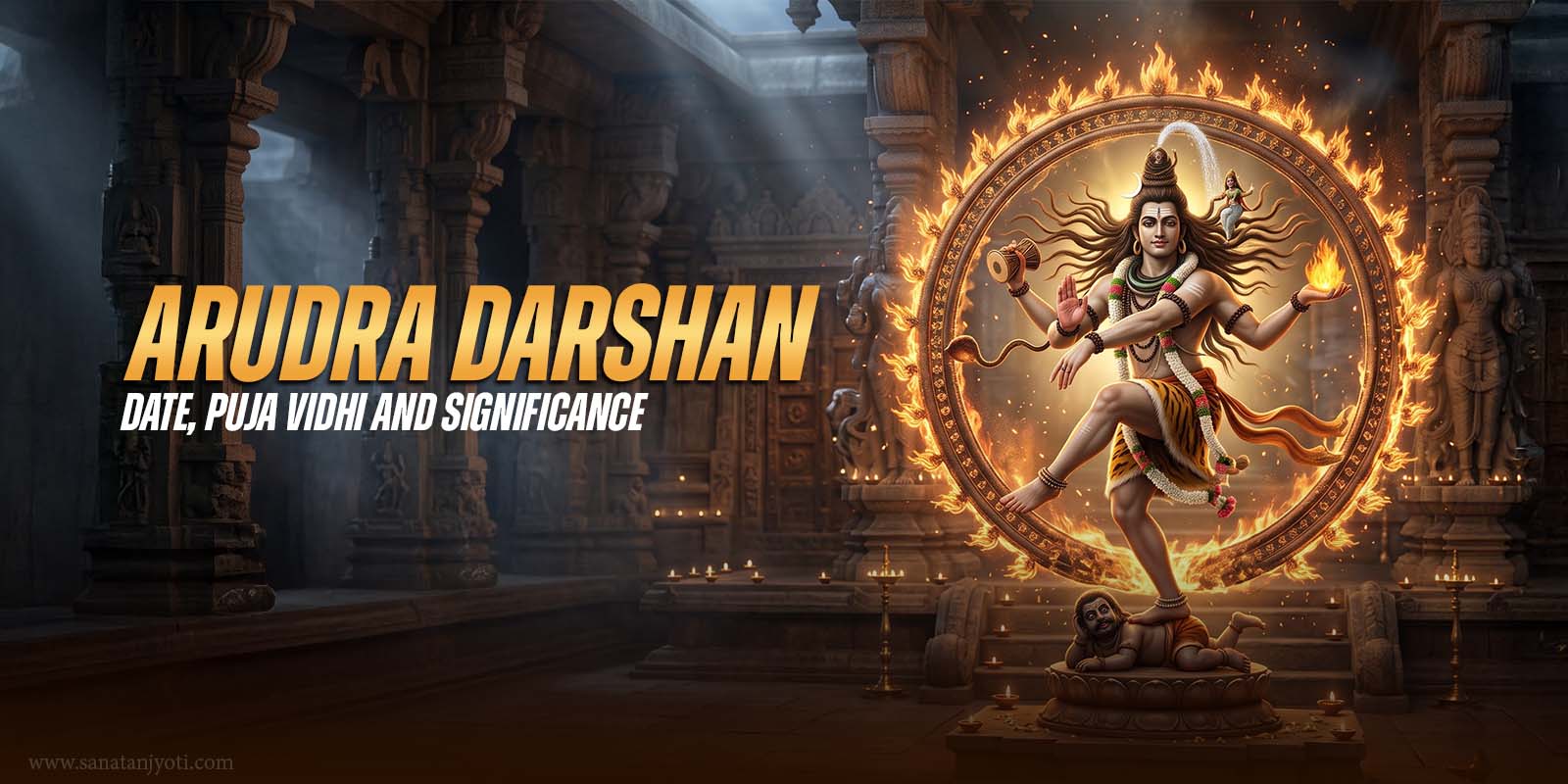
Lord Shiva's Nataraja form holds a special place in Hindu religious and artistic traditions. In the Nataraja idol, Lord Shiva is depicted performing a divine dance. This form is regarded as a symbol of the cosmic cycle of creation, transformation and destruction.
The ring of fire surrounding Nataraja is considered a symbol of cosmic energy and transformation. His dancing posture represents the movement and balance of life. The other symbols in the idol are interpreted differently across various religious and philosophical traditions.
On Arudra Darshan, devotees worship Lord Nataraja and remember his divine form. The festival inspires them to cultivate devotion, self-reflection and balance in life.
Frequently Asked Questions About Arudra Darshan 2026
1. When Is Arudra Darshan 2026?
Arudra Darshan 2026 will be observed on Thursday, December 24. It is a South Indian religious festival dedicated to Lord Shiva in his Nataraja form.
2. Which God Is Arudra Darshan Dedicated To?
Arudra Darshan is dedicated to Lord Shiva in his Nataraja form. On this day, devotees worship his divine dance and cosmic form.
3. What Is Another Name for Arudra Darshan?
In Tamil tradition, Arudra Darshan is also known as Thiruvathirai or Arudra Darshanam. The name and associated festival traditions may vary across regions.
4. What Is the Religious Significance of Arudra Darshan?
The festival is associated with Lord Shiva's Nataraja form and his Ananda Tandava. According to religious beliefs, his dance represents the cycle of creation, transformation and destruction.
5. Where Is Arudra Darshan Mainly Celebrated?
Arudra Darshan is primarily celebrated in Tamil Nadu and several other parts of South India. The Nataraja Temple in Chidambaram is one of the major centres of the festival.
6. How Should You Perform Puja on Arudra Darshan?
Devotees perform Abhishekam of Lord Shiva, offer flowers and Bilva leaves, chant Mantras and perform Aarti. The Puja Vidhi may vary according to family and regional traditions.
7. Which Mantra Should Be Chanted on Arudra Darshan?
Devotees may chant the “Om Namah Shivaya” Mantra to worship Lord Shiva. They may also recite Shiva Stotras according to their faith and method of worship.
8. Which Prasad Is Prepared on Arudra Darshan?
In Tamil tradition, a sweet dish called Thiruvathirai Kali is associated with this festival. It is prepared using rice, jaggery and other ingredients.
9. Is Fasting Compulsory on Arudra Darshan?
Fasting is not compulsory for everyone. Devotees may observe a fast or perform regular Puja according to their faith, family traditions and health conditions.
10. How Can You Find the Auspicious Muhurat for Arudra Darshan 2026?
The exact Puja timings for Arudra Darshan should be checked according to the local Panchang and temple traditions. Visit the SanatanJyoti Panchang to find the Tithi and auspicious timings for your city.
If you need guidance regarding Lord Shiva's Puja Vidhi, Abhishekam or a specific religious ritual, you can obtain information through SanatanJyoti's free consultation service.
On this auspicious occasion of Arudra Darshan, remember Lord Shiva in his Nataraja form and pray for peace, harmony and spiritual growth in your life.