
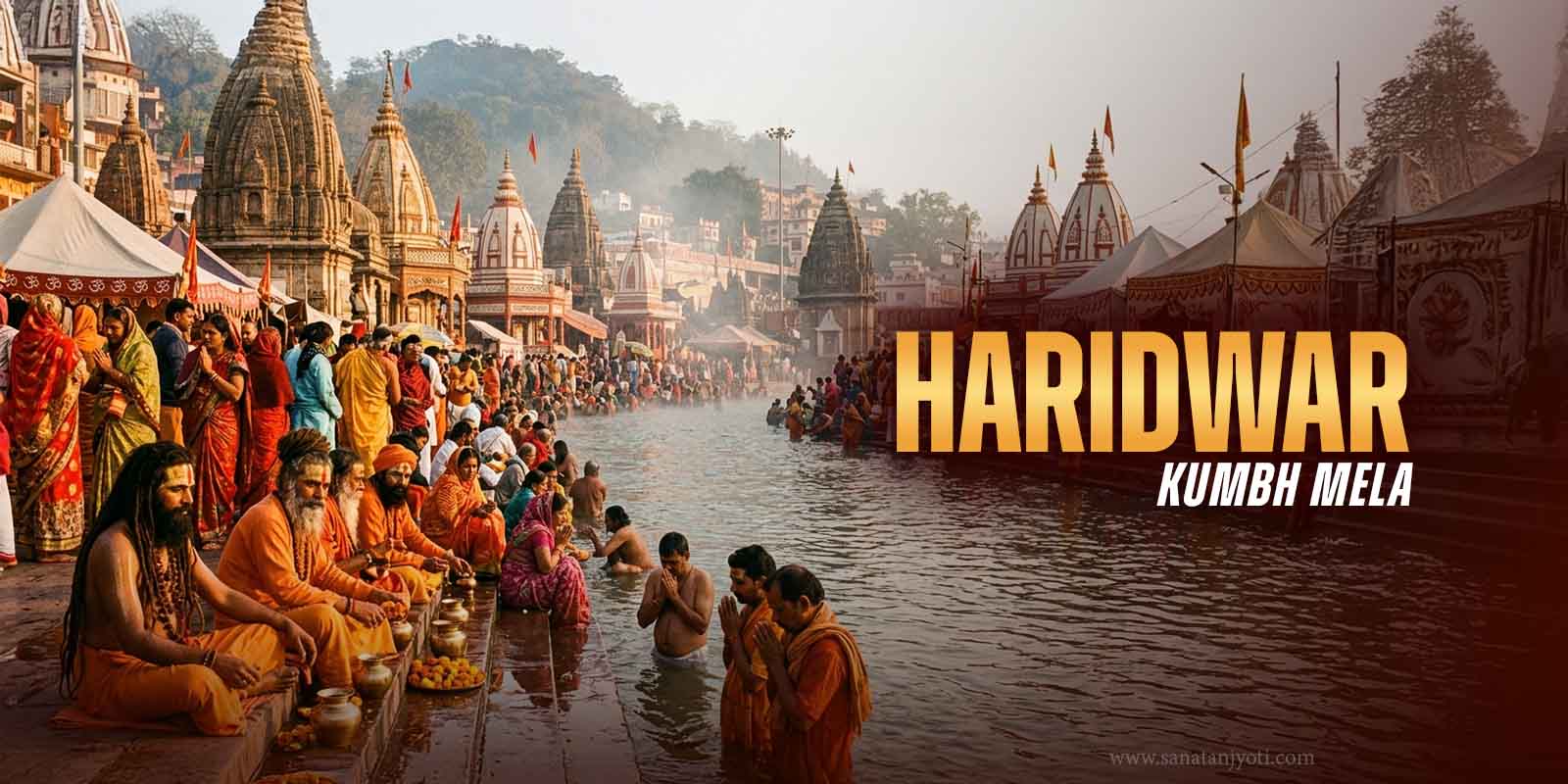
Haridwar Kumbh 2027 is one of the major religious gatherings in Sanatan Dharma. Held on the banks of the River Ganga in Haridwar, Uttarakhand, this religious fair is considered an important occasion for taking a holy dip in the Ganga, offering prayers, meeting saints and spiritual seekers, and engaging in spiritual practices. Devotees from different parts of the country visit Haridwar during this time to bathe in the sacred river, make donations, and perform religious rituals.
The tradition of the Kumbh Mela is associated with the mythological story of Samudra Manthan (the churning of the ocean), the pot of amrit (nectar of immortality), and specific astrological positions. During Haridwar Kumbh 2027, major bathing festivals will take place from Makar Sankranti to Chaitra Purnima. Read on to learn about the bathing dates, the religious significance of bathing in the Ganga, Kumbh traditions, and essential information for visiting Haridwar.
The main bathing date of Haridwar Kumbh 2027 is January 14, 2027, on Makar Sankranti. The event is scheduled to run from January to April 2027. Another major bathing day will fall on April 20, on Chaitra Purnima.
What Are the Different Types of Kumbh Mela?
The Kumbh Mela is mainly divided into three types based on religious traditions and the time between events.
1. Ardh Kumbh Mela: Ardh Kumbh is usually held every six years in Prayagraj and Haridwar. During this event, devotees bathe in holy rivers and take part in religious rituals.
2. Purna Kumbh Mela: Purna Kumbh is held about every 12 years in Prayagraj, Haridwar, Ujjain, and Nashik. Its timing depends on special planetary positions. The dates may differ for each location.
3. Maha Kumbh Mela: Maha Kumbh is mainly linked to the religious tradition of Prayagraj. It is associated with a cycle of 12 Purna Kumbh events, or about 144 years. This makes it a very important religious gathering.
When Is the Haridwar Kumbh Mela Held?
The Haridwar Kumbh Mela is linked to the special positions of the Sun and Jupiter in astrology. According to religious beliefs, a Purna Kumbh takes place in Haridwar when the Sun is in Aries and Jupiter is in Aquarius. The Purna Kumbh Mela is held about every 12 years.
Haridwar Kumbh 2027: A Sacred Gathering on the Banks of the Ganga
Haridwar is one of India's major pilgrimage sites, located in Uttarakhand. Here, the River Ganga leaves the Himalayan region and enters the plains. Har Ki Pauri is the city's most famous bathing ghat. According to religious belief, bathing in the Ganga here brings spiritual merit and peace of mind.
Haridwar Kumbh 2027 is scheduled to take place from January to April. Devotees from many parts of India are expected to visit during this period. Along with bathing in the Ganga, the event will include prayers, donations, religious talks, meetings with saints, and activities by the Akharas.
Large crowds gather at Har Ki Pauri and other ghats on the main bathing days. It is helpful to plan your trip in advance, keeping the bathing dates, place to stay, and local transport in mind.
Important Bathing Dates of Haridwar Kumbh 2027
Several important bathing festivals are scheduled from Makar Sankranti to Chaitra Purnima during Haridwar Kumbh 2027. Devotees bathe in the Ganga, offer prayers, and make donations on these days. The main dates listed are:
• January 14, 2027 — Makar Sankranti: Bathing in the Ganga and making donations are considered especially important on this day.
• February 6, 2027 — Mauni Amavasya: Devotees focus on silence, meditation, chanting, and holy bathing.
• February 11, 2027 — Basant Panchami: This festival is linked to knowledge, learning, and the arrival of spring.
• February 20, 2027 — Magha Purnima: Bathing in a holy river and making donations are important traditions on this day.
• March 6, 2027 — Maha Shivratri: This major festival is dedicated to Lord Shiva and is listed as a date for Amrit Snan.
• March 8, 2027 — Phalguna Amavasya: This date is also listed as an important Amrit Snan day.
• March 15, 2027 — Dev Doli Snan: This day is considered special because of religious traditions linked to Dev Dolis.
• April 7, 2027 — Nav Samvatsar: Prayers and religious rituals are performed to mark the start of the Hindu New Year.
• April 14, 2027 — Mesh Sankranti: This festival marks the Sun's entry into Aries. It is an important day for bathing in the Ganga and is listed as a major Amrit Snan date.
• April 15, 2027 — Shri Ram Navami: Devotees worship Lord Rama and celebrate his birth on this day.
• April 20, 2027 — Chaitra Purnima: This is one of the final major bathing festivals of the Kumbh.
Along with bathing, devotees follow traditions such as prayer, chanting, donations, and meeting saints. Har Ki Pauri and other ghats along the Ganga are important religious places during these festivals.
Special Features of Haridwar Kumbh Mela
Haridwar Kumbh is about more than bathing in the Ganga. It is a major gathering of faith, spiritual practice, Indian culture, and social unity. Its main features include:
1. Gathering of Saints: Saints, holy men, and monks from different Akharas come together at the Kumbh Mela. Devotees meet them and listen to their religious talks.
2. Spiritual Cleansing: In Sanatan Dharma, bathing in a holy river during the Kumbh is believed to bring spiritual merit. Many devotees see it as a time for prayer, self-reflection, and spiritual practice.
3. A Glimpse of Indian Culture: Visitors can experience religious traditions, folk arts, devotional songs, and cultural events during the Kumbh Mela.
4. Social Harmony: People from different states and communities gather in one place because of their shared faith. This shows India's cultural diversity and unity.
5. Amrit Snan: On special bathing days, saints from the Akharas bathe according to traditional religious customs. These events also bring great excitement among devotees.
Main Attractions During Haridwar Kumbh
Along with religious activities, Haridwar Kumbh offers many experiences that help devotees and visitors learn about India's spiritual traditions.
1. Bathing in the Ganga at Har Ki Pauri: Har Ki Pauri is Haridwar's famous ghat. Many devotees come here to bathe during the Kumbh. During Ganga Aarti, lamps, bells, and prayers create a devotional atmosphere.
2. Seeing Saints and Naga Sadhus: Saints from different traditions can be seen during the Kumbh. Naga Sadhus are a special attraction because of their unique appearance, spiritual practices, and religious customs.
3. Akharas' Processions: Akharas are traditional religious groups of saints and monks. Their processions, flags, and public ceremonies are important parts of the Kumbh.
4. Devotional Songs and Religious Talks: Devotees listen to bhajans, take part in kirtans, and attend spiritual talks. These events share teachings about faith, values, and spiritual life.
5. Ganga Aarti and the Ghats: Ganga Aarti in Haridwar is a special experience for many devotees. Lamps, bells, and prayers create a peaceful and spiritual setting along the river.
Historical and Religious Importance of Haridwar
Haridwar is one of the major pilgrimage sites in Sanatan Dharma. It is also known by names such as Mayapuri, Gangadwar, and Haridwar. According to religious belief, this is where the Ganga leaves the mountains and enters the plains.
Haridwar is linked to traditions of worship of both Lord Vishnu and Lord Shiva. It is also known as a gateway to the Char Dham pilgrimage. From here, devotees travel onward to holy places such as Badrinath and Kedarnath.
Har Ki Pauri is Haridwar's most famous religious site. According to belief, bathing in the Ganga and offering prayers here bring spiritual merit. Many devotees attend the evening Ganga Aarti. During the Kumbh, Haridwar becomes even more important as a place of pilgrimage.
Importance of Haridwar Kumbh
The importance of Haridwar Kumbh can be understood through its religious, spiritual, cultural, and social value.
Religious Importance: In Sanatan Dharma, bathing in a holy river during the Kumbh is believed to bring spiritual merit. Devotees bathe in the Ganga, offer prayers, and make donations on the main bathing days.
Spiritual Importance: The Kumbh gives people a chance to reflect, meditate, chant, and take part in spiritual practices. Devotees listen to saints and learn about spiritual life.
Cultural Importance: The Kumbh brings together different religious traditions, customs, and cultural practices from across India. Saints and Akharas make the event special.
Social and Economic Importance: Such a large event supports local shops, hotels, guest houses, transport, and other services. It also brings people from different regions together and encourages cultural exchange.
Religious Importance of the River Ganga
The Ganga is considered one of the holiest rivers in Sanatan Dharma. In religious belief, the river is seen as Maa Ganga. Bathing in the river, offering prayers, performing rituals for ancestors, and making donations have been part of Indian religious life for centuries.
The Ganga holds special importance in Haridwar because it leaves the Himalayan region and flows into the plains here. Bathing at Har Ki Pauri and attending Ganga Aarti are special religious experiences for many devotees.
During the Kumbh, bathing in the Ganga is linked to faith and spiritual cleansing. Devotees pray according to their beliefs and wish for their family's happiness, well-being, and success.
The Ancient Story Behind the Kumbh Mela
The tradition of the Kumbh Mela is linked to the ancient story of the Samudra Manthan. According to Sanatan Puranic stories, the gods and demons churned the ocean to obtain nectar. A pot of nectar appeared, leading to a struggle between the gods and demons to gain it.
According to the story, while the pot was being protected, drops of nectar fell at four places on Earth: Prayagraj, Haridwar, Ujjain, and Nashik. The Kumbh Mela tradition is linked to these four places.
In Haridwar, the Kumbh is connected to the River Ganga and special planetary positions. According to religious belief, bathing in the Ganga during the set Kumbh period brings spiritual merit. Because of this faith, many devotees attend the Kumbh to bathe, pray, and make donations.
How Often Is the Kumbh Mela Held in Haridwar?
The Kumbh Mela in Haridwar is held about every 12 years, based on special planetary positions. The positions of the Sun and Jupiter are important in deciding its timing. The event is also linked to traditions related to the Ganga and the Hindu religious panchang.
Haridwar has also followed the tradition of holding Ardh Kumbh every six years. These events include bathing in the Ganga, religious rituals, and gatherings of saints.
Why Is the Kumbh Mela Held Every 12 Years?
The timing of the Kumbh Mela is linked to traditional astrological calculations. In Sanatan religious beliefs, the positions of the Sun and Jupiter in certain zodiac signs are important for deciding when the Kumbh should take place.
Jupiter takes about one year to move from one zodiac sign to the next and about 12 years to complete its cycle. This cycle is linked to the Kumbh's roughly 12-year interval. The dates at different pilgrimage sites are decided by considering their religious traditions and the positions of the planets.
The importance of the Kumbh in Haridwar comes from bathing in the Ganga, religious faith, and a pilgrimage tradition that has continued for centuries.
Frequently Asked Questions About Haridwar Kumbh 2027
1. What Is Haridwar Kumbh Mela?
Haridwar Kumbh is a major religious event in Sanatan Dharma. Devotees bathe in the Ganga, offer prayers, make donations, and meet saints. It is an important celebration of faith, spiritual practice, and Indian culture.
2. When Will Haridwar Kumbh Mela 2027 Begin?
The main bathing day of Haridwar Kumbh 2027 is January 14, 2027, on Makar Sankranti. The event is scheduled to run from January to April, with another major bathing day on April 20, Chaitra Purnima.
3. When Will Amrit Snan Take Place During Haridwar Kumbh 2027?
The main Amrit Snan dates listed for Haridwar Kumbh 2027 are:
• March 6, 2027 — Maha Shivratri
• March 8, 2027 — Phalguna Amavasya
• March 15, 2027 — Dev Doli Snan
• April 14, 2027 — Mesh Sankranti
Bathing on these dates holds special importance in the religious traditions of the Akharas.
4. What Is Ardh Kumbh?
Ardh Kumbh is a major religious gathering traditionally held every six years in Prayagraj and Haridwar. Devotees bathe in holy rivers and take part in religious activities.
5. What Accommodation Is Available During Haridwar Kumbh?
Visitors can stay in hotels, dharamshalas, ashrams, and guest houses in Haridwar. Temporary camps and tent cities may also be set up during major religious events. Since crowds can be large during the Kumbh, it is useful to book a place to stay in advance.
6. What Are Akharas at the Kumbh Mela?
Akharas are traditional religious groups of saints and monks. They are linked to spiritual practice, religious learning, and the monastic tradition. Their saints, flags, processions, and bathing customs are major attractions at the Kumbh Mela.
7. How Can You Reach Haridwar Kumbh?
Haridwar can be reached by train, road, and air.
• By train: Haridwar Railway Station is connected to many major cities in India.
• By road: Buses and taxis are available from Delhi, Dehradun, Rishikesh, and nearby cities.
• By air: The nearest major airport is Jolly Grant Airport in Dehradun. From there, you can travel to Haridwar by road.
Traffic and travel routes may change during the Kumbh because of the crowds. It is best to allow extra time for your journey.
8. Which Ghats Are Important for Bathing During Haridwar Kumbh?
Har Ki Pauri is Haridwar's most famous bathing ghat. Devotees also bathe at other ghats along the Ganga. During the Kumbh, visitors should use the bathing areas set by the local administration and follow its instructions.
9. What Is the Best Time to Bathe During Haridwar Kumbh?
The main bathing festivals are considered especially important for religious reasons. Many devotees bathe on Makar Sankranti, Mauni Amavasya, Magha Purnima, Maha Shivratri, and Mesh Sankranti. Bathing times and access to ghats may change according to local instructions.
10. Which Is the Nearest Airport to Haridwar?
The nearest major airport is Jolly Grant Airport in Dehradun. From there, visitors can reach Haridwar by road.
11. Where Can You Find Hotels During Haridwar Kumbh?
Hotels, dharamshalas, ashrams, and guest houses are available near Har Ki Pauri, the railway station, and other main areas of Haridwar. Since visitor numbers rise during the Kumbh, it is helpful to book accommodation early.
12. What Is Amrit Snan?
Amrit Snan refers to special bathing festivals during the Kumbh. On these occasions, saints from the Akharas bathe in the Ganga according to traditional customs. Devotees also bathe in the holy river and offer prayers.
13. How Far Is Har Ki Pauri from Haridwar Railway Station?
Har Ki Pauri is about 2 to 3 kilometres from Haridwar Railway Station. Travel time depends on traffic, crowds, and the route taken. Some roads may have traffic restrictions during the Kumbh.
14. Can Visitors See Naga Sadhus During Haridwar Kumbh?
Yes, devotees may get a chance to see Naga Sadhus and saints from different Akharas during the Kumbh. Visitors should respect the rules of Akhara camps and religious events. They should also avoid disturbing saints during their private spiritual practices.