When is Panguni Uthiram 2027?
Panguni Uthiram 2027 will be observed on Monday, March 22. It is a festival associated with the conjunction of Uthiram (Uttara Phalguni) Nakshatra and the Full Moon during the Tamil month of Panguni. Panguni Uthiram is primarily observed in Tamil Hindu tradition and has a special association with Lord Murugan, Lord Shiva and Goddess Parvati, as well as various divine marriage traditions.
In 2027, Uthiram Nakshatra is calculated to begin at approximately 10:08 PM on March 21 and continue until around 8:48 PM on March 22. The exact timing may vary depending on the location.
What is Panguni Uthiram?
Panguni Uthiram is an important festival in Sanatan Dharma, particularly in the Tamil tradition. It is observed during Panguni, the final month of the Tamil calendar, when Uthiram Nakshatra, known in Sanskrit as Uttara Phalguni Nakshatra, coincides with the Full Moon.
The festival is associated with divine marriages and the auspiciousness of family and household life in several religious traditions. In Tamil tradition, the marriage of Lord Murugan and Goddess Devasena, as well as the divine marriage of Lord Shiva and Goddess Parvati, is celebrated with special significance. Some traditions also remember the divine marriage of Lord Rama and Goddess Sita and other divine couples.
Uthiram Nakshatra is traditionally associated with marriage and auspicious activities. Therefore, Panguni Uthiram is considered an important day associated with prayers for marital happiness, family well-being and prosperity in married life.
Panguni Uthiram 2027 Date and Nakshatra
Panguni Uthiram: Monday, March 22, 2027
In 2027, the combination of Full Moon Tithi and Uthiram Nakshatra occurs on Panguni Uthiram. According to the available Panchang calculation, Uthiram Nakshatra will begin at approximately 10:08 PM on March 21 and continue until around 8:48 PM on March 22.
The exact Puja timing and temple celebrations for Panguni Uthiram may vary according to the local Panchang and the traditions of the respective temple.
Where is Panguni Uthiram Celebrated?
Panguni Uthiram is celebrated with great enthusiasm mainly in Tamil Nadu. Due to Tamil and South Indian religious traditions, special Pujas and temple festivals are also held in Kerala, Karnataka and other parts of South India.
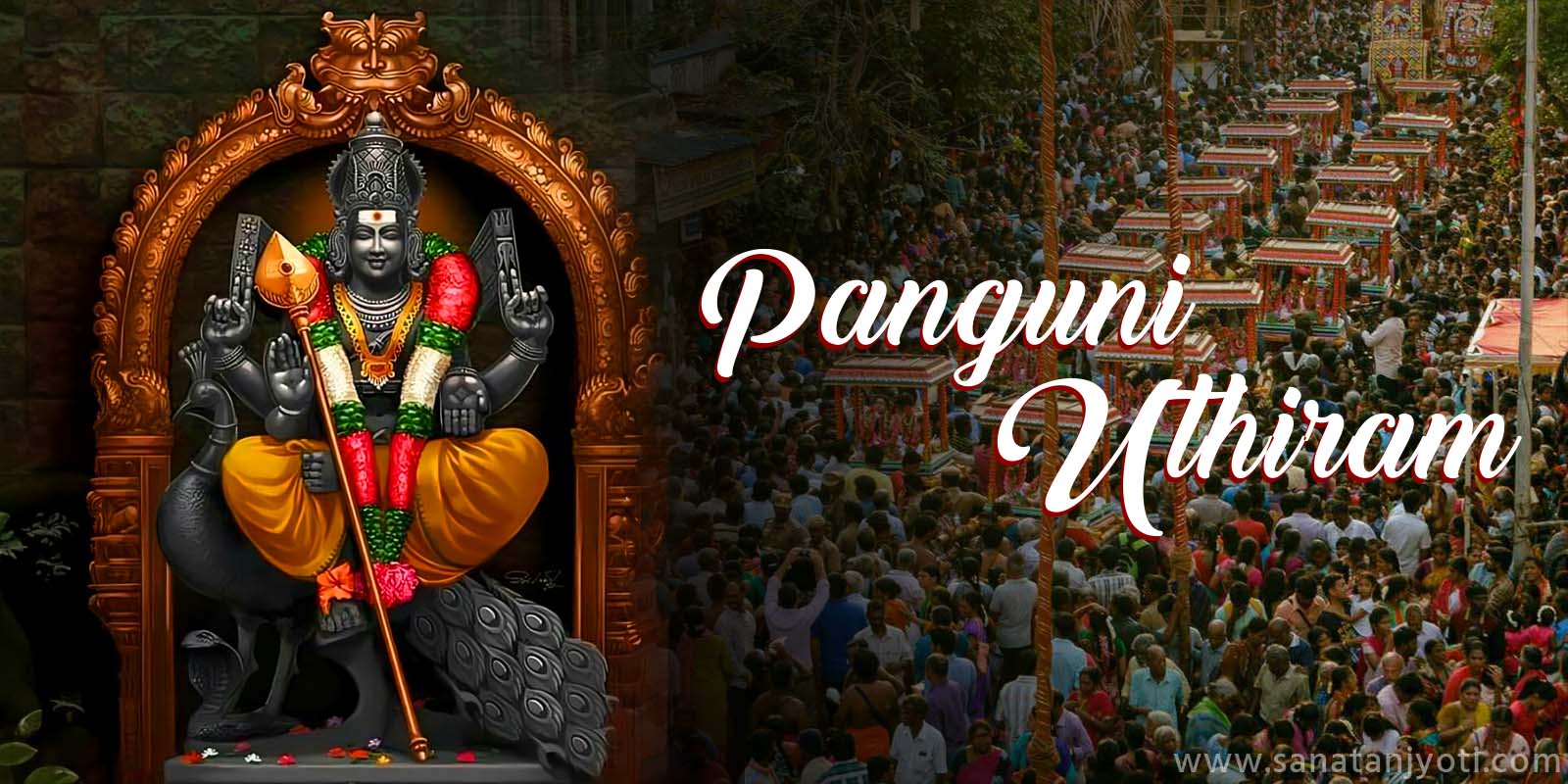
At major Murugan temples in Tamil Nadu, special Abhishekam, Alankaram, divine marriage ceremonies, processions and Rath Utsavs are organized on the occasion of Panguni Uthiram.
Traditions of Celebrating Panguni Uthiram
On Panguni Uthiram, devotees visit temples dedicated to Lord Murugan and offer prayers. In many places, devotees carry Kavadi to the temple and offer it to Lord Murugan according to their faith and tradition.
Many temples in Tamil Nadu organize the Kalyana Utsav of Lord Murugan and Goddess Devasena on this occasion. The divine marriage of Lord Shiva and Goddess Parvati is also celebrated with special rituals at several temples.
Temples conduct religious activities such as Abhishekam, special Alankaram, Deeparadhana, Bhajan-Kirtan and Prasad distribution.
Many devotees also observe a Vrat on this day and worship Lord Murugan, Lord Shiva and Goddess Parvati.
Panguni Uthiram Puja Vidhi
On Panguni Uthiram, wake up early in the morning, complete your daily routine, take a bath and wear clean clothes.
The home Puja area or temple can be decorated with flowers and other decorative items. The idols or images of Lord Murugan, Lord Shiva and Goddess Parvati can be cleaned and decorated with flowers, clothes and ornaments.
After this, worship Lord Murugan, Shiva-Parvati and other deities according to your family and regional traditions.
What to Do During Panguni Uthiram Puja?
• Take a bath in the morning.
• Wear clean clothes.
• Clean the Puja area.
• Meditate on Lord Murugan.
• Worship Lord Shiva and Goddess Parvati.
• Offer flowers to Lord Murugan.
• Light a lamp and incense.
• Perform Abhishekam according to your tradition.
• Offer Naivedya to the deity.
• Chant Murugan Mantras, Shiva Mantras or Stotras.
• If possible, participate in Bhajan-Kirtan and recitation of religious scriptures.
• Perform Aarti in the evening and receive Prasad.
Shiva-Parvati Marriage on Panguni Uthiram
The Shiva-Parvati Kalyana Utsav holds a special place among the major religious traditions associated with Panguni Uthiram.
In South Indian traditions, the divine marriage of Lord Shiva and Goddess Parvati is remembered on this day. Many temples celebrate it as a Kalyanotsav.
According to religious beliefs, the divine union of Lord Shiva and Goddess Parvati symbolizes married life, love, devotion and family well-being.
For this reason, married couples worship Shiva-Parvati with prayers for happiness, peace and harmony in their married life.
Panguni Uthiram and Lord Murugan
Panguni Uthiram holds special significance for devotees of Lord Murugan (Kartikeya/Subramanya).
Many Tamil temples celebrate the marriage of Lord Murugan and Goddess Devasena on this day. A large number of devotees visit Murugan temples during Panguni Uthiram.
Major Murugan temples in Tamil Nadu, including Palani, consider Panguni Uthiram among their important annual festivals.
Tradition of Offering Kavadi on Panguni Uthiram
The tradition of carrying and offering Kavadi has special significance in the worship of Lord Murugan. Devotees carry Kavadi to the temple according to their faith, Sankalp and religious traditions.
Kavadi is considered a symbol of devotion, dedication and spiritual commitment towards Lord Murugan.
The Kavadi tradition is particularly well known at major Murugan pilgrimage sites such as Palani.
Prasad on Panguni Uthiram
Various types of Naivedya are offered to the deities during Panguni Uthiram. In South Indian traditions, devotees may offer Payasam, Pongal, fruits and other Satvik Prasad.
You may offer Bhog according to your family and regional tradition and later receive it as Prasad.
Panguni Uthiram Vrat
Many devotees observe a Vrat on Panguni Uthiram. The duration of the Vrat and dietary rules may vary according to family and regional traditions.
Some devotees observe a complete fast throughout the day, while others consume fruits or have one Satvik meal.
If you are observing the Vrat, follow its rules according to your physical capacity and family tradition.
Significance of Panguni Uthiram
Panguni Uthiram is considered a festival associated with divine marriages and family well-being.
According to religious beliefs, worshipping Lord Shiva and Goddess Parvati on this day is associated with prayers for happiness and peace in married life and prosperity in the family.
Unmarried devotees may also worship Shiva-Parvati and Lord Murugan with prayers for a suitable life partner.
Devotees also associate the worship of Lord Murugan with prayers for freedom from difficulties, courage, inner strength and spiritual power.
What to Do on Panguni Uthiram?
On Panguni Uthiram, the following activities may be performed according to one's faith and tradition:
• Worship Lord Murugan.
• Worship Lord Shiva and Goddess Parvati.
• Visit a temple for Darshan.
• Offer flowers to Lord Murugan.
• Perform Abhishekam and Deeparadhana.
• Offer Kavadi if it is part of your tradition.
• Observe a Vrat or have a fruit-based diet.
• Participate in divine marriage celebrations.
• Sing Bhajans and perform Kirtan.
• Feed people in need.
• Donate according to your capacity.
Panguni Uthiram and Marriage
Uthiram Nakshatra is traditionally associated with marriage and auspicious activities in Tamil religious traditions. Many temples conduct divine marriage celebrations on Panguni Uthiram.
For this reason, the day is considered significant for religious rituals associated with marital happiness, family harmony and prayers for a blessed married life.
However, an actual marriage Muhurat is not determined solely by the festival date. For marriage, factors such as the individual birth charts of the bride and groom, Tithi, Nakshatra, Lagna and the local Panchang are considered.
Panguni Uthiram and Lord Ayyappa
In South Indian religious traditions, Panguni Uthiram is also associated with Lord Ayyappa/Dharmashasta. Some temple traditions commemorate the manifestation or Jayanti of Lord Ayyappa on this day.
Therefore, special Pujas are also organized at some Ayyappa temples on the occasion of Panguni Uthiram.
Panguni Uthiram 2027 will be observed on Monday, March 22. It is a festival associated with the conjunction of the Full Moon and Uthiram, or Uttara Phalguni Nakshatra, during the Tamil month of Panguni. Lord Murugan, Lord Shiva and Goddess Parvati are especially worshipped on this day. In Tamil tradition, the divine marriage of Murugan and Devasena and the divine marriage of Shiva and Parvati hold special significance.
To know the exact Panguni Uthiram date, Nakshatra and Puja timing according to your city: -Check the SanatanJyoti Panchang.
Frequently Asked Questions
1. When is Panguni Uthiram 2027?
Panguni Uthiram 2027 will be observed on Monday, March 22.
2. In which month is Panguni Uthiram celebrated?
It is celebrated during Panguni, the twelfth and final month of the Tamil calendar.
3. Which deity is worshipped on Panguni Uthiram?
Lord Murugan is primarily worshipped on this day. Along with Him, the worship of Lord Shiva and Goddess Parvati and divine marriage celebrations are also important in several South Indian traditions.
4. What is the significance of Panguni Uthiram?
Panguni Uthiram is considered a festival associated with divine marriages, marital happiness and family well-being. It also holds special significance for devotees of Lord Murugan.
5. Is it auspicious to get married on Panguni Uthiram?
Uthiram Nakshatra is traditionally considered auspicious for marriage-related activities. However, an actual marriage Muhurat is determined based on the local Panchang, as well as factors such as the birth charts of the bride and groom.
6. What Vrat is observed on Panguni Uthiram?
Devotees may observe a fast, consume fruits or follow a Satvik diet on Panguni Uthiram according to their tradition. Vrat rules may vary by region and family.
7. Why is Kavadi offered on Panguni Uthiram?
In the worship of Lord Murugan, Kavadi is considered a symbol of devotion, Sankalp and dedication. The tradition of offering Kavadi is especially visible at Murugan temples during Panguni Uthiram.