
When is Varalakshmi Vrat 2026?
In 2026, Varalakshmi Vrat will be observed on Friday, 28 August 2026. This sacred fast is observed on the last Friday of the Shravana month and is dedicated to the worship of Goddess Mahalakshmi. It holds special religious importance in the South Indian states of Andhra Pradesh, Telangana, Tamil Nadu, Karnataka, and Kerala. Today, however, devoted women across India observe this vrat with deep faith and devotion.
According to religious beliefs, observing Varalakshmi Vrat brings the blessings of Goddess Lakshmi, leading to happiness, prosperity, wealth, marital bliss, healthy children, and overall abundance. On this day, married women worship Goddess Varalakshmi and pray for the well-being of their families, the long life of their husbands, and lasting prosperity in their homes.
Varalakshmi Vrat 2026 - Date
• Varalakshmi Vrat: Friday, 28 August 2026
For more information, including the vrat date, auspicious timings, puja muhurat, and complete details about Varalakshmi Vrat: -Be sure to check our detailed Panchang.
What is Varalakshmi Vrat?
Varalakshmi Vrat is one of the most auspicious and rewarding fasts dedicated to Goddess Mahalakshmi. The word "Varalakshmi" comes from two Sanskrit words: "Vara," meaning boon or blessing, and "Lakshmi," the Goddess of wealth, prosperity, fortune, and abundance. Thus, Varalakshmi refers to the form of Goddess Lakshmi who grants the sincere wishes of her devotees.
In Sanatan Dharma, Goddess Lakshmi is not worshipped only as the Goddess of wealth. She is also regarded as the source of happiness, prosperity, success, good fortune, food, children, knowledge, patience, and spiritual growth. It is believed that observing Varalakshmi Vrat with devotion invites her special blessings, bringing peace, financial stability, prosperity, and positive energy into the home.
Although this vrat is mainly observed by married women, in many places unmarried girls also observe it with devotion to seek a happy married life and a bright future.
Why is Varalakshmi Vrat Observed?
Varalakshmi Vrat is not observed only for material wealth. It is considered a sacred fast for seeking family prosperity, good fortune, good health, children, marital happiness, and spiritual progress.
According to religious beliefs, devotees who worship Goddess Varalakshmi with proper rituals and sincere devotion on this day receive her divine blessings. Their homes are filled with peace and happiness, and the path to financial growth and prosperity opens through the grace of Goddess Lakshmi.
This vrat also teaches an important lesson: true prosperity is not measured by wealth alone. It also comes from righteous living, gratitude, selfless service, love for family, and following the path of Dharma.
Goddess Varalakshmi and the Significance of Ashta Lakshmi
In Sanatan Dharma, Goddess Lakshmi is worshipped in many divine forms. The sacred scriptures especially describe the Ashta Lakshmi, the eight manifestations of Goddess Lakshmi, each representing a different kind of prosperity and blessing in life.
The eight forms of Ashta Lakshmi are:
• Adi Lakshmi
• Dhana Lakshmi
• Dhanya Lakshmi
• Gaja Lakshmi
• Santana Lakshmi
• Veera Lakshmi
• Vijaya Lakshmi
• Vidya Lakshmi
It is believed that remembering all these divine forms on Varalakshmi Vrat brings blessings of wealth, food, knowledge, children, success, courage, and overall prosperity.
Religious Significance of Varalakshmi Vrat
Varalakshmi Vrat is regarded as one of the most sacred and auspicious observances in Sanatan Dharma. It is more than a religious ritual—it symbolizes the prayer for prosperity, harmony, and balance in family, society, and spiritual life.
It is believed that worshipping Goddess Mahalakshmi, observing the fast, chanting her sacred mantras, and offering prayers on this day helps devotees:
• Maintain peace and happiness in the family.
• Pray for financial growth and abundance.
• Receive blessings for a happy and successful married life.
• Seek good health, happiness, and a bright future for their children.
• Create a positive and spiritually uplifting atmosphere at home.
This is why Varalakshmi Vrat is celebrated with great faith and devotion, especially in South India, as well as in many other parts of the country.
If you would like to learn more about Varalakshmi Vrat, the worship of Goddess Mahalakshmi, the vrat rules, its religious significance, or the spiritual benefits of Lakshmi worship: -You can receive free consultation and detailed guidance from the experienced Acharyas of Sanatan Jyoti.
Varalakshmi Vrat Puja Vidhi
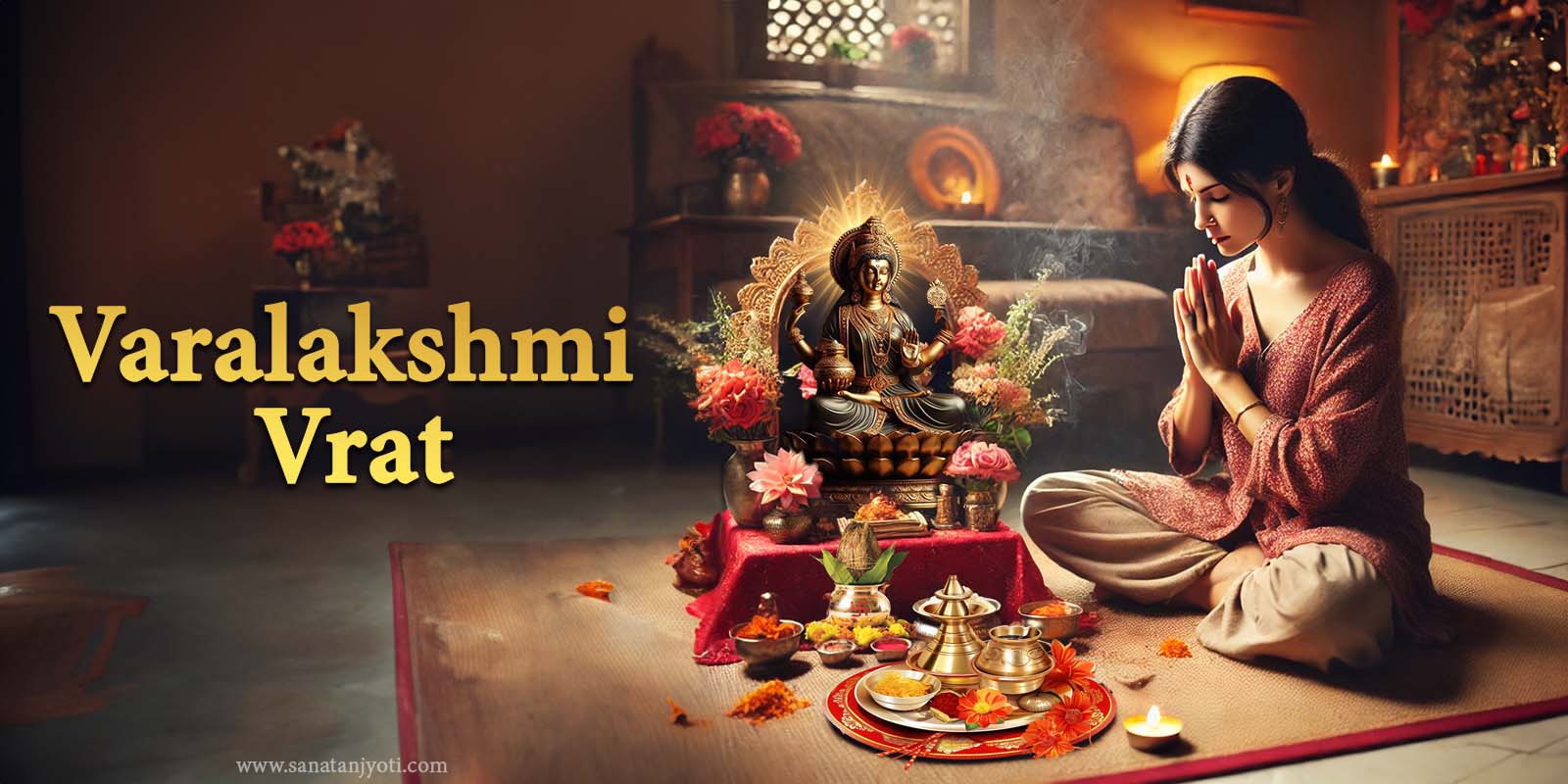
On the day of Varalakshmi Vrat, wake up during Brahma Muhurta, take a holy bath, and wear clean or new clothes. Clean the puja area thoroughly and sprinkle Gangajal to purify the space. Place a red or yellow cloth on a clean wooden platform and install an idol, picture, or Kalasha representing Goddess Mahalakshmi.
Fill the Kalasha with clean water and place a betel nut, Akshata (unbroken rice), a coin, a turmeric root, and Pancharatna (five sacred gems, if available) inside it. Arrange mango leaves at the mouth of the Kalasha and place a coconut on top. In many parts of South India, a decorative Lakshmi Face is also placed on the Kalasha, which is considered highly auspicious.
After invoking Goddess Lakshmi, offer Roli, turmeric, Kumkum, Akshata, flowers, a fragrant flower garland, sandalwood paste, incense, a lamp, and Naivedya. Offering lotus flowers, coconuts, bananas, pomegranates, sweets, Kheer, and seasonal fruits is considered especially auspicious.
During the puja, chant the Shri Suktam, Kanakadhara Stotram, Lakshmi Ashtottara Shatanamavali, or the mantra "Om Shreem Mahalakshmyai Namah" with devotion. Conclude the worship by performing the Aarti and praying for your family's happiness, prosperity, abundance, good fortune, and spiritual well-being.
Puja Samagri for Varalakshmi Vrat
It is considered auspicious to gather all the required puja items before beginning the worship.
Main Puja Items
• Idol, picture, or Varalakshmi Face of Goddess Lakshmi
• Kalasha (sacred pot)
• Coconut
• Mango leaves
• Red or yellow cloth
• Turmeric, Kumkum, and sandalwood paste
• Akshata (unbroken rice)
• Fresh flowers and flower garland
• Incense sticks and oil lamp
• Ghee or sesame oil
• Camphor
• Betel nut
• Betel leaves
• Bananas and seasonal fruits
• Coconut
• Sweets or Kheer
• Panchamrit
• Dakshina (offering)
• Aarti plate
If all the items are not available, you may still perform the puja with whatever materials you have. Sincere devotion is considered more important than the quantity of offerings.
Rules for Observing Varalakshmi Vrat
Observing Varalakshmi Vrat with devotion, purity, and discipline is considered highly important. According to religious beliefs, a vrat performed with proper rituals and sincere faith brings greater blessings.
On this day, devotees generally follow these practices:
• Take a bath early in the morning and wear clean clothes.
• Keep the house and puja area clean.
• Observe fast or eat only Satvik food, according to your ability.
• Avoid anger, harsh speech, and negative thoughts.
• Chant the mantras of Goddess Lakshmi.
• Donate food, clothes, or other useful items to those in need.
• Maintain love, harmony, and mutual respect within the family.
From a spiritual perspective, this vrat is not only about external worship. It also represents the purity of thoughts, words, and actions.
What to Do and What to Avoid on Varalakshmi Vrat
What to Do
• Worship Goddess Lakshmi with complete faith and devotion.
• Keep your home clean and spiritually pure.
• Light a sacred lamp and perform the Aarti of Goddess Lakshmi.
• Perform the puja together with your family.
• Practice charity and selfless service according to your ability.
• Eat only Satvik food.
• Chant the sacred mantras of Goddess Lakshmi.
What to Avoid
• Avoid anger, arguments, and harsh words on the day of the puja.
• Do not keep the house untidy or unclean.
• Stay away from Tamasic food and intoxicants.
• Do not insult or disrespect anyone.
• Do not perform the puja as a mere formality or without devotion.
Which Mantra Should Be Chanted During Varalakshmi Vrat?
Many sacred mantras are recited while worshipping Goddess Lakshmi. The following mantra is simple and widely chanted by devotees:
Om Shreem Mahalakshmyai Namah.
It is believed that chanting this mantra with faith and devotion invites the blessings of Goddess Mahalakshmi.
Importance of Charity on Varalakshmi Vrat
In Sanatan Dharma, charity is considered an important part of every vrat and puja. On Varalakshmi Vrat, devotees are encouraged to donate food, clothes, fruits, sweets, Dakshina, or other useful items according to their ability.
Religious beliefs say that charity performed with a pure heart not only earns spiritual merit but also strengthens the values of compassion, service, and kindness in society.
The Legend of Varalakshmi Vrat
The most well-known legend associated with Varalakshmi Vrat is the story of a virtuous woman named Charumati. This story is mentioned in several religious traditions and is narrated with great devotion, especially in South India.
Long ago, in the kingdom of Magadha, there lived a noble woman named Charumati. She served her parents, husband, and other family members with love, respect, and complete dedication. She was known for her honesty, devotion, humility, and righteous conduct. Worshipping the deities and performing acts of charity were an important part of her daily life.
Pleased by her sincere devotion, Goddess Mahalakshmi appeared in Charumati's dream one night. The Goddess said:
"Observe my vrat and worship me with proper rituals on the last Friday of the Shravana month. Whoever performs this vrat with faith and devotion will be blessed with wealth, prosperity, good fortune, children, and happiness in the family."
When Charumati woke up, she shared the Goddess's message with her family and the people of her town. On the last Friday of the Shravana month, all the women gathered and worshipped Goddess Varalakshmi with great devotion.
According to religious belief, the blessings of Goddess Mahalakshmi filled their lives with prosperity, happiness, good fortune, and abundance. Since then, devoted women have observed Varalakshmi Vrat every year on the last Friday of Shravana to seek the blessings of Goddess Mahalakshmi.
This sacred story teaches us that those who live with faith, selfless service, righteous conduct, and unwavering trust in God become worthy of divine blessings.
Religious and Spiritual Significance of Varalakshmi Vrat
Varalakshmi Vrat is not only a fast for gaining wealth. It is also a symbol of righteous living, gratitude, selfless service, family unity, and spiritual growth.
In Sanatan Dharma, Goddess Lakshmi is worshipped not only as the Goddess of wealth but also as the divine source of righteous prosperity, food, knowledge, patience, good fortune, and overall well-being. Therefore, the purpose of this vrat is not limited to material success. It also encourages devotees to develop inner balance, contentment, and a positive outlook on life.
According to religious beliefs, observing Varalakshmi Vrat brings the following blessings:
• The divine grace of Goddess Mahalakshmi.
• Happiness, peace, and prosperity in the family.
• Love, harmony, and happiness in married life.
• Prayers for financial growth and abundance.
• Blessings for children and the overall well-being of the family.
• A path toward positive energy and spiritual progress.
This vrat also reminds us that true prosperity is not measured by wealth alone. It comes from good values, selfless service, following Dharma, and loving one's family.
How to Receive the Blessings of Goddess Lakshmi
According to religious traditions, simply observing a vrat is not enough to receive the blessings of Goddess Lakshmi. A person should also live a life guided by truth, honesty, cleanliness, hard work, charity, and righteous conduct.
Along with worshipping Goddess Lakshmi, devotees are encouraged to:
• Perform daily prayers and worship.
• Help people in need.
• Follow the path of Dharma and truth.
• Maintain love, respect, and harmony within the family.
By following these values, one can create a life filled with lasting happiness and prosperity.
If you wish to seek the blessings of Goddess Mahalakshmi for wealth, abundance, family prosperity, financial growth, and a positive life: - You can learn more about the Kanakadhara Stotram Path Anushthan.
Frequently Asked Questions
1. When is Varalakshmi Vrat 2026?
In 2026, Varalakshmi Vrat will be observed on Friday, 28 August 2026.
2. Who can observe Varalakshmi Vrat?
This vrat is mainly observed by married women. However, in many places, unmarried girls also observe it to seek the blessings of Goddess Lakshmi for a happy married life and a bright future.
3. Which Goddess is worshipped during Varalakshmi Vrat?
This vrat is dedicated to Goddess Mahalakshmi (Varalakshmi), who is worshipped as the Goddess of wealth, prosperity, good fortune, and abundance.
4. Why is Varalakshmi Vrat observed?
It is observed to seek family happiness, marital bliss, financial prosperity, the blessing of children, and the divine grace of Goddess Lakshmi.
5. Is Varalakshmi Vrat celebrated only in South India?
The vrat is most popular in South India, but today it is observed with devotion in many parts of India.
6. Which mantra is considered auspicious for Varalakshmi Vrat?
The mantra "Om Shreem Mahalakshmyai Namah" is considered highly auspicious during the puja. Many devotees also recite the Shri Suktam and Lakshmi Stotras.
7. What is the main message of Varalakshmi Vrat?
Varalakshmi Vrat teaches us that true prosperity comes not only from wealth but also from righteous living, selfless service, devotion, family love, and following the path of Dharma.
Varalakshmi Vrat is one of the most sacred and auspicious observances in Sanatan Dharma. It is celebrated to seek the blessings of Goddess Mahalakshmi for family happiness, prosperity, good fortune, and spiritual growth.
More than a religious tradition, this vrat represents faith, gratitude, selfless service, and positive values. It is believed that those who worship Goddess Varalakshmi with sincere devotion, proper rituals, and pure intentions are blessed with peace, prosperity, happiness, and spiritual harmony in their lives.