
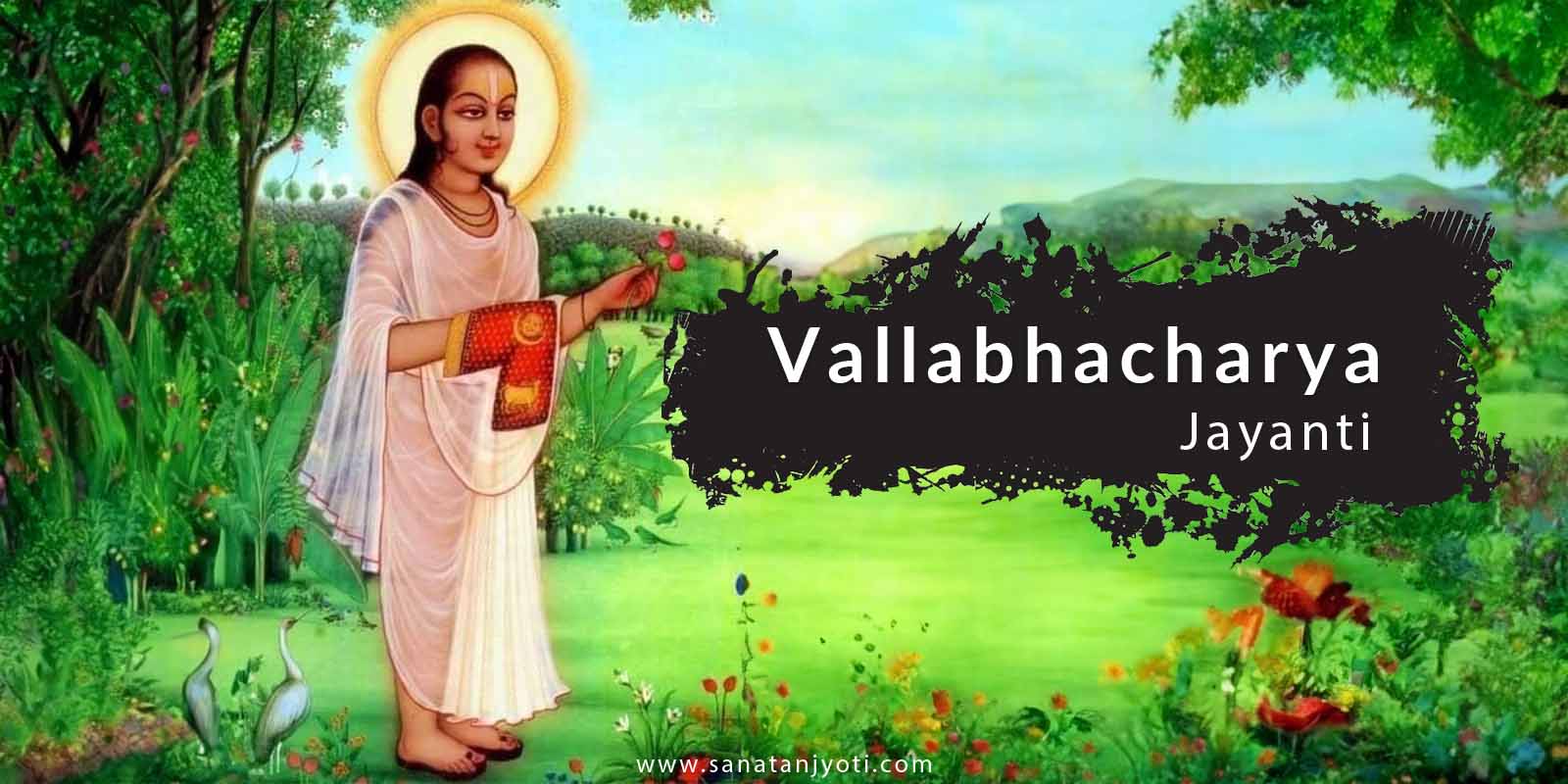
Vallabhacharya Jayanti will be observed on Sunday, May 2, 2027. This day is celebrated as the birth anniversary of Mahaprabhu Shri Vallabhacharya Ji, the great Vaishnava Acharya and founder of the Pushtimarg tradition. Vallabhacharya Ji is regarded as a devoted follower of Lord Shri Krishna and one of the foremost proponents of Shuddhadvaita Vedanta. In 2027, his Jayanti falls on the same day as Varuthini Ekadashi. On this occasion, devotees worship Lord Shri Krishna, participate in Bhajan-Kirtan, perform Seva and remember the teachings of Vallabhacharya Ji.
When is Vallabhacharya Jayanti 2027?
Vallabhacharya Jayanti will be celebrated on Sunday, May 2, 2027. According to the Panchang, this day falls on Ekadashi Tithi of Krishna Paksha in the month of Vaishakha, known as Varuthini Ekadashi.
Ekadashi Tithi will begin at approximately 6:55 PM on May 1, 2027, and end at around 7:53 PM on May 2.
Vallabhacharya Jayanti is observed every year in remembrance of his birth. According to the North Indian Purnimanta Panchang tradition, his birth is associated with Vaishakha Krishna Ekadashi, while in the Amanta tradition, the same Tithi is known as Chaitra Krishna Ekadashi. Both calculations refer to the same birth anniversary.
To know the Varuthini Ekadashi date, Parana time and other Shubh Muhurat according to your city: -Check the SanatanJyoti Panchang.
Who Was Vallabhacharya?
Mahaprabhu Shri Vallabhacharya Ji was a great Vaishnava Acharya, philosopher and devoted follower of Lord Shri Krishna who lived around the 15th–16th century. He is regarded as the founder of Pushtimarg, also known as the Vallabha Sampradaya. He propounded Shuddhadvaita Vedanta and gave a special place to devotion, love and Seva of Lord Shri Krishna in spiritual practice.
Vallabhacharya Ji is traditionally believed to have been born around 1479 CE. His father's name was Lakshman Bhatt, and his mother's name was Illammagaru. The Pushtimarg tradition identifies Champaaranya in the Chhattisgarh region as his birthplace.
He spent important periods of his life in various centres of religion and learning, including Kashi, Prayag and Vrindavan, where he propagated his Vaishnava philosophy and teachings of devotion to Lord Shri Krishna.
Why is Vallabhacharya Jayanti Celebrated?
Vallabhacharya Jayanti is observed in remembrance of the birth anniversary of Mahaprabhu Vallabhacharya Ji. On this day, devotees remember the principles of Pushti Bhakti, Seva of Lord Shri Krishna and Shuddhadvaita philosophy taught by him.
The Pushtimarg tradition places special emphasis on the grace of God and understands Bhakti as an expression of love and Seva. Vallabhacharya Ji taught that complete surrender and a spirit of Seva towards Lord Shri Krishna are important aspects of the path of devotion.
The Divine Appearance of Vallabhacharya Ji
Once upon a time, a Brahmin named Lakshman Bhatt lived in a village called Kankarwad in Telangana. His wife's name was Illama. Both of them were devoted followers of Lord Shri Krishna.
They resolved to perform 100 Soma Yajnas with the desire to have a son. After completing the Soma Yajna, Lakshman Bhatt was travelling to Kashi to feed one lakh Brahmins. At that time, his wife was pregnant.
While travelling, Mahaprabhu Vallabhacharya Ji was born under a Shami tree in Champaaranya. At the time of his birth, the child did not move at all. Believing that the baby had died, his parents left him under the tree and covered him with leaves.
They were extremely tired after travelling on foot, and soon fell asleep. In a dream, Lord Shri Krishna appeared and told them that their Soma Yajna had been successfully completed and that they had been blessed with a son. He asked them why they had left their child behind.
Lakshman Bhatt and Illama immediately returned to the place where they had left the child. Their followers also accompanied them.
When they reached the spot, they saw an extraordinary radiance surrounding the child. A fire was burning around him, forming a protective circle as though it were guarding the infant.
In the Pushtimarg tradition, this event is associated with the divine appearance of Vallabhacharya Ji, and the story of the sacred fire surrounding him is therefore remembered with deep religious reverence.
Vallabhacharya Ji's Early Education and Scholarship
Vallabhacharya Ji received his education in Kashi. From childhood, he showed a deep interest in religious studies and spiritual subjects. According to tradition, he studied the Vedas, Upanishads, Puranas and other scriptures extensively at a young age.
His scholarship and knowledge of the scriptures earned him recognition for his debates and discussions on religious philosophy in different places. Later, he travelled across various regions of India and propagated his philosophy and devotion to Lord Shri Krishna.
The Message of Vallabhacharya Ji
The teachings of Vallabhacharya Ji place special importance on love, devotion, Seva and complete surrender to Lord Shri Krishna.
His tradition emphasises that a person should have faith in the grace of God and follow the path of Bhakti and Seva. Regardless of one's worldly circumstances, a devotee should maintain faith and devotion towards the Lord.
Pushtimarg gives special importance to the grace of God, or Pushti. Bhakti is not limited merely to rituals; rather, it is understood as loving Seva offered to the Lord.
Shuddhadvaita Philosophy of Vallabhacharya Ji
Vallabhacharya Ji propounded Shuddhadvaita Vedanta. In his philosophy, Brahman is regarded as the ultimate reality, while Lord Shri Krishna is accepted as the Supreme God.
In Shuddhadvaita philosophy, the world is not considered merely an illusion or falsehood. Instead, there is a philosophical tradition of understanding the world as the divine Leela of God. The relationship between the individual soul and the Supreme Being is also understood from this spiritual perspective.
Vallabhacharya Ji and Pushtimarg
One of Vallabhacharya Ji's most significant contributions was the establishment of Pushtimarg. This tradition gives special importance to God's grace, Bhakti, love and Seva.
There is a special tradition of serving Lord Shri Krishna in his child form. The worship of Shrinathji is also an important part of the Pushtimarg tradition.
In Pushtimarg, devotees do not worship Lord Krishna merely as a distant deity. Instead, they experience Him as someone extremely close and beloved, worshipping Him with love and a spirit of Seva.
Major Works of Vallabhacharya Ji
Vallabhacharya Ji composed important religious and philosophical literature in Sanskrit, Braj Bhasha and other literary traditions.
Among his major works, the Shodash Granthas are particularly well known. These include:
• Yamunashtakam
• Balbodh
• Siddhant Muktavali
• Pushtipravahamaryadabheda
• Siddhant Rahasya
• Navaratna Stotra
• Antahkarana Prabodh
• Vivekdhairyashraya
• Shri Krishnashraya
• Chatushloki
• Bhaktivardhini
• Jalabheda
• Panchapadyani
• Sannyasa Nirnaya
• Nirodhalakshana
• Sevaphala
In addition, Tattvarthadipanibandha, Subodhini and his commentary on the Shrimad Bhagavata are also considered important works within his philosophical and Vaishnava literature.
Vallabhacharya Ji's Disciples and Bhakti Tradition
The influence of Vallabhacharya Ji's Bhakti tradition became widespread in Vaishnava devotional literature and the Pushtimarg community.
Many devotees and disciples became prominent within his tradition. The 84 Baithaks are an important part of the Pushtimarg tradition and are associated with Vallabhacharya Ji's travels and teachings.
Devotees such as Surdas, Krishnadas, Kumbhandas and Parmanand Das are mentioned in connection with the Vallabha tradition. However, details regarding Guru-disciple relationships differ among historical sources, so these associations are best presented in their traditional context.
Family of Vallabhacharya Ji
Vallabhacharya Ji was married to Mahalakshmi Ji. They had two sons, Gopinath Ji and Vitthalnath Ji. Both sons are considered important figures in the Pushtimarg tradition.
In particular, Vitthalnath Ji, also known as Gusain Ji, later played an important role in expanding the Pushtimarg tradition.
Vallabhacharya Ji's Passing
According to the Pushtimarg tradition associated with the final period of Vallabhacharya Ji's life, he gave important spiritual teachings to both of his sons, Gopinath Ji and Vitthalnath Ji.
According to Pushtimarg sources, Vallabhacharya Ji entered the Ganga on the day of Rath Yatra in Samvat 1587, marking the completion of his earthly life.
He is traditionally believed to have lived for approximately 52 years. The final episode of his life is remembered with deep reverence in the Pushtimarg tradition.
How is Vallabhacharya Jayanti Celebrated?
On Vallabhacharya Jayanti, his followers worship and perform Seva of Lord Shri Krishna. Temples organise special Shringar, Bhajan-Kirtan, scripture recitations and religious programmes.
In the Pushtimarg tradition, Darshan of Shrinathji, Seva, Bhog, Kirtan and remembrance of the teachings of Vallabhacharya Ji are given special importance on this day.
Some devotees also observe a Vrat or fast and worship Lord Shri Krishna. The method of worship may vary according to the region and the traditions of the Sampradaya.
Vallabhacharya Jayanti and Varuthini Ekadashi
In 2027, Vallabhacharya Jayanti and Varuthini Ekadashi will fall on the same day, May 2. According to the Panchang, this is Vaishakha Krishna Ekadashi.
Therefore, this day holds special religious significance for devotees in 2027. On this occasion, devotees may worship Lord Shri Krishna while remembering the life of Vallabhacharya Ji and the principles of Pushtimarg taught by him.
For detailed information about Varuthini Ekadashi Vrat, Puja Vidhi and Parana time: - Read Varuthini Ekadashi.
What Should You Do on Vallabhacharya Jayanti?
On Vallabhacharya Jayanti, the following religious activities may be performed according to one's faith and tradition:
• Worship Lord Shri Krishna.
• Meditate upon and take Darshan of Shrinathji.
• Remember the life and teachings of Vallabhacharya Ji.
• Participate in Bhajan-Kirtan and chant the name of Lord Krishna.
• Offer Bhog to the Lord.
• Donate food or grains to people in need.
• Perform Seva and religious Anushthans according to your tradition.
• Since the day is also Varuthini Ekadashi, follow the tradition of Ekadashi Vrat.
Significance of Vallabhacharya Jayanti
Vallabhacharya Jayanti is not merely an occasion to remember the birth anniversary of a great Acharya. It is also a day to remember the spirit of love, devotion and Seva towards Lord Shri Krishna.
Through Pushtimarg, Mahaprabhu Vallabhacharya Ji placed God's grace and loving Seva at the heart of Bhakti. His Shuddhadvaita philosophy made an important contribution to the traditions of Vaishnava philosophy and Krishna Bhakti.
If you seek guidance on worshipping Lord Shri Krishna, understanding the teachings of Vallabhacharya Ji or performing a religious Anushthan according to your tradition: -You can receive personalised advice from our expert through a Free Consultation.
Important Questions Related to Vallabhacharya Jayanti 2027
1. When is Vallabhacharya Jayanti in 2027?
Vallabhacharya Jayanti will be observed on Sunday, May 2, 2027.
2. Whose Birth Anniversary is Celebrated as Vallabhacharya Jayanti?
Vallabhacharya Jayanti is celebrated in remembrance of the birth anniversary of Mahaprabhu Shri Vallabhacharya Ji, the great Vaishnava Acharya and founder of Pushtimarg.
3. Which Sampradaya Was Founded by Vallabhacharya Ji?
Vallabhacharya Ji is regarded as the founder of Pushtimarg, also known as the Vallabha Sampradaya.
4. What Was the Philosophy of Vallabhacharya Ji?
Vallabhacharya Ji propounded Shuddhadvaita Vedanta. In this philosophy, Lord Shri Krishna is regarded as the Supreme Reality, while the world is understood within the philosophical tradition as the divine Leela of God.
5. When Was Vallabhacharya Ji Born?
Vallabhacharya Ji is traditionally believed to have been born in 1479 CE. His birth is associated with Vaishakha Krishna Ekadashi.
6. What Were the Names of Vallabhacharya Ji's Parents?
Vallabhacharya Ji's father's name was Lakshman Bhatt, and his mother's name was Illammagaru.
7. How Many Sons Did Vallabhacharya Ji Have?
Vallabhacharya Ji had two sons - Gopinath Ji and Vitthalnath Ji.
8. Will Vallabhacharya Jayanti and Varuthini Ekadashi Fall on the Same Day in 2027?
Yes. In 2027, both festivals will fall on Sunday, May 2.
9. What is Worshipped on Vallabhacharya Jayanti?
On this day, devotees worship Lord Shri Krishna, perform Seva, participate in Bhajan-Kirtan and recite religious scriptures. In the Pushtimarg tradition, Seva and Darshan of Shrinathji hold special significance.
10. What Are the Major Works of Vallabhacharya Ji?
The major works of Vallabhacharya Ji include the Shodash Granthas, Tattvarthadipanibandha, Subodhini and important commentaries related to the Shrimad Bhagavata.