
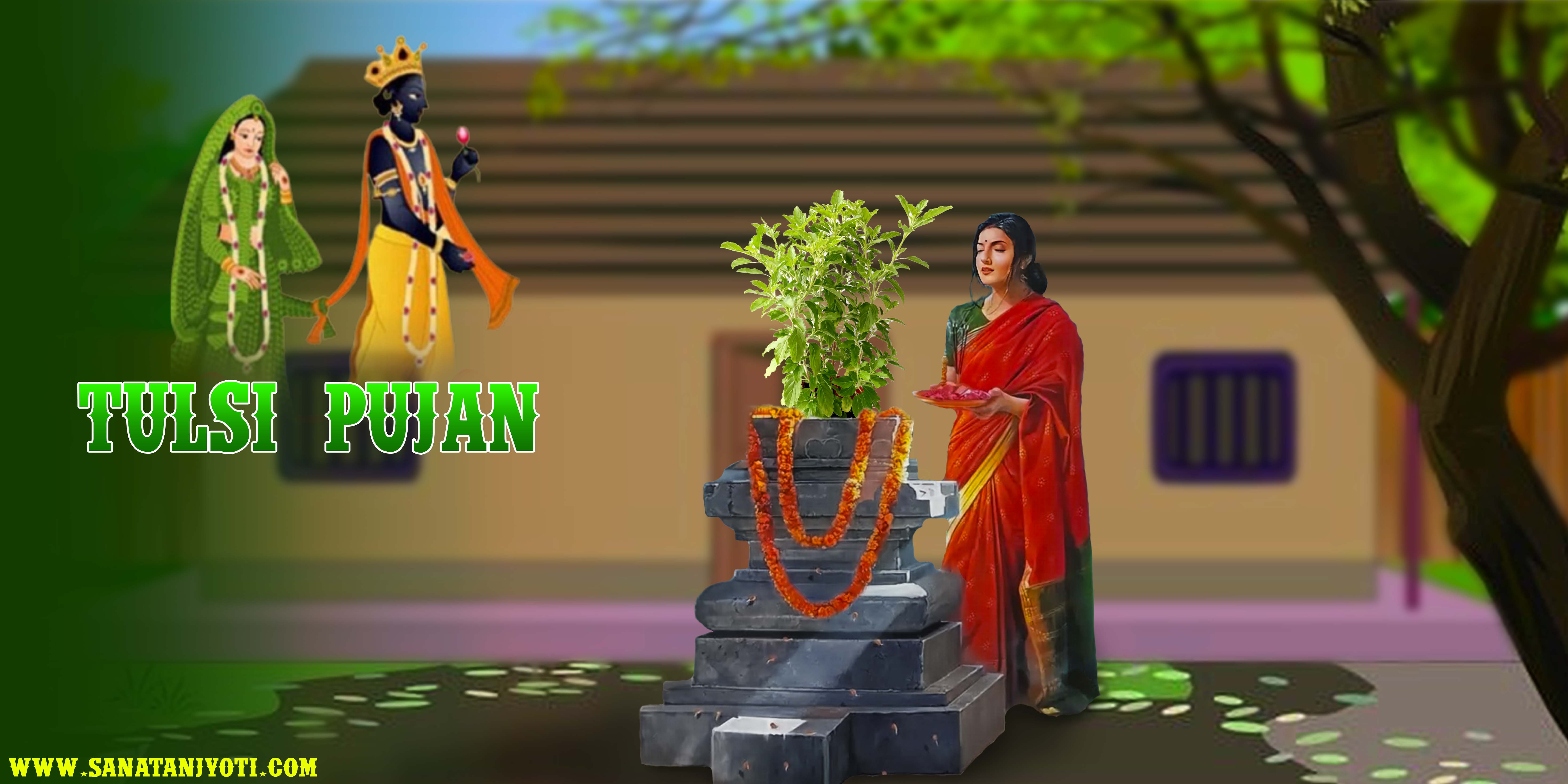
Tulsi Mata is considered highly revered in Sanatan Dharma. According to religious beliefs, a home where the Tulsi plant is present is blessed with positivity, happiness, prosperity and the grace of Lord Vishnu. Tulsi Vivah is a religious celebration that commemorates the marriage of Mata Tulsi with Lord Shaligram, who is considered a form of Lord Vishnu.
When is Tulsi Vivah in 2026?
In 2026, Tulsi Vivah will be celebrated on November 21, 2026, Saturday. According to the Panchang, Dev Uthani Ekadashi will be observed on November 20, and Tulsi Vivah may be performed on the following day, Kartik Shukla Dwadashi.
Important Date for Tulsi Vivah 2026
• Tulsi Vivah: November 21, 2026, Saturday
• Dev Uthani Ekadashi: November 20, 2026, Friday
• Kartik Purnima: November 24, 2026, Tuesday
The date and Puja timings for Tulsi Vivah may vary slightly depending on the region and local Panchang. In some traditions, the period from Dev Uthani Ekadashi to Kartik Purnima is considered auspicious for performing Tulsi Vivah.
Who Was Mata Tulsi?
In Sanatan Dharma, Tulsi is revered as a divine form, and Tulsi leaves are considered especially important in the worship of Lord Vishnu. Mythological stories describe Tulsi’s previous form, her penance, her devotion to her husband and her connection with Lord Shri Hari.
According to the tradition associated with the Brahma Vaivarta Purana, Tulsi was the daughter of King Dharmadhwaja and his wife Madhavi. Tulsi performed penance in the forest with the desire to attain Lord Shri Hari. Later, she became associated with Shankhachuda, whose special protection was connected with her power and devotion as a devoted wife.
The religious tradition of Tulsi Vivah is associated with this mythological story and the marriage of Tulsi with Lord Vishnu in His Shaligram form.
Why Is Tulsi Vivah Performed?
During Tulsi Vivah, Mata Tulsi is ceremonially married to Lord Vishnu in His Shaligram form. According to religious beliefs, this marriage symbolizes the divine union of Lord Vishnu and Mata Tulsi.
In many Hindu families, Tulsi Vivah is also associated with the beginning of auspicious ceremonies. According to religious tradition, Lord Vishnu awakens after Dev Uthani Ekadashi, after which auspicious activities such as marriages are traditionally considered suitable to begin.
Story of the Marriage of Tulsi and Shri Hari
According to the mythological story, Tulsi was the daughter of King Dharmadhwaja and his wife Madhavi. Tulsi was devoted, virtuous and deeply religious, and she performed penance with the desire to attain Lord Shri Hari.
On the other hand, Shankhachuda, the son of Dambha, performed penance to please Lord Brahma and received a divine protective armour. At the command of Lord Brahma, he married Tulsi through the Gandharva form of marriage. Because of Tulsi’s devotion and chastity as a devoted wife, Shankhachuda received special strength and protection.
Shankhachuda had taken control of the rights and authority of the Devas. Although the people and other living beings in his kingdom were happy, the Devas became concerned because their authority had been taken away. They first approached Lord Brahma, then Lord Vishnu and finally Lord Shiva.
Lord Shiva assured the Devas and sent a message to Shankhachuda asking him to return their authority. Shankhachuda refused to return the kingdom to the Devas without a battle. As a result, a war began between Lord Shiva and Shankhachuda.
The battle continued for a long time, but Shankhachuda could not be defeated. According to the story, this was because of his divine armour and the power of his wife Tulsi’s chastity.
Lord Vishnu then took the form of an old Brahmin and asked Shankhachuda for his protective armour. Shankhachuda was truthful and generous, so he donated his armour to the Brahmin.
After this, Lord Vishnu assumed the form of Shankhachuda and approached Tulsi. According to the story, this resulted in the breaking of Tulsi’s vow of chastity, making it possible for Shankhachuda to be defeated. Lord Shiva then killed Shankhachuda with His Trident.
When Tulsi learned about the deception by Lord Vishnu, she became extremely angry and cursed Lord Vishnu to take the form of a Shila, or sacred stone. Lord Shiva then explained to Tulsi that the purpose of her penance was to attain Lord Shri Hari.
Lord Shiva told her that after she gave up her physical form, she would become famous as the Gandaki River and would also be revered in the form of the Tulsi plant. Lord Vishnu, under the influence of the curse, would reside near the Gandaki River in the form of the Shaligram Shila.
This mythological tradition is considered the basis for the religious tradition of Tulsi and Shaligram Vivah.
Tulsi Vivah Puja Vidhi
On the day of Tulsi Vivah, first clean the Puja area and sprinkle Gangajal. Then clean the pot containing the Tulsi plant and decorate it with Geru, flowers and other decorative items.
A Mandap can be prepared using sugarcane. In the evening, spread a red or yellow cloth over a wooden platform. Place Mata Tulsi on one seat and Lord Shaligram on another.
After this, perform the Puja as follows:
1. Bathe Tulsi and Shaligram Ji with Gangajal.
2. Apply a sandalwood Tilak to Lord Shaligram.
3. Offer yellow flowers, fruits and clothes to Shaligram Ji.
4. Apply a red sandalwood Tilak to Mata Tulsi.
5. Offer flowers, fruits, a red Chunari, Bindi and traditional adornment items to Mata Tulsi.
6. Light incense and a Ghee lamp.
7. Worship Mata Tulsi and Lord Shaligram according to the prescribed rituals.
8. Traditionally, Shaligram Ji may be carried around Mata Tulsi for seven rounds.
9. Perform Aarti of Mata Tulsi and Lord Shaligram.
10. Offer Kheer, sweets and other Satvik Prasad as Bhog.
11. According to your devotion, recite the Vishnu Sahasranama or Tulsi Chalisa.
12. Finally, offer a prayer to the Lord seeking forgiveness for any mistakes made during the Puja.
Do you have any questions about Tulsi Vivah Puja Vidhi, auspicious Muhurat, Puja Samagri or religious rituals?
What Items Are Used in Tulsi Vivah?
For Tulsi Vivah Puja, items such as the Tulsi plant, Shaligram Shila, wooden platform, clothes, Gangajal, sandalwood, Roli, Akshat, flowers, fruits, incense, lamp, Naivedya and Prasad may be kept ready.
For the traditional adornment of Mata Tulsi, a Chunari, Bindi, Sindoor and other traditional Shringar items are also used. The Puja Samagri may be arranged according to the family’s traditions and availability.
Religious Significance of Tulsi Vivah
Tulsi Vivah is considered an important religious celebration in Sanatan Dharma associated with Lord Vishnu and Mata Tulsi. According to religious beliefs, performing the marriage ceremony of Tulsi and Shaligram Ji on this day is believed to invite the grace of Lord Shri Hari and blessings of happiness and prosperity for the family.
Tulsi is considered dear to Lord Vishnu. For this reason, there is a tradition of offering Tulsi leaves during the worship of Lord Vishnu and Lord Shaligram.
Tulsi Vivah is also associated with devotion, faith and marital well-being. Many families perform the marriage ceremony of Tulsi and Shaligram Ji according to traditional wedding rituals.
What to Do on Tulsi Vivah?
On the day of Tulsi Vivah, take a bath in the morning and meditate upon Lord Vishnu and Mata Tulsi. Clean the Puja area at home and the area around the Tulsi plant.
Tulsi Vivah may be performed in the evening. With family members, remember the name of Lord Vishnu, sing Bhajans, perform Aarti and listen to the religious story. After the Puja, distribute Prasad and donate to people in need according to your capacity.
Connection Between Tulsi Vivah and Dev Uthani Ekadashi
Tulsi Vivah is often performed around Dev Uthani Ekadashi. According to religious beliefs, Lord Vishnu is believed to enter Yog Nidra on Ashadha Shukla Ekadashi and awaken on Kartik Shukla Ekadashi.
In 2026, Dev Uthani Ekadashi will be observed on November 20, and Tulsi Vivah will be celebrated on November 21.
In some traditions, the period from Dev Uthani Ekadashi to Kartik Purnima is considered an auspicious period for Tulsi Vivah. Therefore, the date of Tulsi Vivah may differ among different regions and families.
Tulsi Vivah is a religious celebration associated with the sacred relationship between Lord Vishnu in His Shaligram form and Mata Tulsi. The mythological story describes Tulsi’s penance, her relationship with Shankhachuda and the events associated with Lord Vishnu taking the form of Shaligram.
In 2026, Tulsi Vivah will be celebrated on November 21, Saturday. On this occasion, devotees worship Mata Tulsi and Shaligram Ji and perform the traditional marriage ceremony while praying for the blessings of Lord Vishnu, happiness and prosperity in the family, and a peaceful and auspicious life.