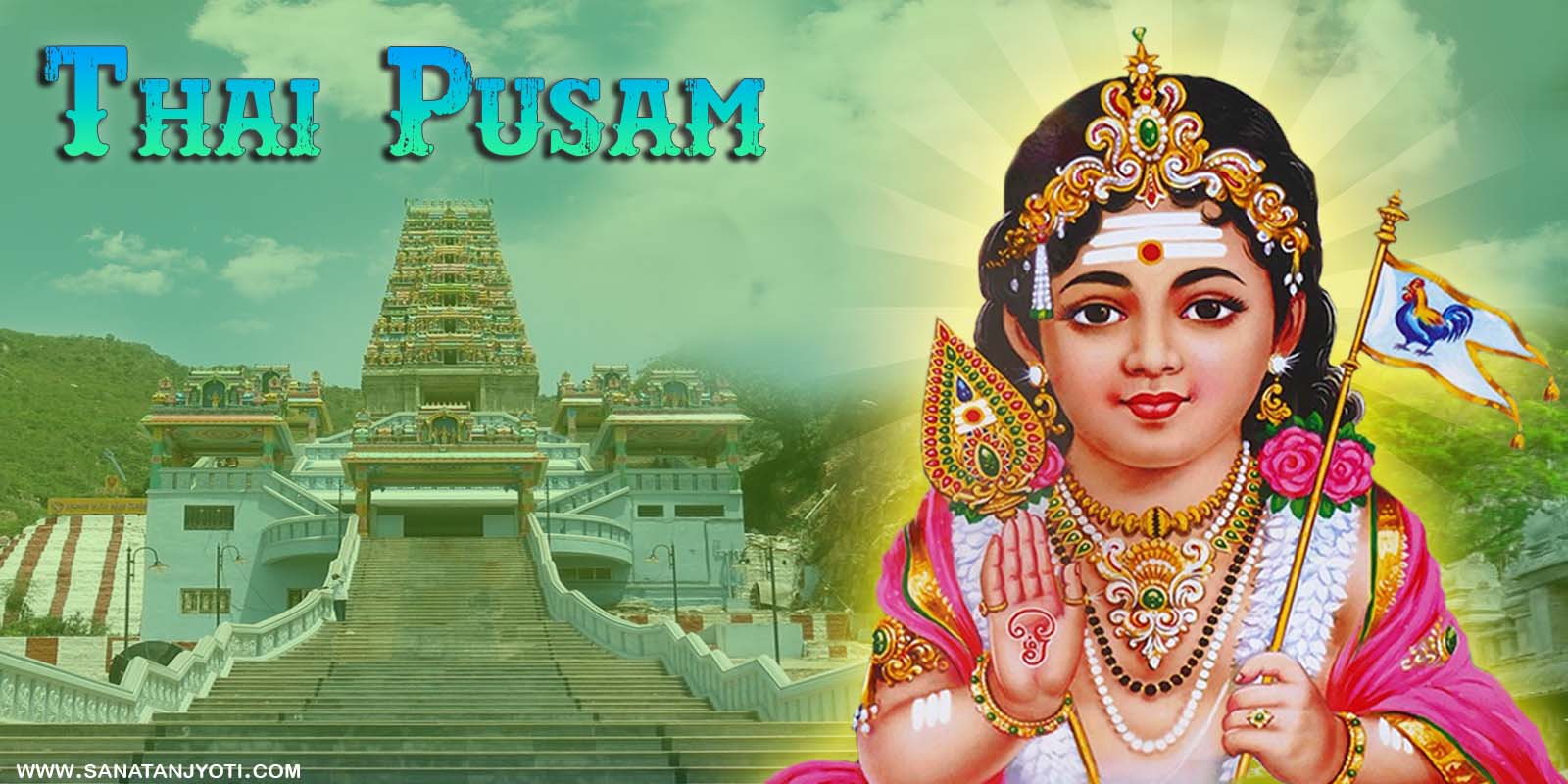
Thai Pusam or Thai Poosam is a major religious festival dedicated to Lord Murugan (Kartikeya) and is especially important among the Tamil community. The festival is celebrated with devotion and enthusiasm in Tamil Nadu and Kerala, as well as by Tamil communities living in Singapore, Malaysia, Mauritius and other countries. It is observed when the Poosam (Pushya) Nakshatra coincides with the Tamil solar month of Thai.
When is Thai Pusam in 2027?
Thai Pusam 2027 will be celebrated on Friday, January 22, 2027. According to the Panchang references for Mumbai, Chennai and Kochi, the festival will also fall on January 22. The Pusam Nakshatra will begin at 10:27 AM on January 22 and end at 7:32 AM on January 23, 2027. Timings may vary slightly according to the local Panchang.
• Thai Pusam 2027: January 22, 2027, Friday
• Pusam Nakshatra Begins: January 22, at 10:27 AM
• Pusam Nakshatra Ends: January 23, at 7:32 AM
• Presiding Deity: Lord Murugan
• Tamil Month: Thai
To get accurate information about the Thai Pusam date, Pushya (Poosam) Nakshatra and auspicious timings according to your city: - Check our Panchang.
Religious Significance of Thai Pusam
Thai Pusam is considered an important festival associated with the bravery, strength, wisdom and devotion of Lord Murugan. According to religious beliefs, on this occasion, Goddess Parvati presented Lord Murugan with the divine Vel (spear). With the help of this Vel, Murugan fought the demon Surapadman and protected the Devas.
For this reason, Thai Pusam is regarded as a symbol of the victory of good over evil, the establishment of Dharma and devotion to the Divine. Devotees worship Lord Murugan on this day, observe fasting and self-discipline, and participate in special Darshan and religious rituals at temples.
Story of Lord Murugan and Surapadman
According to mythological traditions, Lord Murugan is known as the commander of the army of the Devas. When the Devas were troubled by the atrocities of the demons, Lord Murugan manifested through the divine energy of Lord Shiva. He was later entrusted with the leadership of the Devas’ army.
According to tradition, the Devas fought against a demon named Surapadman. During this conflict, the Vel given to Lord Murugan by Goddess Parvati is considered to have played an important role as His divine weapon. Murugan confronted Surapadman and eventually defeated him.
The traditions of Thai Pusam are associated with this religious episode, and devotees regard the festival as a symbol of the victory of Dharma over Adharma.
To learn more about the battle between Lord Murugan and Surapadman, the date of Skanda Shashti, Vrat, Puja Vidhi and the tradition of Soorasamharam: -Read our detailed article on Skanda Shashti.
Significance of Kavadi During Thai Pusam
One of the most important traditions of Thai Pusam is Kavadi offering. According to their devotion and Sankalp, devotees carry Kavadi and travel to temples dedicated to Lord Murugan. Kavadi is considered a symbol of devotion, penance, sacrifice and surrender to the Divine.
The tradition of Kavadi is associated with the story of Idumban, a devotee of Lord Murugan. According to tradition, Sage Agastya asked Idumban to carry two hills using a pole. During the journey, when Idumban placed the hills at a particular location, he was unable to lift them again. Lord Murugan was present there in the form of a young boy.
A conflict took place between Idumban and Murugan. Later, Idumban realized the greatness of Lord Murugan and became His devotee. The tradition of offering Kavadi is associated with this story.
Puja and Religious Rituals During Thai Pusam
During Thai Pusam, devotees visit temples dedicated to Lord Murugan and perform Puja. Many devotees observe self-discipline and fasting for a certain period before the festival and take a Sankalp according to their faith.
The main practices on this day include:
• Taking Darshan of Lord Murugan and performing His Puja.
• Observing fasting and self-discipline.
• Offering fruits, flowers and other Puja materials to Lord Murugan.
• Chanting Bhajans, Kirtans and religious Mantras.
• Carrying Kavadi and travelling to temples.
• Participating in special processions and religious programs at temples.
• Taking part in Seva activities such as Prasad distribution and Annadaan.
The duration and method of fasting and religious rituals may vary according to different traditions and temples.
Thai Pusam at Palani Murugan Temple
The Palani Murugan Temple in Tamil Nadu is one of the major pilgrimage destinations associated with Thai Pusam. A large number of devotees visit Palani to seek Darshan of Lord Murugan during this festival.
Around Thai Pusam, several days of religious celebrations, processions, chariot festivals and Kavadi-related programs are organized in Palani. In 2027, the main Thai Pusam celebrations in Palani will be held around January 22.
Kavadi Attam During Thai Pusam
Kavadi Attam is a traditional religious dance and ritual associated with devotion to Lord Murugan. Devotees carry the Kavadi on their shoulders and travel toward the temple with devotion.
For many devotees, carrying the Kavadi is a way of offering their Sankalp, penance and devotion at the feet of Lord Murugan. During the journey, devotees travel while singing Bhajans and chanting religious slogans.
Do you have any questions about Thai Pusam Puja Vidhi, Vrat, Kavadi offering or any religious ritual associated with Lord Murugan?
Spiritual Message of Thai Pusam
Thai Pusam is not only a religious festival but is also considered an opportunity for devotees to practice self-discipline, devotion, sacrifice and determination. The traditions associated with the bravery and wisdom of Lord Murugan inspire devotees to remain patient during difficult situations and follow the path of Dharma.
Religious practices such as Kavadi offering, fasting, temple visits, Bhajan-Kirtan and Seva strengthen the feeling of devotion and community spirit among devotees.
What to Do on Thai Pusam 2027?
On Thai Pusam, devotees may worship Lord Murugan according to their traditions and personal capacity. On this occasion, they may:
• Take a bath in the morning and meditate upon Lord Murugan.
• Visit a temple and seek Darshan of Lord Murugan.
• Chant the Mantra “Om Saravanabhavaya Namah.”
• Observe fasting or self-discipline according to their faith.
• Offer fruits, flowers and Prasad to Lord Murugan.
• Participate in Kavadi processions or religious activities at temples.
• Donate food and other essential items to people in need.
• Listen to Bhajans, perform Kirtan and remember the name of Lord Murugan.
Cultural Significance of Thai Pusam
Thai Pusam is deeply connected with Tamil culture and religious traditions. Apart from India, Tamil communities living in Malaysia, Singapore, Mauritius and other countries also perform special worship of Lord Murugan on this occasion.
During the festival, temples organize processions, Kavadi rituals, chariot festivals, Bhajans and community religious programs. These activities strengthen not only religious devotion but also a sense of social unity and cooperation within the community.
Thai Pusam is an important festival dedicated to the worship of Lord Murugan and is associated with devotion, self-discipline and surrender. In 2027, the festival will be celebrated on January 22, Friday. The Pusam Nakshatra will remain from 10:27 AM on January 22 to 7:32 AM on January 23. It is advisable to confirm the exact timing of Puja and religious rituals according to the Panchang applicable to your city.
This festival dedicated to Lord Murugan inspires devotees to move forward on the path of Dharma, courage, self-discipline and devotion.