
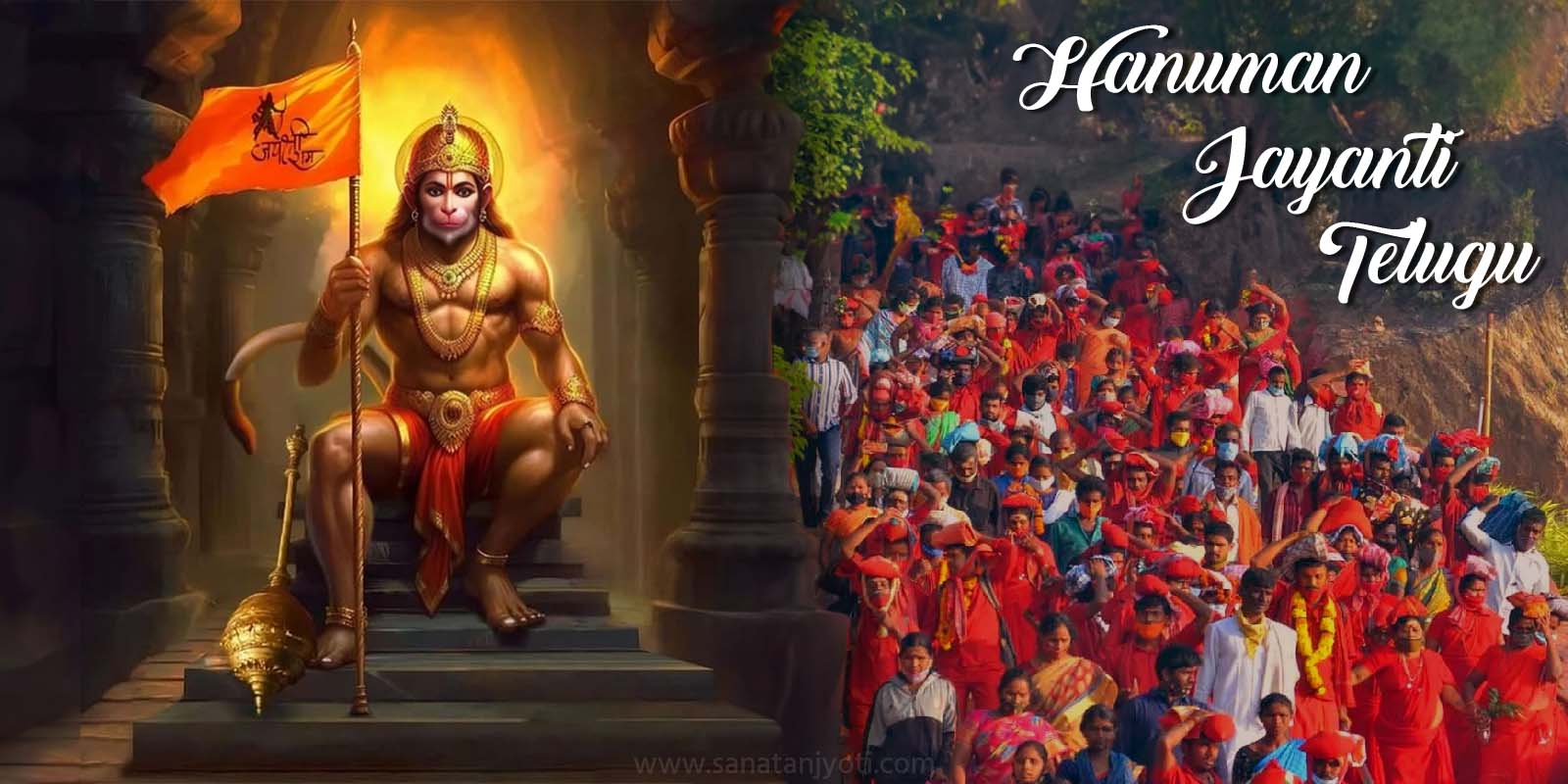
Hanuman Jayanti is one of the major religious festivals celebrated in India. It is an occasion to remember Lord Hanuman's devotion, strength, courage, selflessness and unwavering dedication to Lord Shri Rama.
In the traditions of Sanatan Dharma, Lord Hanuman is worshipped as a powerful, devoted and selfless devotee. He is also believed to be blessed with the Ashta Siddhis and Nava Nidhis. This is why devotees across India celebrate Hanuman Jayanti with great devotion and enthusiasm.
However, the date and traditions associated with Hanuman Jayanti vary across different regions of India. In North India, Hanuman Jayanti is generally celebrated on Chaitra Purnima as the birth anniversary of Lord Hanuman. In the Telugu traditions of Andhra Pradesh and Telangana, Hanuman Jayanti is observed on Vaishakha Krishna Paksha Dashami, and it is associated with the special tradition of the 41-day Hanuman Diksha.
When is Telugu Hanuman Jayanti 2027?
In Andhra Pradesh and Telangana, Hanuman Jayanti 2027 will be observed on Monday, May 31, 2027. According to the Telugu Panchang, this day is associated with the Dashami Tithi of the Krishna Paksha in the month of Vaishakha. The 41-day Hanuman Diksha is also concluded on this day.
In the North Indian tradition, Hanuman Jayanti will be observed on Tuesday, April 20, 2027, on the day of Chaitra Purnima. Therefore, the date of Hanuman Jayanti in 2027 varies according to regional traditions.
Telugu Hanuman Jayanti 2027: May 31, 2027, Monday
Diksha Begins: April 20, 2027, Chaitra Purnima
Diksha Duration: Approximately 41 days
Main Regions: Andhra Pradesh and Telangana
The Tithi and Tithi-ending time may vary slightly depending on the location.
How Is Hanuman Jayanti Celebrated in the Telugu Tradition?
In Andhra Pradesh and Telangana, Hanuman Jayanti is not limited to a single day of celebration. The region has a special tradition of 41-day Hanuman Diksha associated with the worship of Lord Hanuman. Devotees take a Sankalp on Chaitra Purnima to begin the Diksha and complete it on Vaishakha Krishna Paksha Dashami.
During the Diksha, devotees try to follow a disciplined and restrained lifestyle. Many devotees wear a Hanuman Diksha Mala, worship Lord Hanuman regularly, recite the Hanuman Chalisa and Sundarkand, and visit temples. Some devotees also observe fasting and follow a Satvik diet according to their faith and capacity.
What Is the Hanuman Diksha Ceremony?
In Andhra Pradesh and Telangana, Hanuman Diksha is an important religious tradition associated with devotion to Lord Hanuman, self-discipline and determination. Generally, the Diksha continues for 41 days. During this period, devotees worship Lord Hanuman while following discipline and religious practices in their daily lives.
During the Diksha, many devotees wear a Hanuman Diksha Mala and special orange or saffron-colored clothing. Some devotees also follow practices such as remaining barefoot, observing Brahmacharya and maintaining a Satvik lifestyle. However, the rules of the Diksha may vary depending on the individual and local traditions.
During this period, devotees chant Hanuman Mantras, recite the Hanuman Chalisa and Sundarkand, and remember the name of Lord Shri Rama. Regular temple visits and Puja are also considered important parts of the Diksha.
Hanuman Diksha is considered not merely a practice of following external rules but also a commitment to maintaining self-control in thought, speech and actions. Its purpose is to inspire devotees toward self-discipline, devotion and spiritual practice.
How Was Lord Hanuman Born? Know the Story of Hanuman Charit
According to mythological stories, Vanara King Kesari and his wife, Mata Anjana, performed intense penance to seek the blessing of a son. Mata Anjana was a devoted follower of Lord Shiva and undertook rigorous spiritual practices to please Him.
According to religious beliefs, Lord Vishnu was destined to incarnate on Earth as Lord Shri Rama to defeat Ravana, and Vanara warriors endowed with divine powers were to be born to assist Him. As part of this divine purpose, Lord Shiva also incarnated as Lord Hanuman through His divine aspect to help Lord Shri Rama.
It is believed that Vayu Dev played an important role in carrying the divine energy of Lord Shiva to Mata Anjana. This is why Lord Hanuman is also known by names such as Pavanputra, Maruti and Anjaniputra. As the son of Kesari, he is also known as Kesari Nandan.
Thus, according to religious traditions, Lord Hanuman is regarded as the son of Mata Anjana and Vanara King Kesari and is especially associated with Vayu Dev. He is also associated with the Rudra form or divine aspect of Lord Shiva.
Tulsidas Ji also wrote in the Hanuman Chalisa:
“Sankar Suvan Kesari Nandan.
Tej Pratap Maha Jag Vandan.”
Lord Shiva is regarded as a great devotee of Lord Vishnu and Lord Shri Rama, while Lord Hanuman is considered the supreme devotee of Lord Shri Rama. For this reason, the worship of Lord Hanuman reflects religious sentiments associated with both Shiva and Rama.
How Did Lord Hanuman Get His Name?
A popular mythological story associated with the childhood of Lord Hanuman explains the origin of his name.
According to the story, young Hanuman mistook the rising Sun for a red fruit. Thinking that the Sun was a fruit, he flew toward the sky to catch it. At the same time, Rahu was also approaching the Sun to eclipse it.
Seeing the extraordinary powers of young Hanuman, Rahu became frightened and sought help from Indra, the king of the Devas. Indra struck young Hanuman with his Vajra. The Vajra struck his Hanu, meaning his chin, causing him to become unconscious and fall to the ground.
When Vayu Dev saw his son in this condition, he became extremely angry. He stopped the movement of air, which created a crisis for all living beings. The Devas became concerned and, in order to calm Vayu Dev, granted young Hanuman various divine blessings.
According to this story, because his Hanu was struck by the Vajra, he became known as Hanuman.
What Boons Did Lord Hanuman Receive from the Devas?
After witnessing the extraordinary power and divine nature of young Hanuman, various Devas granted him several blessings. These blessings are described in different forms in religious stories.
Blessings from Lord Vishnu
According to religious beliefs, Lord Vishnu blessed Lord Hanuman with fearlessness and a long life.
Blessings from Lord Shiva
Lord Shiva blessed him with protection from divine weapons and powers. Lord Hanuman is also associated with the Rudra form of Lord Shiva.
Blessings from Lord Brahma
Lord Brahma granted Lord Hanuman protection from several divine weapons, including the Brahmastra, along with special powers.
Blessings from Kubera
Kubera blessed Lord Hanuman with extraordinary strength in battle and victory against Asuras.
Blessings from Varuna Dev
Varuna Dev blessed Lord Hanuman with powers associated with water and extraordinary strength in battle.
Blessing from Indra, the King of the Devas
Indra had struck Lord Hanuman on the chin with his Vajra. Later, he blessed Hanuman with the assurance that his Vajra would not harm him and that his body would become as strong as a Vajra.
Thus, according to religious stories, the blessings received from various Devas made Lord Hanuman extremely powerful, fearless and endowed with divine abilities.
Why Is Lord Hanuman Called Pavanputra?
Lord Hanuman is known by names such as Pavanputra, Pavansut and Maruti. In religious traditions, Vayu Dev is closely associated with the birth of Lord Hanuman.
Vayu Dev is believed to have played a role in carrying the divine energy of Lord Shiva to Mata Anjana. This is why Lord Hanuman is considered to have a special connection with Vayu Dev.
In addition, because of his extraordinary speed and immense strength, he is also addressed by names associated with the wind.
What to Do on Hanuman Jayanti?
On Hanuman Jayanti, devotees can worship Lord Hanuman according to their faith and capacity. In the Telugu tradition, the day is particularly associated with the completion of Hanuman Diksha and special Puja and worship.
On this day, devotees can:
• Worship Lord Hanuman.
• Recite the Hanuman Chalisa.
• Recite the Sundarkand.
• Remember and chant the name of Lord Shri Rama.
• Visit a Hanuman temple.
• Offer Sindoor and flowers to Lord Hanuman.
• Follow a Satvik diet and observe a fast according to their faith.
• Devotees observing the Diksha should complete it according to the prescribed rules.
In the Telugu tradition, after completing the 41-day Diksha, a special Puja and the religious process of Diksha Viraman are performed.
Religious Significance of Hanuman Jayanti
Hanuman Jayanti is a festival that commemorates the devotion, courage, service and dedication of Lord Hanuman. Lord Hanuman is regarded as the supreme devotee of Lord Shri Rama. His devotion, bravery and spirit of service hold a special place in the Ramayana.
The 41-day Diksha in the Telugu tradition further expands upon this religious spirit. Following discipline, Puja, Mantra Jaap and a Satvik lifestyle for an extended period inspires devotees toward self-control and devotion.
Thus, the Hanuman Jayanti tradition of Andhra Pradesh and Telangana is not merely a festival but also a special occasion associated with devotion, determination, discipline and spiritual practice.
According to the Telugu tradition, Hanuman Jayanti 2027 will be observed on Monday, May 31. In this tradition, the approximately 41-day Hanuman Diksha beginning on Chaitra Purnima holds special significance. During this period, devotees engage in religious practices such as worshipping Lord Hanuman, chanting Mantras, reciting the Hanuman Chalisa and Sundarkand, and visiting temples, and they conclude the Diksha on Hanuman Jayanti.
Lord Hanuman is regarded as a symbol of strength, devotion, courage, service and unwavering dedication to Lord Shri Rama. His worship inspires devotees to follow the path of Dharma, self-discipline and devotion.
Do you have any questions related to Hanuman Jayanti Puja Vidhi, Vrat, Mantras or religious rituals?
Get a free consultation from our Acharya Ji today and find answers to your Puja-related questions.