
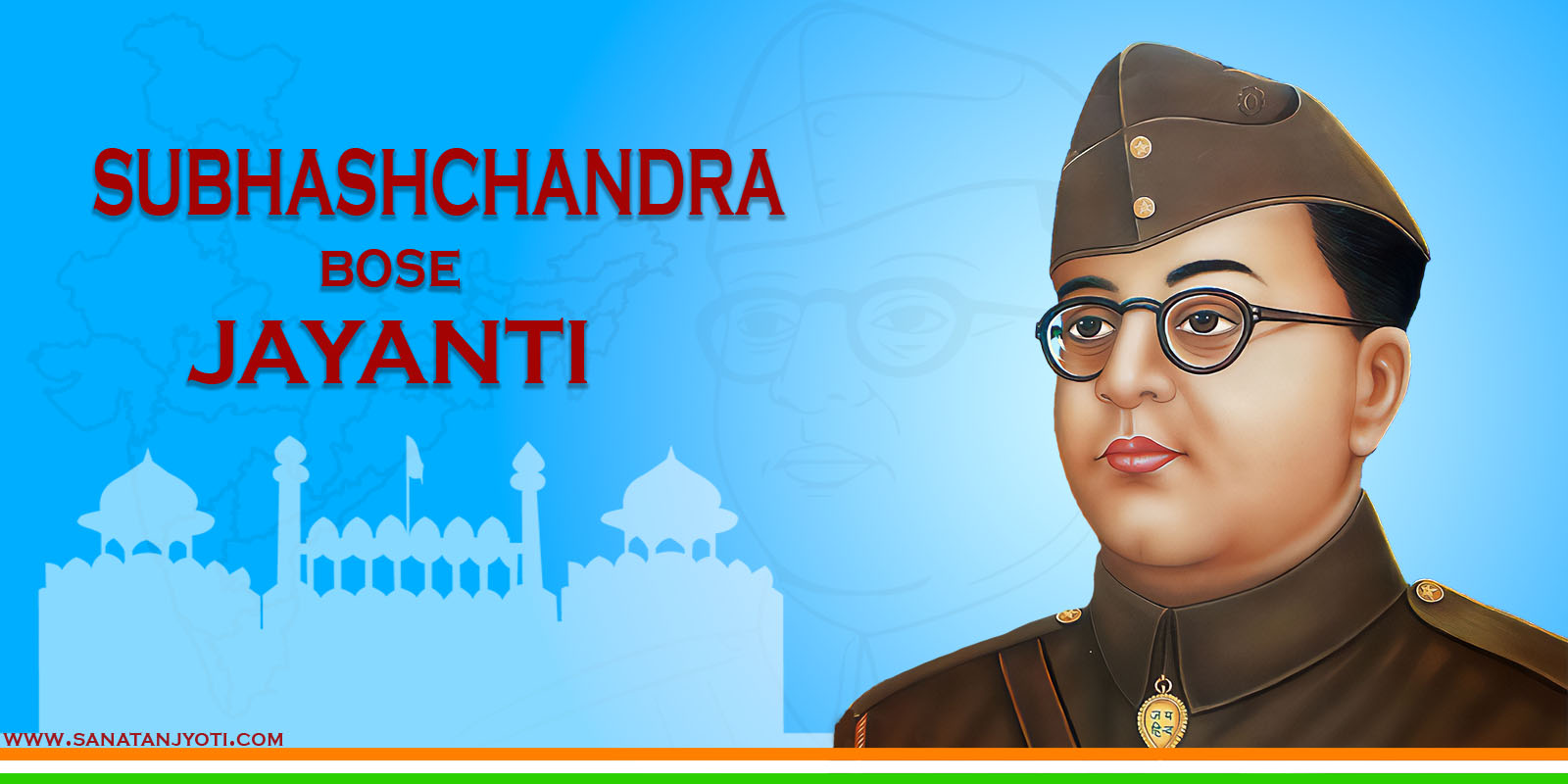
Subhash Chandra Bose, popularly known across India as Netaji, was one of the great leaders of the Indian freedom struggle. He was born on January 23, 1897, in Cuttack, Odisha. He led a strong and organized struggle against British rule for India's independence.
Subhash Chandra Bose was associated with the Indian National Congress and served as Congress President in 1938 and 1939. Later, he adopted a different strategy for achieving independence and went abroad in an effort to secure international support for India's freedom.
During the Second World War, he took leadership of the Azad Hind Fauj (Indian National Army) and organized an armed struggle for India's independence. According to official Government of India sources, in 1943, Netaji provided strong leadership to the Azad Hind movement in Southeast Asia and on October 21, 1943, announced the formation of the Provisional Government of Free India (Azad Hind).
When Is Subhash Chandra Bose Jayanti 2027?
Subhash Chandra Bose Jayanti 2027 will be observed on Saturday, January 23.
The Government of India decided in 2021 to observe the birth anniversary of Netaji Subhash Chandra Bose as “Parakram Diwas.” The objective is to remember his courage, patriotism, sacrifice, and contribution to India's freedom struggle, while particularly inspiring young people to draw lessons from his life.
On this day, tributes are paid to Netaji across the country, and his life, ideas, and the contribution of the Azad Hind Fauj are remembered. In recent years, prominent national leaders, including the President and Prime Minister, have paid tribute to Netaji on January 23.
Life of Subhash Chandra Bose
Subhash Chandra Bose was born on January 23, 1897, in Cuttack. He was a bright and disciplined student from an early age. After completing his higher education, he passed the Indian Civil Service examination. However, instead of serving under British rule, he decided to dedicate his life to India's independence.
He became an active leader of the Indian National Congress and played an important role in the freedom movement. In 1938, he was elected Congress President and was re-elected in 1939. However, after differences within the Congress over strategy, he resigned from the position and founded the Forward Bloc.
He subsequently worked to secure international support for India's independence.
Azad Hind Fauj and Netaji
The name of Subhash Chandra Bose is particularly associated with the Azad Hind Fauj (Indian National Army or INA). While organizing the Indian independence movement in Southeast Asia, he took leadership of the INA and worked to bring together Indian soldiers and the overseas Indian community around the goal of independence.
His famous call, “Give me blood, and I will give you freedom,” remains particularly remembered in the history of India's freedom movement.
The Azad Hind Fauj launched military campaigns against British rule and attempted to advance toward northeastern India. However, due to military circumstances and the changing course of the Second World War, the INA could not achieve its objective. Nevertheless, its struggle had a significant political and psychological impact on the direction of India's freedom movement.
Provisional Government of Free India
On October 21, 1943, Subhash Chandra Bose announced the formation of the Provisional Government of Free India (Azad Hind) in Singapore. Official Government of India sources also describe this event as an important milestone in Netaji's struggle for India's independence.
The government made India's independence from British rule its primary objective. Japan and several other countries recognized this government.
Netaji later visited the Andaman and Nicobar Islands, where he hoisted the Tricolour as a symbol of the Indian independence movement. According to the Government of India, Netaji hoisted the flag in Port Blair on December 30, 1943.
He used the names “Shaheed” and “Swaraj” for the Andaman and Nicobar Islands.
Why Is Subhash Chandra Bose Called Netaji?
Subhash Chandra Bose came to be known as “Netaji” because of his powerful leadership, courage, organizational abilities, and dedication to India's independence.
Even in difficult circumstances, he envisioned an independent India and inspired thousands of Indians to join the struggle for freedom.
His life conveys the message that achieving a great goal requires strong determination, discipline, courage, and continuous effort.
Death of Subhash Chandra Bose
The final chapter of Subhash Chandra Bose's life remains a subject of historical discussion. According to the widely accepted historical account, he died following an aircraft crash in Taiwan on August 18, 1945.
Famous Thoughts and Slogans of Subhash Chandra Bose
Several inspiring statements are popularly associated with Subhash Chandra Bose. Among the most famous is:
“Give me blood, and I will give you freedom.”
His life and leadership are regarded as symbols of courage, sacrifice, discipline, and determination in the struggle for India's independence.
His famous greeting, “Jai Hind,” has also become an important part of India's national consciousness. Recent Government of India messages have likewise remembered “Jai Hind” in connection with Netaji as an expression of national pride.
Why Is Subhash Chandra Bose Jayanti Celebrated?
The primary purpose of celebrating Subhash Chandra Bose Jayanti is to remember his life, contribution to the freedom struggle, courage, and dedication to the nation.
January 23 is now also observed as Parakram Diwas. In 2021, the Government of India announced this decision with the objective of inspiring people, especially young citizens, through Netaji's indomitable courage and selfless service to the nation.
On this occasion, various activities are organized across different places:
• Tributes are paid to Netaji.
• Programs are organized based on his life and ideas.
• The contribution of the Azad Hind Fauj is remembered.
• Exhibitions and programs related to the history of India's freedom struggle are organized.
• Young people are encouraged to develop a spirit of patriotism and national service.
Lessons From the Life of Subhash Chandra Bose
1. Dedication to Freedom
Netaji's life inspires us to remain dedicated to our country and the ideal of freedom.
2. Courage and Determination
Even in difficult circumstances, he continued working toward his goal instead of giving up. His life remains an example of courage and strong determination.
3. Importance of Leadership
Netaji's leadership brought thousands of Indians together around a common objective. His life continues to inspire us about effective leadership and organizational ability.
4. Discipline and Sacrifice
His life shows that achieving a great goal often requires rising above personal comfort and developing a spirit of discipline and sacrifice.
5. Responsibility Toward the Nation
Netaji's life inspires young people to understand their responsibilities toward the country and society and to contribute to the national interest.
Significance of Subhash Chandra Bose Jayanti 2027
January 23, 2027, will be observed as the birth anniversary of Subhash Chandra Bose and Parakram Diwas.
The day is not merely an occasion to commemorate the birth anniversary of a great freedom fighter. It is also a day to remember his courage, leadership, patriotism, and struggle for an independent India.
The life of Netaji continues to inspire young people to move forward courageously in difficult circumstances, remain determined toward their goals, and understand their responsibilities toward the nation.
Subhash Chandra Bose Jayanti 2027 will be observed on Saturday, January 23. The day is also celebrated in India as Parakram Diwas.
The contribution of Netaji Subhash Chandra Bose to India's freedom struggle is an important chapter in Indian history. From leading the Azad Hind Fauj to establishing the Provisional Government of Free India, his life remains an example of courage, organization, sacrifice, and patriotism.
Remembering his ideas and struggle on his birth anniversary inspires us to face even the most difficult circumstances with dedication, courage, and determination toward the nation.