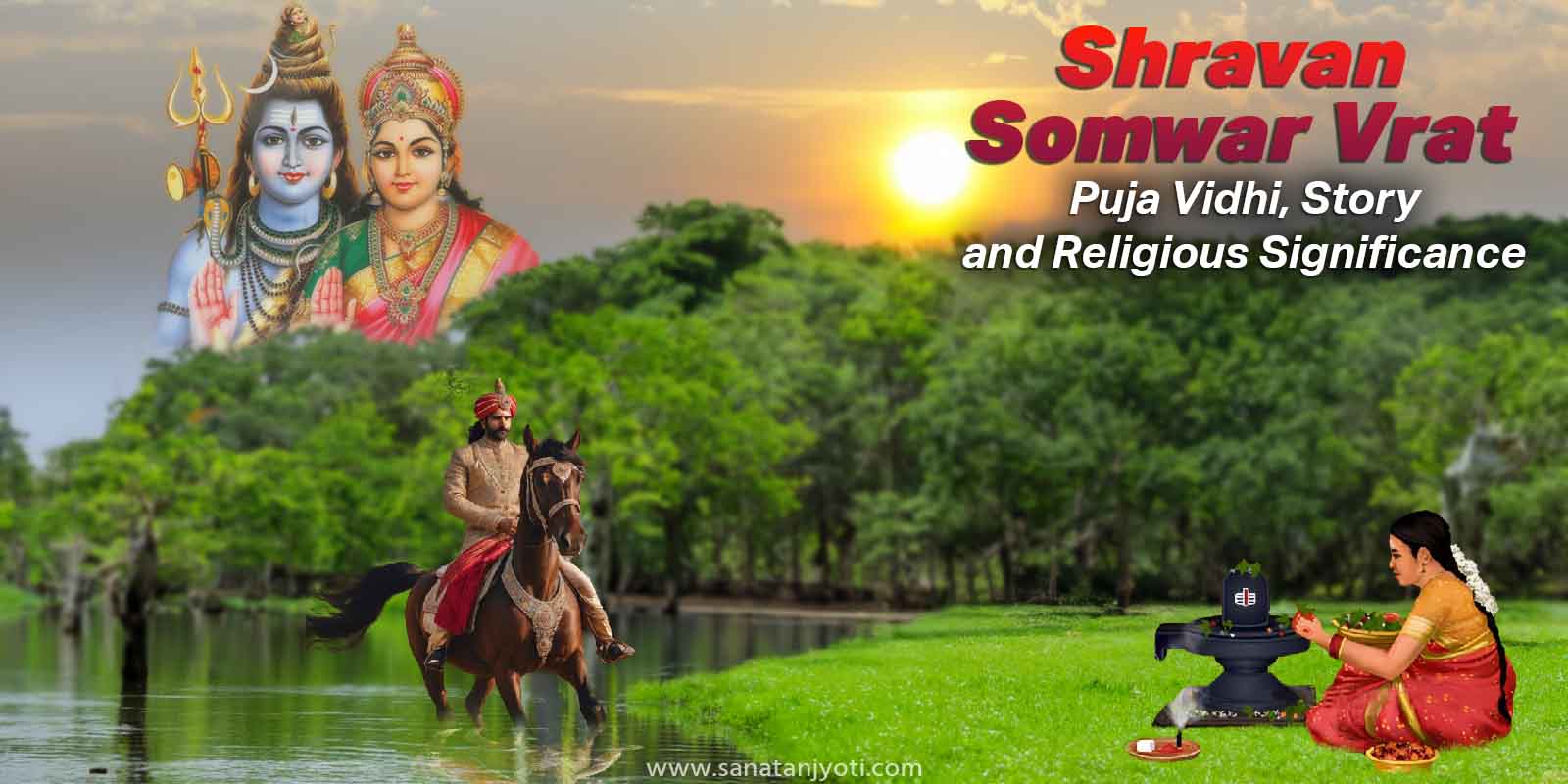
Shravan Somvar Vrat, dedicated to Lord Shiva, is one of the holiest and most widely observed fasts in Sanatan Dharma. Every Monday during the sacred month of Shravan (Sawan) is devoted to the worship of Lord Shiva. According to religious beliefs, observing this fast with devotion, performing Jalabhishek on the Shivling, offering Rudrabhishek, and chanting the Mahamrityunjaya Mantra and "Om Namah Shivaya" pleases Lord Shiva. Devotees believe that He blesses them with peace, prosperity, and the fulfillment of their sincere wishes.
Every year, millions of devotees search for answers to questions such as: When is Shravan Somvar Vrat 2026? When is the first Monday of Sawan? When does Shravan Somvar begin? What are the Sawan Somvar Vrat 2026 dates? What is the correct puja vidhi, the vrat rules, and the religious significance of Shravan Somvar Vrat?
If you are looking for detailed answers to all these questions in one place, this guide will help you understand everything about Shravan Somvar Vrat 2026.
When Does Sawan Somvar Vrat 2026 Begin?
In 2026, Shravan Somvar Vrat begins on Monday, 3 August 2026. There will be four Mondays during the holy month of Shravan.
All four Shravan Somvars are considered highly sacred in Sanatan Dharma. On these days, devotees worship Lord Shiva by performing Abhishek of the Shivling, observing a fast, offering Rudrabhishek, presenting Bilva (Bel) leaves, and chanting Shiva mantras. These practices are believed to bring Lord Shiva's divine blessings.
Many devotees observe the fast on every Monday of Shravan. It is believed that doing so with sincere faith helps them receive the grace of Lord Shiva and brings peace, prosperity, and spiritual growth.
Sawan Somvar Vrat 2026 Dates
The Sawan Somvar dates for 2026 are:
• First Sawan Somvar: Monday, 3 August 2026
• Second Sawan Somvar: Monday, 10 August 2026
• Third Sawan Somvar: Monday, 17 August 2026
• Fourth Sawan Somvar: Monday, 24 August 2026
If you would like to check the Shravan Somvar dates, auspicious puja timings, Abhishek muhurat, and the detailed Panchang: -Be sure to explore our complete Panchang.
What is Sawan Somvar Vrat?
Shravan Somvar Vrat, also known as Sawan Somvar Vrat, is a sacred fast dedicated to Lord Shiva. It is observed on every Monday during the holy month of Shravan (Sawan).
On this day, devotees wake up early, take a holy bath, and worship Lord Shiva with devotion. They perform Jalabhishek on the Shivling and offer Gangajal, milk, curd, honey, Bilva (Bel) leaves, Dhatura, and Bhasma. Many devotees also observe a day-long fast and chant Shiva mantras, especially "Om Namah Shivaya."
According to religious beliefs, worshipping Lord Shiva during the month of Shravan brings greater spiritual benefits than on ordinary days. For this reason, Shiva temples across the country witness a large number of devotees every Monday throughout the Sawan month.
Significance of Sawan Somvar Vrat 2026
The month of Sawan is considered the most sacred month for the worship of Lord Shiva. According to the Puranas, it was during this time that Lord Shiva drank the deadly Halahala poison that emerged during the Samudra Manthan (Churning of the Ocean) to protect the universe.
To reduce the intense heat of the poison, the gods offered Jalabhishek by pouring holy water over Lord Shiva. Since then, offering water to the Shivling during the month of Shravan has become a sacred tradition.
For this reason, performing Jalabhishek, Dugdhabhishek (offering milk), Rudrabhishek, and chanting Shiva mantras on Shravan Somvar is believed to be especially auspicious.
According to religious beliefs, observing this vrat with devotion and sincerity may bring the following blessings:
• The blessings of Lord Shiva and Goddess Parvati.
• Relief from obstacles related to marriage.
• Prayers for a suitable life partner.
• Love, harmony, and happiness in married life.
• Peace, prosperity, and well-being in the family.
• Fulfillment of sincere wishes and progress on the spiritual path.
Why is Sawan Somvar Associated with Goddess Parvati?
Many people know that Shravan Somvar is dedicated to Lord Shiva, but fewer know that it also has a deep connection with Goddess Parvati.
According to religious beliefs, Goddess Parvati performed intense penance and observed sacred fasts to receive Lord Shiva as her husband. Inspired by her devotion, many unmarried women observe Shravan Somvar Vrat to pray for a suitable life partner. Married women keep this fast to seek a happy married life and pray for the long life and well-being of their husbands.
For this reason, devotees worship Goddess Parvati along with Lord Shiva on every Shravan Somvar. It is believed that offering prayers to both divine deities together brings harmony, love, and prosperity to family life.
If you would like to learn more about Shravan Somvar Vrat, Lord Shiva worship, Rudrabhishek, Mahamrityunjaya Mantra chanting, or any special Vedic ritual: -You can receive free consultation and guidance from the experienced Acharyas of Sanatan Jyoti.
Sawan Somvar Vrat Puja Vidhi
On Shravan Somvar, devotees should worship Lord Shiva and Goddess Parvati with devotion, purity, and the proper rituals. According to religious beliefs, prayers offered with a sincere heart on this day are believed to bring Lord Shiva's blessings quickly.
If you are observing Shravan Somvar Vrat for the first time, you can follow the puja steps below.
Morning Preparation
• Wake up during Brahma Muhurta or before sunrise.
• Take a bath and wear clean or white clothes.
• Purify the puja area by sprinkling Gangajal.
• Pray to Lord Shiva and Goddess Parvati, and take a vow to observe the vrat.
If possible, visit a Shiva temple and perform Jalabhishek on the Shivling. If you cannot visit a temple, you may perform the puja at home before a Shivling or an image of Lord Shiva.
How to Perform Abhishek of the Shivling
On Savan Somvar, devotees traditionally offer the following items to the Shivling with faith and devotion:
• Gangajal
• Clean water
• Raw milk
• Curd
• Honey
• Ghee
• Sugar
• Panchamrit
• Bilva (Bel) leaves
• Bhang
• Dhatura
• Aak flowers
• White sandalwood paste
• Akshata (unbroken rice)
• Fresh flowers
• Incense and a sacred lamp
While performing the Abhishek, it is considered highly auspicious to chant "Om Namah Shivaya" or the Mahamrityunjaya Mantra.
After the Abhishek, offer Bilva (Bel) leaves to the Shivling. Make sure the leaves are fresh, clean, and have three leaflets, as they are considered most auspicious for Lord Shiva.
Which Mantras Should Be Chanted During Sawan Somvar Puja?
The following mantras are widely chanted during the puja:
• Om Namah Shivaya
• Mahamrityunjaya Mantra
• Shiva Panchakshari Mantra
If you have enough time, you may also recite the Shiva Chalisa, Rudrashtakam, or the Shiva Tandava Stotram. These sacred hymns are believed to deepen devotion and bring the blessings of Lord Shiva.
Rules for Observing Sawan Somvar Vrat
Many devotees ask:
• How should I observe Savan Somvar Vrat?
• What rules should I follow during the fast?
According to religious beliefs, following these guidelines during Shravan Somvar Vrat is considered auspicious:
• Observe Brahmacharya (self-discipline).
• Stay away from anger, lies, and arguments.
• Avoid meat, alcohol, garlic, and onions.
• Eat only Satvik food.
• Remember Lord Shiva throughout the day.
• Chant "Om Namah Shivaya" as often as possible.
• Help people in need.
• Perform Gau Seva and make charitable donations.
• Treat everyone with respect.
• Maintain a peaceful and positive atmosphere at home.
It is believed that a vrat observed with faith, self-control, and a sincere heart brings the greatest spiritual benefits.
What to Eat During Sawan Somvar Vrat
If you are observing Shravan Somvar Vrat, you may usually eat the following fasting foods:
• Fresh fruits
• Milk
• Curd
• Makhana (fox nuts)
• Sabudana (tapioca pearls)
• Water chestnut flour (Singhara flour)
• Buckwheat flour (Kuttu flour)
• Rajgira (amaranth)
• Peanuts
• Coconut water
Some devotees observe the fast by eating only fruits, while others consume only water throughout the day. The way you observe the vrat depends on your faith, health, and family tradition.
What Should You Avoid During Sawan Somvar Vrat?
During Shravan Somvar Vrat, devotees generally avoid the following:
• Non-vegetarian food
• Alcohol
• Tobacco
• Garlic
• Onion
• Tamasic food
If you are observing a Phalahar Vrat (fruit fast), regular meals are generally avoided.
Who Can Observe Sawan Somvar Vrat?
A common misconception is that Shravan Somvar Vrat is meant only for women.
However, that is not true.
This sacred vrat can be observed by:
• Men
• Women
• Unmarried men
• Unmarried women
• Married couples
• Elderly devotees
Anyone can observe this vrat according to their faith, health, and personal capacity.
According to religious beliefs:
• Unmarried women observe the vrat to pray for a suitable life partner.
• Married women keep the fast for a happy married life and the long life of their husbands.
• Men observe the vrat to seek the blessings of Lord Shiva for good health, family happiness, and prosperity.
Important Things to Keep in Mind During Sawan Somvar Vrat
Shravan Somvar is more than just a day of fasting. It is a day of self-discipline, devotion, and spiritual growth.
On this day, devotees are encouraged to:
• Avoid speaking ill of others.
• Stay calm and control anger.
• Help people in need.
• Feed animals and birds.
• Light a lamp in a Shiva temple, if possible.
• Worship Lord Shiva and Goddess Parvati together.
Following these practices with sincerity is believed to make the vrat even more meaningful and spiritually rewarding.
The Story of Sawan Somvar Vrat
Many stories describe the glory of Lord Shiva, but this sacred story is mentioned in the Skanda Purana. According to religious beliefs, those who listen to this story with true devotion to Lord Shiva are freed from worldly attachments and move closer to moksha (liberation).
The sacred story of Sawan Somvar Vrat is as follows.
Long ago, there was a powerful king named Chitravarma, who ruled the land of Aryavarta. He was known for his justice and treated wrongdoers as strictly as Yama, the God of Death. He punished those who followed the path of evil, protected people who sought refuge, and supported those who performed sacred Vedic rituals.
King Chitravarma was a devoted worshipper of Lord Shiva and Lord Vishnu.
The king had many brave and strong sons. Later, he was blessed with a beautiful daughter named Seemantini. Wanting to know about her future, he invited several learned scholars who were experts in reading a person's qualities and destiny.
One wise scholar said, "This princess will be as graceful as Goddess Saraswati. She will master many arts and possess noble qualities like Goddess Lakshmi. She will enjoy a happy married life with her husband for ten thousand years."
However, another scholar gave a different prediction. He said, "This princess will become a widow at the age of fourteen."
Hearing these words, King Chitravarma was deeply saddened. After the scholars left, he reminded himself that everything happens according to destiny and slowly accepted what fate had written.
As the years passed, Seemantini grew up. One day, she heard about the prediction from one of her close friends. The news filled her heart with fear and sorrow.
Worried about her future, she went to Maitreyi, the wife of the great sage Yajnavalkya, and said, "Mother, I have come to seek your guidance. Please tell me what I should do to protect my married life and receive lasting good fortune."
Maitreyi replied with kindness, "My child, surrender yourself to Lord Shiva and Goddess Parvati. Observe the Monday fast (Somvar Vrat) every week with devotion and follow the proper rituals."
She continued, "With the blessings of Lord Shiva and Goddess Parvati, you will overcome even the greatest difficulties. No matter how hard life becomes, never stop worshipping them. The power of Somvar Vrat will protect you from even the greatest dangers."
After giving her blessings, Maitreyi returned to her ashram. From that day onward, Seemantini began observing the Monday fast with complete faith and devotion.
As time passed, Seemantini continued to observe the Monday Vrat with complete devotion.
Around the same time, King Indrasena, the son of King Nala and Queen Damayanti, had a son named Chandrangada. King Chitravarma arranged the marriage of his daughter Seemantini with Prince Chandrangada.
After the wedding, Chandrangada stayed at his in-laws' palace for some time.
One day, he went boating on the Yamuna River with his friends. Sadly, their boat sank in the river. Several boatmen and passengers drowned. Some lost their lives, while others disappeared into the deep waters.
When the news reached King Chitravarma, he rushed to the banks of the Yamuna. The grief was so overwhelming that he collapsed unconscious.
After some time, his ministers and elders comforted him and brought him back to the palace. Believing that Chandrangada had died, his family performed his last rites.
Seemantini also wished to give up her life with her husband. However, King Chitravarma stopped her because he could not bear to lose his beloved daughter.
Even after this heartbreaking event, Seemantini did not lose her faith. She continued to observe the Monday Vrat and worship Lord Shiva with complete devotion. Three years passed, but she never missed a single fast.
Meanwhile, King Indrasena was also facing great hardship. While he was grieving for his son, his own brothers captured the kingdom by force. They imprisoned the king and queen and took control of the throne.
However, Chandrangada had not died.
After sinking into the Yamuna, he reached Patala Loka (the Netherworld). There, the wives of the Nagas found him and took him to the palace of Naga King Takshaka.
When Takshaka saw the young prince, he asked, "Who is this young man, and where has he come from?"
The Naga women replied, "We found him in the waters of the Yamuna. We do not know his name or family, so we brought him to you."
Takshaka then asked the prince, "Tell me, who are you? Who is your father? Which kingdom do you belong to?"
Chandrangada replied, "On Earth, there is a kingdom called Nishadha. My grandfather is the noble King Nala, my father is King Indrasena, and my name is Chandrangada. I was staying at my in-laws' home after my marriage when my boat sank in the Yamuna. These noble Naga women rescued me and brought me here."
He then folded his hands and said, "The good deeds of my past lives have blessed me today. I have been fortunate enough to receive your darshan, and I feel truly blessed."
Hearing these humble words, Naga King Takshaka was deeply pleased. He spoke kindly to Chandrangada and said, "Do not be afraid. You are safe here."
Takshaka said, "I am pleased with you. Look around—this is a land filled with precious gems and Kalpavriksha, the wish-fulfilling divine tree. There is no old age, sorrow, or suffering here. Stay as long as you wish and enjoy every comfort."
Chandrangada folded his hands and replied respectfully, "O Naga King, I was married only recently. My wife is a devoted follower of Lord Shiva and faithfully observes sacred vows. I am also the only son of my parents. They must believe that I have died and are grieving deeply. I cannot stay here for long."
Hearing this, Naga King Takshaka smiled and said, "Whenever you remember me, I will appear before you. Now return to your family."
Before sending him back, Takshaka gave Chandrangada many precious jewels, ornaments, and a divine horse that could travel wherever its rider wished. He blessed the prince and wished him a safe journey.
Riding the divine horse, Chandrangada soon emerged from the waters of the Yamuna River.
On the same day, Seemantini had come to the river to take a holy bath because it was Monday, the day she observed her weekly fast for Lord Shiva.
She noticed a handsome prince riding a magnificent horse, accompanied by noble-looking Nagas in human form. Chandrangada also saw Seemantini and rode towards her.
He gently asked, "Who are you? What is your name? Whose daughter are you?"
Out of modesty, Seemantini remained silent. One of her friends stepped forward and replied, "She is Princess Seemantini, the daughter of King Chitravarma. She is the wife of Prince Chandrangada, the son of King Indrasena."
The friend continued, "Sadly, her husband was believed to have drowned in the Yamuna. Soon after that, her father-in-law lost his kingdom, and he and the queen were imprisoned by their own relatives. Since then, Seemantini has been living in deep sorrow. Today is Monday, so she has come here to take a holy bath before worshipping Lord Shiva."
After hearing these words, Seemantini could no longer control her emotions. She began to weep and said to the prince, "Who are you? Why do you listen to my sorrow with such kindness? My heart tells me that you are somehow connected to me."
Chandrangada was also overcome with emotion. He remained silent for a few moments before saying softly, "Do not lose hope. Your husband will surely return to you. May Lord Shiva bless you."
After speaking these words, he left for his kingdom.
Seemantini kept thinking about the prince. His appearance, his voice, and his words all felt strangely familiar. She wondered, "Could he really be my husband? But how can a widow meet her husband again?"
Then another thought came to her mind. "Perhaps this is the blessing of my Monday Vrat. Mother Maitreyi had promised that the grace of Lord Shiva would help me overcome even the greatest sorrow. The scholar had also predicted that I would spend ten thousand years with my husband."
Filled with hope, she returned to the palace with her friends.
Meanwhile, Chandrangada reached his kingdom with the Naga princes. They went to the men who had taken King Indrasena's throne and declared, "Release King Indrasena at once and return the kingdom. Prince Chandrangada has returned safely from Patala Loka. If you refuse, you will have to face his arrows."
Frightened by the warning, they immediately freed King Indrasena, returned the throne, and accepted his authority once again.
When King Indrasena heard that his son had returned alive, tears of joy filled his eyes. The queen was equally overwhelmed. Soon, Chandrangada arrived, bowed at their feet, and received their blessings.
King Indrasena embraced his son with great happiness and later crowned him as the rightful heir to the kingdom.
After receiving the joyful news, King Chitravarma was filled with delight. He removed the symbols of widowhood from Seemantini, adorned her with beautiful ornaments and precious jewels, and happily sent her to her husband's home.
From that day onward, Seemantini and Chandrangada lived together in happiness. According to the sacred legend, they enjoyed a long and prosperous life for ten thousand years.
Seemantini continued to worship Lord Shiva every day with deep devotion. Through the power of Shravan Somvar Vrat, she regained the happiness and good fortune that she had once lost.
Religious Significance of Sawan Somvar Vrat
The month of Shravan is one of the holiest months dedicated to Lord Shiva in Sanatan Dharma. According to religious beliefs, during the Samudra Manthan (Churning of the Ocean), a deadly poison called Kalakuta (Halahala) emerged. To protect the entire universe, Lord Shiva held the poison in his throat.
To reduce the intense heat of the poison, the gods offered holy water to Lord Shiva. Since then, devotees have continued the tradition of offering water, Gangajal, milk, and Bilva (Bel) leaves to the Shivling throughout the month of Shravan.
Shravan Somvar Vrat is not only observed to seek the fulfillment of wishes. It also inspires devotees to practice self-discipline, devotion, service, faith, and positive living.
According to religious beliefs, worshipping Lord Shiva and Goddess Parvati on this day may bring the following blessings:
• Peace, happiness, and prosperity in life.
• Relief from obstacles related to marriage.
• Prayers for a suitable life partner.
• Greater love and trust in married life.
• A positive and peaceful family environment.
• Mental peace and spiritual growth.
Benefits of Sawan Somvar Vrat
Religious scriptures mention many spiritual benefits of observing Shravan Somvar Vrat with faith and devotion.
It is believed that this vrat may bring:
• The blessings of Lord Shiva and Goddess Parvati.
• Fulfillment of sincere wishes.
• Peace and harmony in the family.
• New opportunities for financial growth.
• Relief from obstacles related to marriage.
• Greater love and understanding in married life.
• Reduced mental stress.
• Better self-confidence and a positive mindset.
• Progress on the spiritual path.
These benefits are based on religious beliefs and traditional practices.
Udyapan of Sawan Somvar Vrat
If a devotee has observed Shravan Somvar Vrat for several years or taken the vrat with a special vow, it is customary to perform an Udyapan after completing the observance.
On this day, Lord Shiva and Goddess Parvati are worshipped with proper rituals. Devotees perform Abhishek of the Shivling, chant sacred mantras, and perform the Aarti.
After the puja, many devotees offer food to Brahmins, saints, or people in need. Donating clothes, food, or Dakshina according to one's ability is also considered highly auspicious.
Auspicious Practices on Sawan Somvar
The following religious practices are considered especially auspicious on Shravan Somvar:
• Performing Jalabhishek and Dugdhabhishek of the Shivling.
• Offering Rudrabhishek.
• Chanting the Mahamrityunjaya Mantra.
• Repeating the mantra "Om Namah Shivaya."
• Reciting the Shiva Chalisa and Rudrashtakam.
• Offering Bilva (Bel) leaves to the Shivling.
• Donating food or other essentials to people in need.
• Performing Gau Seva.
• Caring for Peepal and Bilva (Bel) trees.
How to Receive the Special Blessings of Lord Shiva
If you wish to seek the special blessings of Lord Shiva for family happiness, good health, marriage, children, or freedom from life's challenges: -You may learn more about the Rudrabhishek Anushthan.
According to religious beliefs, Rudrabhishek, when performed with devotion and proper Vedic rituals, is one of the most powerful ways to worship Lord Shiva and seek His divine grace.
Frequently Asked Questions About Sawan Somvar Vrat 2026
1. When does Sawan Somvar Vrat 2026 begin?
In 2026, Shravan Somvar Vrat begins on Monday, August 3, 2026.
2. How many Sawan Mondays are there in 2026?
There are four Sawan Mondays during the month of Shravan in 2026:
• August 3, 2026
• August 10, 2026
• August 17, 2026
• August 24, 2026
3. Is it necessary to observe the fast on every Shravan Monday?
No. Devotees may observe the vrat on one Monday or all four Mondays, depending on their faith, health, and personal circumstances.
4. Can men observe Shravan Somvar Vrat?
Yes. Men, women, unmarried boys and girls, and married couples can all observe this vrat with devotion.
5. What should be offered to the Shivling on Shravan Somvar?
Devotees commonly offer:
• Gangajal (holy Ganga water)
• Clean water
• Bilva (Bel) leaves
• Dhatura
• Bhang
• Sandalwood paste
• Fresh flowers
• Milk
• Panchamrit
6. Which mantra is considered most important on Shravan Somvar?
Chanting "Om Namah Shivaya" and the Mahamrityunjaya Mantra is considered especially auspicious.
7. Can I eat fruits while observing Shravan Somvar Vrat?
Yes. Most devotees follow a fruit-based fasting diet (Phalahar) and consume fruits, milk, makhana (fox nuts), sabudana (tapioca pearls), water chestnut flour, and other sattvic foods.
8. Can unmarried girls observe Shravan Somvar Vrat?
Yes. According to religious beliefs, many unmarried girls observe this vrat while praying for a suitable life partner.
Shravan Somvar Vrat is a sacred observance that reflects devotion to Lord Shiva, self-discipline, faith, and a positive way of life. In 2026, the vrat will be observed on four Mondays, from August 3 to August 24.
According to religious beliefs, worshipping Lord Shiva and Goddess Parvati with sincere devotion, proper rituals, and a pure heart during these sacred Mondays may bring peace, happiness, prosperity, and spiritual growth into one's life.