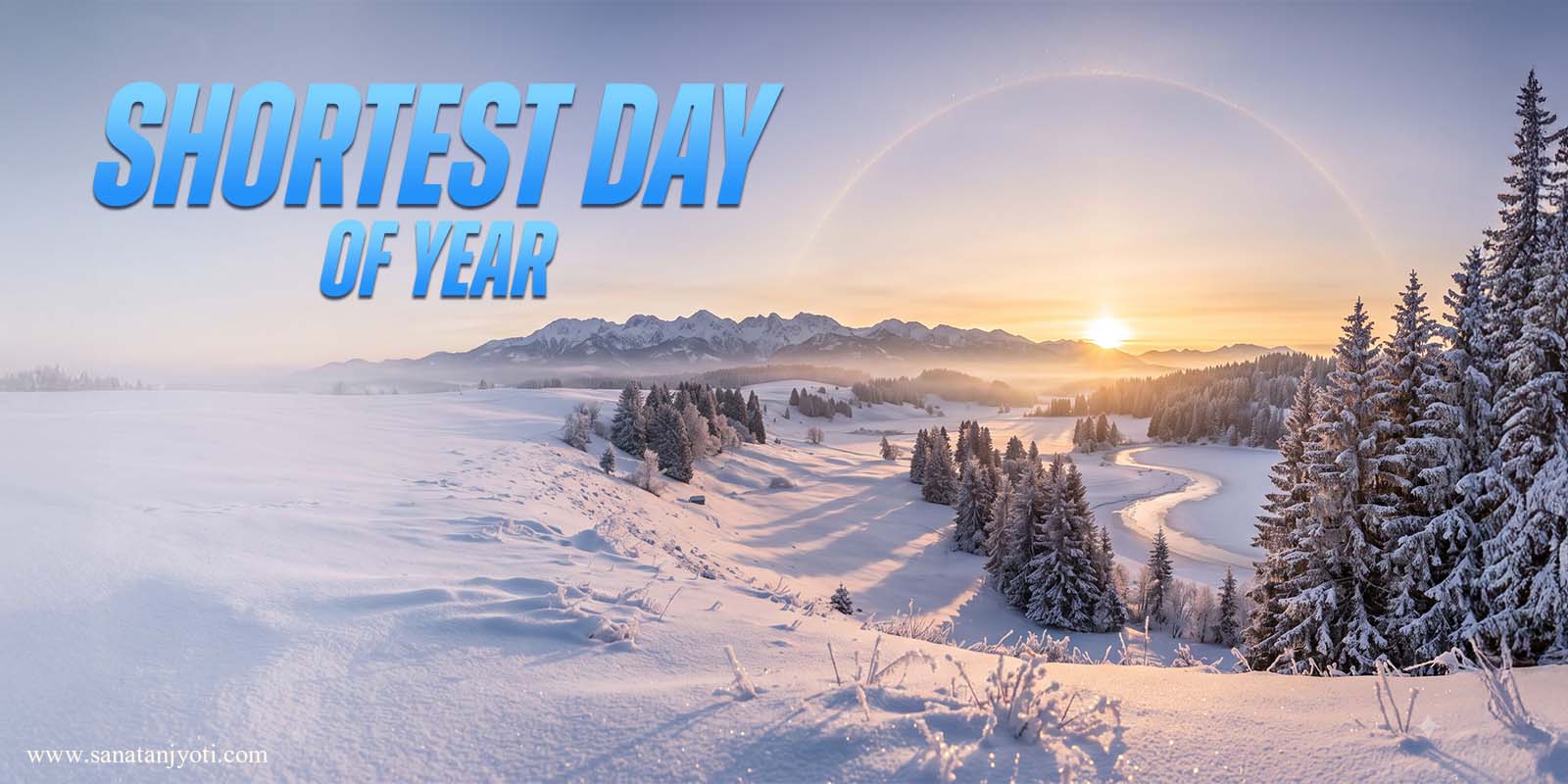
The shortest day of the year in India usually occurs around December 21 or 22. In 2026, the astronomical event known as the Winter Solstice will occur in the early hours of December 22, according to Indian Standard Time (IST). On this day, the Northern Hemisphere experiences the shortest period of daylight and the longest night of the year. This happens because of the Earth's axial tilt and its revolution around the Sun.
When Is the Shortest Day of the Year in 2026?
In 2026, the Winter Solstice will occur in the early hours of December 22, 2026, according to Indian Standard Time (IST). The shortest day of the year refers to the day when a location receives the least amount of daylight during the year.
On this day, the Sun reaches a comparatively lower height in the sky during its apparent daily journey, and the duration of daylight is at its shortest for the year. Since India is located in the Northern Hemisphere, the shortest day and longest night occur around the December Winter Solstice.
Why Is the Day the Shortest of the Year?
The main reason for the shortest day of the year is the tilt of the Earth's axis. Earth is tilted at approximately 23.5 degrees on its axis and revolves around the Sun. Because of this tilt, the Northern and Southern Hemispheres receive different amounts of sunlight at different times of the year.
During December, the Northern Hemisphere is tilted relatively away from the Sun. As a result, the Sun's rays fall more obliquely, and the Sun appears lower in the sky. The time between sunrise and sunset also becomes shorter. Consequently, the day becomes shorter and the night becomes longer.
In contrast, the Southern Hemisphere is tilted toward the Sun during the same period. Therefore, Australia, New Zealand and many other regions in the Southern Hemisphere experience longer days and shorter nights during December.
What Is the Winter Solstice?
The Winter Solstice is an astronomical event known as the Winter Solstice in the Northern Hemisphere. It usually occurs around December 21 or 22. Currently, the Sun's apparent annual position in the sky reaches its southernmost point. As a result, the Northern Hemisphere experiences the shortest daylight period of the year.
After the Winter Solstice, days gradually begin to grow longer, and nights become shorter in the Northern Hemisphere. This change may be very slight at first, but daylight hours continue to increase over the following months.
It is important to understand that the Winter Solstice and the coldest day of the year are not the same. The Winter Solstice relates to the duration of daylight, whereas temperature is also influenced by other factors, including weather conditions, winds, clouds and the way the land stores and releases heat.
When Is the Longest Night of the Year?
The longest night of the year occurs around the Winter Solstice in the Northern Hemisphere. In India, this period generally falls around December 21 or 22. During this time, daylight lasts for the shortest duration, making the night the longest of the year.
However, the duration of day and night is not exactly the same in every city. In general, daylight hours in northern parts of India are shorter than in many locations in southern India. This is because seasonal variations in day length become more pronounced as the distance from the equator increases.
Is the Shortest Day of the Year the Same Across India?
No, the duration of daylight is not the same throughout India. The country covers a large geographical area, and different locations lie at different latitudes. As a result, sunrise and sunset times, as well as the total length of the day, vary from place to place.
For example, during December, cities in northern India generally experience shorter days than many cities in southern India. Therefore, the duration of daylight can differ in cities such as Delhi, Lucknow, Jaipur, Chennai and Bengaluru.
If you want to know the exact timing and total duration of the shortest day in a particular city, You should check the local sunrise and sunset times for that city.
What Happens After the Shortest Day of the Year?
After the Winter Solstice, days gradually become longer and nights become shorter in the Northern Hemisphere. This means that the Sun's apparent daily path gradually changes, and the duration of daylight begins to increase.
However, this does not mean that temperatures will start rising immediately after the Winter Solstice. In many regions, the cold may continue to intensify in January, even after December has ended. This happens because changes in the temperature of the land and atmosphere often lag behind changes in the amount of energy received from the Sun.
After this, the Spring Equinox occurs in March, when the lengths of day and night become approximately equal. Later, around the Summer Solstice in June, the Northern Hemisphere experiences the longest day of the year.
The Shortest Day and the Longest Day of the Year
The length of daylight changes throughout the year because of the Earth's axial tilt. In the Northern Hemisphere, the shortest day occurs around the December Winter Solstice, while the longest day occurs around the June Summer Solstice.
In contrast, the Southern Hemisphere experiences its longest day around December and its shortest days around June. Thus, the annual cycles of seasons and daylight duration in the two hemispheres are opposite to each other.
Important Facts About the Shortest Day of the Year
• Shortest Day of the Year: Usually around December 21 or 22 in the Northern Hemisphere.
• Winter Solstice in 2026: In the early hours of December 22 in India.
• Longest Night: Occurs around the Winter Solstice in the Northern Hemisphere.
• Main Scientific Reason: The Earth's axis is tilted by approximately 23.5 degrees.
• After the Winter Solstice: Days gradually become longer in the Northern Hemisphere.
• In the Southern Hemisphere: The longest day of the year occurs during December.
• Does the Date Remain the Same Every Year? No. The timing of the astronomical event and its local calendar date may vary depending on the year and time zone.
Frequently Asked Questions
1. Which Is the Shortest Day of the Year?
In the Northern Hemisphere, the shortest day of the year usually occurs around December 21 or 22. The Winter Solstice takes place during this period.
2. When Is the Shortest Day of the Year in 2026?
In 2026, the Winter Solstice will occur in the early hours of December 22, according to Indian Standard Time. In some other time zones, the date will be December 21.
3. When Is the Longest Night of the Year?
In India and other regions of the Northern Hemisphere, the longest night of the year occurs around the Winter Solstice, which usually falls on December 21 or 22.
4. Why Is the Day the Shortest of the Year?
Earth is tilted at approximately 23.5 degrees on its axis. During December, the Northern Hemisphere is tilted away from the Sun, resulting in a shorter period of sunlight and a shorter day.
5. Are the Shortest Day and the Coldest Day of the Year the Same?
No. The shortest day is related to the duration of sunlight, while the coldest day depends on local weather and temperature conditions. Therefore, the shortest day and the coldest day can occur on different dates.
6. Do Days Become Longer After the Shortest Day of the Year?
Yes. After the Winter Solstice, days gradually become longer and nights become shorter in the Northern Hemisphere.
7. Does the Shortest Day of the Year Occur on the Same Date Worldwide?
No. The shortest day occurs around December in the Northern Hemisphere and around June in the Southern Hemisphere. The local calendar date of the astronomical event may also differ because of time zones.