
When is Shankaracharya Jayanti 2027?
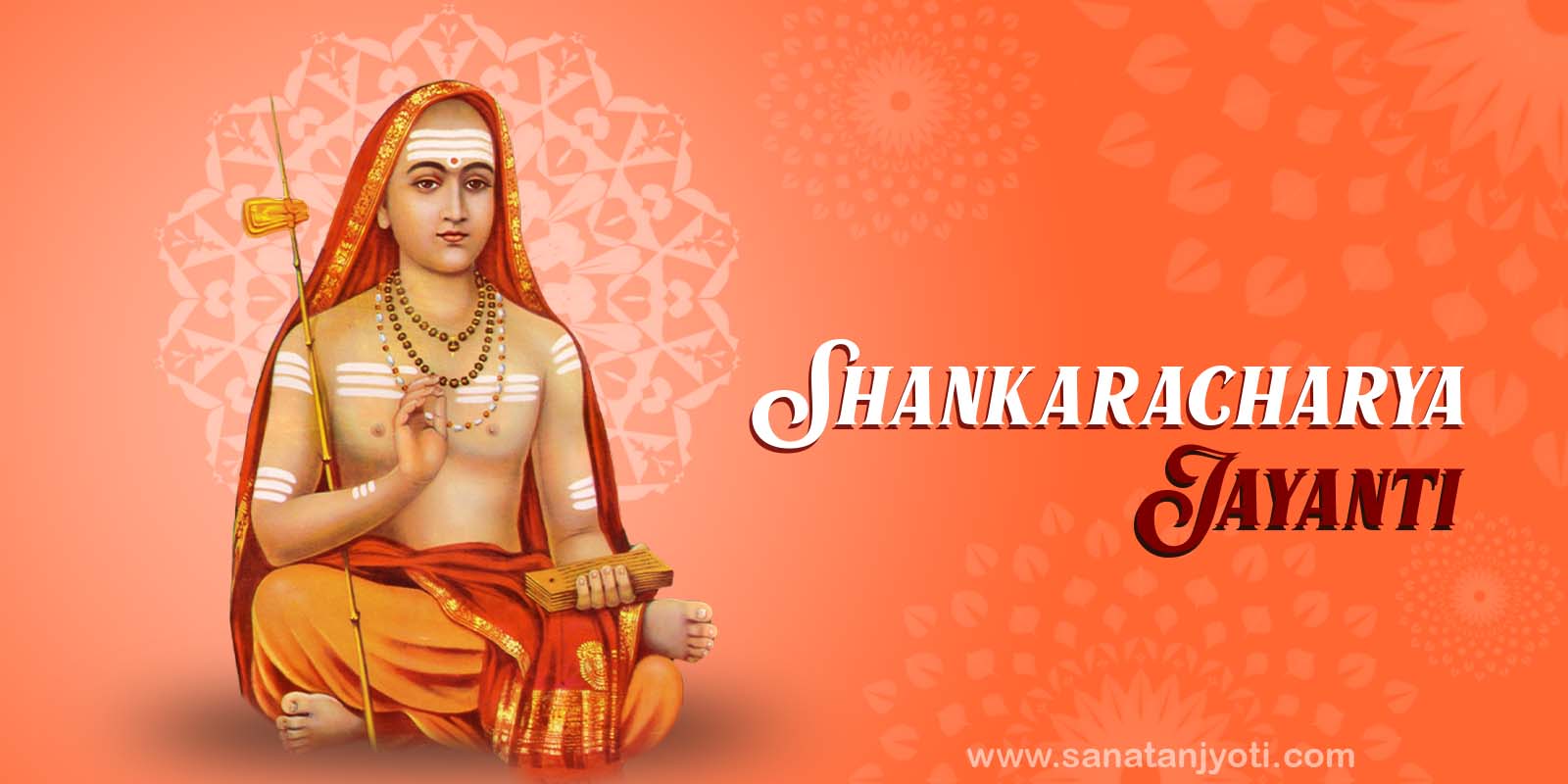
Shankaracharya Jayanti 2027 will be observed on Monday, May 10. This day is celebrated as the birth anniversary of Adi Guru Shankaracharya on the occasion of Vaishakha Shukla Panchami.
Who Was Adi Guru Shankaracharya?
Adi Guru Shankaracharya is regarded as one of the great Acharyas in the Indian philosophical tradition. He is especially known for the systematic exposition and propagation of Advaita Vedanta philosophy.
His life is closely associated with Indian spiritual traditions, the study of Vedanta, philosophical debates, and the monastic tradition. He is traditionally credited with the revival and widespread propagation of Sanatana Vedic philosophy.
There are differences between historical sources and the traditions of various monasteries regarding the chronology and dates associated with his life. Therefore, it is not appropriate to present all dates related to Shankaracharya's life as universally established historical facts.
When and Where Was Adi Shankaracharya Born?
According to tradition, Adi Shankaracharya was born in Kalady (Kalati), Kerala. His parents are traditionally identified as Shivaguru and Aryamba. Modern historical studies generally place him around the 8th century CE, while some traditional monastic traditions follow different chronologies.
Early Life of Adi Shankaracharya
According to traditional accounts, Adi Shankaracharya was exceptionally gifted and spiritually inclined from a very young age. His father, Shivaguru, is described as a learned and religious man, while his mother, Aryamba, was deeply devoted to religious practices.
From childhood, Shankaracharya is said to have shown a keen interest in studying the Vedas, Upanishads and other scriptures. Numerous stories highlighting his extraordinary knowledge and intellectual abilities are well known in Indian religious traditions.
According to traditional biographies, his father passed away when he was still young. After this, his mother took responsibility for his education and spiritual development.
Why Did Shankaracharya Take Sannyasa?
One of the most famous stories associated with Adi Shankaracharya's decision to renounce worldly life involves his mother, Aryamba, and his desire to become a Sannyasi.
According to tradition, young Shankara was deeply eager to understand the impermanence of worldly life and the ultimate truth of existence. He asked his mother for permission to take Sannyasa, but she was initially unwilling to allow her son to become a monk.
The famous crocodile story is closely associated with this episode in Indian religious tradition.
The Story of Shankaracharya and the Crocodile
One day, Shankaracharya went to the river to bathe. His mother was also present on the riverbank. According to the traditional story, a crocodile suddenly caught hold of Shankaracharya's leg.
Shankaracharya told his mother that if she allowed him to take Sannyasa, he would be freed from the crocodile's grip. Concerned for her son's life, his mother eventually gave him permission to renounce worldly life.
According to the story, as soon as his mother granted permission, the crocodile released his leg.
Shankaracharya then embraced the monastic life. His mother expressed one final wish—that her son should perform her last rites at the time of her death. Shankaracharya promised to fulfill her wish.
This episode is one of the most well-known traditional stories associated with the life of Shankaracharya.
Shankaracharya's Meeting with Guru Govindapada
After embracing Sannyasa, Adi Shankaracharya continued his journey in search of a spiritual teacher. According to tradition, he met Guru Govindapada, who is regarded as one of his principal teachers.
Govindapada recognized Shankaracharya's spiritual abilities and accepted him as his disciple. Under his guidance, Shankaracharya undertook an in-depth study of Vedanta and spiritual knowledge.
The Guru-Shishya relationship is traditionally regarded as an important foundation for Shankaracharya's later philosophical journey.
Shankaracharya and Advaita Vedanta
Adi Shankaracharya is particularly associated with Advaita Vedanta philosophy. In Advaita Vedanta, Brahman is regarded as the ultimate reality, and the relationship between the individual self and Brahman is explored in depth.
Shankaracharya wrote commentaries on the Upanishads, the Bhagavad Gita and the Brahma Sutras. His philosophical tradition had a profound influence on the development of Vedanta thought in India.
His teachings placed special emphasis on self-knowledge, knowledge of Brahman and the concept of Moksha.
The Philosophical Debate Between Mandana Mishra and Shankaracharya
One of the most famous traditional accounts associated with Adi Shankaracharya is the philosophical debate with Mandana Mishra.
According to the traditional account, Mandana Mishra was a great scholar and is regarded as a proponent of Vedic rituals and the ritualistic tradition. Shankaracharya approached him for a philosophical debate.
Shankaracharya placed greater emphasis on knowledge and Brahma Vidya, while Mandana Mishra emphasized the importance of rituals and Vedic actions.
The two scholars are traditionally said to have debated for several days. In accounts associated with this debate, Ubhaya Bharati is described as having served as the judge.
Ubhaya Bharati and the Debate with Shankaracharya
According to the traditional story, after Mandana Mishra was defeated in the debate, he agreed to accept Shankaracharya as his Guru.
However, Mandana Mishra's wife, Ubhaya Bharati, stated that a wife is considered her husband's Ardhangini, or other half, and therefore the debate was not yet complete.
Ubhaya Bharati then also engaged in a philosophical debate with Shankaracharya. According to the religious tradition, their debate continued for several days.
The later part of this story is associated with Shankaracharya acquiring knowledge related to Kama Shastra. This episode is found primarily in traditional biographies such as the Shankara Digvijaya. Therefore, it is more appropriate to present it as a traditional account rather than an undisputed historical event.
Why Are Four Monasteries Associated with Adi Shankaracharya?
Four major monasteries in India are traditionally associated with the lineage of Adi Shankaracharya. These monasteries, established in the four directions, hold an important place in the Indian monastic and Vedanta traditions.
North – Jyotirmath
In North India, Jyotirmath, associated with the Badrikashram region, is regarded as one of the important monasteries in the Shankaracharya tradition.
West – Sharada Math
In the western part of India, Sharada Math in Dwarka is regarded as a major monastery associated with the Shankaracharya tradition.
South – Sringeri Sharada Peetham
In South India, Sringeri Sharada Peetham is an important center of the Shankaracharya tradition.
East – Govardhan Math
In eastern India, Govardhan Math in Puri is traditionally regarded as being associated with the monastic lineage of Adi Shankaracharya.
The traditions of these four monasteries have played an important role in the propagation of Vedanta and the monastic tradition in India.
What Was the Greatest Contribution of Adi Shankaracharya?
The principal contribution of Adi Shankaracharya is associated with the systematic exposition and widespread propagation of Advaita Vedanta philosophy. He wrote commentaries on important scriptures such as the Upanishads, Bhagavad Gita and Brahma Sutras and presented profound philosophical perspectives on Brahman, Atman, knowledge and Moksha.
The monasteries and monastic traditions associated with his lineage have also had a long-lasting influence on India's spiritual and philosophical traditions.
Major Works of Adi Shankaracharya
Numerous texts and hymns are traditionally attributed to Adi Shankaracharya. Some of the major works include:
• Brahma Sutra Bhashya
• Bhagavad Gita Bhashya
• Commentaries on the Principal Upanishads
• Upadeshasahasri
• Vivekachudamani
• Atma Bodha
• Bhaja Govindam
• Various hymns dedicated to different deities
There are also scholarly debates regarding the authenticity of some works attributed to Shankaracharya. Therefore, not every work should be presented with the same degree of historical certainty.
How Is Shankaracharya Jayanti Celebrated?
On the occasion of Shankaracharya Jayanti, various monasteries, Ashrams and religious institutions organize worship and remembrance of Adi Shankaracharya. Devotees study his life, philosophy and teachings.
Programs such as Vedanta discussions, scripture recitations, spiritual discourses, Bhajans, religious rituals and honoring of Sadhus and Saints are also organized on this occasion.
Significance of Shankaracharya Jayanti
Adi Shankaracharya Jayanti is not observed only as a birth anniversary but also as an occasion to remember the tradition of Vedanta philosophy, self-knowledge and spiritual inquiry.
On this day, devotees and followers study and remember the life and teachings of Adi Guru Shankaracharya, Advaita Vedanta and his contribution to the Indian spiritual tradition.
Frequently Asked Questions About Shankaracharya Jayanti 2027
1. When is Shankaracharya Jayanti in 2027?
Shankaracharya Jayanti will be observed on Monday, May 10, 2027. It will be celebrated on Vaishakha Shukla Panchami.
2. Where was Adi Shankaracharya born?
According to tradition, Adi Shankaracharya was born in Kalady, Kerala.
3. Who were the parents of Adi Shankaracharya?
His father's name is traditionally given as Shivaguru, and his mother's name was Aryamba.
4. Which philosophy was Adi Shankaracharya primarily associated with?
Adi Shankaracharya is particularly known as one of the principal teachers of Advaita Vedanta philosophy.
5. What are the four monasteries associated with Adi Shankaracharya?
The Shankaracharya tradition associates Jyotirmath, Dwarka Sharada Math, Sringeri Sharada Peetham and Puri Govardhan Math with the four major monastic centers.
6. Who was the Guru of Adi Shankaracharya?
According to tradition, Govindapada Acharya was one of his principal Gurus.