
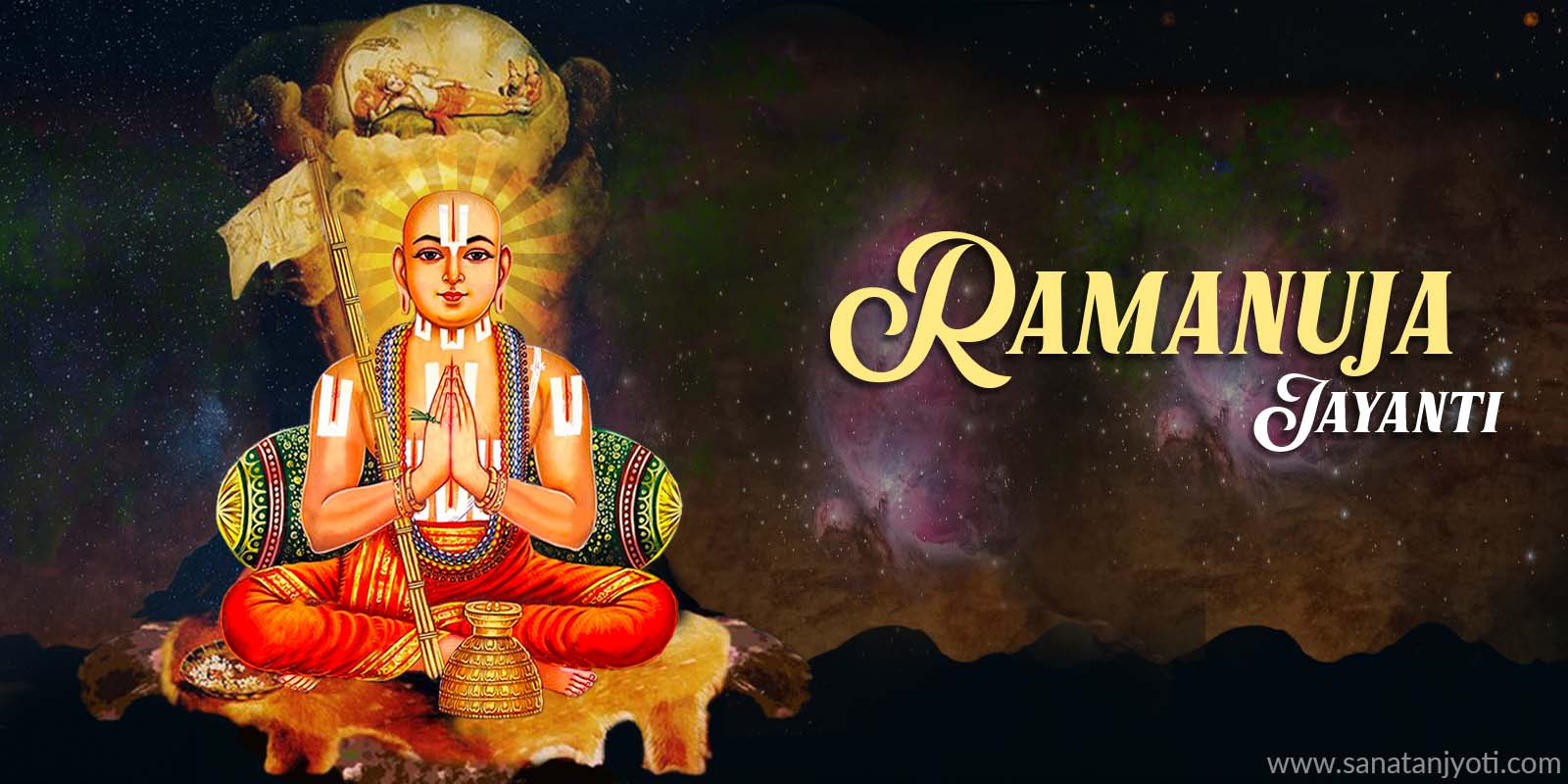
Ramanuja Jayanti 2027 will be celebrated on Monday, May 10. This day marks the birth anniversary of the great Vaishnava Acharya and philosopher Sri Ramanujacharya. Ramanujacharya is regarded as one of the prominent Acharyas of the Sri Vaishnava tradition. Through Bhakti, devotion to God and the philosophy of Vishishtadvaita, he explained and propagated Vaishnava philosophy in a systematic manner. According to the Panchang for 2027, Ramanuja Jayanti falls on May 10.
When is Ramanuja Jayanti 2027?
Ramanuja Jayanti 2027 will be celebrated on Monday, May 10. According to the Panchang, the day is associated with Panchami Tithi of Shukla Paksha in the month of Vaishakha.
Ramanujacharya was born in Sriperumbudur in South India. He provided a systematic philosophical foundation to Vaishnava philosophy and the Bhakti tradition, and his teachings had a wide influence beyond South India as well.
Who Was Ramanujacharya?
Ramanujacharya was a great Hindu philosopher, saint, Acharya and prominent thinker of the Vaishnava tradition. He is counted among the most respected Acharyas of the Sri Vaishnava Sampradaya.
The philosophy of Ramanujacharya is primarily known as Vishishtadvaita Vedanta. According to his philosophy, one should understand the relationship between the Supreme Being, individual souls and the universe and follow the path of devotion and complete surrender to God.
In South India, his birth anniversary is observed with great devotion as Ramanuja Jayanti.
Early Life
Ramanujacharya was born in Sriperumbudur, Tamil Nadu, into a Brahmin family. His father is traditionally known as Keshava Bhatta and his mother as Kantimati.
From childhood, Ramanuja was exceptionally intelligent. He went to Kanchipuram, where he studied the Vedas and scriptures under Guru Yadav Prakash.
At a young age, Ramanujacharya had already developed a deep understanding of the Vedas and Upanishads. His approach to interpretation and philosophical thinking sometimes differed from that of his teacher, Yadav Prakash.
According to traditional accounts, Ramanujacharya later renounced household life and accepted Sannyasa. He devoted his life to the propagation of Vaishnava Bhakti and Vedanta.
Relationship with Yamunacharya
Ramanujacharya was deeply influenced by the great Vaishnava Acharya Yamunacharya (Alavandar). He travelled to Srirangam to meet him, but Yamunacharya had passed away before Ramanujacharya arrived.
According to tradition, when Ramanujacharya saw the body of Yamunacharya, three of his fingers were folded. Ramanujacharya understood this as a sign of his Guru's unfulfilled wishes and made three important resolutions.
These resolutions are traditionally described as follows:
1. To write a commentary on the **Brahma Sutras**.
2. To propagate the glory of the **Vishnu Sahasranama**.
3. To carry forward the tradition of the **Divya Prabandham**.
These resolutions provided direction to his later religious and philosophical life.
Ramanujacharya's Religious Teachings
Ramanujacharya undertook extensive journeys to spread Vaishnava Dharma and Bhakti. He travelled across South India as well as different parts of India, propagating his philosophical ideas and principles of devotion.
Srirangam became one of the major centers of his religious and spiritual activities. He played an important role in organizing temple traditions, Bhakti practices and Vaishnava religious principles.
The teachings of Ramanujacharya later influenced various Vaishnava Bhakti traditions as well.
Ramanujacharya's Vishishtadvaita Philosophy
The philosophy of Ramanujacharya is known as Vishishtadvaita Vedanta. In general terms, Vishishtadvaita refers to a form of non-dualism that accepts the unity of Brahman while also recognizing the reality of individual souls and the universe and their relationship with God.
In Ramanujacharya's philosophy, Lord Vishnu/Narayana is regarded as the Supreme Brahman. The individual soul and the universe are related to the Supreme Being, while devotion to God and Prapatti, or complete surrender, are regarded as important means of attaining liberation.
For this reason, Bhakti, Prapatti or surrender to God, and complete devotion to the Supreme Being hold a special place in the teachings of Ramanujacharya.
The True Meaning of Bhakti
According to Ramanujacharya, Bhakti is not limited to performing Puja, reciting Mantras or singing devotional hymns. Bhakti also includes constant remembrance of God, meditation, love and complete surrender to Him.
A person should focus the mind on God and contemplate His divine form and qualities. In this way, Bhakti develops spiritual discipline and a sense of surrender to God in one's life.
Ramanujacharya's View of Brahman
In Ramanujacharya's Vishishtadvaita philosophy, Brahman is regarded as the highest reality, and Lord Narayana is accepted as the Supreme Brahman.
His philosophy explains a special relationship between Chit and Achit, that is, conscious individual souls and the unconscious universe, and God. The individual soul and the universe are not independent ultimate realities separate from God; rather, their existence depends upon the Supreme Being.
In this way, Ramanujacharya's philosophy presents an important Vedantic perspective for understanding the relationship between God, the individual soul and the universe.
Major Works of Ramanujacharya
Ramanujacharya wrote several important works related to Vedanta and Vaishnava philosophy. His major works include:
• Shri Bhashya — A renowned commentary on the Brahma Sutras.
• Vedanta Deepa
• Vedanta Sara
• Gita Bhashya
Through these works, he presented Vishishtadvaita Vedanta in a systematic and organized form.
Contribution of Ramanujacharya
Ramanujacharya was not only a philosopher but also a great religious Acharya and saint who spread Bhakti and spiritual awareness in society.
He presented devotion to God and surrender as important paths of spiritual life. His teachings gave special importance to love, surrender and devotion toward the Supreme Being.
His contribution to organizing the Sri Vaishnava tradition and establishing Vishishtadvaita Vedanta is regarded as highly significant.
Statue of Equality
A massive statue of Ramanujacharya has been established at Muchintal near Hyderabad, known as the Statue of Equality.
The statue is one of the prominent modern landmarks associated with the teachings of Ramanujacharya and serves as a reminder of his message of equality.
Death of Ramanujacharya
According to traditional beliefs, Ramanujacharya lived a long life and is traditionally believed to have attained Brahma Loka around 1137 CE.
Different traditions provide varying details regarding the dates and age associated with his life and passing. Therefore, these historical details are best understood as traditional accounts.
Significance of Ramanuja Jayanti
Ramanuja Jayanti is an opportunity to remember the life, philosophy and spiritual contribution of the great Vaishnava Acharya Ramanujacharya.
On this day, devotees remember Lord Vishnu and Ramanujacharya and reflect upon his teachings related to Bhakti, Prapatti and spiritual life.
The teachings of Ramanujacharya emphasize love, devotion and surrender to God, along with the importance of spiritual knowledge. For this reason, Ramanuja Jayanti holds special religious significance in the Sri Vaishnava tradition.
Frequently Asked Questions About Ramanuja Jayanti 2027
1. When is Ramanuja Jayanti 2027?
Ramanuja Jayanti 2027 will be celebrated on Monday, May 10. According to the 2027 Panchang, it is associated with Panchami Tithi of Shukla Paksha in the month of Vaishakha.
2. What is the philosophy of Ramanujacharya called?
The philosophy of Ramanujacharya is known as Vishishtadvaita Vedanta.
3. What is the most famous work of Ramanujacharya?
Among the major and well-known works of Ramanujacharya is Shri Bhashya, an important commentary on the Brahma Sutras.
4. Which tradition was Ramanujacharya a prominent Acharya of?
Ramanujacharya is regarded as one of the prominent Acharyas of the Sri Vaishnava tradition.
5. Which path of devotion did Ramanujacharya emphasize?
The teachings of Ramanujacharya give special importance to Bhakti, Prapatti and complete surrender to God.