
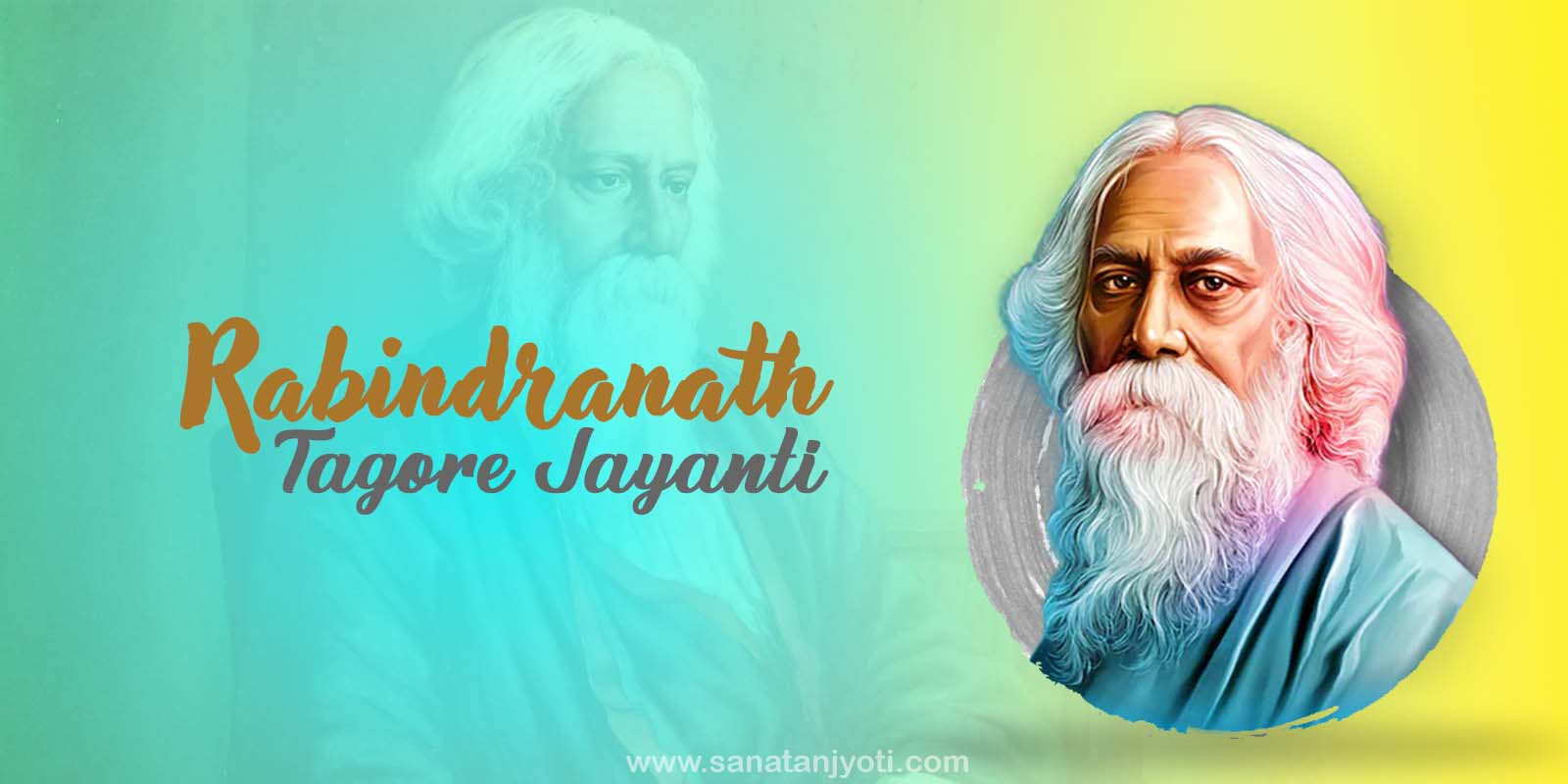
Rabindranath Tagore Jayanti 2027 will be observed on Sunday, May 9. According to the Bengali calendar, the day falls on 25 Baishakh 1434. Rabindranath Tagore was born on May 7, 1861, in Kolkata, but in West Bengal, his birth anniversary is traditionally observed according to the Bengali calendar on 25 Baishakh. Therefore, in 2027, Rabindra Jayanti will be observed on May 9. It is also known in Bengali as Poila/Pochishe Boishakh (Pochishe Boishakh).
Rabindranath Tagore was one of India's greatest poets, writers, philosophers, playwrights, musicians and painters. His contribution to literature and the arts brought Indian culture recognition on the global stage. In 1913, he received the Nobel Prize in Literature, becoming the first Asian to receive the honor.
When is Rabindranath Tagore Jayanti 2027?
Rabindranath Tagore Jayanti 2027 will be observed on Sunday, May 9. According to the Bengali calendar, May 9, 2027, corresponds to 25 Baishakh 1434, and Rabindra Jayanti will be observed on this day.
In West Bengal, Rabindranath Tagore's birth anniversary is traditionally observed according to the Bengali calendar date of 25 Baishakh. The day is especially celebrated in Kolkata and across West Bengal through cultural programs, Rabindra Sangeet, poetry recitations, dance performances and theatrical presentations.
Note: Rabindranath Tagore's actual date of birth according to the Gregorian calendar was May 7, 1861, while his birth anniversary is observed according to 25 Baishakh in the Bengali tradition. This is why the two dates may differ.
When Was Rabindranath Tagore Born?
Rabindranath Tagore was born on May 7, 1861, at Jorasanko Thakurbari in Kolkata. His father's name was Debendranath Tagore and his mother's name was Sarada Devi.
According to the Bengali calendar, he was born on 25 Baishakh 1268 Bangabda. His birth anniversary is observed every year based on this Bengali date.
As a child, he was affectionately called 'Rabi' by his family. His family held an important place in the cultural, literary and social life of Bengal.
What Was Rabindranath Tagore's Family Like?
Rabindranath Tagore's father, Debendranath Tagore, was one of the prominent figures of the Brahmo Samaj. His mother's name was Sarada Devi.
The Tagore family had an environment rich in literature, music, art and social thought. Several of his siblings were also associated with literature, music, art and administration.
His elder brother Dwijendranath Tagore was a poet and philosopher. His brother Satyendranath Tagore was among the first Indians to join the Indian Civil Service. His brother Jyotirindranath Tagore was a musician, playwright and painter. His sister Swarnakumari Devi was a renowned writer and novelist.
This environment had a deep influence on Rabindranath Tagore's literary and artistic development.
Rabindranath Tagore's Education and Early Life
Rabindranath Tagore's early education was different from the conventional schooling system. He studied various subjects at home and received education from members of his family and private teachers.
In 1873, he travelled with his father, Debendranath Tagore. During this journey, he lived close to nature and studied literature, history, astronomy, Sanskrit and other subjects.
From childhood, he had a strong inclination toward poetry and literature. He began writing poetry at a very young age.
Later, he was sent to England for higher education, but he did not develop an interest in conventional legal studies and returned to India without completing his degree.
How Did Rabindranath Tagore Contribute to Literature?
Rabindranath Tagore wrote in several literary genres, including poetry, short stories, novels, plays, songs and essays.
His literary works reflect themes such as nature, love, humanity, society, spirituality and various aspects of human life.
His major works include Gitanjali, Gora, Ghare-Baire, Chokher Bali, The Post Office, The King and Muktadhara.
His works played an important role in giving Bengali literature a modern form, and his literature reached readers in many parts of the world.
When Did Rabindranath Tagore Receive the Nobel Prize?
Rabindranath Tagore received the Nobel Prize in Literature in 1913. He received the honor after gaining international recognition, particularly through the English translation of his poetic work Gitanjali.
He was the first Asian to receive the Nobel Prize in Literature.
This achievement played an important role in bringing Indian literature greater international recognition.
What Are the Major Works of Rabindranath Tagore?
Rabindranath Tagore produced important works across various literary genres. His major works include:
• Gitanjali
• Gora
• Ghare-Baire
• Chokher Bali
• Chaturanga
• The Post Office
• The King
• Muktadhara
• Manasi
• Sonar Tari
He also wrote a large number of poems and songs. His songs later became widely known as Rabindra Sangeet.
When Did Rabindranath Tagore Write India's National Anthem?
Rabindranath Tagore wrote 'Jana Gana Mana', which later became India's national anthem.
The Constituent Assembly of India adopted the first stanza of 'Jana Gana Mana' as India's national anthem on January 24, 1950.
Another famous composition by Rabindranath Tagore is 'Amar Sonar Bangla', which was adopted as the national anthem of Bangladesh.
Thus, Tagore's works extended beyond India's and Bengal's cultural identity and gained international significance.
What Was Rabindranath Tagore's Connection with Shantiniketan?
Rabindranath Tagore made significant efforts to connect education with nature and independent thinking. Shantiniketan became an important center for his educational ideas.
He envisioned an education system in which students could learn close to nature while giving importance to creativity and independent thought.
Later, Visva-Bharati, established at Shantiniketan, became an important expression of his educational philosophy.
Rabindranath Tagore's Views on Society and Humanity
Humanity, nature, independent thinking and social awareness held an important place in Rabindranath Tagore's literature.
His literature was not limited to any particular community or region. His works express the relationship between human beings and nature as well as universal human values.
His ideas influenced Indian literature, education and cultural thought.
Why Is Rabindranath Tagore Called 'Gurudev'?
Rabindranath Tagore is known by honorific titles such as 'Gurudev,' 'Kaviguru' and 'Vishwakavi.'
The title 'Gurudev' has traditionally been used as a mark of respect for him. Mahatma Gandhi and Tagore also shared a deep intellectual and personal relationship.
Although they differed on several issues, they continued to maintain mutual respect for each other.
When Did Rabindranath Tagore Die?
Rabindranath Tagore passed away on August 7, 1941, in Kolkata. He was 80 years old at the time.
Even during the final years of his life, he continued to contribute actively to literature and the arts. He also developed a particular interest in painting and created many paintings.
Even after his death, his works have remained an important part of Indian and world literature.
How Is Rabindranath Tagore Jayanti Celebrated?
Rabindranath Tagore Jayanti is especially celebrated in West Bengal as a major cultural festival.
On this occasion, various programs are organized, including:
• Rabindra Sangeet performances.
• Poetry recitations.
• Dance and theatrical performances based on Tagore's works.
• Literary discussions and seminars.
• Cultural programs in schools and colleges.
• Lectures on Tagore's literature and ideas.
The day has special cultural significance in Kolkata and throughout West Bengal.
What Is the Significance of Rabindranath Tagore Jayanti?
Rabindranath Tagore Jayanti is an opportunity to remember his contributions to literature, music, art, education and humanistic thought.
Themes such as nature, humanity, love, freedom and social awareness are prominently reflected in his works. His literary legacy continues to influence Indian culture and literature.
On this day, people read Tagore's works, sing his songs and remember his literary and educational contributions.
Famous Thoughts of Rabindranath Tagore
Rabindranath Tagore's literature contains numerous thoughts and ideas related to life, love, nature, humanity and freedom. Reading his works allows readers to reflect on different aspects of life and society.
The central message reflected in his literature is closely associated with humanity, independent thinking and sensitivity toward nature.
Important Questions Related to Rabindranath Tagore Jayanti 2027
1. When is Rabindranath Tagore Jayanti 2027?
Rabindranath Tagore Jayanti 2027 will be observed on Sunday, May 9. According to the Bengali calendar, it falls on 25 Baishakh 1434.
2. When was Rabindranath Tagore born?
Rabindranath Tagore was born on May 7, 1861, in Kolkata. According to the Bengali calendar, his birth date is observed as 25 Baishakh.
3. When did Rabindranath Tagore receive the Nobel Prize?
Rabindranath Tagore received the Nobel Prize in Literature in 1913.
4. What is Rabindranath Tagore's most famous work?
Gitanjali is one of his most famous works, and its English translation played an important role in bringing him international recognition.
5. When did Rabindranath Tagore write India's national anthem?
Rabindranath Tagore composed 'Jana Gana Mana', which was adopted by the Constituent Assembly as India's national anthem on January 24, 1950.
6. Where is Rabindranath Tagore Jayanti mainly celebrated?
Rabindranath Tagore Jayanti is especially celebrated in West Bengal and among Bengali communities as a major cultural festival.
7. What names is Rabindranath Tagore known by?
Rabindranath Tagore is known by honorific titles such as Gurudev, Kaviguru and Vishwakavi.