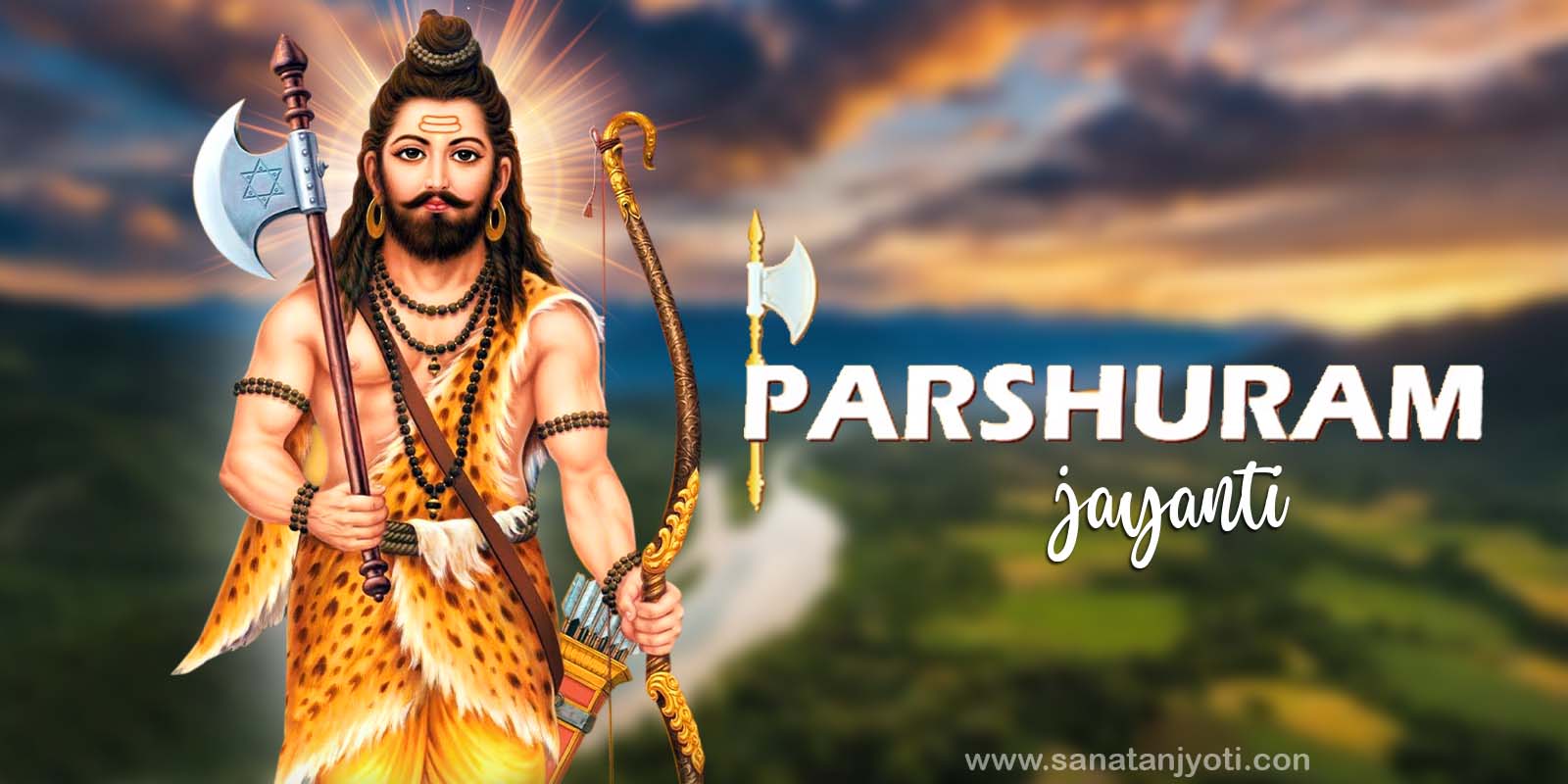
Parashurama Jayanti will be observed on Saturday, May 8, 2027. This festival is celebrated on the Tritiya Tithi of Shukla Paksha in the month of Vaishakha as the birth anniversary of Lord Parashurama, the sixth incarnation of Lord Vishnu. According to religious beliefs, Lord Parashurama was born during the Pradosh period. Therefore, the presence of Tritiya Tithi during Pradosh is considered particularly significant for determining Parashurama Jayanti. On this day, devotees worship Lord Parashurama, observe a Vrat and worship Lord Vishnu.
Lord Vishnu has taken several incarnations for the welfare of the Earth and the destruction of Adharma, among which the incarnation of Lord Parashurama is considered significant. According to religious beliefs, Lord Parashurama is the sixth incarnation of Lord Vishnu. He is also known by names such as Bhargava, Bhrigupati, Parashudhara, Jamadagnya and Renukeya.
When is Parashurama Jayanti in 2027?
Parashurama Jayanti will be observed on Saturday, May 8, 2027. The day falls on Tritiya Tithi of Shukla Paksha in the month of Vaishakha. According to the Panchang, the Tritiya Tithi will begin at 11:45 AM on May 8, 2027, and end at 9:06 AM on May 9, 2027. In 2027, Akshaya Tritiya will be observed on May 9.
For information about all major Vrat, festivals, Tithis and Shubh Muhurat, including Parashurama Jayanti: - Check the SanatanJyoti Panchang.
According to religious beliefs, Lord Parashurama was born during the Pradosh period. Therefore, the presence of Tritiya Tithi during Pradosh is given special importance when determining Parashurama Jayanti.
Why Is Parashurama Jayanti Celebrated?
Parashurama Jayanti is celebrated to commemorate the birth of Lord Parashurama, the sixth incarnation of Lord Vishnu. According to religious beliefs, Lord Parashurama fought against Adharma and oppression and worked to relieve the Earth of its burden. On this day, devotees remember Lord Parashurama, perform Puja and observe a Vrat according to their faith.
Let Us Know How Lord Parashurama Was Born and Why He Was Known for His Anger and Valor
Story of Lord Parashurama's Birth
A sage named Ruchika lived in a forest. He was extremely short-tempered and powerful by nature. One day, he decided to marry. He went to King Gadhi to ask for his daughter's hand in marriage. King Gadhi was believed to be an aspect of Lord Indra. He had a daughter named Satyavati, who was extremely beautiful and attractive.
Sage Ruchika asked King Gadhi for his daughter's hand in marriage. King Gadhi did not wish to give his daughter to the very old and extremely short-tempered Brahmin Ruchika. Therefore, he said that if Ruchika could give him one thousand dark-eared horses, radiant like the Moon and as swift as the wind, as the bride price for his daughter, he would allow him to marry her.
Sage Ruchika brought one thousand such horses from Varuna Dev, said to have originated from Ashwatirtha, and gave them to the king. Thus, even though he was initially unwilling, King Gadhi had to marry his daughter Satyavati to Sage Ruchika.
After this, Sage Ruchika prepared a sacred Kheer through a Yajna for Satyavati with the intention of blessing her with a child. He also prepared another Yajna Kheer for her mother, intended to bless her with a powerful Kshatriya son.
Sage Ruchika gave the Kheer to Satyavati and said, "This Kheer is for you and this one is for your mother. Use them appropriately." Having said this, he went into the forest.
While using the sacred Kheer, Satyavati's mother told her, "Daughter, everyone naturally wishes to have the most virtuous son for themselves. No one is particularly interested in the qualities of their wife's brother. Therefore, give your Kheer to me and take mine, because my son will have to protect the entire Earth, whereas what need would a Brahmin boy have for strength, valor and wealth?"
Hearing this, Satyavati gave her Kheer to her mother.
When Sage Ruchika returned from the forest and saw Satyavati, he said, "O sinful one! What wrong have you done that your body appears so frightening? Surely, you have consumed the Kheer that was prepared for your mother. This was not right. I had infused it with the qualities of prosperity, valor, courage and strength, while I had infused your Kheer with peacefulness, knowledge and all the qualities appropriate for a Brahmin. Because they were consumed in the opposite manner, you will have a son who will behave like a fierce Kshatriya, equipped with terrible weapons and devoted to the duty of protection, while his son will possess the peaceful conduct and qualities of a Brahmin."
Hearing this, Satyavati held his feet and bowed before him. She said, "O Bhagavan! I made this mistake out of ignorance. Therefore, please be gracious and make it so that my son does not have these qualities, even if my grandson does."
The sage replied, "So be it."
After this, Satyavati gave birth to Jamadagni, while her mother gave birth to Vishwamitra, and Satyavati herself became the river known as Kaushiki.
Jamadagni married Renuka, the daughter of Renu. Lord Parashurama was born to Jamadagni and Renuka. He is regarded as an aspect of Lord Narayana, the universal teacher.
Why Was Lord Parashurama Named Parashurama?
Renuka, the wife of Jamadagni, gave birth to five sons. Their names are said to be Rumanvan, Sushena, Vasu, Vishvavasu and Rama.
Lord Parashurama's parents called him "Rama." From childhood, Rama was deeply devoted to Lord Shiva. Later, when his father Jamadagni saw Rama's deep devotion to Lord Shiva, he took him to the Himalayas and instructed him to worship Lord Shiva there.
Rama obeyed his father's command and began worshipping Lord Shiva. Pleased with Rama's determination and intense penance, Lord Shiva appeared before him. Impressed by his devotion, Lord Shiva gave Rama an axe known as Parashu for the destruction of demons.
When Rama received and carried the Parashu, he became known as Parashurama.
Why Did Lord Parashurama Have to Kill His Mother?
One day, Sage Jamadagni's wife Renuka went to a lake to fetch water. A handsome prince was bathing in the lake. Seeing him, Renuka became attracted to him. When Renuka returned to Sage Jamadagni in that state of mind, Jamadagni learned everything through his yogic powers and ordered his sons to cut off their mother's head.
All the sons refused to obey this command. At that time, Rama had gone to perform penance to Lord Shiva. A few days later, when he returned to his father's Ashram, he bowed before his father and told him about the axe he had received through his penance.
At that moment, Sage Jamadagni ordered Parashurama to cut off his mother's head. Parashurama knew that his father was a great sage. He thought that if his father had given such an order, there must certainly be some deeper purpose and welfare behind it. Thinking this, he cut off his mother's head with the axe.
Pleased with him, Sage Jamadagni asked Parashurama to ask for a boon. Parashurama then requested that his mother be brought back to life. His father granted the boon, and Renuka came back to life.
The Valor of Lord Parashurama
Other religious stories associated with Lord Parashurama describe the death of his father, Jamadagni, and the revenge he subsequently took. According to religious tradition, the sons of Kritavirya Arjuna killed Jamadagni. Parashurama became extremely angry and fought against oppressive Kshatriya kings.
According to the stories described in the Puranas, he rid the Earth of Kshatriyas 21 times. After this, he performed a Yajna and donated the Earth to Sage Kashyapa as Dakshina, taking a vow not to reside on the Earth. He then established an Ashram on Mahendra Mountain, where he began living.
The valor of Lord Parashurama is also depicted in the Dhanush Bhang episode of the Ramayana, where he encountered Lord Shri Ram.
Parashurama Jayanti Puja Vidhi
On Parashurama Jayanti, wake up early, complete your daily routine, take a bath and wear clean clothes. After this, fold your hands before Lord Parashurama and take a Sankalp for the Vrat.
During the Puja, apply a sandalwood Tilak to Lord Parashurama and offer Kumkum, Tulsi leaves, flowers and fruits. After this, light Dhoop and Deep, perform the Lord's Aarti, and meditate upon and praise him.
Devotees may also remember Lord Vishnu and recite the Vishnu Sahasranama according to their faith. According to religious beliefs, worshipping Lord Parashurama on this day is a way of praying for wisdom, courage and the strength to follow the path of Dharma in life.
For performing Lord Parashurama's Puja Vidhi and religious rituals according to your faith and traditions: -Seek guidance from our expert through a free consultation.
Significance of Parashurama Jayanti
Parashurama Jayanti is considered especially significant in Sanatan Dharma. The festival is celebrated to commemorate the birth of Lord Parashurama. According to religious beliefs, Lord Parashurama is the sixth incarnation of Lord Vishnu and fought against Adharma and oppression.
On this day, devotees of Lord Parashurama observe a Vrat, perform Puja and worship Lord Vishnu. Some devotees also recite the Vishnu Sahasranama on this occasion.
Parashurama Jayanti is also considered an opportunity to remember Lord Parashurama's penance, courage, valor and dedication to Dharma.
Religious Significance of Parashurama Jayanti 2027
Parashurama Jayanti will be observed on May 8, 2027, followed by Akshaya Tritiya on May 9. Both festivals associated with Vaishakha Shukla Tritiya hold special significance in Hindu religious traditions.
On this day, devotees can remember Lord Parashurama and take a Sankalp to follow Dharma, self-discipline, courage and righteous conduct in their lives. Puja and Vrat are observed according to one's faith and traditions.