
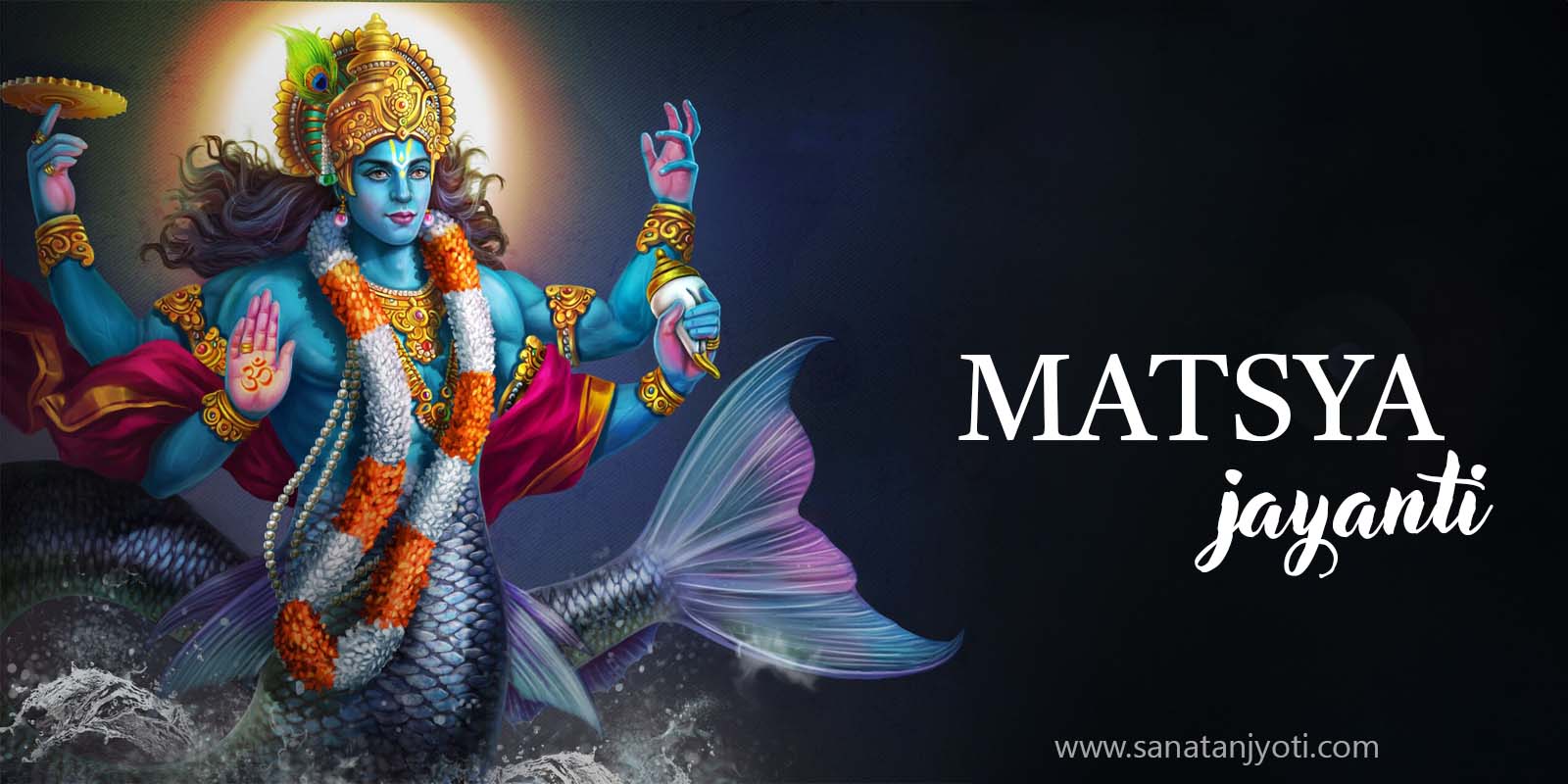
Matsya Jayanti 2027 will be observed on Friday, April 9. This festival is observed on the Tritiya Tithi of Shukla Paksha in the month of Chaitra as the birth anniversary of Matsya Avatar, regarded as the first incarnation of Lord Vishnu. On this day, devotees traditionally worship Lord Vishnu in His Matsya form, observe a Vrat, listen to the associated story and chant Vishnu Mantras. According to religious beliefs, Lord Vishnu took the form of Matsya to protect King Manu and the living world during the Pralaya.
When is Matsya Jayanti 2027?
Matsya Jayanti 2027 will be observed on Friday, April 9. The day falls on Chaitra Shukla Tritiya. According to the 2027 Panchang, the Tritiya Tithi will prevail on April 9 and end on April 10. The exact Tithi and Puja timings may vary slightly depending on the city.
What Is the Significance of Matsya Jayanti?
Matsya Jayanti is a religious festival associated with the appearance of Matsya Avatar, the first incarnation of Lord Vishnu according to Hindu tradition. Matsya Avatar is regarded as the first of the Dashavatara of Lord Vishnu.
According to religious stories, during the Pralaya, Lord Vishnu assumed the form of Matsya and protected King Manu and numerous living beings. Therefore, devotees worship Lord Vishnu in His Matsya form on this day and pray for His protection and blessings.
Matsya Jayanti Puja Vidhi
On Matsya Jayanti, wake up before sunrise, take a bath and purify yourself. After this, offer Arghya to the Sun God and take a Sankalp for the Vrat.
If possible, wear clean yellow clothes. For the Puja, place a yellow cloth on a Chouki and install an image or idol of Lord Vishnu in His Matsya form.
Offer yellow clothes to Lord Vishnu in His Matsya form. Apply a sandalwood Tilak and offer flowers, fruits, sweets, Naivedya and other Puja Samagri.
During the Puja, hold Akshat in your hands and listen to the story of Lord Vishnu's Matsya Avatar. After this, perform the Aarti of Lord Vishnu and distribute Prasad among the devotees.
On Matsya Jayanti, devotees may also observe a Vrat according to their faith and family tradition. Some traditions also mention reciting the Matsya Purana and Shri Vishnu Sahasranama on this day.
Story of Lord Vishnu's Matsya Avatar on Matsya Jayanti
A Kalpa is traditionally described as a vast period that includes Satya Yuga, Treta Yuga, Dvapara Yuga and Kali Yuga. At the end of one Kalpa and the beginning of another, religious traditions describe the protection of creation through various incarnations of Lord Vishnu.
Among the Dashavatara of Lord Vishnu, Matsya Avatar is regarded as the first incarnation. Let us understand why Lord Vishnu assumed the form of a fish.
The Boon Received by King Manu
According to a story associated with the Matsya Purana, in ancient times, Surya's son, Maharaj Vaivasvata Manu, handed over the responsibility of his kingdom to his son and went to a part of the Malayachala region to perform intense penance.
Through his prolonged penance, he attained a higher state of spiritual realization. After he had spent a long time performing austerities, Lord Brahma, seated on the lotus, appeared before him and said, "Ask for a boon."
Maharaj Manu bowed before Grandfather Brahma and said that he desired only one great boon. He prayed that at the time of the Pralaya, he would be capable of protecting all stationary beings and the living world.
Lord Brahma said, "So be it," and disappeared.
Where Did Manu Find the Fish?
Once, Maharaj Manu was performing Tarpan for his ancestors. At that moment, a small fish came into his palm along with the water.
Seeing the fish, King Manu's heart was filled with compassion. He tried to protect it and placed the fish in his Kamandalu.
However, the fish soon grew so large that it could no longer fit inside the Kamandalu. The king then placed it in a large earthen pot.
The fish continued to grow rapidly there as well and pleaded with the king to protect it.
The Fish Takes a Gigantic Form
Maharaj Manu placed the fish in a well, but after some time, even the well became too small for it.
He then placed it in a large lake. But its size continued to increase there as well.
Manu then released it into the River Ganga. Even in the Ganga, the fish continued to grow larger. Finally, the king placed it in the ocean.
When the fish assumed an enormous form even in the ocean, King Manu was astonished.
He said, "Are you an Asura king? Or are you Lord Vasudeva Himself? How can an ordinary creature have such an enormous body?"
King Manu recognized the Lord and bowed before Him.
Lord Vishnu Warned Manu About the Pralaya
The Lord then told King Manu that the Earth would soon be submerged in water along with its mountains, forests and groves.
Lord Matsya instructed Manu to keep a boat ready to protect the living world during the Pralaya. He told him to preserve different kinds of living beings safely in the boat.
The Lord said that when the boat began to drift and shake because of the powerful winds and waters during the Pralaya, Manu should tie the boat to His horn.
He also told Manu that after the Pralaya ended, Manu would become the Prajapati responsible for the continuation of creation.
Having said this, Lord Matsya disappeared.
Lord Matsya Protected Living Beings During the Pralaya
Manu continued practicing the Yoga he had received through the grace of Lord Vasudeva. Eventually, the time foretold by the Lord arrived.
During the Pralaya, the Earth began to sink beneath the waters. At that moment, Lord Janardana appeared in the form of a gigantic Matsya with one horn.
According to the story, a serpent then appeared before Manu in the form of a rope. Using his Yogic power, Manu safely placed the living beings in the boat and tied the boat to the horn of Lord Matsya with the serpent-like rope.
Manu then bowed before Lord Janardana and also boarded the boat.
Thus, according to the religious story, Lord Vishnu in His Matsya Avatar protected Manu and the living world during the Pralaya and prepared Manu to continue the process of creation.
Why Did Lord Vishnu Take the Matsya Avatar?
According to religious tradition, Lord Vishnu took the Matsya Avatar to protect the living world during the Pralaya. The story of Matsya Avatar describes King Manu, the Pralaya, the boat and the enormous Matsya form of Lord Vishnu.
Another popular version of the Matsya Avatar story also mentions an Asura named Hayagriva stealing the Vedas, after which Lord Vishnu recovered them.
What to Do on Matsya Jayanti?
On Matsya Jayanti, devotees may worship Lord Vishnu according to their religious traditions.
• Take a bath in the morning and take a Sankalp for the Vrat.
• Worship Lord Vishnu in His Matsya form.
• Offer yellow flowers, fruits and Naivedya.
• Chant Lord Vishnu's Mantras.
• Listen to the story of Matsya Avatar.
• Observe a Vrat according to your faith.
• Recite the Shri Vishnu Sahasranama.
• Donate food or essential items to people in need.
Shri Vishnu Sahasranama Anushthan on Matsya Jayanti 2027
If you wish to make the worship and remembrance of Lord Vishnu a part of your spiritual practice, Shri Vishnu Sahasranama Anushthan can be performed as a special Vedic ritual.
If you wish to perform Shri Vishnu Sahasranama Anushthan on the occasion of Matsya Jayanti, SanatanJyoti conducts this Anushthan with traditional Vedic rituals and devotion.
Book Shri Vishnu Sahasranama Anushthan
Frequently Asked Questions About Matsya Jayanti 2027
1. When is Matsya Jayanti 2027?
Matsya Jayanti 2027 will be observed on Friday, April 9. It will be celebrated on the Tritiya Tithi of Shukla Paksha in the month of Chaitra.
2. Matsya Jayanti is associated with which Lord?
Matsya Jayanti is associated with Lord Vishnu's Matsya Avatar. Matsya Avatar is regarded as the first incarnation among the Dashavatara of Lord Vishnu.
3. Who is worshipped on Matsya Jayanti?
On Matsya Jayanti, devotees worship Lord Vishnu in His Matsya form.
4. Why did Lord Vishnu take the Matsya Avatar?
According to the religious story, Lord Vishnu assumed the Matsya form to protect King Manu and the living world during the Pralaya.
5. What should be read on Matsya Jayanti?
On Matsya Jayanti, devotees may read or listen to the story of Matsya Avatar, Matsya Purana and Shri Vishnu Sahasranama according to their tradition.
6. Which Anushthan can be performed on Matsya Jayanti?
For the worship of Lord Vishnu, Shri Vishnu Sahasranama Anushthan can be performed. It is appropriate to perform the Anushthan according to one's tradition and faith under the guidance of a qualified Acharya.