
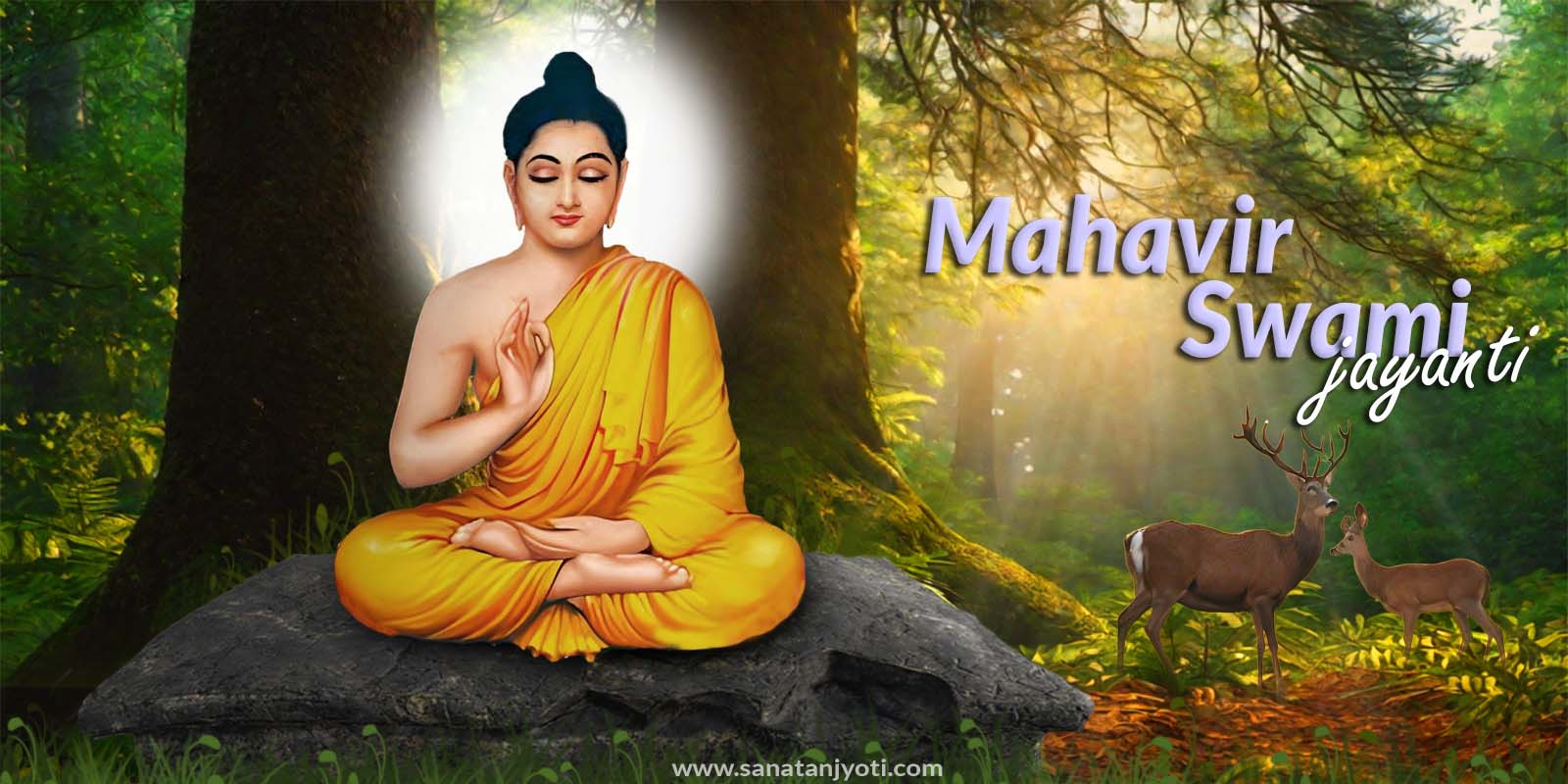
Mahavir Swami Jayanti 2027 will be observed on Friday, April 2. This festival is celebrated as the birth anniversary of Lord Mahavir Swami on the Trayodashi Tithi of Shukla Paksha in the month of Chaitra. Lord Mahavir is regarded as the 24th and last Tirthankara of Jainism.
He is also known by names such as Vardhaman, Veer and Sanmati. Through principles such as Ahimsa (non-violence), Satya (truth), Asteya (non-stealing), Aparigraha (non-possessiveness) and Brahmacharya (celibacy), Lord Mahavir taught the path of self-discipline, compassion and spiritual liberation. Mahavir Jayanti is one of the major festivals of Jainism, and on this day, devotees respectfully remember his life, penance and teachings.
Early life of Mahavir Swamiji, the great spiritual guru of Jainism
Mahavir Swami was born in a Kshatriya family in 599 BC in Vaishali district of Bihar in India. His father's name was Maharaj Siddhartha and mother's name was Maharani Trishala. His brother's name was Nandivardhana and sister's name was Sudarshana. Since childhood, he was not interested in worldly pleasures. But due to the instructions of his parents, he married with Yashoda, daughter of Samarveer of Vasantpur. From which a daughter was born whose name was Priyadarshini. After this, Lord Mahavir wanted to take renunciation but on the advice of his elder brother Nandivardhana, he took renunciation after 2 years at the age of only 30. At the age of 30, he lived in the forest with 'Keshloch'. He started doing rigorous penance there. After 12 years of rigorous penance, he attained true enlightenment under the Sal tree on the banks of Rijupalika river in Jambak. Lord Mahavir made non-violence the basis of Jainism. He always preached equality in society. He never wanted to hurt anyone. He always adopted the path of non-violence and inspired everyone to be equal. So that people can connect with each other without any discrimination in society. At the age of 72, he left his body through self-fasting (a Jain practice adopted near death) in 527 BC at Pawapuri.
Panchmukhi theory of Mahavir Swami
Mahavir Swami has given five principles for the progress of humans. Those principles are-
Ahimsa: Not hurting living beings or causing pain to any living being.
Truth: Not lying or always speaking the truth.
Asteya: Do not steal or take someone else's thing without informing him.
Aparigraha: Not accumulating wealth or staying away from the attractions of attachment.
Brahmacharya: virtuous life
Truth and non-violence are the first duties of man. By following which man becomes fearless. Along with this, Asteya i.e., not stealing leads to spiritual peace and salvation. Due to Aparigraha i.e., not having attraction towards any subject or thing, a person gives up worldly attachments and walks on the path of spirituality and a person who follows celibacy easily gets control over his senses.
Messages of Lord Mahavir Swami
The symbol of Lord Mahavir is the lion. He had some important teachings. Like- live and let live; Adopt the path of non-violence, it means that you should love others as much as you love yourself. Walk on the path of truth. It is a great sin to steal the things of others, be satisfied with whatever you have got, this world is mortal. Everything in this world is perishable. Attachment towards things is the cause of sorrow. True people never get attached to mortal things.
Lord Mahavir Swami teachings
All matter constantly changes its form, nothing can be destroyed or created in this universe.
The universe and all its matter are eternal, meaning that it has no beginning or end with respect to time. The universe operates according to its own cosmic laws.
A person can be ruined because of ego, lust, greed and anger. Therefore, if you want happiness and peace, then forgive the mistakes of others.
The liberated soul has infinite knowledge, infinite vision, infinite power and infinite joy.
Meaning of the word Jain and who are Tirthankaras?
The word Jain is derived from Jin, which means conqueror. One who has conquered the mind, has gained control over speech, has suppressed desires and lusts. In Jainism, Tirthankara or Arihant or Jinendra is used for those persons who have attained 'only knowledge ' i.e., 'Self-knowledge' through their asceticism. There have been 24 Tirthankaras in Jainism so far. Mahavir Swami is the 24th Tirthankar of Jainism.