
When is Kurma Jayanti 2027?
Kurma Jayanti 2027 will be observed on Thursday, May 20. It is dedicated to Lord Vishnu's Kurma Avatar, the second incarnation in the form of a tortoise. Kurma Jayanti is observed on Vaishakha Shukla Purnima. In 2027, the Vaishakha Purnima Tithi will begin at approximately 4:05 PM on May 19 and end at around 4:30 PM on May 20.
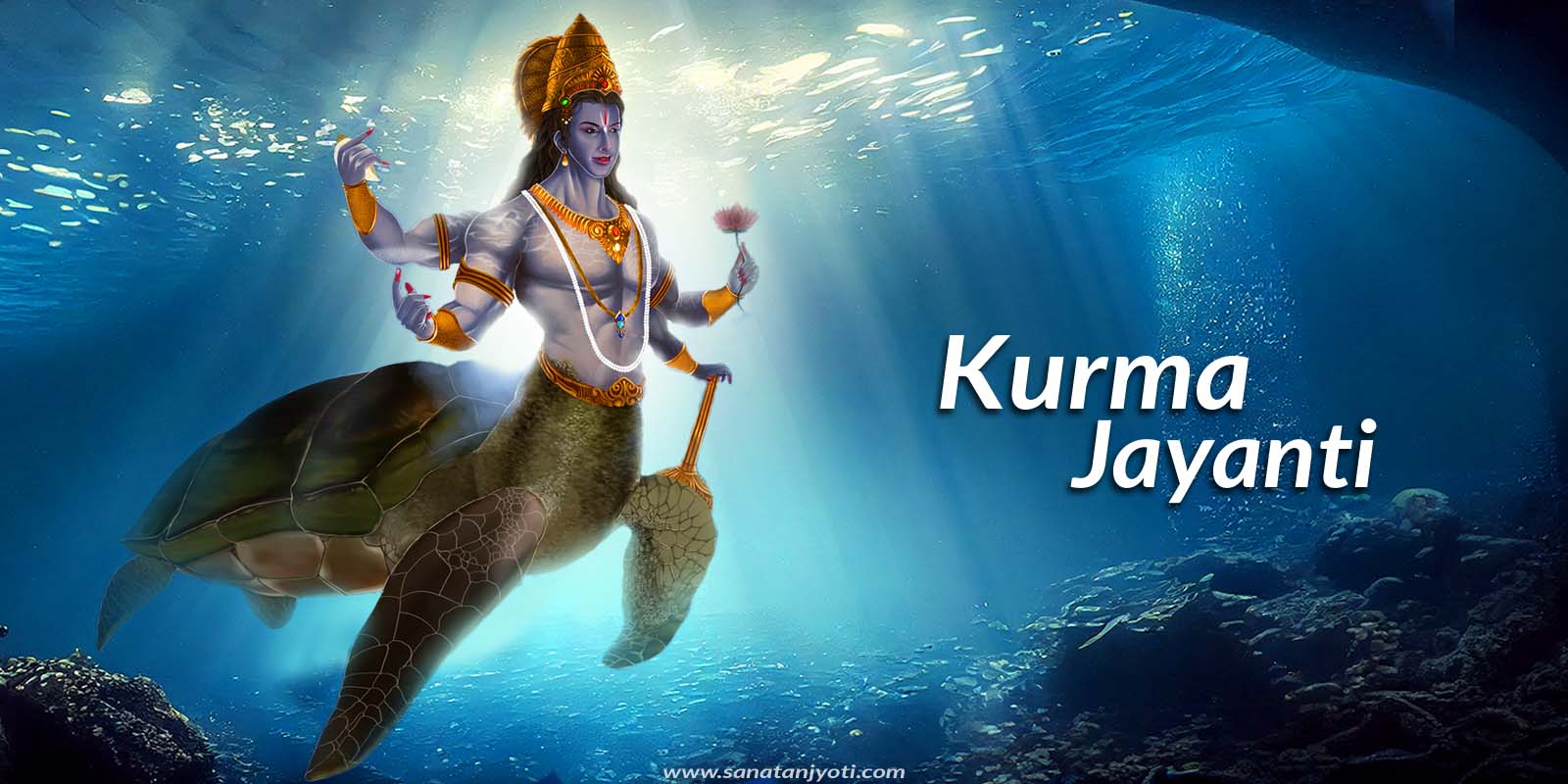
The story of the Kurma Avatar is closely associated with the Samudra Manthan. When Mount Mandarachal began sinking into the ocean during the churning of the ocean, Lord Vishnu took the form of a giant tortoise, or Kurma, and supported Mount Mandarachal on His back. This support allowed the Samudra Manthan to continue and paved the way for the Devas to obtain Amrit.
What is Kurma Jayanti?
Lord Vishnu took various Avatars to protect Dharma and ensure the welfare of the Devas and all living beings. Among these incarnations, the Kurma Avatar holds special significance.
Kurma means tortoise. During the Samudra Manthan, when Mount Mandarachal could not remain stable in the ocean, Lord Vishnu assumed the gigantic form of a tortoise and supported the mountain on His back.
Kurma Jayanti is observed on Vaishakha Shukla Purnima in remembrance of this event. The festival is associated with devotion to Lord Vishnu and is traditionally linked with patience, stability and protection.
Kurma Jayanti 2027 Date and Time
Kurma Jayanti 2027 will be observed on Thursday, May 20.
Vaishakha Shukla Purnima Tithi:
• Purnima Begins: May 19, 2027, at approximately 4:05 PM
• Purnima Ends: May 20, 2027, at approximately 4:30 PM
• Kurma Jayanti: Thursday, May 20, 2027
The Puja timing for Kurma Jayanti may vary according to the location, so it is advisable to check the local Panchang for the exact Puja time.
To know the exact Kurma Jayanti date, Puja timing and other Shubh Muhurat according to your city: - Check the SanatanJyoti Panchang.
Why Did Lord Vishnu Need to Take the Kurma Avatar?
Once upon a time, Sage Durvasa, who was the third son of Anasuya and known for his Rudra-like temperament, was wandering on Earth. While travelling, he saw a celestial garland of Santanaka flowers in the hands of a Vidyadhari.
The garland was extremely beautiful. Seeing it, Sage Durvasa asked the Vidyadhari for the divine garland.
When he asked for it, the woman respectfully bowed before him and gave him the garland.
Sage Durvasa, known for his fierce temperament, placed the garland around his neck and continued wandering on Earth.
At that moment, he saw Devaraj Indra, the husband of Shachi, approaching with the Devas while riding on Airavata.
Seeing Indra, Sage Durvasa threw the divine garland towards him.
Devaraj Indra accepted the garland and placed it on Airavata's head. Attracted by the fragrance of the divine flowers, the elephant smelled the garland and then threw it onto the ground.
Seeing this, Sage Durvasa became extremely angry.
He said to Devaraj Indra:
“O Indra, whose mind has been weakened by attachment to wealth and power! You did not show any respect to the divine garland I gave you. You neither bowed before me nor expressed gratitude for the grace of receiving this divine garland from me. You have thrown the garland I gave you onto the ground. Therefore, your prosperity in the three worlds will be destroyed, and you will become devoid of Shri.”
Because of Sage Durvasa's curse, Devaraj Indra lost his prosperity and the power of all the Devas began to decline.
When the Asuras learned that Devaraj Indra and the Devas had become powerless due to Sage Durvasa's curse and had lost their prosperity, they attacked the Devas.
Unable to fight effectively, the Devas began fleeing to save their lives. The strength of the Daityas was overpowering the Devas.
The Guru of the Daityas, Shukracharya, had obtained the Mritasanjivani Vidya through the worship of Lord Shiva. As a result, he could revive the Daityas who were killed in battle, whereas the Devas who died could not be brought back to life.
Seeing this, Indra and the other Devas became frightened and sought refuge in Lord Vishnu.
They prayed to Lord Vishnu:
“O Lord! Please protect us.”
Lord Vishnu told Devaraj Indra that one should not engage in battle when circumstances are unfavorable because the prosperity of all the Devas had been destroyed due to the curse.
He explained that when a storm arises, it is not wise to walk directly into it with one's eyes open. A wise person should remain calm during the storm and wait for it to pass.
Lord Vishnu further explained that fighting an armed warrior while being unarmed is not bravery but putting one's life at unnecessary risk. Therefore, it would be wiser for the Devas to make an agreement with the Daityas instead of fighting them at that time.
Lord Vishnu said that the Devas could regain their lost prosperity and strength and could eventually defeat the Daityas.
Indra asked:
“Lord, how will this be possible?”
Lord Shri Hari then explained in detail that the Devas should make an agreement with the Daityas and perform the Samudra Manthan together.
By consuming the Amrit obtained from the Samudra Manthan, the Devas would attain immortality and regain their lost prosperity.
After this, Mount Mandarachal was chosen as the churning rod and Vasuki Nag as the rope for the Samudra Manthan.
When Mount Mandarachal was placed in the ocean, it began sinking because of its immense weight.
The mountain had no support in the ocean. As a result, the Samudra Manthan appeared to be on the verge of failure.
At that moment, Lord Vishnu assumed the gigantic form of a Kurma, or tortoise, and supported Mount Mandarachal on His back.
Because of the strong support provided by Lord Kurma, Mount Mandarachal became stable in the ocean and the process of Samudra Manthan could continue.
Thus, Lord Vishnu's Kurma Avatar proved beneficial not only for the Devas but also for the welfare of all the worlds.
Significance of the Kurma Avatar in Samudra Manthan
The Kurma Avatar played an extremely important role in the entire process of the Samudra Manthan.
When Mount Mandarachal began sinking, the churning of the ocean came to a halt. Lord Vishnu assumed the form of Kurma, supported the mountain on His back and provided it with a stable foundation.
In this way, Lord Vishnu Himself became the foundation that helped make the joint efforts of the Devas and Daityas successful.
For this reason, the Kurma Avatar is also regarded as a symbol of patience, stability, endurance and protection.
Kurma Jayanti Puja Vidhi
On Kurma Jayanti, wake up early in the morning, complete your daily routine, take a bath and wear clean clothes.
After this, take a Sankalp to perform Puja before an idol or image of Lord Vishnu or Lord Kurma.
Apply a Chandan Tilak to Lord Vishnu and offer Tulsi leaves, flowers, fruits and Naivedya.
After this, light incense and a lamp and perform Lord Vishnu's Aarti.
During the Puja, while meditating on Lord Shri Hari, devotees may pray for freedom from negativity and for happiness, peace, prosperity and spiritual growth in life.
Main Steps of Kurma Jayanti Puja
• Take a bath in the morning.
• Wear clean clothes.
• Clean the Puja area.
• Meditate on Lord Vishnu or His Kurma Avatar.
• Take a Sankalp for the Puja.
• Apply Chandan to Lord Vishnu.
• Offer Tulsi leaves.
• Offer flowers and fruits.
• Light incense and a lamp.
• Recite Vishnu Mantras or Vishnu Sahasranama.
• Perform Lord Vishnu's Aarti.
• Listen to the story of the Kurma Avatar.
• Donate according to your capacity.
• Receive Prasad.
Kurma Jayanti Vrat
Devotees of Lord Vishnu also observe a fast on Kurma Jayanti.
Those observing the Vrat may spend the day remembering Lord Vishnu, chanting Mantras, performing Puja and listening to the Kurma Avatar Katha.
The rules of the Vrat may vary according to family and regional traditions. Some devotees observe a complete fast, while others consume fruits or Satvik food.
According to religious beliefs, observing the Vrat with devotion and faith is associated with spiritual peace and prayers for the blessings of Lord Vishnu.
How to Worship Lord Vishnu on Kurma Jayanti?
While worshipping Lord Vishnu on Kurma Jayanti, meditating on His Kurma form is considered appropriate.
Tulsi leaves, yellow flowers, fruits and Naivedya may be offered to Lord Vishnu.
After this, devotees may chant:
Om Namo Bhagavate Vasudevaya
Devotees may also recite Vishnu Sahasranama according to their faith.
If you wish to have a religious ritual related to Lord Vishnu Puja or Vishnu Sahasranama performed according to traditional Vedic procedures: -Learn more about the Vishnu Sahasranama Anushthan.
Significance of Kurma Jayanti
Kurma Jayanti reminds devotees of the form of Lord Vishnu in which He Himself became the foundation that helped make the Samudra Manthan successful.
Just as Mount Mandarachal began sinking into the ocean during the Samudra Manthan and the efforts of the Devas appeared to be failing, Lord Vishnu took the Kurma Avatar and resolved the crisis.
Similarly, according to religious belief, Lord Vishnu assists and protects His devotees by taking different forms whenever required.
The message of Kurma Jayanti is not limited to the story of the Avatar. The festival can also be associated with the values of patience, stability, responsibility and remaining a strong foundation during difficult circumstances.
What Should You Do on Kurma Jayanti?
On Kurma Jayanti, devotees may perform the following activities according to their faith and family traditions:
• Worship Lord Vishnu.
• Meditate on Lord Kurma.
• Chant Vishnu Mantras.
• Recite Vishnu Sahasranama.
• Listen to the story of the Kurma Avatar.
• Observe a fast or have a fruit-based diet.
• Feed people in need.
• Donate food grains, clothes or other useful items.
• Visit a Lord Vishnu temple for Darshan.
• Follow Satvik conduct and self-discipline.
Importance of Charity on Kurma Jayanti
In Hindu religious traditions, charity and acts of merit are considered especially significant on Purnima Tithi. Kurma Jayanti is also observed on Vaishakha Shukla Purnima.
On this day, devotees may donate food grains, clothes, fruits, water or other essential items according to their capacity.
While making donations, importance should be given to devotion, service and the genuine intention to help those in need.
Kurma Jayanti and Vaishakha Purnima
Kurma Jayanti is observed on Vaishakha Shukla Purnima. In 2027, Vaishakha Purnima will be observed on May 20.
Buddha Purnima will also be observed on the same day. Therefore, May 20, 2027, will be a significant Purnima Tithi from a religious perspective.
What is Special About Kurma Jayanti 2027?
In 2027, Kurma Jayanti will fall on Thursday, May 20.
The Purnima Tithi will begin on the evening of May 19 and continue until the evening of May 20. Therefore, the Puja timing may vary slightly according to the local Panchang.
Frequently Asked Questions About Kurma Jayanti
1. When is Kurma Jayanti 2027?
Kurma Jayanti 2027 will be observed on Thursday, May 20. It is observed on Vaishakha Shukla Purnima.
2. Which deity is Kurma Jayanti dedicated to?
Kurma Jayanti is dedicated to Lord Vishnu's Kurma Avatar. Kurma means tortoise.
3. Why did Lord Vishnu take the Kurma Avatar?
During the Samudra Manthan, Mount Mandarachal began sinking into the ocean. To provide support to the mountain, Lord Vishnu assumed the gigantic form of a tortoise and held the mountain on His back.
4. Which Avatar of Lord Vishnu is the Kurma Avatar?
The Kurma Avatar is traditionally considered the second Avatar of Lord Vishnu.
5. Whom should you worship on Kurma Jayanti?
On this day, devotees primarily worship Lord Vishnu and His Kurma form.
6. What Vrat should be observed on Kurma Jayanti?
Devotees may observe a fast, have fruits or follow a Satvik diet on Kurma Jayanti according to their faith and family traditions.
7. What should be donated on Kurma Jayanti?
According to one's capacity, devotees may donate food grains, clothes, fruits, water or useful items to people in need.
8. What is the connection between Kurma Jayanti and Samudra Manthan?
Kurma Jayanti is closely associated with the Samudra Manthan. Lord Vishnu assumed the form of Kurma and supported Mount Mandarachal on His back, allowing the process of churning the ocean to continue.
Kurma Jayanti 2027 will be observed on Thursday, May 20. It is an important festival dedicated to Lord Vishnu's Kurma Avatar and is observed on Vaishakha Shukla Purnima.
The story of the Kurma Avatar is associated with the Samudra Manthan. When Mount Mandarachal began sinking into the ocean, Lord Vishnu took the form of a tortoise, supported the mountain on His back and provided the foundation needed for the Samudra Manthan to continue.
On this day, devotees traditionally worship Lord Vishnu, listen to the story of the Kurma Avatar, chant Mantras, observe a Vrat and make donations. According to religious beliefs, Lord Vishnu always helps protect and support His devotees for their welfare.
If you want personal guidance on performing Kurma Jayanti Puja Vidhi, Vrat, Sankalp or any religious ritual related to Lord Vishnu according to your tradition: - You can consult our expert through a free consultation.