
Mata Sita, the daughter of King Janaka, is believed to have appeared on the Ashtami Tithi of the Krishna Paksha in the month of Phalguna. For this reason, the birth celebration of Mata Sita is observed as Janaki Jayanti. In 2027, Janaki Jayanti will be celebrated on Sunday, February 28. According to the Panchang, the Ashtami Tithi of the Phalguna Krishna Paksha will prevail on this day.
Mata Sita was the daughter of King Janaka, which is why she is also known as Janaki. For this reason, her birth anniversary is called Janaki Jayanti. In many places, it is also known as Sita Ashtami. On this day, devotees worship Mata Sita and Lord Shri Ram and remember Mata Sita's life, ideals, sacrifice, patience, and devotion to her husband.
Janaki Jayanti is considered a special occasion in Hinduism to express devotion and reverence toward Mata Sita. Women especially observe a fast on this day and pray to Mata Sita for a happy married life and the well-being of their families. Unmarried women also worship Mata Sita and observe a fast with the wish to find a suitable life partner.
When Is Janaki Jayanti 2027?
Janaki Jayanti 2027 will be celebrated on Sunday, February 28. This festival is observed on the Ashtami Tithi of the Krishna Paksha in the month of Phalguna.
There is a tradition of worshipping Mata Sita and Lord Shri Ram on Janaki Jayanti. Devotees observe a fast, perform Puja, sing Ram-Sita Bhajans and Kirtans, and listen to stories associated with Mata Sita.
Key Details About Janaki Jayanti 2027
• Festival: Janaki Jayanti
• Other Name: Sita Ashtami
• Year: 2027
• Date: February 28, 2027
• Day: Sunday
• Tithi: Phalguna Krishna Paksha Ashtami
• Goddess Worshipped: Mata Sita
• Worship Alongside: Lord Shri Ram
• Main Theme: Devotion, faith, sacrifice, patience, and prayers for marital well-being
Why Is Mata Sita Called Janaki?
The primary reason Mata Sita is called Janaki is that she was accepted as the daughter of King Janaka. King Janaka was the ruler of Mithila, and he accepted Mata Sita as his daughter. Therefore, Mata Sita is also known by names such as Janakanandini, Janaki, and Maithili.
In Indian religious traditions, Mata Sita's life is described as an example of an ideal woman. Her personality is associated with qualities such as love, compassion, patience, sacrifice, self-control, self-respect, and a strong sense of duty.
What Is the Connection Between Janaki Jayanti and Sita Ashtami?
Janaki Jayanti is also known as Sita Ashtami in many places. This is because Mata Sita's appearance is believed to have taken place on the Ashtami Tithi of the Krishna Paksha in the month of Phalguna.
On this day, devotees celebrate Mata Sita's birth anniversary with devotion. They worship her, observe a fast, and read or listen to stories associated with her life. Devotees also worship Lord Shri Ram and Mata Sita and pray for happiness, peace, and prosperity in their families.
Why Is Janaki Jayanti Celebrated?
Janaki Jayanti is celebrated to remember the appearance of Mata Sita and her exemplary life. Her life is considered an example of sacrifice, patience, love, self-control, and dedication to duty.
Through this festival, devotees express their reverence for Mata Sita and seek inspiration from her life. Women especially remember Mata Sita as an ideal wife and a symbol of feminine strength.
On Janaki Jayanti, devotees engage in Ram-Sita Bhajans, Kirtans, scripture recitation, and Puja. During the worship of Mata Sita, devotees traditionally offer flowers, Ark, incense, lamps, Naivedya, Aarti, garlands, and a Chadar.
Devotees may also read stories from Mata Sita's life that describe her courage and devotion to her husband.
Who Observes a Fast on Janaki Jayanti?
On Janaki Jayanti, married women observe a fast with prayers for their husband's long life and a happy married life. Mata Sita is associated with marital values and devotion, which is why she is especially worshipped on this day.
Unmarried women may also observe a fast and pray for a suitable life partner. Devotees pray to Mata Sita for happiness, peace, and the well-being of their families.
Janaki Jayanti Puja Vidhi
On Janaki Jayanti, Mata Sita is traditionally worshipped with devotion and according to the prescribed rituals. Before beginning the Puja, clean the house and the Puja area and prepare a clean place for worship.
Next, place an idol, image, or picture of Mata Sita. If possible, place an idol or picture of Lord Shri Ram alongside her.
During the Puja, offer Mata Sita flowers, incense, a lamp, Naivedya, Ark leaves, incense sticks, and a flower garland. After this, chant Mata Sita's Mantra.
The following Mantra can be chanted: “Om Sitayai Namah”
Devotees may also chant other Mantras associated with Mata Sita according to their faith and tradition.
During the Puja, devotees may also recite the Sita Chalisa and Sita Ashtottara. Afterward, offer prayers to Mata Sita and seek her blessings.
Finally, perform the Aarti of Mata Sita and Lord Shri Ram and distribute the Puja Prasad among family members.
What Should Be Offered During Janaki Jayanti Puja?
During Janaki Jayanti Puja, devotees offer various Puja items to Mata Sita according to their faith. These mainly include flowers, incense, lamps, Naivedya, and flower garlands.
Clean clothes or a Chadar may also be offered to Mata Sita during the Puja. More than the material offerings, the feeling of faith and devotion is considered important.
After the Puja, devotees listen to the story of Mata Sita and remember the ideals associated with her life.
What Is the Story of Janaki Jayanti?
The story associated with Janaki Jayanti describes the appearance of Mata Sita. Once upon a time, the entire city of Mithila was inhabited largely by farmers, and agriculture was their main occupation.
As time passed, a severe drought suddenly struck Mithila. All the fields dried up, and there was no sign of rain anywhere. The entire population became distressed because of the drought.
King Janaka was the ruler of Mithila and was also known as Mithila Naresh. Troubled by the drought, the people approached King Janaka in his court.
King Janaka understood the concerns of his people and arranged for Yajnas to be performed. After this, the Brahmins advised that if the king himself ploughed the field like a farmer, Indra Dev would be pleased and bring rain.
For the welfare of his people, King Janaka went to the fields along with his wife and other people and began ploughing the land.
How Did King Janaka Find Mata Sita in the Field?
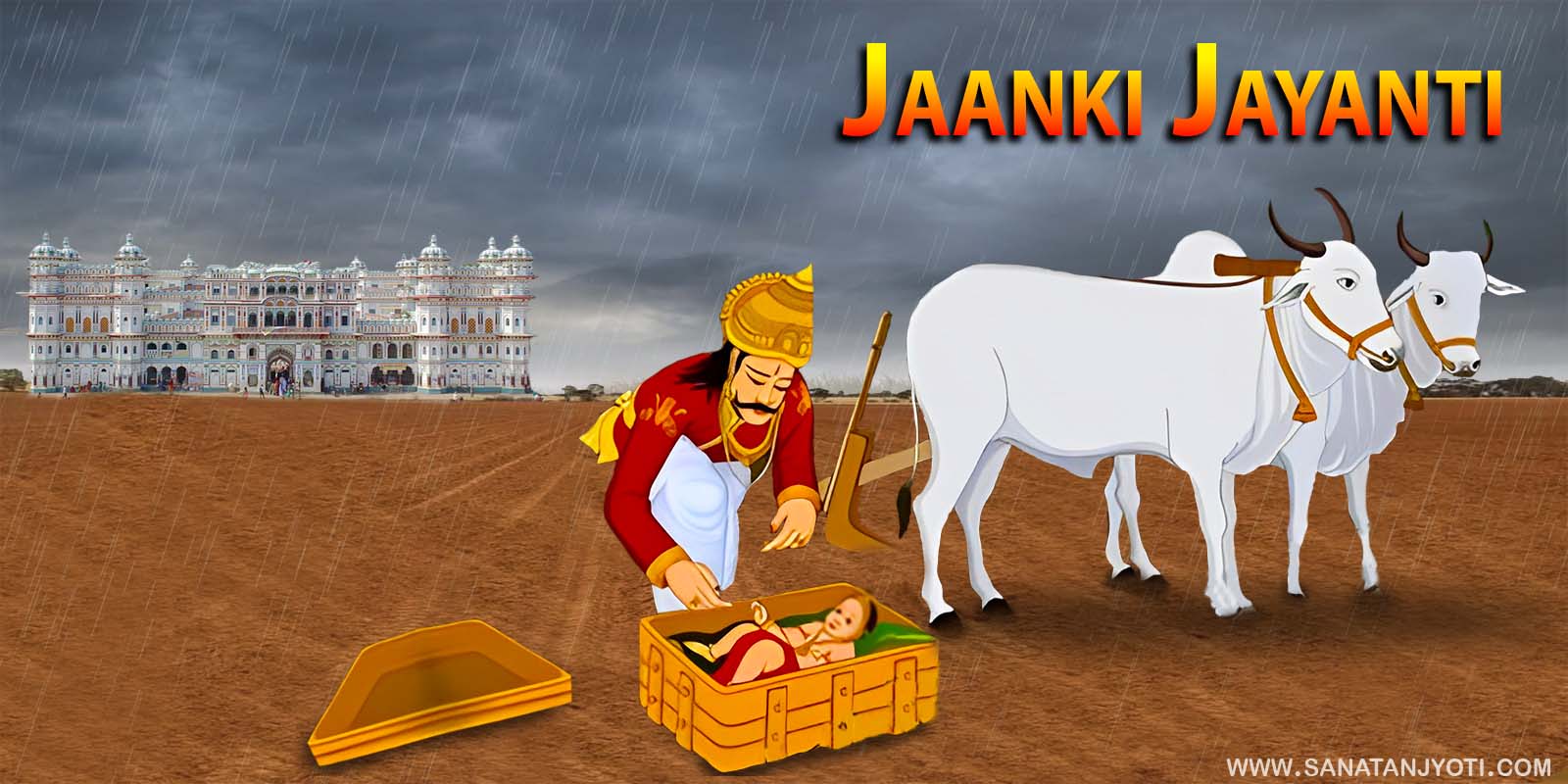
According to the Padma Purana, while King Janaka was ploughing the field, his plough suddenly became stuck in the ground. From the front of the plough, a beautiful baby girl appeared, who was considered a manifestation of Goddess Lakshmi.
Seeing the divine girl, the queen took her into her arms, and her maternal affection overflowed. Seeing this, King Janaka accepted the girl as his daughter.
Since she became the daughter of King Janaka, she was named Janaki. As the child was found from the earth while King Janaka was ploughing the field, she was named Sita.
The word Sita is also associated with the line formed by a plough while tilling the earth. The Ramayana provides an extensive account of Mata Sita's life and her relationship with Lord Shri Ram.
Major Names of Mata Sita
Mata Sita is known by different names based on her life and relationships. Her major names include Sita, Janaki, Maithili, Vaidehi, and Janakanandini.
• Sita: A name associated with her appearance from the earth and the line created by a plough.
• Janaki: Because she was the daughter of King Janaka.
• Maithili: Because of her connection with Mithila.
• Vaidehi: A name associated with the Videha lineage and King Janaka.
• Janakanandini: Because she was the daughter of King Janaka.
Devotees remember these names of Mata Sita with faith and devotion.
Inspiration From the Life of Mata Sita
Sita Ji embodied countless virtues. Her personality reflected qualities such as self-respect, self-control, wisdom, fearlessness, courage, compassion, kindness, forgiveness, love, and dignity.
Sita Ji was truly incomparable, and her character is regarded as an embodiment of human excellence.
Her life inspires people to remain patient during difficult circumstances, stay committed to their duties, and preserve their self-respect. For this reason, Mata Sita is respected as an ideal woman in religious traditions.
Religious Significance of Janaki Jayanti
Janaki Jayanti is an important festival for devotees and is observed with faith and devotion. Through this festival, devotees remember the life and virtues of Mata Sita.
Mata Sita is especially revered as the consort of Lord Shri Ram and the daughter of King Janaka. Therefore, there is also a tradition of worshipping Lord Shri Ram along with Mata Sita on Janaki Jayanti.
Devotees pray to Mata Sita for happiness, peace, and prosperity in their families. The festival is considered particularly significant for women because Mata Sita is associated with marital life, patience, and devotion.
What Should You Do on Janaki Jayanti?
On Janaki Jayanti, devotees can worship Mata Sita and Lord Shri Ram according to their faith. The main religious activities performed on this day include Puja, scripture recitation, Mantra chanting, listening to religious stories, Bhajan-Kirtan, and Aarti.
Devotees can read or listen to the story of Mata Sita. Visiting a temple dedicated to Lord Shri Ram and Mata Sita is also considered a way of expressing devotion.
If possible, devotees may also donate food, clothes, or other necessities to people in need according to their capacity. The purpose of such religious activities is to encourage the spirit of service, faith, and harmony.
Significance of Worshipping Ram-Sita on Janaki Jayanti
The relationship between Mata Sita and Lord Shri Ram is remembered in Indian religious traditions as an example of an ideal married life. Therefore, Lord Shri Ram is also worshipped along with Mata Sita on Janaki Jayanti.
Devotees sing Ram-Sita Bhajans and Kirtans and listen to stories associated with their lives. On this day, people remember the ideals represented by Mata Sita and pray for love, peace, and harmony within their families.
Why Should You Read the Story of Mata Sita on Janaki Jayanti?
Reading and listening to the story of Mata Sita on Janaki Jayanti gives devotees an opportunity to understand her life and ideals. Her life is associated with love, sacrifice, patience, self-control, and a sense of duty.
Through these stories, devotees remember the appearance of Mata Sita, her upbringing in the family of King Janaka, and the religious stories associated with her life with Lord Shri Ram.
Remembering Mata Sita through story recitation and Bhajan-Kirtan on this day is considered a way to deepen one's devotion.
Special Significance of Janaki Jayanti for Women
On Janaki Jayanti, married women observe a fast and worship Mata Sita with prayers for their husband's long life and the happiness and peace of their family. Since Mata Sita is remembered as an ideal wife, this day holds special religious significance for women.
Unmarried women also worship Mata Sita and pray for a suitable life partner and a happy married life. During the Puja, women pray to Mata Sita for happiness, peace, and prosperity for their families.
Message of Janaki Jayanti
Janaki Jayanti is not only a festival celebrating the appearance of Mata Sita but also an occasion to remember the ideals associated with her life. Her life is described through qualities such as love, patience, compassion, self-control, self-respect, and a sense of duty.
Her life inspires devotees to remain patient during difficult circumstances and stay committed to their values. This is why Janaki Jayanti is celebrated with faith and devotion.
Janaki Jayanti is a sacred festival commemorating the appearance and exemplary life of Mata Sita. In 2027, Janaki Jayanti will be celebrated on Sunday, February 28. The Ashtami Tithi of the Phalguna Krishna Paksha will prevail on this day.
Mata Sita is known as Janaki because she was the daughter of King Janaka and as Maithili because of her connection with Mithila. On the occasion of Janaki Jayanti, devotees worship Mata Sita and Lord Shri Ram, listen to religious stories, sing Bhajans and Kirtans, and chant Mantras.
The qualities associated with Mata Sita's life, such as self-respect, self-control, compassion, kindness, forgiveness, love, and patience, continue to inspire devotees. By observing Janaki Jayanti with faith and devotion, devotees seek the blessings of Mata Sita and Lord Shri Ram.