
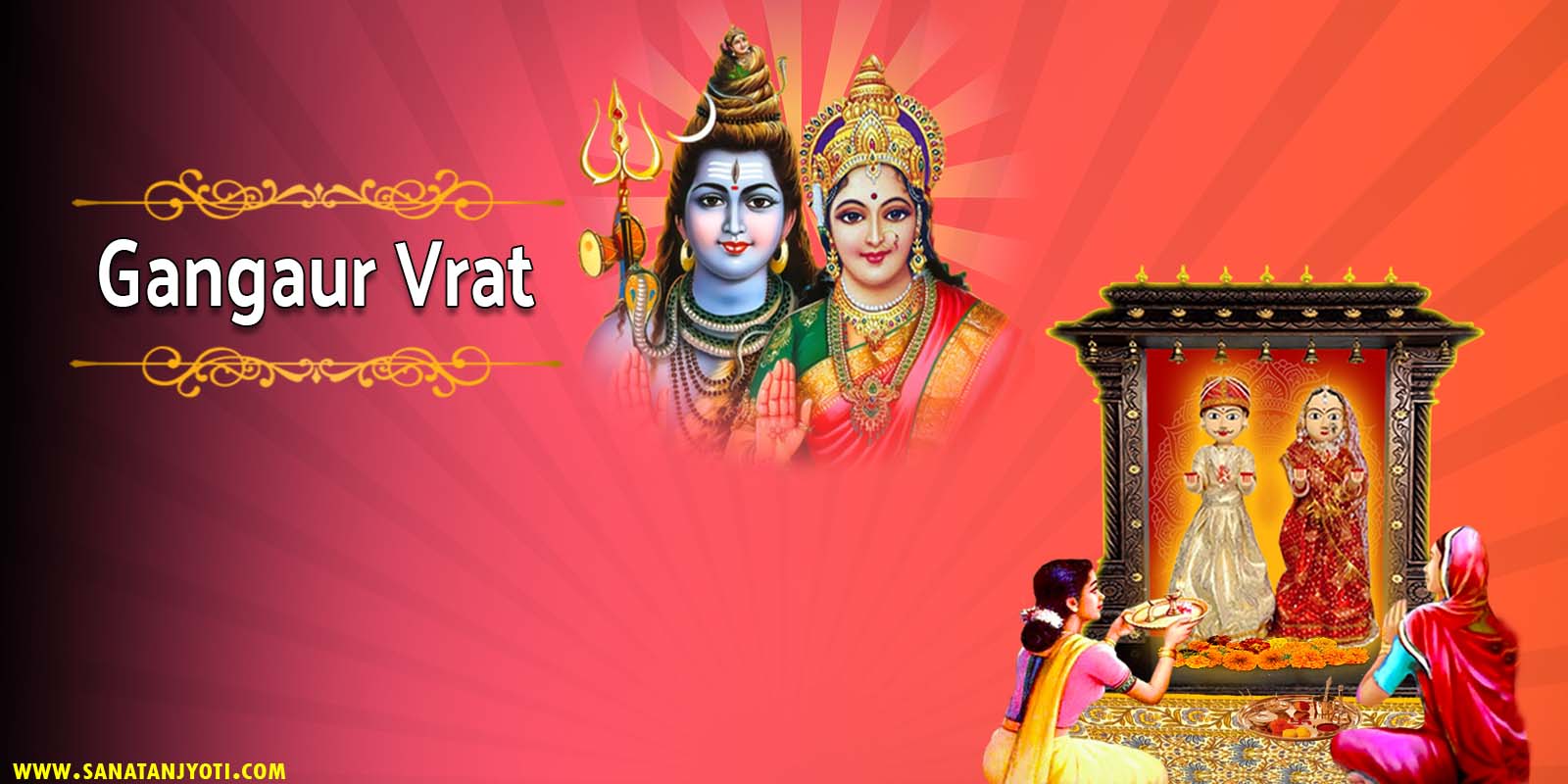
Gangaur Vrat will be observed on Friday, April 9, 2027. Gangaur is a major festival celebrated in Rajasthan and several other parts of India, during which Lord Shiva and Goddess Parvati are worshipped. The festival is especially observed by married women who pray for their husband's long life, marital bliss and family prosperity, while unmarried girls pray for a suitable life partner. The main Gangaur Puja is performed on Tritiya Tithi of Shukla Paksha in the month of Chaitra. In 2027, this Tithi falls on April 9.
When is Gangaur in 2027?
Gangaur will be observed on Friday, April 9, 2027. It falls on Tritiya Tithi of Shukla Paksha in the month of Chaitra, which is also known as Gangaur or Gauri Tritiya. According to the Panchang, Gangaur and Gauri Puja will be observed on April 9, 2027.
In 2027, Tritiya Tithi will begin at approximately 3:12 AM on April 9 and continue until around 1:34 AM on April 10. The Tithi and Puja timings may vary slightly from one city to another according to the local Panchang.
What is Gangaur?
Gangaur is one of India's major folk and religious festivals. It is celebrated with great enthusiasm and traditional rituals, particularly in Rajasthan. The tradition of Gangaur is also observed in different forms in Madhya Pradesh, Haryana, Uttar Pradesh and other parts of the country.
The word 'Gangaur' is generally associated with Gan + Gaur. Here, 'Gan' is considered to represent Lord Shiva, while 'Gaur' represents Goddess Parvati, or Gauri. Therefore, Lord Shiva and Goddess Parvati are worshipped during the Gangaur festival.
As part of the Gangaur tradition, idols of Lord Shiva and Goddess Parvati are made from clay and installed for worship. In many places, these idols are decorated according to local traditions and ceremonially immersed on the final day of the festival.
How Many Days Does Gangaur Vrat Last?
In many regions, the Gangaur tradition begins after Holi and continues until Chaitra Shukla Tritiya. During this period, women worship Gangaur every day and participate in traditional songs, Puja and other religious activities according to local customs.
In several traditions, Gangaur idols are installed from Pratipada of Chaitra Krishna Paksha after Holika Dahan, and they are immersed after the main Puja on Chaitra Shukla Tritiya.
Thus, the Gangaur Puja period is generally considered to be around 18 days. However, the traditions and Puja Vidhi may vary among different regions and families.
Significance of Gangaur Vrat
Gangaur Vrat is associated with the worship of Lord Shiva and Goddess Parvati in their divine marital form. Married women worship Gangaur with prayers for their husband's long life, lasting marital bliss and family prosperity.
Unmarried girls observe Gangaur Vrat and perform Puja with prayers for a good and suitable life partner.
Goddess Gauri is associated with marital bliss and auspiciousness in married life during the Gangaur festival. This is why the tradition of offering Solah Shringar items, Mehendi, Haldi, Kumkum, clothes, jewellery and other Suhag Samagri is followed in many places.
Gangaur Puja Vidhi
On the final day of Gangaur, that is, Chaitra Shukla Tritiya, women take a bath in the morning and prepare for the Puja. Clean the Puja area and purify the Chauk or Pata by sprinkling Gangajal over it.
Spread a red cloth over the Chauk and install the Gangaur idols made from clay and Holika ashes. Then dress the idols in clothes.
First, install Lord Ganesha for the Puja. If an idol or picture of Lord Ganesha is not available, a Supari can be decorated with Kumkum and placed at the Puja altar while meditating upon Lord Ganesha.
Next, establish the Kalash. Tie a Kalava around the neck of the Kalash and fill it with clean water after adding a coin, Supari, rice and some Gangajal. Tie a Kalava around a coconut and place five mango leaves around the mouth of the Kalash before placing the coconut on top. Then keep the Kalash on the right side of the Chauk.
Next, take a Supari, flowers and other Puja items on a betel leaf, fold your hands and take the Sankalp for your Vrat.
After taking the Sankalp, offer Kumkum, Haldi, Mehendi, fruits and Solah Shringar items to Lord Shiva and Goddess Parvati. Light Dhoop, Diya and incense sticks and perform the Puja with devotion. Pray to Lord Shiva and Goddess Parvati for the fulfilment of your wishes.
After the Puja, mix some Gangajal, water and milk in a bowl and place a Supari in it. Hold the bowl in your hands and read or listen to the Gangaur Vrat Katha.
According to the detailed Gangaur tradition, this Puja is performed daily for the prescribed period, followed by special worship and Visarjan of the Gangaur idols on the final day.
What is Offered During Gangaur Puja?
During Gangaur Puja, Kumkum, Haldi, Mehendi, flowers, fruits, clothes and Solah Shringar items are offered to Goddess Gauri according to the local tradition.
In several regions, there is also a tradition of offering jewellery made from flour and gram flour to Gangaur Ji.
Puja Samagri may vary according to local and family traditions, so the required items can be used according to the customs followed in your region.
What is Done on the Final Day of Gangaur?
On the final day of Gangaur, women dress up according to their traditions and means and worship Lord Shiva and Goddess Parvati.
In many places, Gangaur Ji is specially decorated on this day. After the Puja, married women are offered a meal and Dakshina is given according to one's means.
After this, the Gangaur idols are ceremonially bid farewell and immersed in a river, lake or another sacred water body.
According to folk belief, the place where Gangaur is installed is considered symbolic of Goddess Gaura's maternal home, while the place where the idols are immersed represents her marital home.
Who Observes Gangaur Vrat?
Gangaur Vrat is primarily observed by women. Married women observe this Vrat with prayers for their husband's long life, lasting marital bliss and family prosperity.
Unmarried girls also worship Gangaur and, according to religious beliefs, pray for a suitable life partner.
However, the method of observing the Vrat and performing the Puja may vary according to regional, family and local traditions.
If you have any questions regarding Gangaur Vrat Puja Vidhi, Vrat, Sankalp or any religious Anushthan: -You can receive personal guidance from our expert through a Free Consultation.
Gangaur Vrat Katha
Once, Lord Shiva, Goddess Parvati and Narada Ji went out on a journey. While travelling, they reached a village on Tritiya Tithi of Shukla Paksha in the month of Chaitra.
When the women of the village heard about their arrival, the poor women immediately came to welcome them with plates containing Haldi, Akshata and flowers for the Puja. Goddess Parvati was pleased with them and showered her Suhag blessings upon them. They returned home blessed with everlasting marital fortune.
After some time, women from wealthy families arrived to welcome Goddess Parvati. They were dressed in Solah Shringar and had prepared various delicacies on gold and silver plates.
Seeing these women, Lord Shiva said, “You have already showered all your Suhag blessings upon those poor women. What will you give these women now?”
Goddess Parvati replied, “I have given them external Suhag items. I will now give these women Suhag by cutting my finger and offering my own blood, through which they will become as fortunate in marriage as I am.”
After this, Goddess Parvati took Lord Shiva's permission and went to bathe in the river. There, she made a Shivling from pure clay and worshipped it.
Lord Shiva then appeared before her and blessed her, saying that the husband of any woman who worships him along with Goddess Parvati on this day will have a long life, and ultimately attain Moksha.
Goddess Parvati took considerable time to complete her Puja. When Lord Shiva asked her the reason for the delay, Parvati Ji said that she had met her brother and sister-in-law near the river, and they had asked her to stay for a while, which caused the delay.
Hearing this, Lord Shiva said, “Come, let us also go to your brother and sister-in-law's house.”
At that moment, Goddess Parvati silently meditated upon her husband and prayed, “O Lord, please protect my honour.”
When the three of them reached the riverbank, they saw a beautiful palace created through Lord Shiva's divine Maya. Shiva Ji's brother-in-law and sister-in-law welcomed and honoured them.
After resting there for three days, the three began their return journey. Suddenly, Lord Shiva remembered that his Mala had been left behind there.
Lord Shiva instructed Narada Ji to return to the same palace and bring the Mala.
When Narada Ji reached the riverbank, he saw that there was no palace there at all. The entire area was covered by forest.
Then he noticed Lord Shiva's Mala hanging from a tree. Narada Ji brought the Mala back and narrated everything to Lord Shiva.
Lord Shiva said, “All of this is the Maya of Parvati.”
Hearing this, Goddess Parvati replied, “What am I worthy of? All of this is only through your grace.”
Goddess Parvati had observed this Vrat secretly and attained everlasting marital fortune. Therefore, according to one tradition, even today when women perform Gangaur Puja, women worship separately without the presence of men in some customs.
According to religious beliefs associated with Gangaur Vrat, women who observe this Vrat receive lasting marital bliss, and the blessings of Lord Shiva and Goddess Parvati remain upon their husbands and families.
Benefits of Gangaur Vrat
According to religious beliefs, Gangaur Vrat and Puja are observed with prayers for lasting marital bliss, the long life of the husband and happiness and prosperity within the family.
Unmarried girls also worship Goddess Gauri and pray for a suitable life partner.
These benefits should be understood as religious beliefs. The purpose of the Vrat and Puja is also to express devotion, pray for family well-being and wish for happiness in married life.
Gangaur 2027 Puja Shubh Muhurat
The main Gangaur festival will be observed on Friday, April 9, 2027. Chaitra Shukla Tritiya will prevail on this day. Tritiya Tithi will begin at approximately 3:12 AM on April 9 and end at around 1:34 AM on April 10.
The exact Gangaur Puja Muhurat may vary according to the city's sunrise time and local Panchang. Therefore, according to your city: -Check the SanatanJyoti Panchang to know the exact Puja time.
Things to Keep in Mind During Gangaur Vrat
The most important aspects of Gangaur Puja are devotion and following one's family and local traditions.
Women observing the Vrat should perform the Puja and observe the Vrat according to their capacity. If health or other personal circumstances make fasting difficult, one may perform the Puja according to one's tradition and remember Lord Shiva and Goddess Parvati.
Since Puja Samagri and rituals may vary from one region to another, necessary changes can be made according to family or local traditions.
Important Questions Related to Gangaur 2027
When is Gangaur in 2027?
Gangaur will be observed on Friday, April 9, 2027. It falls on Tritiya Tithi of Chaitra Shukla Paksha.
Why is Gangaur Vrat Observed?
Married women observe Gangaur Vrat with prayers for their husband's long life, lasting marital bliss and family prosperity. Unmarried girls worship Gangaur with prayers for a suitable life partner.
Whom is Worshipped During Gangaur?
During Gangaur, Lord Shiva and Goddess Parvati in her Gauri form are worshipped.
How Many Days Does Gangaur Puja Last?
In many traditions, Gangaur Puja begins from Chaitra Krishna Pratipada after Holi and continues until Chaitra Shukla Tritiya. This is considered a Puja tradition of approximately 18 days.
What is Offered During Gangaur Puja?
Haldi, Kumkum, Mehendi, flowers, fruits, clothes and Solah Shringar items are traditionally offered during Gangaur Puja. In several regions, jewellery made from flour and gram flour is also offered to Gangaur Ji.
What is the Story of Gangaur Vrat?
The Gangaur Vrat Katha is a religious story associated with Goddess Parvati's penance, the boon she received from Lord Shiva and everlasting marital fortune. In many places, this story is traditionally read or listened to during Gangaur Puja.
When are the Gangaur Idols Immersed?
After the main Gangaur Puja on Chaitra Shukla Tritiya, the Gangaur idols are ceremonially bid farewell and immersed according to regional traditions.
Can Unmarried Girls Also Observe Gangaur Vrat?
Yes. In many traditions, unmarried girls also worship Gangaur and pray for a suitable life partner.
Can Men Perform Gangaur Puja?
Gangaur Puja is primarily associated with the tradition of women. In some places and families, women have a tradition of performing the Puja separately. Therefore, it is appropriate to follow the local and family customs regarding this practice.