
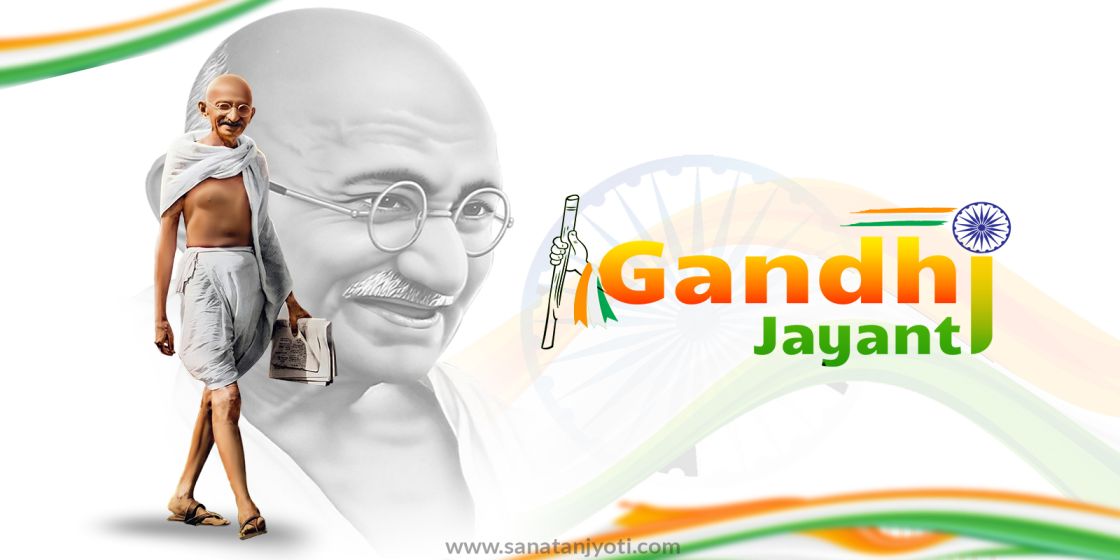
Gandhi Jayanti is celebrated every year on 2 October in India. This day is observed across the country with devotion and respect as the birth anniversary of Mahatma Gandhi. In 2026, Gandhi Jayanti will be celebrated on Friday, 2 October.
Mahatma Gandhi’s life is known for values such as truth, non-violence, simplicity and humanity. Gandhi Jayanti is an occasion to remember his life, ideas and significant contribution to the Indian freedom movement.
Why is Gandhi Jayanti Celebrated?
Gandhi Jayanti is celebrating the birth anniversary of Mahatma Gandhi. He was born on 2 October 1869, in Porbandar, Gujarat. He adopted truth and non-violence as the key principles of his life and played an important role in India’s freedom movement.
On this day, prayer meetings, tribute programmes, cleanliness drives and various social awareness programmes are organized across the country. Gandhi Jayanti inspires people to adopt values such as truth, non-violence, cleanliness, self-reliance and social harmony in their lives.
Significance of Gandhi Jayanti 2026
Gandhi Jayanti 2026 will be observed on Friday, 2 October. This day provides an opportunity to remember Mahatma Gandhi’s ideas and ideals while inspiring the present generation to follow the path of truth and non-violence.
Gandhi placed great importance on simplicity, truth and non-violence throughout his life. His ideas were not limited to the freedom movement but also continue to inspire people towards social equality, cleanliness, self-reliance and peaceful living.
How is Gandhi Jayanti Celebrated?
On Gandhi Jayanti, Mahatma Gandhi is remembered and honored across the country. Schools, government institutions and various social organizations organize prayer meetings, speeches, essay competitions, cleanliness drives and other awareness programmes.
On this occasion, people remember Gandhi’s famous ideas and lessons from his life and take a pledge to promote cleanliness, peace and harmony in society.
Life Introduction of Mahatma Gandhi
Mahatma Gandhi’s full name was Mohandas Karamchand Gandhi. He was born on 2 October 1869, in Porbandar, Gujarat. His father, Karamchand Gandhi, was the Diwan of the princely state of Rajkot, while his mother, Putlibai, was a deeply religious woman. The values instilled by his mother and his faith in truth had a deep influence on Gandhi’s life.
Gandhi studied law and went to England for further education. He later travelled to South Africa, where he experienced discrimination against Indians. His struggle in South Africa strengthened his ideas of Satyagraha and non-violence.
After returning to India, Gandhi became actively involved in the Indian freedom movement and gradually emerged as one of the country’s leading public figures.
Mahatma Gandhi’s Contribution to the Freedom Movement
Gandhi played an important role in connecting the Indian freedom movement with widespread public participation. He made Satyagraha and non-violence the principal means of opposing British rule. Under his leadership, major mass movements such as the Non-Cooperation Movement, Salt Satyagraha and Quit India Movement took place.
To understand these movements, it is important to understand some of the major events and British policies of that period.
What Was the Rowlatt Act of 1919 and Why Was It Introduced?
The Rowlatt Act was introduced by the British government in 1919. After some extraordinary laws introduced during the First World War were set to expire, the British government introduced this law with the aim of maintaining control over political activities and alleged revolutionary activities.
The law gave the government extensive powers, including the ability to arrest and detain people without following normal judicial procedures. Indian leaders and a large section of the public considered it a serious threat to civil liberties and opposed it.
Mahatma Gandhi called for the Rowlatt Satyagraha against the Rowlatt Act. During this period of protest, tension and unrest increased in several parts of the country.
When and Why Did the Jallianwala Bagh Massacre Take Place?
The Jallianwala Bagh massacre took place on 13 April 1919, in Amritsar. The incident occurred amid a tense atmosphere following protests against the Rowlatt Act and the arrest of local leaders Dr Saifuddin Kitchlew and Dr Satyapal.
On 13 April, a large number of people had gathered at Jallianwala Bagh on the occasion of Baisakhi. The gathering also included people who had come to protest against the Rowlatt Act. British officer Brigadier General Reginald Dyer arrived there with soldiers and ordered them to fire on the crowd. A large number of people were killed and injured in the incident.
The Jallianwala Bagh incident deepened anger against British rule throughout India and became one of the important events that gave a new direction to the freedom movement.
When and Why Was the Non-Cooperation Movement Started?
The Non-Cooperation Movement was launched in 1920 under the leadership of Mahatma Gandhi. Public dissatisfaction with British rule had increased considerably because of the Rowlatt Act, the Jallianwala Bagh massacre and the repression in Punjab. Against this background, Gandhi called upon people to withdraw their cooperation from British rule.
The objective of the movement was to end cooperation with British institutions and systems without resorting to violence. People were encouraged to boycott government institutions and British systems and to adopt Swadeshi. Cooperation with the Khilafat Movement also played a role in the broader political mobilization of that period.
The Non-Cooperation Movement played an important role in taking the freedom struggle beyond cities and involving ordinary people. However, after the violent incident at Chauri Chaura in 1922, Gandhi decided to withdraw the movement.
When and Why Did the Salt Satyagraha Take Place?
The Salt Satyagraha began in 1930 under the leadership of Mahatma Gandhi. Its main objective was to oppose the British salt law and the tax imposed on salt. Since salt was a daily necessity for everyone, Gandhi used it as an effective symbol of opposition to British economic and colonial policies.
On 12 March 1930, Gandhi began his march from Sabarmati Ashram to Dandi. After a journey of approximately 24 days, he reached Dandi on 6 April 1930 and broke the salt law. This event became an important symbol of the Civil Disobedience Movement and strengthened peaceful opposition to British laws across the country.
The most important feature of the Salt Satyagraha was that it connected an everyday necessity like salt with the freedom movement, thereby increasing the participation of ordinary people.
When and Why Was the Quit India Movement Started?
The resolution for the Quit India Movement was adopted by the All-India Congress Committee in Bombay on 8 August 1942. The movement gained widespread momentum from 9 August 1942 onwards, when Gandhi and several other prominent leaders were arrested.
The main objective of the Quit India Movement was to demand the immediate end of British rule in India and the country’s independence. During the Second World War, India had been involved in the war by the British government without the consent of Indian leaders. As no satisfactory solution was reached regarding the question of independence, the Congress called for a decisive movement against British rule.
Major Ideas of Gandhi
The central ideas of Mahatma Gandhi were truth and non-violence. He placed special importance on truth, non-violence, Swadeshi, cleanliness, self-reliance and social harmony.
He believed that social and political change was possible not only through struggle but also through morality, self-discipline and peaceful efforts. His ideas influenced social life as well as the freedom movement.
What is Done on Gandhi Jayanti?
On Gandhi Jayanti, Mahatma Gandhi is honored and remembered throughout the country. Schools, government institutions and social organizations organize prayer meetings, speeches, essay competitions, cleanliness drives and awareness programmes.
On this day, people remember Gandhi’s life and ideas and take a pledge to adopt values such as truth, non-violence, cleanliness and social harmony in their daily lives.
What Should You Do on Gandhi Jayanti?
On Gandhi Jayanti, various social and educational activities are carried out to remember Mahatma Gandhi’s life and ideas. On this day, you can undertake the following activities according to your श्रद्धा and interests:
• Read about Mahatma Gandhi’s life and ideas.
• Try to understand the importance of truth and non-violence.
• Take a pledge to maintain cleanliness in your surroundings.
• Help people in need.
• Participate in tribute and awareness programmes organized at schools or at the local level.
What Should You Not Do on Gandhi Jayanti?
Gandhi Jayanti inspires us to live a peaceful and responsible life. Therefore, it is appropriate to keep the following things in mind on this occasion:
• Do not engage in violence or mistreat anyone.
• Do not litter public places.
• Do not insult anyone or engage in unnecessary disputes.
• Instead of limiting Gandhi’s ideas to speeches, try to put them into practice in everyday life.
What Can We Learn from Gandhi’s Life?
Mahatma Gandhi’s life is considered an example of his strong commitment to truth and non-violence. Even in difficult circumstances, he tried to remain committed to his principles. His life teaches us that patience, self-discipline and continuous effort are essential for achieving any goal.
Gandhi also placed great emphasis on Swadeshi and self-reliance. He believed that individuals and society should respect their own resources, labor and abilities. Cleanliness, social equality and respect for humanity also held an important place in his ideas.
Important Facts About Mahatma Gandhi
Gandhi’s life was closely connected with an important period in Indian history. His ideas and movements played an important role in connecting the freedom struggle with widespread public participation. When Gandhi Jayanti, it is useful to know some important facts about his life.
• Mahatma Gandhi’s full name was Mohandas Karamchand Gandhi.
• He was born on 2 October 1869 in Porbandar, Gujarat.
• He fought for the rights of Indians in South Africa.
• After returning to India, he became one of the leading figures of the freedom movement.
• He made Satyagraha and non-violence the principal means of his struggle.
• The Non-Cooperation Movement began in 1920.
• The Dandi March began on 12 March 1930, and the salt law was broken on 6 April 1930.
• The Quit India Movement began in 1942.
• Truth, non-violence, Swadeshi, cleanliness and self-reliance held special importance in Gandhi’s ideas.
Why Was Gandhi Called Mahatma?
Mahatma Gandhi received widespread respect because of his simple way of life, commitment to truth, non-violence and contribution to society. The word “Mahatma” is generally understood to mean “great soul.” The title became widely used as a mark of respect for his public life and moral influence.
Throughout his life, Gandhi focused not only on political freedom but also on social reform and issues related to humanity. He tried to explain the importance of truth, self-control, cleanliness and mutual harmony to the people.
Message of Gandhi Jayanti
Gandhi Jayanti does not only provide an opportunity to remember the history of the freedom movement. It also inspires us to adopt values such as truth, non-violence, discipline and responsibility in our daily lives.
2 October gives us an opportunity to remember Mahatma Gandhi’s life and contribution and to reflect on our responsibilities towards the country and society.
Frequently Asked Questions About Gandhi Jayanti
1. When is Gandhi Jayanti celebrated?
Gandhi Jayanti is celebrated every year on 2 October. In 2026, it will be observed on Friday, 2 October.
2. When was Mahatma Gandhi born?
Mahatma Gandhi was born on 2 October 1869 in Porbandar, Gujarat.
3. Why is Gandhi Jayanti celebrated?
This day is celebrated to mark Mahatma Gandhi’s birth anniversary and to remember his life, ideas and contribution to the Indian freedom movement.
4. What were Gandhi’s major principles?
Truth, non-violence, simplicity, self-reliance, cleanliness and social harmony were among his major ideas.
5. When did the Non-Cooperation Movement begin?
The Non-Cooperation Movement began in 1920 under the leadership of Mahatma Gandhi.
6. When did the Salt Satyagraha begin?
Mahatma Gandhi began the Dandi March from Sabarmati Ashram on 12 March 1930. He reached Dandi and broke the salt law on 6 April 1930.
7. When did the Quit India Movement begin?
The resolution for the Quit India Movement was adopted on 8 August 1942, after which the movement gained widespread momentum.
8. When did the Jallianwala Bagh massacre take place?
The Jallianwala Bagh massacre took place on 13 April 1919 in Amritsar.
Gandhi Jayanti is an important occasion to remember Mahatma Gandhi’s life, his struggles and his ideas. Gandhi Jayanti 2026, observed on 2 October 2026, inspires us to adopt values such as truth, non-violence, cleanliness, self-reliance and social harmony in our lives.
Mahatma Gandhi’s contribution holds an important place in the history of the Indian freedom movement. The lessons associated with his life continue to inspire people to embrace peaceful thinking, responsible citizenship and a greater understanding of their duties towards society.