
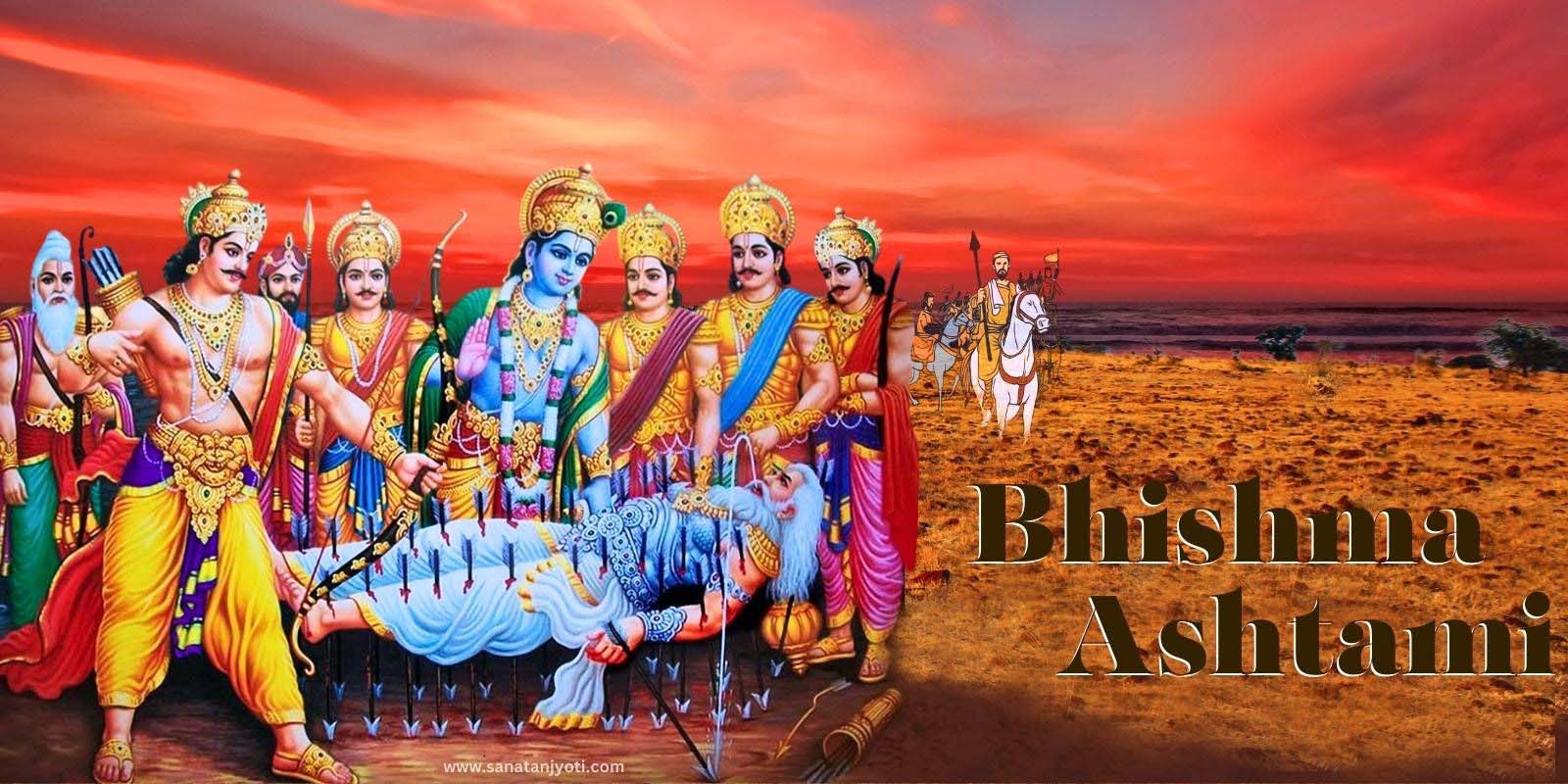
Bhishma Ashtami 2027 will be observed on Sunday, February 14. The day falls on the Ashtami Tithi of Shukla Paksha in the month of Magha and is observed as the death anniversary of Bhishma Pitamah, the great warrior of the Mahabharata. On this day, devotees remember Bhishma Pitamah through Puja, Tarpan, Vrat and prayers. In 2027, Bhishma Ashtami falls on Magha Shukla Ashtami.
When is Bhishma Ashtami 2027?
Bhishma Ashtami 2027 will be observed on Sunday, February 14. The festival is observed on the Ashtami Tithi of Shukla Paksha in the month of Magha. According to the Mahabharata tradition, after the Kurukshetra war, Bhishma Pitamah left his mortal body on this Tithi according to his own will. Therefore, the day is remembered as his death anniversary.
In 2027, the Ashtami Tithi will begin on the night of February 13 and continue until the night of February 14. The exact beginning and ending time of the Tithi may vary slightly from one city to another. Therefore, it is advisable to refer to the Panchang for your city before performing Puja and Tarpan.
To know the exact date, Puja and Tarpan timings for Bhishma Ashtami 2027 according to your city: -Check the SanatanJyoti Panchang.
Significance of Bhishma Ashtami
Bhishma Ashtami is regarded as a day to remember the sacrifice, devotion to Dharma, commitment and values of Bhishma Pitamah. In the Mahabharata, Bhishma Pitamah is especially known for his dedication to truth, duty and his solemn vows.
According to religious beliefs, he was blessed with Ichha Mrityu, the ability to choose the time of his death. Even after being severely wounded by arrows during the Mahabharata war, he did not immediately leave his body. Instead, he waited for the appropriate time according to his own will. He finally left his mortal body on Magha Shukla Ashtami. This is why the day is known as Bhishma Ashtami.
The tradition of remembering Bhishma Pitamah and performing Puja and Tarpan for him is also found in various religious traditions.
Bhishma Ashtami Puja Vidhi
On Bhishma Ashtami, devotees should take a bath in the morning and wear clean clothes. After this, choose a clean and sacred place for the Puja.
Clean the Puja area and remember Bhishma Pitamah along with Lord Vishnu or your Ishta Devata. If an image of Bhishma Pitamah is available, it may be placed at the Puja altar.
For the Puja, prepare Gangajal, Akshat, Roli, Kumkum, flowers, a Diya, incense, Naivedya and other necessary Puja Samagri.
First, light the Diya and remember the Lord. Then respectfully offer prayers to Bhishma Pitamah and remember his life, devotion to Dharma and sacrifice.
In many traditions, Tarpan is also performed for Bhishma Pitamah on this day. It is considered appropriate to perform Tarpan and Shraddha-related rituals according to one's family tradition and local religious practices.
After the Puja, offer Naivedya to the deity and distribute Prasad. Devotees may also observe a Vrat or practice self-restraint according to their faith.
If you need guidance for performing Puja, Tarpan or any specific religious ritual on Bhishma Ashtami according to your tradition: -Consult our experts through Free Consultation.
Bhishma Ashtami Story
The story dates back to the Dvapara Yuga. One day, King Shantanu went hunting. While walking through a forest near the River Ganga, he saw an exceptionally beautiful woman. She was none other than Goddess Ganga.
King Shantanu was deeply attracted to Goddess Ganga and proposed marriage to her. Goddess Ganga placed a condition before him. She said that she would be free to do whatever she wished, and the king would neither stop her nor question her about her actions. If the king ever did so, she would leave him.
King Shantanu accepted her condition, and the two were married.
After some time, Goddess Ganga gave birth to seven sons. However, after the birth of each son, she would take the child to the River Ganga and immerse him in the river. King Shantanu witnessed this but remained silent because of the promise he had made. He feared that questioning Ganga would cause her to leave him.
When their eighth son was born and Goddess Ganga once again went to immerse him in the river, King Shantanu could no longer restrain himself. He questioned her about the reason for her actions.
The moment the king asked the question, his promise was broken. Goddess Ganga told him that she would now leave him. Their eighth son was named Devavrata, who later became known as Bhishma.
Goddess Ganga raised Devavrata and gave him excellent education and training in warfare. Later, Devavrata returned to his father, King Shantanu.
The Story of How Devavrata Became Bhishma
Once, King Shantanu saw Satyavati, the daughter of the chief of the Nishada community. The king wished to marry Satyavati. When he proposed marriage to her father, he placed a condition that only the son born to Satyavati would become the king of Hastinapura.
King Shantanu had already considered Devavrata his heir, so he could not accept this condition. He became deeply troubled and remained unhappy.
When Devavrata learned about his father's situation, he decided to fulfill his father's wish. He went before Satyavati's father and took a vow that he would never claim the throne of Hastinapura for himself.
He then took another difficult vow to remain unmarried and observe celibacy throughout his life. Because of this terrible and extraordinary vow, Devavrata came to be known as Bhishma.
Pleased with Devavrata's great sacrifice, King Shantanu granted him the boon of Ichha Mrityu. Because of this boon, Bhishma Pitamah could choose the time of his own death.
Mahabharata War and Bhishma Pitamah's Departure from His Body
During the Mahabharata war, Bhishma Pitamah became the commander of the Kaurava army. According to the Mahabharata, it was extremely difficult to defeat him in battle.
According to the Mahabharata story, when Arjuna shot arrows at Bhishma Pitamah while keeping Shikhandi in front of him, Bhishma Pitamah did not raise his weapons. Wounded by Arjuna's arrows, he fell onto a bed of arrows.
Because he had received the boon of Ichha Mrityu, he did not immediately give up his life. He waited for the appropriate time and later left his mortal body on the Ashtami Tithi of Shukla Paksha in the month of Magha.
For this reason, Magha Shukla Ashtami is remembered as the death anniversary of Bhishma Pitamah and is known as Bhishma Ashtami.
What to Do on Bhishma Ashtami?
On Bhishma Ashtami, devotees may perform the following activities according to their traditions:
• Take a bath in the morning and wear clean clothes.
• Remember and respectfully bow to Bhishma Pitamah.
• Worship Lord Vishnu and your Ishta Devata.
• Perform Tarpan for Bhishma Pitamah according to your tradition.
• Donate food, clothes or other useful items to a needy person.
• Listen to stories related to the life of Bhishma Pitamah and the Mahabharata.
• Observe a Vrat or practice self-restraint according to your faith and family tradition.
Religious Message of Bhishma Ashtami
Bhishma Ashtami is not only a religious observance but also an opportunity to remember the ideals of sacrifice, commitment, duty and Dharma associated with the life of Bhishma Pitamah.
His life conveys the message that a person should remain devoted to their duties and promises. On this day, devotees respectfully remember Bhishma Pitamah and reflect on the values associated with his life.
Frequently Asked Questions About Bhishma Ashtami 2027
1. When is Bhishma Ashtami in 2027?
Bhishma Ashtami 2027 will be observed on Sunday, February 14. It falls on Magha Shukla Ashtami.
2. Why is Bhishma Ashtami celebrated?
Bhishma Ashtami is observed on Magha Shukla Ashtami. According to religious tradition, Bhishma Pitamah left his mortal body on this Tithi according to his own will. Therefore, devotees remember him and perform Tarpan in his honor on this day.
3. Who granted Bhishma Pitamah the boon of Ichha Mrityu?
According to the Mahabharata tradition, King Shantanu granted Bhishma Pitamah the boon of Ichha Mrityu, pleased by his extraordinary vow and sacrifice.
4. What was the real name of Bhishma Pitamah?
Bhishma Pitamah's original name was Devavrata. Because of his extraordinary vow, he later came to be known as Bhishma.
5. What is done on Bhishma Ashtami?
On this day, devotees remember and worship Bhishma Pitamah and perform Tarpan according to their tradition. Devotees may also observe a Vrat, make donations and listen to religious stories.