
Baisakhi, also known as Vaisakhi, is one of the major festivals of India. It is celebrated with great enthusiasm and joy, especially in Punjab and Haryana. The festival is associated with the harvest season, the solar New Year and the establishment of the Khalsa Panth in Sikh history.
In 2027, Baisakhi will be celebrated on April 14, Wednesday. On the same day, Mesha Sankranti will also be observed as the Sun enters the zodiac sign of Aries (Mesha).
Around the same time, different regions of India celebrate festivals associated with the New Year and harvest under different names and traditions. In Kerala, it is celebrated as Vishu, in Assam as Bihu, in Tamil Nadu as Puthandu, in Bengal as Poila Boishakh, and in several other regions through traditions associated with the solar New Year.
When is Baisakhi in 2027?
In 2027, the festival of Baisakhi will be celebrated on April 14, 2027, Wednesday. The day is associated with harvest celebrations and religious and cultural traditions in Punjab and several other parts of India.
Important Information About Baisakhi 2027
• Baisakhi: April 14, 2027, Wednesday
• Mesha Sankranti: April 14, 2027
• Vishu: April 14, 2027
• Bohag Bihu: April 15, 2027
• Vaishakhadi (Bengal): April 15, 2027
The exact Sankranti timing may vary depending on the location. Therefore, it is advisable to confirm the timing according to the local Panchang for Puja or religious rituals.
Why Is Baisakhi Celebrated?
Baisakhi is associated with agriculture, seasonal change and Sikh history. In Punjab and nearby regions, it is a major harvest festival celebrated to mark the ripening of the Rabi crop and the arrival of new agricultural produce.
Baisakhi holds special religious significance for the Sikh community. In 1699, Guru Gobind Singh Ji established the Khalsa Panth on the day of Baisakhi. For this reason, the day holds an important place in Sikh history.
On this occasion, religious gatherings, Nagar Kirtans, special programs at Gurudwaras and traditions of Seva can be seen across Sikh communities.
Baisakhi is also connected with regional New Year and harvest festivals in different parts of India. Therefore, it is celebrated according to the local culture and traditions of different states.
Connection Between Baisakhi and Mesha Sankranti
Baisakhi is associated with the Sun entering the zodiac sign of Aries (Mesha). The Sun’s entry into Aries is known as Mesha Sankranti, and Baisakhi is celebrated around this time.
In 2027, both Mesha Sankranti and Baisakhi will fall on April 14.
On this day, the tradition of worshipping Surya Dev and offering Arghya is also followed in many places.
How Is Baisakhi Celebrated?
Gurudwaras are specially decorated on Baisakhi. Members of the Sikh community visit Gurudwaras, express their devotion before the Guru Granth Sahib, listen to Gurbani and participate in religious programs.
In many places, Nagar Kirtans are organized. People wear traditional clothes and exchange Baisakhi greetings with one another.
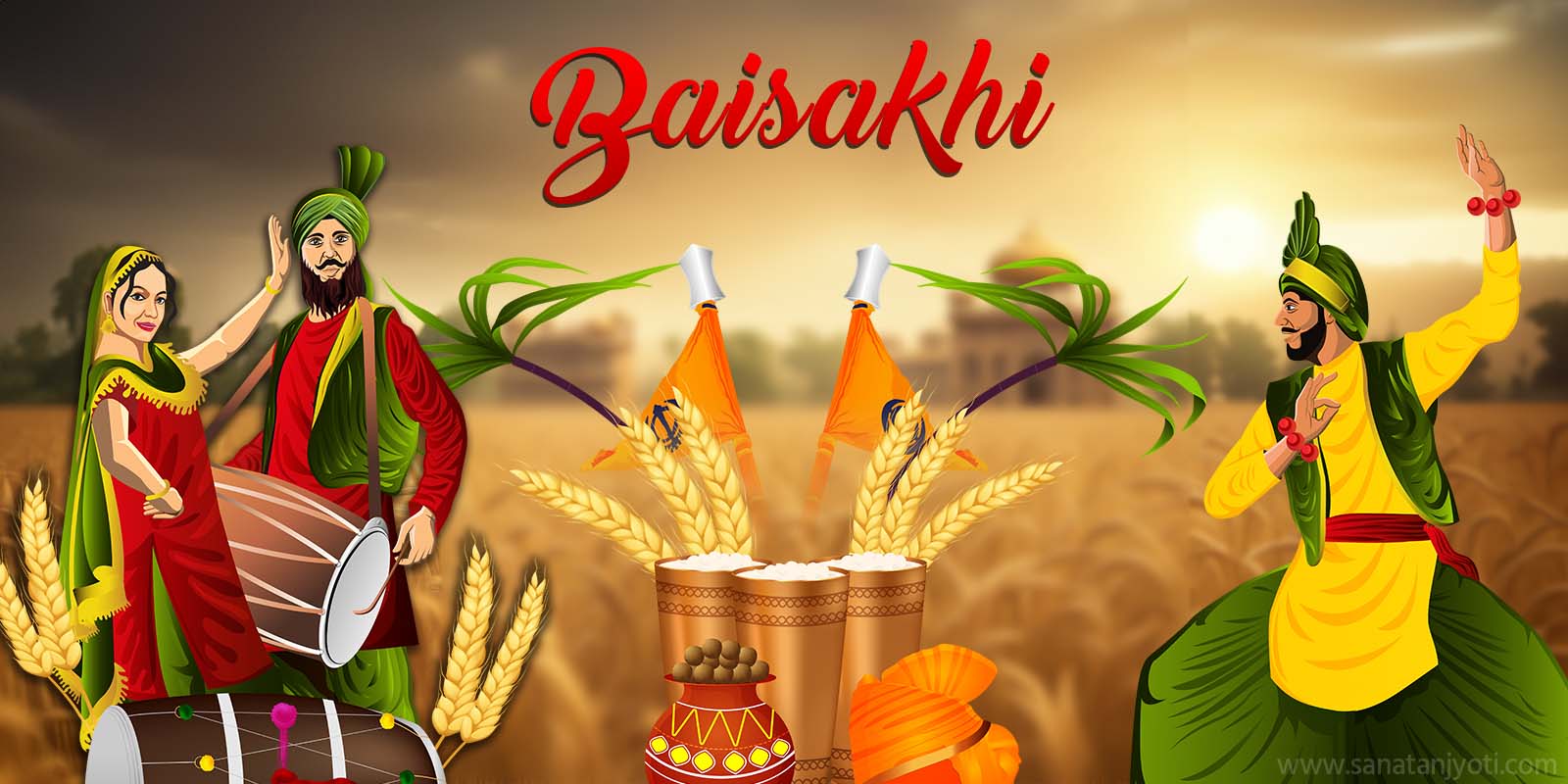
Bhangra and Giddha hold a special place in the cultural traditions of Punjab. People celebrate the joy of the harvest by performing traditional dances to the beats of the Dhol.
Special dishes are also prepared at home, and the happiness of the festival is shared with family and friends.
Agricultural Significance of Baisakhi
Baisakhi is primarily a harvest-related festival. Around this time, the Rabi crop begins to ripen in Punjab, Haryana and several parts of North India, and the harvesting season for wheat and other crops begins.
Farmers express gratitude to nature and God for a good harvest and celebrate the arrival of new agricultural produce. For this reason, Baisakhi is also known as a festival of harvest and prosperity.
In agricultural regions, fairs and cultural programs are organized on this occasion.
Festivals Similar to Baisakhi in Different Parts of India
India’s diverse culture includes several regional festivals celebrated around the same time. These festivals reflect the influence of local calendars, agricultural cycles and solar New Year traditions.
• Kerala: Vishu
• Assam: Bihu
• Tamil Nadu: Puthandu
• Bengal: Poila Boishakh / Bengali New Year
• Bihar: Sattu Sankranti
• Bangladesh: Pohela Boishakh
In 2027, Vishu will also be celebrated on April 14, while Assam’s Bohag Bihu will be observed on April 15.
Each of these festivals has its own religious and cultural traditions. Therefore, rather than considering them the same as Baisakhi, it is more appropriate to understand them as regional festivals that occur around the same time.
Religious Significance of Baisakhi
Baisakhi has particular religious significance for the Sikh community. The establishment of the Khalsa Panth by Guru Gobind Singh Ji in 1699 gives this day an important place in Sikh religious history.
In Hindu traditions, Mesha Sankranti is also significant on this day. Around the time of the Sun’s entry into Aries, traditions of worshipping Surya Dev, taking a holy bath and performing charitable activities are followed in several regions.
According to religious beliefs, donating food, clothes and other useful items to people in need on this day is considered auspicious.
What to Do on Baisakhi?
On Baisakhi, devotees may perform Puja and religious activities according to their religious and family traditions.
• Take a bath in the morning and offer Arghya to Surya Dev.
• Worship Surya Dev according to your faith and tradition.
• Donate food or other useful items to people in need.
• Visit a Gurudwara and express devotion before the Guru Granth Sahib.
• Listen to Gurbani and participate in religious programs.
• Celebrate Baisakhi together with family and the community.
• Farmers and people associated with agriculture may express gratitude for the new harvest.
Do you have any questions about Baisakhi Puja, offering Arghya to the Sun, donations or any religious ritual?Get a free consultation from our Acharya Ji and get answers to your questions related to Puja and religious practices.
Cultural Significance of Baisakhi
Baisakhi is deeply connected with the folk culture of Punjab and Haryana. On this occasion, people express their happiness through traditional music, Dhol, Bhangra and Giddha folk dances.
Baisakhi is also an occasion for social unity and community participation. People meet one another, exchange greetings and celebrate the festival together.
Baisakhi is a major Indian festival connected with agriculture, the solar New Year, regional culture and Sikh religious history. In Punjab and Haryana, it is celebrated with great enthusiasm as a harvest festival, while for the Sikh community, it holds special religious significance because of the establishment of the Khalsa Panth in 1699.
In 2027, Baisakhi will be celebrated on April 14, Wednesday. Mesha Sankranti will also be observed on the same day.