

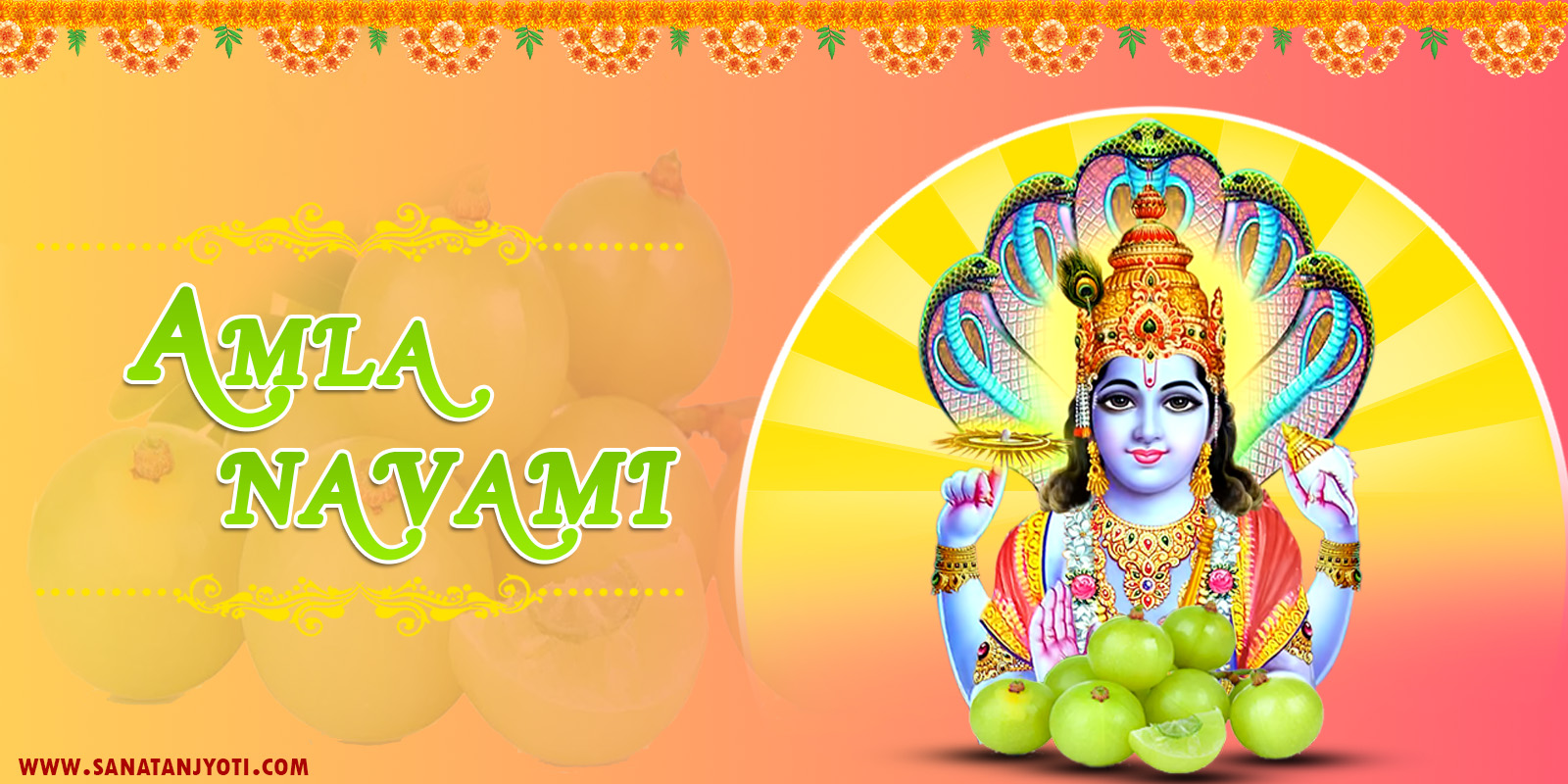
Amla Navami 2026
When Is Amla Navami 2026?
Amla Navami 2026 will be observed on Wednesday, November 18. Amla Navami is also known as Akshaya Navami and is observed on the Navami Tithi of the Shukla Paksha in the Hindu month of Kartik. On this day, devotees traditionally worship the Amla tree, circumambulate it, and in some traditions, eat meals beneath its shade. Amla Navami is also considered significant for charitable donations and religious practices.
To know the exact Navami Tithi, auspicious Puja timing and other Panchang details for Amla Navami 2026 according to your city: -Check the SanatanJyoti Panchang.
Why Is Amla Navami Celebrated as a Festival?
Amla Navami is observed on the Navami Tithi of Shukla Paksha in the month of Kartik. The Amla tree is worshipped on this day. According to religious beliefs, the Amla tree is considered to have a special connection with Lord Vishnu.
On Amla Navami, women and men worship the Amla tree with their families. After the Puja, devotees perform Parikrama around the Amla tree, and in many places, there is also a tradition of having a meal and receiving Prasad under the shade of the tree.
Amla Navami is also known as Akshaya Navami. Religious traditions attach special significance to charity, virtuous deeds and religious activities performed on this day.
What Is the Religious Significance of Amla Navami?
Amla Navami is associated with the worship of the Amla tree, devotion to Lord Vishnu and charity. According to some religious beliefs, worshipping the Amla tree on this day is believed to invite the blessings of Lord Vishnu and is associated with prayers for happiness and prosperity in the family.
Amla Navami is also known as Akshaya Navami. “Akshaya” means that which does not diminish or come to an end. According to religious beliefs, the merit earned through good deeds, charity and worship performed on this day is considered Akshaya, or imperishable.
Worshipping Lord Vishnu and reciting the Vishnu Sahasranama on Amla Navami is considered auspicious.
If you wish to perform a Vishnu Sahasranama Anushthan according to proper rituals with the intention of seeking the grace and blessings of Lord Vishnu: -You can get information about the Vishnu Sahasranama Anushthan and also book the Anushthan.
What Is the Story of Amla Navami?
The Story of Goddess Lakshmi and the Amla Tree
In ancient times, Goddess Lakshmi went on a journey across the Earth. She thought about worshipping Lord Vishnu and Lord Shiva together, but Lord Shiva is traditionally associated with Bilva leaves, while Lord Vishnu is associated with Tulsi. She wondered how both deities could be worshipped together.
At that moment, she saw an Amla tree on the Earth. According to the religious story, the Amla fruit is believed to possess qualities associated with both deities. It is regarded as a superior and beneficial fruit.
Goddess Lakshmi worshipped Lord Shiva and Lord Vishnu together under this tree and served food to sages and other holy people. Since then, the tradition of observing the Navami Tithi of Shukla Paksha in the month of Kartik as Amla Navami is believed to have continued.
As the Amla tree is worshipped on this day, this Navami came to be known as Amla Navami.
What Is the Vrat Katha of Amla Navami?
On Amla Navami, devotees observing the Vrat listen to this story. The story is as follows:
Long ago, there was a righteous merchant who was childless. One day, a neighbor told his wife that if she sacrificed a child in the name of Lord Bhairava, she might be blessed with a son.
The merchant rejected this idea, but his wife accepted it. One day, taking advantage of an opportunity, she abducted a young girl and sacrificed her in the name of Bhairava Baba by throwing her into a well.
As a result of this act, the merchant's wife developed leprosy, and the spirit of the girl she had sacrificed began to trouble her. The merchant asked his wife about what had happened, and she told him everything.
The merchant then told her that there was no place in this world for those who had committed sins such as killing a cow, killing a Brahmin or killing a child. He therefore advised her to go to the banks of the Ganga, worship God and bathe in the Ganga. He told her that only then could she be freed from her suffering.
The merchant's wife began living near the Ganga. After some time, Mother Ganga came to her in the form of an elderly woman and said, “Go to Mathura, observe the Kartik Navami Vrat, perform Parikrama around the Amla tree and worship it. By doing this, your leprosy will be cured.”
The merchant's wife followed the elderly woman's advice and went to Mathura, where she began observing the Amla Navami Vrat according to the prescribed rituals. Through her Vrat and worship, she received the grace of God and became endowed with divine powers. As a result, she was also blessed with a beautiful son.
This story conveys important messages about human nature, divine grace, sacrifice and Dharma. It also teaches that one should not harm another person for one's own selfish interests.
What Is the Puja Vidhi for Amla Navami?
The general Puja Vidhi for Amla Navami is traditionally observed as follows:
1. Wake up before sunrise and take a bath.
2. Wear clean clothes and prepare for the Puja.
3. Sit facing east under the Amla tree.
4. Clean the Amla tree and decorate it with incense, flowers, Chandan and other Puja Samagri.
5. Prepare Roli, Akshat, incense, lamp, flowers and other Puja items.
6. Worship the Amla tree according to the prescribed rituals.
7. Tie a raw thread or Mauli around the tree while performing Parikrama.
8. Traditionally, seven Parikramas are performed around the tree.
9. After the Puja, perform Aarti using camphor or a pure ghee lamp.
10. Follow the tradition of having a meal and receiving Prasad under the Amla tree with family.
Why Is the Amla Tree Worshipped on Amla Navami?
The Amla tree holds special significance in Indian religious traditions. In several mythological beliefs, Amla is described as a divine and beneficial fruit.
According to beliefs associated with the Skanda Purana, the Amla tree is considered dear to Lord Vishnu. In some religious traditions, Amla is regarded as one of the earliest trees to have appeared and is also referred to as “Adiroha.”
The Amla tree is associated with merit, health and religious practices. For this reason, worshipping the Amla tree and having food under its shade during the month of Kartik is considered especially significant.
What Is the Connection Between Amla Navami and the Amla Tree?
The Amla tree is the most prominent religious symbol associated with Amla Navami. The tradition of worshipping the tree, performing Parikrama and having a meal under its shade also reflects reverence for nature.
The Sanatana tradition reflects a sense of respect for nature and for trees and plants that are beneficial to life. Amla is also an important part of this tradition.
What Is the Ayurvedic Significance of Amla Navami?
Along with its religious significance, Amla also holds an important place in Ayurveda. Amla is a nutritious fruit and contains Vitamin C along with several other nutrients.
In Ayurvedic traditions, Amla has long been used in various types of medicinal preparations. It is traditionally known for several uses related to health and nutrition.
However, Amla should not be considered a substitute for medical advice when it comes to treating any disease or health condition.
What Are the Traditional Benefits of Eating Amla?
Amla is a nutrient-rich fruit. It contains Vitamin C along with several other nutrients. Traditionally, it has been used for various purposes related to immunity, skin, hair and general health.
Because of these qualities, Amla has been considered an important fruit in Indian traditions and Ayurveda.
What Can We Learn from Amla Navami?
The religious stories associated with Amla Navami are not limited to Vrat and Puja. They also convey several moral and social messages.
The story of this festival teaches that one should not harm another person for personal gain. One should also not follow any rule or practice suggested by others if it causes harm to another living being or person.
Amla Navami is also associated with respect for nature, religious faith, charity and the tradition of worshipping together with family.
What Should You Do on Amla Navami?
• Worship the Amla tree with devotion.
• Perform Parikrama around the Amla tree.
• Worship Lord Vishnu.
• Observe the Vrat or religious practices according to your tradition.
• Donate to people in need.
• Take a pledge to protect and preserve the Amla tree.
• Perform Puja and receive Prasad with your family.
What Should You Avoid Doing on Amla Navami?
• Do not engage in activities that harm any living being or person.
• Do not neglect cleanliness and discipline during the Puja.
• Do not perform harmful acts under the influence of superstition or pressure from others.
• Do not harm nature, trees or plants.
What Is the Connection Between Amla Navami and Environmental Conservation?
The tradition of worshipping the Amla tree on Amla Navami reflects a sense of respect for nature and trees. Protecting trees that are considered sacred in religious traditions can also strengthen a sense of responsibility toward the environment.
The Sanatana tradition has a long-standing practice of seeing the presence of the Divine in different forms of nature. From this perspective, the worship of the Amla tree can also be associated with its protection and respect.
Frequently Asked Questions About Amla Navami 2026
1. When Is Amla Navami 2026?
Amla Navami 2026 will be observed on Wednesday, November 18. The festival is associated with Kartik Shukla Navami.
2. What is another name for Amla Navami?
Amla Navami is also known as Akshaya Navami.
3. Which tree is worshipped on Amla Navami?
The Amla tree is worshipped on Amla Navami.
4. Why is Parikrama performed around the Amla tree on Amla Navami?
According to religious beliefs, worshipping and performing Parikrama around the Amla tree is one of the major traditions of this festival. It is associated with religious merit and spiritual practices.
5. What should you eat on Amla Navami?
Vrat and food traditions may vary according to family and regional practices. In many places, there is a tradition of having Sattvic food and receiving Prasad under the shade of the Amla tree.
6. What is the significance of Amla Navami?
Amla Navami is regarded as an important religious festival associated with Puja, charity, worship of Lord Vishnu and reverence for the Amla tree. It is also known as Akshaya Navami.