
When is Upakarma 2026?
In 2026, Upakarma (Shravani Upakarma / Avani Avittam) will be celebrated on different dates for each Veda. Rigveda Upakarma falls on Wednesday, 26 August 2026. Yajurveda Upakarma (Avani Avittam) is on Thursday, 27 August 2026. Samaveda Upakarma will be celebrated on Friday, 11 September 2026.
Upakarma is also called Shravani Upakarma, Avani Avittam, and the Yajnopavita (Janeu) Changing Ceremony. On this day, people change their old Yajnopavita (Sacred Thread or Janeu) and wear a new one. They perform Rishi Tarpana, pray for forgiveness for their mistakes, and take a new pledge to study the Vedas and follow the path of Dharma.
In South India, especially in Tamil Nadu, Kerala, Karnataka, and Andhra Pradesh, this festival is known as Avani Avittam. In North India, it is called Shravani Upakarma. Many people believe that this day helps clean the mind, words, and actions. They also pray for the blessings of the Rishis and ask for knowledge, wisdom, and a good life.
For more information, the date, auspicious timings, and detailed details about Upakarma: - Be sure to check our detailed Panchang.
What is Upakarma?
Upakarma is one of the oldest and most important Vedic rituals in Sanatan Dharma. In Sanskrit, "Upa" means near, and "Karma" means action or sacred work. Together, Upakarma means starting a sacred duty again.
In the Vedic tradition, Upakarma is more than a religious ritual. It is a day to make a fresh start in Vedic learning and a life of Dharma. People who wear the Yajnopavita (Sacred Thread or Janeu) pray for forgiveness for their mistakes, wear a new sacred thread, offer Rishi Tarpana, and promise to continue studying the Vedas.
In ancient Gurukuls, the study of the Vedas often began again after the monsoon season. Because of this, many people also call Upakarma the Vedic New Year for learning.
Why is Upakarma Performed?
The main purpose of Upakarma is not simply to replace the Yajnopavita (Sacred Thread or Janeu). It is a sacred occasion to renew oneself spiritually, mentally, and morally.
According to Sanatan Dharma, every person makes both known and unknown mistakes throughout the year. On the day of Upakarma, devotees perform Prayaschitta (atonement), chant sacred mantras, offer Rishi Tarpana, and replace the Yajnopavita to seek forgiveness for these mistakes. They also renew their commitment to living a righteous and disciplined life.
According to religious beliefs, the following rituals are performed on Upakarma:
• The Yajnopavita (Sacred Thread or Janeu) is replaced.
• Rishi Tarpana is performed to honor the sages.
• A fresh commitment is made to the study of the Vedas.
• A vow is taken to practice self-discipline and righteous conduct.
• A pledge is made to follow the path of knowledge and Dharma in daily life.
For this reason, Upakarma is also regarded as a festival of spiritual renewal.
History of Upakarma
The tradition of Upakarma began in the Vedic period. In ancient India, students studied in Gurukuls. Every year, they started learning the Vedas at a fixed time. Before their lessons began, they took part in a special Vedic ritual with their Guru. This ritual became known as Upakarma.
On this day, the Guru gave students the Yajnopavita (Sacred Thread or Janeu). He taught them Vedic mantras and asked them to follow Dharma, good behavior, and a life of learning. After this ceremony, the study of the Vedas began.
Today, the Gurukul system has changed, but Upakarma is still important. The festival reminds us to respect knowledge, our Guru, the Guru-Shishya tradition, and the Vedas.
The Connection Between Upakarma and the Yajnopavita
The most important part of Upakarma is the changing of the Yajnopavita (Sacred Thread or Janeu). The Yajnopavita is not just a sacred thread. It is a symbol of Dharma, duty, self-discipline, and the Vedic way of life.
According to religious tradition, the old Yajnopavita is removed and a new one is worn on the day of Upakarma. This symbolizes not only an outward change but also a renewed commitment to purify one's thoughts, actions, and way of life.
For this reason, Upakarma is regarded as a festival of spiritual purification and the renewal of Vedic living.
If you would like to learn more about Upakarma, the Yajnopavita Sanskara, Vedic studies, the Rishi tradition, or the Vedic rituals of Sanatan Dharma: - You can receive free consultation and detailed guidance from the experienced Acharyas of Sanatan Jyoti.
Upakarma Puja Vidhi
Upakarma is a sacred Vedic ritual. On this day, wake up during Brahma Muhurta, take a holy bath, and wear clean or traditional clothes. Then pray to Lord Vishnu, Lord Ganesha, your Kuladevata (family deity), and your Guru. After that, take the Sankalpa (sacred vow) to perform Upakarma.
During the puja, people use the Yajnopavita (Sacred Thread or Janeu), Kusha grass, sesame seeds, Akshata (unbroken rice), flowers, water, Panchagavya, and other puja items. They pray to the Devas, the Rishis, and their Guru while chanting Vedic mantras. Then they remove the old Yajnopavita and wear a new one.
Upakarma is more than changing the Yajnopavita. It is also a day to keep the mind, words, and actions pure. On this day, devotees promise to speak the truth, live with Dharma, and follow good values.
The Three Main Stages of Upakarma
The Three Main Parts of Upakarma According to the Vedas, Upakarma has three main parts.
1. Prayaschitta Sankalpa (Prayer for Forgiveness)
The first part is Prayaschitta Sankalpa. On this day, devotees pray to God for forgiveness for the mistakes they made during the year. They also take a Sankalpa (sacred vow) to follow Dharma, speak the truth, and live a good life.
Many people also promise to stay away from anger, pride, lies, and other bad habits. This step reminds people to think about their actions and make a fresh start.
2. Samskara (Changing the Yajnopavita)
The second part is Samskara, or changing the Yajnopavita (Sacred Thread or Janeu).
People remove the old Janeu and wear a new Yajnopavita while chanting Vedic mantras. The new sacred thread is a sign of a fresh start, a life of Dharma, and a promise to keep learning.
If someone has not yet received the Yajnopavita Sanskara, the Upanayana Sanskara may also be performed on this day under the guidance of an Acharya.
3. Swadhyaya (Self-Study)
The last part of Upakarma is Swadhyaya, which means self-study.
In ancient Gurukuls, students began studying the Vedas after Upakarma. Even today, many people start or continue reading the Vedas, Upanishads, Bhagavad Gita, Vishnu Sahasranama, and other sacred books on this day.
Swadhyaya teaches us to keep learning and growing throughout life.
Why Is the Yajnopavita Changed?
Changing the Yajnopavita (Sacred Thread or Janeu) is one of the most important parts of Upakarma.
In Sanatan Dharma, the Yajnopavita is more than a cotton thread. It stands for Dharma, duty, knowledge, and a good life. When the old thread wears out, people wear a new one during Upakarma.
Wearing a new Yajnopavita reminds people to:
• Leave past mistakes behind.
• Start life with new hope and discipline.
• Follow the path of Dharma.
• Continue studying the Vedas and learning new things.
For this reason, changing the Janeu is more than a tradition. It is a sign of a new beginning.
Importance of Rishi Tarpana
Rishi Tarpana is an important part of Upakarma.
In Sanatan Dharma, people believe that the Rishis gave us the wisdom of the Vedas, Upanishads, Shastras, and other sacred books. On Upakarma, devotees offer water to the Saptarishis and other great Vedic sages to show their respect.
Rishi Tarpana is more than offering water. It is a way to thank the great Rishis for sharing their knowledge and keeping the Vedic tradition alive.
This ritual reminds us to respect our culture, the Guru tradition, and the gift of knowledge.
What Should You Do on Upakarma?
The following practices are considered auspicious on Upakarma:
• Take a holy bath in the morning and wear clean clothes.
• Perform Upakarma under the guidance of a qualified Acharya.
• Wear a new Yajnopavita (Sacred Thread or Janeu).
• Perform Rishi Tarpana.
• Worship Lord Vishnu and your Guru.
• Study the Vedas, Upanishads, Bhagavad Gita, or other sacred scriptures.
• Students should take a pledge to begin or renew their studies.
• Perform charity according to your ability.
• Show respect to Brahmins, Gurus, and scholars.
What Should You Avoid on Upakarma?
On this sacred occasion, it is important to observe the following:
• Avoid lying, anger, and harsh speech.
• Do not consume intoxicants or Tamasic food.
• Do not disrespect your Guru, parents, or sacred scriptures.
• Do not recite Vedic mantras incorrectly without proper knowledge.
• Do not mock Dharma or Vedic traditions.
• Stay away from unnecessary arguments and negative behavior.
Why is Upakarma Performed on Shravana Purnima?
In Sanatan Dharma, the Purnima (Full Moon) of the Shravana month is considered highly sacred and auspicious. On this day, devotees perform Upakarma, Rishi Tarpana, the changing of the Yajnopavita, the renewal of Vedic study, and many other Vedic rituals. According to religious beliefs, this day symbolizes self-purification, knowledge, and renewed dedication to Dharma.
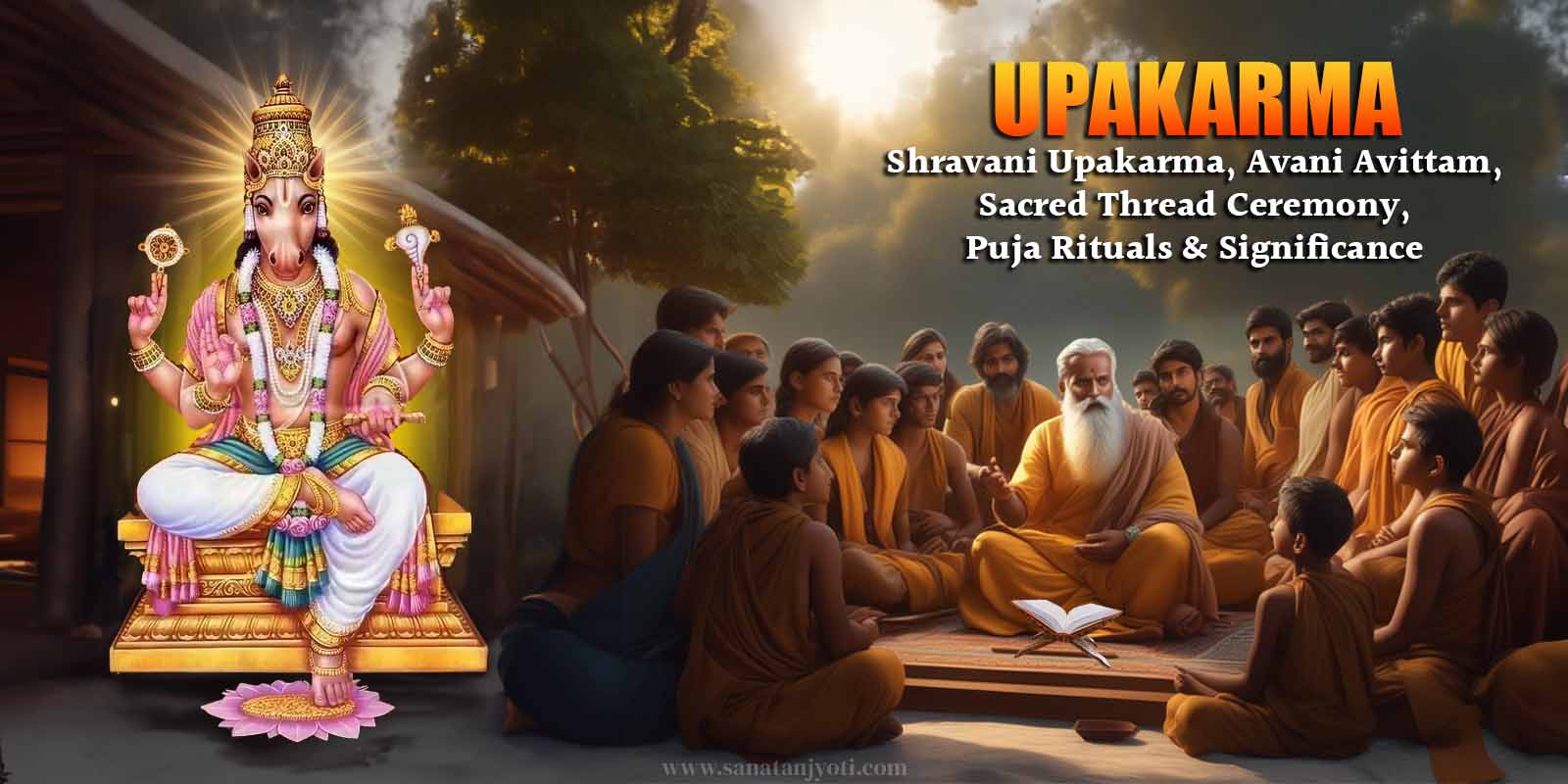
According to the Puranas, Lord Vishnu took the Hayagriva Avatar on this sacred occasion to recover the Vedas that had been stolen by a demon. With the restoration of the Vedas, the light of knowledge, Dharma, and truth was restored to the world. For this reason, Upakarma is also regarded as a festival that honors the Vedas and the Rishi tradition.
This is why devotees wear a new Yajnopavita, remember the Rishis, and renew their commitment to the study of the Vedas on this day. This tradition is not only a religious ritual but also a way of expressing devotion to knowledge, discipline, and the Guru tradition.
Upakarma is also closely associated with Lord Hayagriva, the protection of the Vedas, and the restoration of divine knowledge. If you would like to learn more about Lord Hayagriva, the legend of the Vedas, and the religious significance of Hayagriva Jayanti: - Be sure to read our detailed article on Hayagriva Jayanti.
Religious Significance of Upakarma
Upakarma is more than changing the Yajnopavita (Sacred Thread or Janeu). It is a special day to make a fresh start in life. The festival reminds people to follow Dharma, keep learning, show self-control, and respect knowledge.
Many people believe that Upakarma:
• Brings the blessings of the Rishis and the Guru tradition.
• Inspires people to study the Vedas and other sacred books.
• Gives people a chance to pray for forgiveness through Prayaschitta.
• Encourages a life of Dharma, good values, and self-control.
• Helps people gain knowledge, wisdom, and positive thinking.
• Builds respect for Vedic culture and learning.
The main message of Upakarma is simple. Respect knowledge, honor your Guru, and follow the path of Dharma in everyday life.
Who Should Perform Upakarma?
Upakarma is mainly for people who have completed the Upanayana Sanskara (Yajnopavita or Sacred Thread Ceremony). In the Vedic tradition, people who follow the Rigveda, Yajurveda, and Samaveda perform Upakarma on the dates followed by their tradition.
Many families still perform Upakarma every year. Many people also believe that doing this ritual with the guidance of a qualified Acharya makes it more meaningful.
People who follow Sanatan Dharma, respect the Vedas, and honor the Guru-Shishya tradition can also observe this day. They can pray to Lord Vishnu, remember the Rishis and their Guru, and spend time reading the Vedas or other sacred books.
Benefits of Upakarma
Upakarma is more than a religious ritual. It encourages people to live a better life.
Many people believe that Upakarma:
• Builds self-confidence and self-control.
• Creates a love for learning.
• Increases respect for Gurus and the Rishis.
• Encourages truth, good values, and positive thinking.
• Helps people grow in faith.
• Inspires people to protect Vedic culture and Sanatan traditions.
If you want to seek the blessings of Lord Vishnu for knowledge, wisdom, peace, and family well-being: -You can learn more about the Vishnu Sahasranama Chanting Ritual.
The main message of Upakarma is simple. Respect knowledge, honor your Guru, and follow the path of Dharma.
Upakarma is more than changing the Yajnopavita (Sacred Thread). It is a day to honor the Guru, the Rishis, and the Vedic tradition. It reminds us that real change begins from within. Rishi Tarpana, studying the Vedas, and following Dharma help us become better people.
By living these values, we can build a life filled with wisdom, peace, and faith.