
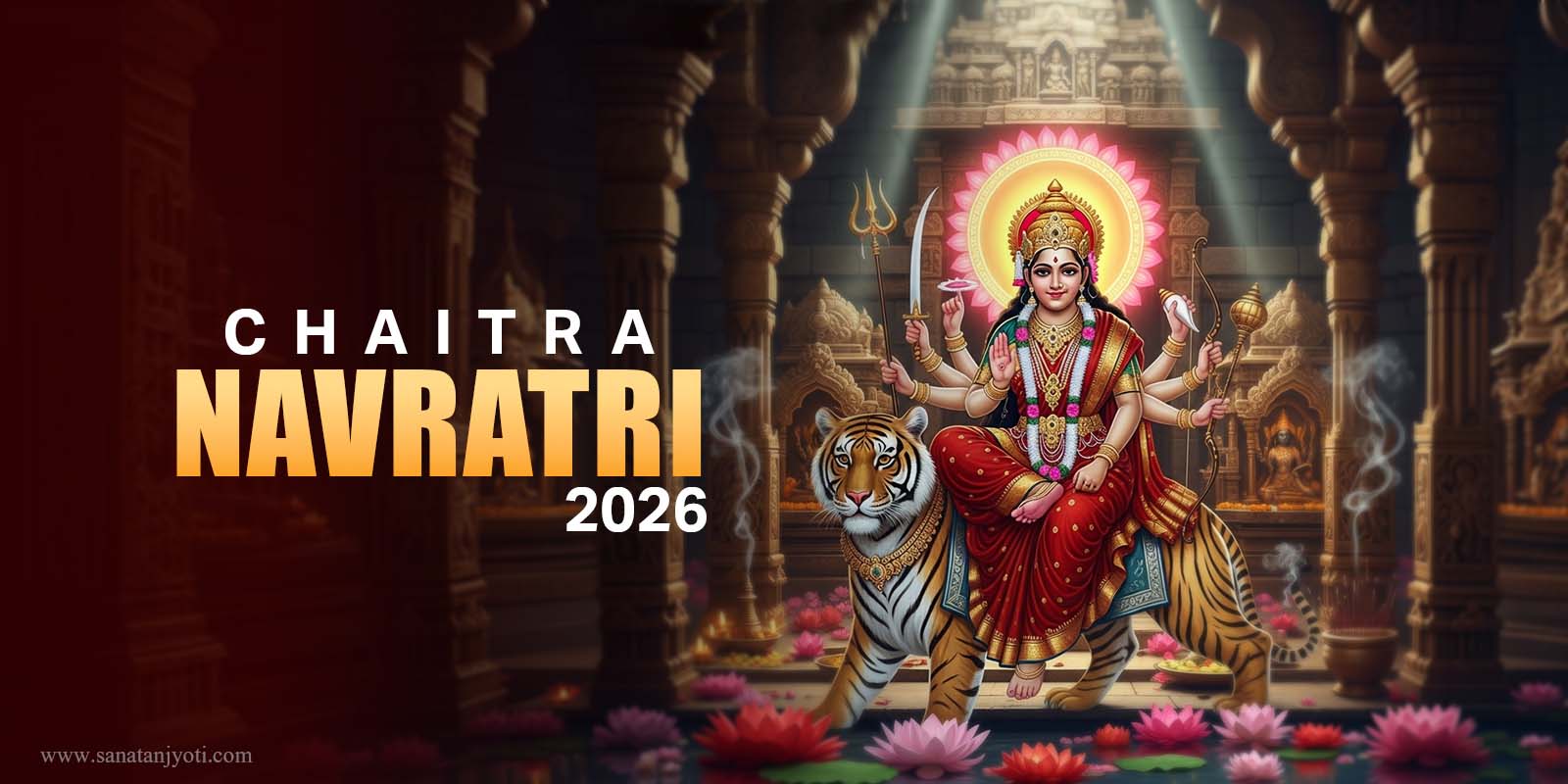
Chaitra Navratri is a sacred nine-day festival in Hinduism, celebrated during the spring season. It begins on the first day (Pratipada) of the Shukla Paksha in the month of Chaitra and continues until Ram Navami. During Chaitra Navratri, devotees worship different forms of Goddess Durga, and the ninth day is celebrated as Ram Navami, as per ancient scriptures, marking the birth of Lord Shri Ram on this day (Chaitra Shukla Navami). Worshiping the various forms of the Goddess during Chaitra Navratri strengthens devotees' mental power and fulfills their spiritual aspirations. This festival is considered a symbol of power, devotion, spiritual practice, and self-purification.
In 2026, Chaitra Navratri will commence on March 19, 2026 (Thursday) and conclude on March 27, 2026 (Friday). The festival of Ram Navami will also be observed on March 27, 2026 (Friday).
Chaitra Navratri 2026 Date and Muhurat
According to the VedicPanchang, the auspicious date and timing for the beginning of Chaitra Navratri 2026 and Ghatasthapana are as follows.
Chaitra Navratri Start Date: 19 March 2026, Thursday
Auspicious Time for Ghatasthapana (Kalash Sthapana):
• 19 March 2026 from 06:51 AM to 08:07 AM
• 19 March 2026 from 11:50 AM to 12:38 PM
Pratipada Tithi Begins: 19 March 2026 at 06:54 AM
Pratipada Tithi Ends: 20 March 2026 at 04:53 AM
For specialAnushthanor personalized worship timings, it is advisable to seekMuhurat consultationfrom experienced Acharyas.
Chaitra Navratri 2026 Daily Worship Schedule:
19 March (Thursday) – Pratipada (Shailputri Puja), Ghatasthapana
20 March (Friday) – Dwitiya (Brahmacharini Puja)
21 March (Saturday) – Tritiya (Chandraghanta Puja)
22 March (Sunday) – Chaturthi (Kushmanda Puja)
23 March (Monday) – Panchami (Skandamata Puja)
24 March (Tuesday) – Shashthi (Katyayani Puja)
25 March (Wednesday) – Saptami (Kalaratri Puja)
26 March (Thursday) – Ashtami (Mahagauri Puja)
27 March (Friday) – Navami (Siddhidatri Puja), Navratri Paran
Ram Navami Festival Date: 26 March 2026, Thursday
Navami Tithi Begins: 26 March 2026 at 11:51 AM
Navami Tithi Ends: 27 March 2026 at 10:08 AM
Puja Muhurat: 11:48 AM to 12:36 PM
On the Ashtami Tithi of Navratri, Kanya Pujan is considered extremely auspicious and rewarding. While some people also perform Kanya Pujan on Navami Tithi, from a religious perspective, worshiping, feeding, and offering donations to young girls on Ashtami is particularly beneficial.
Worshiping nine young girls duringworship processof Kanya Pujan is considered ideal, as they symbolize the nine forms of Goddess Durga. However, if nine girls are not available, at least two girls should be worshiped to ensure the completion of the ritual and to receive its full benefits.
On Ashtami, coconut is specially offered as bhog to Goddess Durga and is later distributed as prasad among devotees and the young girls. The traditional and auspicious offerings for Kanya Bhoj include halwa, puri, sabzi, and black chana. However, if arranging all these items is not possible, devotees can provide food and donations to the young girls as per their faith and capacity.
Types of Navratri
There are four Navratris in a year, known as Chaitra Navratri (Spring), Magha Navratri (Winter), Ashadha Navratri (Monsoon), and Sharad Navratri (Autumn). However, Chaitra Navratri and Sharad Navratri hold special significance, while the other two are observed secretly.
1. Chaitra Navratri – It falls in the spring season and is also known as Vasantik Navratri.
2. Sharad Navratri – It occurs in the autumn season and is the most popular Navratri.
3. Gupt Navratri – These occur twice a year (beginning from Shukla Paksha Pratipada of Magha and Ashadha months) and are observed for special spiritual practices.
Chaitra Navratri Puja Vidhi
Wake up before sunrise, complete your daily rituals, and take a bath to purify yourself. Clean the home temple and purify the worship area by sprinkling Gangajal (holy water). Place a wooden platform (Chowki) in the temple, wash it with pure water, and spread a red cloth over it. Then, place some unbroken rice (Akshat) on the Chowki and install an idol or picture of Goddess Durga.As this is the first day of Navratri, Kalash or Ghatasthapana should be performed according to the Vedicworship method and traditional rituals. Offer clothes to the Goddess and adorn her with ornaments. Present offerings such as fruits, Akshat, Roli (sacred red powder), sweets, white flowers, and white clothes. Offering cow ghee to the Goddess is believed to grant good health to the devotees.
From this day onwards, begin the recitation of Durga Saptashati. If possible, complete all 13 chapters daily for maximum benefits. However, if time is limited, the recitation can be completed over nine days. Additionally, chanting the 108 names of Goddess Durga daily is highly auspicious and beneficial. While chanting, it is recommended to understand the meaning of each name, as this pleases the Goddess and brings happiness, prosperity, and success to the devotee.
Chaitra Navratri Worship Materials
• Kalash (with a clay pot), Gangajal (holy water), mango leaves, coconut.
• Idol or picture of Goddess Durga
• Red cloth, sacred thread (Mouli), Janeu (sacred thread), barley (Jau)
• Roli (sacred red powder), Akshat (unbroken rice), Kumkum, Turmeric, Sandalwood paste
• Incense sticks (Dhoop), lamp (Diya), ghee, camphor (Kapoor)
• Flowers, garlands, fruits, and sweets (Naivedya)
• Betel leaves (Paan), betel nut (Supari), cloves (Laung), cardamom (Elaichi)
• Copper pot (Lota), conch shell (Shankh), bell (Ghanti)
• Oil lamp for Akhand Jyoti (continuous sacred flame)
Nine Forms of Goddess Durga in Chaitra Navratri
During Navratri, the Goddess manifests in nine different forms, each worshipped on a specific day.
1. Shailputri (First Day - March 19, 2026)
• Form: Daughter of the Himalayas, the first form of Goddess Durga
• Vehicle: Bull (Vrishabha)
• Attributes: Adorned with a trident and a lotus
• Benefits: Grants mental stability, strength, and courage
2. Brahmacharini (Second Day - March 20, 2026)
• Form: The ascetic form, Goddess of knowledge and penance
• Attributes: Holds a rosary and a water pot (Kamandal)
• Qualities: Enhances self-restraint, patience, and inner strength
• Benefits: Brings wealth, prosperity, and happiness in family life
3. Chandraghanta (Third Day – March 21, 2026)
• Form: Fierce warrior, radiating a golden aura, riding a tiger
• Attributes: Armed with a sword and a trident
• Qualities: Bestows power, courage, and fearlessness
• Benefits: Protects from negative energies and fear
4. Kushmanda (Forth Day –March 22, 2026)
• Form: Creator of the universe
• Vehicle: Lion
• Favorite Offering: Pumpkin (Petha)
• Attributes: Holds various weapons and divine objects in her hands
• Benefits: Removes sorrow and diseases, grants fame, strength, and wisdom
5. Skandamata (Fifth Day –March 23, 2026)
• Form: Mother of Lord Kartikeya (Skanda)
• Vehicle: Lion
• Attributes: Holds a lotus and her son Skanda in her lap
• Benefits: Grants children, prosperity, and divine wealth
6. Katyayani (Sixth Day – March 24, 2026)
• Form: Slayer of Mahishasura, daughter of Sage Katyayan
• Vehicle: Lion
• Attributes: Wields a sword and a lotus flower
• Benefits: Destroys enemies and fulfils desires
7. Kalaratri (Seventh Day – March 25, 2026)
• Form: Fierce and terrifying yet benevolent
• Vehicle: Donkey
• Attributes: Three-eyed goddess adorned with a garland of skulls
• Benefits: Protects from evil forces, fear, and black magic
8. Mahagauri (Eighth Day – March 26, 2026)
• Form: Serene, radiant, and dressed in white
• Vehicle: Bull (Vrishabha)
• Attributes: Adorned with a trident and a drum (Damaru)
• Benefits: Brings peace, fortune, and prosperity
9. Siddhidatri (Ninth Day – March 27, 2026)
• Form: Goddess of Siddhis (spiritual powers) and Moksha (liberation)
• Seat: Sits on a lotus, with four arms
• Attributes: Holds a discus (Chakra), mace (Gada), conch (Shankha), and lotus
• Benefits: Grants all eight Siddhis, success, and fulfillment of wishes
All these forms are manifestations of Goddess Parvati. The blessings of the Goddess bestow immense virtue upon both men and women observing the fast. When the universe was created, Goddess Durga appeared as the primordial energy (Adi Shakti). At that time, all deities worshipped and prayed to her. Pleased with their devotion, Goddess Durga granted them her blessings for their well-being. Since then, the tradition of celebrating Chaitra Navratri and Sharad Navratri has continued.
Significance of Chaitra Navratri
• It is a festival of power and devotion.
• It is associated with Ram Navami, the birth anniversary of Lord Rama.
• According to the Hindu calendar, it marks the beginning of the New Year, bringing new energy and positivity.
Rituals Performed During Chaitra Navratri
1. Kalash Sthapana (Ghatasthapana) and lighting the Akhand Jyoti.
2. Worshiping the nine forms of Goddess Durga.
3. Reciting Durga Saptashati, Devi Kavach, Argala Stotra, and Kilak Stotra.
4. Performing Kanya Pujan.
5. Engaging in Bhajan and Kirtan.
6. Donating to the needy.
Fasting During Chaitra Navratri and Its Benefits
Observing a fast-during Chaitra Navratri not only provides spiritual benefits but also contributes to good health. Its benefits include:
• Purification of the body and mind, along with improved digestion.
• A calm mind filled with positive energy.
• Enhanced self-discipline and concentration.
• Support in spiritual growth.
Difference Between Chaitra Navratri and Sharadiya Navratri
• Chaitra Navratri is observed in the spring season, whereas Sharadiya Navratri is celebrated in the autumn season.
• Sharadiya Navratri is more popular and celebrated on a larger scale.
• Chaitra Navratri concludes with Ram Navami, whereas Sharadiya Navratri ends with Dussehra.
Dos and Don'ts During Chaitra Navratri
Dos:
• Maintain cleanliness and hygiene.
• Consume a sattvic (pure and vegetarian) diet.
• Devote yourself to the worship of Goddess Durga.
• Help those in need by offering donations.
Don'ts:
• Avoid consuming non-vegetarian food and intoxicants.
• Stay away from anger, lies, and negative thoughts.
• Do not eat tamasic (heavy and impure) food.
• Avoid unnecessary arguments and disputes.
• Never disrespect women.
Frequently Asked Questions
1. Why is Chaitra Navratri celebrated?
Chaitra Navratri is observed in Hinduism for the worship of Goddess Durga. It is also known as Vasant Navratri, symbolizing the renewal of nature. It is believed that during these nine days, Goddess Durga resides on Earth and blesses her devotees with strength, prosperity, and peace. This Navratri is considered a sacred period for self-purification, devotion, and gaining new energy.
2. When is Chaitra Navratri in 2026?
Chaitra Navratri in 2026 will begin on March 19, 2026 (Thursday) and conclude on March 27, 2026 (Friday). The festival of Ram Navami will also be celebrated on March 27, 2026 (Friday).
3. What are the auspicious timings for Chaitra Navratri 2026 Puja?
The auspicious timings for Chaitra Navratri 2026 Puja
Auspicious Time for Ghatasthapana:
• 19 March 2026 from 06:51 AM to 08:07 AM
• 19 March 2026 from 11:50 AM to 12:38 PM
Pratipada Tithi Begins: 19 March 2026 at 06:54 AM
Pratipada Tithi Ends: 20 March 2026 at 04:53 AM
Ram Navami Festival Date: 26 March 2026, Thursday
Navami Tithi Begins: 26 March 2026 at 11:51 AM
Navami Tithi Ends: 27 March 2026 at 10:08 AM
Puja Muhurat: 11:48 AM to 12:36 PM
(The exact auspicious timings may vary depending on your location and the Panchang, so please refer to your local Panchang.)
4. Which deity is worshipped in the month of Chaitra?
In the Chaitra month, Lord Shri Ram and Goddess Durga are primarily worshipped. During Navratri, devotees worship the nine forms of Goddess Durga, while on Ram Navami, the birth anniversary of Lord Shri Ram is celebrated with great devotion.
5. What is Garba in Navratri 2026?
Garba is a traditional dance, primarily performed in Gujarat and other Indian states during Navratri. It is a devotional dance dedicated to Goddess Durga, where people dressed in traditional attire perform Garba and Dandiya. Although Garba is more popular during Sharadiya Navratri (September-October), it is also organized in some places during Chaitra Navratri.
6. Is Griha Pravesh (housewarming) considered auspicious during Chaitra Navratri 2026?
According to Sanatan Jyoti, it is advisable to avoid auspicious ceremonies like Griha Pravesh during the months of Chaitra, Ashadha, Ashwin, and Paush. It is believed that performing such ceremonies during these months does not yield complete positive results and may lead to financial loss or other obstacles. This knowledge has been attained by saints through deep penance and spiritual practices.
However, in the present time, many scholars do perform Griha Pravesh and other auspicious rituals during Chaitra Navratri. Yet, from a scriptural perspective, ceremonies conducted in these months may not bring the desired positive outcomes. Therefore, as per Sanatan tradition, it is considered best to postpone such auspicious activities during these specific months.