Rudra Chandi Mahayagya
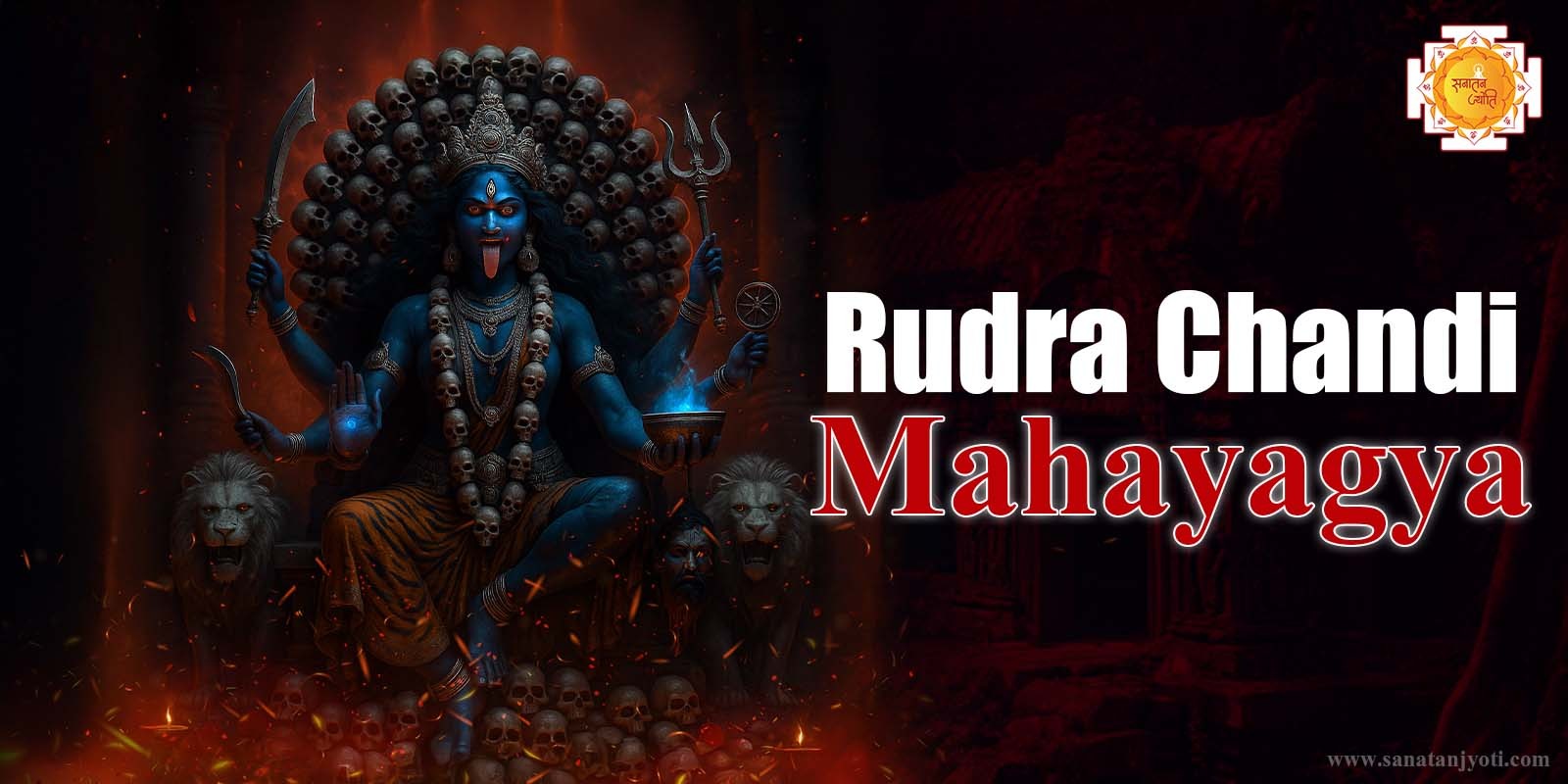
Rudra Chandi Mahayagya is one of the most sacred and powerful Vedic rituals of Sanatan Dharma, where Lord Shiva in his fierce Rudra form and Goddess Durga in her mighty Chandi form are worshipped together. In the various divine Anushthan (Ritual) traditions of Sanatan Dharma, this ritual holds a supreme position.
This is not an ordinary act of worship but a profound Vedic ritual that combines the chanting of sacred mantras, Rudrabhishek, and the complete recitation of the Durga Saptashati. The soothing and protective Mrityunjaya mantras of Rudra safeguard the devotee from fear, diseases, and untimely death, while the fierce and victorious mantras of Chandi bestow unshakable courage, strength, and the energy of triumph. Through this Mahayajna, balance, confidence, and spiritual growth are infused into the devotee’s life. The primary purpose of this ritual is to free the seeker from negative forces, enemy obstacles, and life’s hardships. At the same time, it is also considered highly beneficial for the collective welfare, peace, and prosperity of family, society, and the nation. If a seeker is facing any kind of Victory Related Problem, this Mahayagya infuses balance and spiritual progress into their life. To make the impact even more extensive, the combination of this Yagya with Shatchandi Mahayagya is also considered extremely beneficial for collective welfare.
According to tradition, this Yajna is especially performed during Navratri, Maha Shivaratri, and other auspicious occasions.
Why is performed?
There are several reasons for performing the Rudra Chandi Mahayagya. This sacred ritual helps remove obstacles in life and protects one from enemies and adversities. It shields the devotee from diseases, fear, and untimely death, while also granting both mental and physical strength. The Maha yajna is especially beneficial in resolving family disputes, removing obstacles in business or profession, and overcoming difficulties related to progeny. On a larger scale, it is also performed for world peace, social prosperity, and the collective welfare of humanity.
Who should perform this, Yajna?
This ritual is ideal for those who face repeated obstacles and crises in their lives. If you are experiencing any kind of tantric-related issues or negative energy, this Mahayajna acts as a supreme protective shield. To ensure complete protection and total victory over enemies, the recitation of the Aparajita Stotra along with this ritual is described in the scriptures as infallible and highly effective.
When is it auspicious to perform?
• During Navratri, Maha Shivaratri, and the holy month of Sawan (Shravan).
• On auspicious dates such as Ashtami, Navami, Purnima, and Amavasya.
• On a favorable date suggested by a Guru or learned experienced Acharya.
Benefits of Rudra Chandi Mahayagya
The scriptures and Puranas describe the Rudra Chandi Mahayagya as one of the most powerful and welfare-bestowing rituals. The combined effect of Rudra’s calming mantras and Chandi’s fierce seed mantras brings about miraculous transformation in the life of the devotee. Its main benefits are considered as follows—
1. Removal of Sufferings and Obstacles
• All crises, troubles, and calamities of life are eliminated.
• Protection is gained from sudden problems such as accidents, diseases, and disputes.
• Everlasting peace and harmony enter the devotee’s life.
2. Protection from Enemies and Negative Forces
• The Rudra Kavach of Shiva and the Chandi Kavach of the Goddess shield the devotee from every type of enemy.
• Evil forces like black magic, spirits, and malefic entities are destroyed.
• Blessings are received for protection even from natural disasters.
3. Wealth, Prosperity, and Removal of Poverty
• Poverty and scarcity are driven out of the home and life.
• Abundance in wealth, food grains, clothing, and growth in business is attained.
• Pathways open for debt relief and financial prosperity.
4. Blessings of Progeny and Family Welfare
• Childless couples are blessed with progeny.
• Health, longevity, and protection of family members are ensured.
• Love, happiness, and peace prevail within the family.
5. Relief from Planetary Doshas and Inauspicious Influences
• Malefic effects of planets like Saturn and Rahu are pacified.
• Doshas such as Kaal Sarp and Pitru Dosha are reduced.
• The Navagrahas are pleased, bringing fortune and auspiciousness.
6. Success and Victory
• Opportunities for success increase in every sphere of life.
• Courage and self-confidence are strengthened.
• Victory is attained in education, competitions, career, or even legal matters.
Through the Rudra Chandi Mahayagya, the devotee is blessed with wealth, happiness, prosperity, protection, and victory. This sacred ritual also aids in attaining the four Purusharthas of life—Dharma, Artha, Kama, and Moksha. Wherever this yajna is performed, the atmosphere becomes pure and energized, and it is believed that Shiva and Shakti establish their divine presence there permanently.
Worship Procedure
The Rudra Chandi Mahayagya is a deeply sacred and highly systematic ritual, usually performed under the guidance of qualified and experienced Acharyas. Its main procedure can be understood in the following stages—
Poojan Procedure of Rudra Chandi Mahayagya
1. Purification of the Place and Mandap Setup
• The yajna site is chosen in a calm, sacred, and auspicious environment.
• The havan kund is purified with cow dung, Ganga water, and kusha grass.
• Special mandalas such as Sarvatobhadra, Navagraha, and Vastu Mandal are drawn to invoke the deities.
2. Preliminary Worship and Kalash Sthapana
• Worship of Lord Ganesha is performed first to remove obstacles and seek his blessings.
• A sacred Kalash is established, invoking the presence of holy rivers and pilgrimage sites.
• Shodashopachar Puja (sixteen-fold worship) of Goddess Durga and Lord Shiva is conducted.
3. Rudrabhishek and Chandi Path
• The Shivling is bathed with water, Panchamrit, and offered Bilva leaves while chanting Sri Rudram.
• The 13 chapters of Durga Saptashati are recited with full devotion and proper method.
• The Navarna Mantra is chanted to sanctify the atmosphere.
4. Havan and Offerings
• At the end of each chapter, oblations of ghee, rice, sesame, barley, and other sacred items are offered into the fire.
• The havan is further enriched with the chanting of Mahamrityunjaya Mantra, Navagraha Mantras, and Devi Beej Mantras.
5. Purnahuti and Conclusion
• In the final offering, ghee, nine grains, fruits, and coconuts are offered to mark the completion of the yajna.
• A collective havan, grand aarti, and distribution of prasad take place.
• Finally, Bhandara (community feast) and offering of meals to Brahmins and young girls are organized to seek divine blessings.
Worship Materials
A. Pooja and Decoration Items
1. Auspicious coloured clothes in red, yellow, etc. (for offering to the Goddess and for mandap decoration)
2. Kalawa/Mauli (sacred thread)
3. Sindoor, turmeric, sandalwood, kumkum, abhrak (bukkaa)
4. Incense sticks, dhoop, camphor, ghee, and oil lamps
5. Flower garlands (marigold, rose, etc.) and loose flowers
6. Mango leaves bandhanwar (toran)
7. Swastik symbol and other auspicious signs
8. Saree, garments, and ornaments for adorning Goddess Durga and Lord Shiva
9. Small symbolic items like trident (Trishul), discus (Chakra), etc.
B. Havan Materials
1. Havan kund (fire altar)
2. Dry Samidha (especially mango wood)
3. Pure desi ghee (in abundant quantity)
4. Camphor
5. Prepared havan mixture
6. Barley, sesame seeds (black/white), rice, jaggery
7. Panchmeva (cashews, almonds, etc.)
8. Cloves, cardamom, lotus seeds
9. Herbs such as Nagarmotha, Jatamansi, Agar, Tagar, Belgiri, Giloy, Shatavari, etc.
10. Guggul dhoop, resin, powdered sandalwood
11. Wood from Navagraha Samidha (nine-planet twigs)
12. Red sandalwood, Ashoka flowers/bark, black pepper
13. Camphor soaked in cow ghee
C. Special Pooja Items
1. Durga Saptashati scripture and Sri Rudram text
2. Japa mala (Rudraksha or lotus-seed beads)
3. Betel leaves and betel nuts
4. Coconut (both water-filled and dry)
5. Large lamp for Akhanda Deepa (eternal flame)
6. Panchamrit (milk, curd, ghee, honey, sugar)
7. Ganga water and pure water
8. Earthen Kalash and clay lamps
9. Saptadhanya (seven types of grains)
10. Sacred leaves such as Durva grass, Bilva leaves, Tulsi
11. Seasonal fruits
12. Sweets and halwa for Naivedya (offering)
13. Clothes and food for the worship and feeding of nine young girls (Kanya Pujan)
14. Idols or images of Lord Ganesha, Shiva-Parvati, Lakshmi-Narayan, Ram Darbar, and Hanuman
15. Garlands, clothes, and offerings for worship of the above deities
D. Materials for Purification
1. Cow dung
2. Ganga water
3. Sandalwood or turmeric paste
4. Flowers for offering
Frequently Asked Questions
1. When is the best time to perform Rudra Chandi Mahayagya?
The Rudra Chandi Mahayagya can be performed at any time after consulting an Acharya for the proper muhurta (auspicious time). However, conducting it during Navratri is considered the most auspicious and fruitful. It is especially beneficial when facing major life obstacles, repeated failures, troubles from enemies, sudden health issues, debts, or when taking a special vow. On such occasions, performing the Maha yajna at the right muhurta as suggested by an Acharya brings immense blessings.
2. Can it be performed at home?
Yes, it can be performed at home, but since this is a grand and elaborate ritual, it requires Vedic scholars, detailed arrangements, and a pure atmosphere. Making all such provisions at home is often difficult, and the ritual may remain incomplete. Therefore, it is generally advised to perform this Maha yajna in a Yajna Shala or under the guidance of a spiritual institution.
3. How many priests are required for this Yajna?
Typically, 9 priests are considered sufficient for the Rudra Chandi Mahayagya. However, if the yajna is being organized on a very large scale or if the Sankalp (intention) is especially significant, then 21 or more learned priests may be involved. The greater the number of Vedic scholars, the more powerful and effective the yajna becomes.
4. Does it only bring spiritual benefits?
No, the Rudra Chandi Mahayagya is not limited to spiritual benefits alone. Along with spiritual upliftment, it removes life’s obstacles, opens paths for financial growth, reduces health-related problems, and brings harmony to family life. It is regarded as a holistic and welfare-bestowing ritual.
5. Can anyone perform this, Yajna?
Yes, this yajna is not restricted to any group or class. Any devotee or family can perform it under the guidance of qualified Acharyas. When the Sankalp is taken with full sincerity, the fruits of the yajna directly reach the devotee, ensuring complete blessings.




 +91 9219765437