
When is Mahesh Navami in 2026?
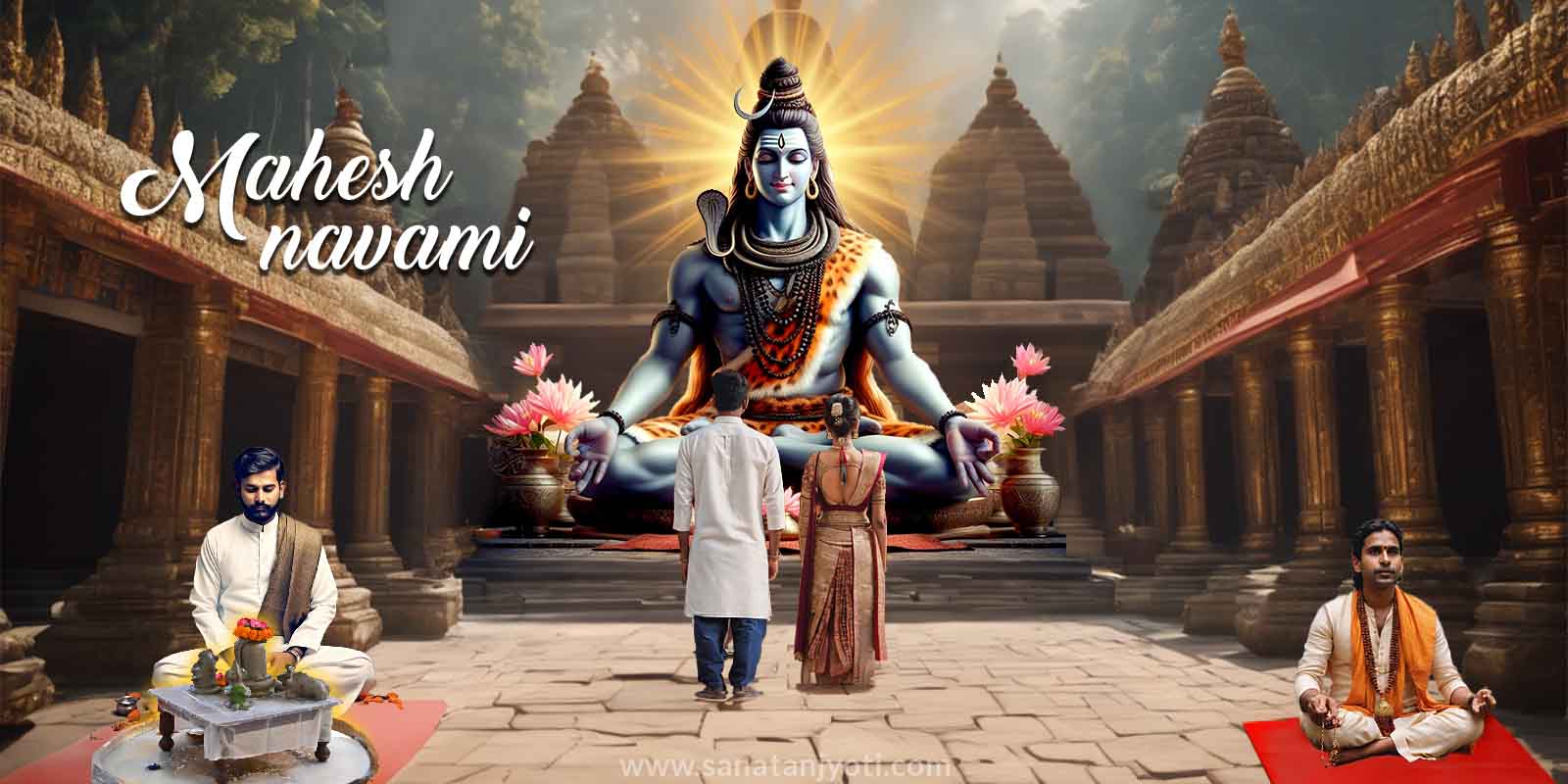
Mahesh Navami is observed on the Navami tithi of Shukla Paksha in the Jyeshtha month. In 2026, Mahesh Navami will be celebrated on Tuesday, 23 June 2026. This auspicious day is associated with the worship of Lord Shiva and Goddess Parvati and is also believed to mark the origin of the Maheshwari community.
Mahesh Navami 2026 Date and Time
• Mahesh Navami: 23 June 2026, Tuesday
• Navami Tithi Begins: 22 June 2026 at 3:41 PM
• Navami Tithi Ends: 23 June 2026 at 4:40 PM
If you want to know all the important dates, auspicious timings, and accurate Panchang details of the Jyeshtha month:- Do explore our detailed Panchang.
What is Mahesh Navami?
Mahesh Navami is celebrated on the Navami tithi of Shukla Paksha in the Jyeshtha month. On this auspicious day, Lord Shiva and Goddess Parvati are specially worshipped, and devotees perform Jalabhishek of Lord Shiva. According to religious beliefs, it is said that Lord Shiva established the Maheshwari community on this very day.
The Maheshwari community is believed to have originated through the blessings of Lord Shiva. It is believed that Lord Mahesh (Shiva) created the Maheshwari community on the Navami tithi of Shukla Paksha in the Jyeshtha month, which is why this day is celebrated as Mahesh Navami. The Maheshwari community is often associated with Rajput lineage.
Various surnames found within the Maheshwari community include Malpani, Kakani, Partani, Gaggar, Sabu, Somani, Soni, Birla, Jhanwar, Rathi, Kalyani, Bajaj, Damani, Jaju, Mundada, Biyani, Samdani, Binani, Kabra, Pachisia, and others.
On Mahesh Navami, devotees visit Lord Shiva temples and perform Jalabhishek of Lord Shiva. They also worship Goddess Parvati, Lord Ganesha, and Kartikeya. Fruits, flowers, and Naivedya are offered to the deities with devotion, and hymns and prayers dedicated to Lord Shiva are recited in temples.
It is believed that worshipping Lord Shiva on this day fulfills the wishes of devotees and blesses them with happiness, prosperity, and peace. Bathing with Ganga water on Mahesh Navami is considered highly auspicious and is believed to purify both the body and mind.
A purified mind remains free from negative thoughts, and the blessings of Lord Mahesh always remain upon the devotee. Religious beliefs also state that anyone who performs charity and donations on this sacred day attains spiritual merit and, after death, reaches Shivlok.
How to Please Lord Mahesh?
People of the Maheshwari community worship Lord Mahesh (Lord Shiva) through various rituals, chanting, penance, yajnas, prayers, and devotional practices to seek his blessings. It is believed that devotees who visit Lord Shiva temples and worship him on this day receive the special grace of Lord Shiva.
Performing Rudrabhishek on Mahesh Navami is considered highly auspicious and spiritually beneficial. Religious beliefs state that devotees who perform Rudrabhishek with devotion to please Lord Shiva are blessed with the fulfillment of their wishes and receive happiness, prosperity, and divine blessings from Mahadev.
To learn the proper Rudrabhishek puja method, read our article:-“Method of Performing Rudrabhishek”
If you wish to perform Rudrabhishek on Mahesh Navami to please Lord Shiva but do not have enough time, then:-
Mahesh Navami Puja Vidhi
The method of worship may vary according to different regions and traditions. If you wish to seek the blessings of Lord Shiva, you may perform prayers, chanting, rituals, and yajnas according to your family traditions. Here, a simple and commonly followed puja method of Lord Shiva is described, through which devotees can worship Mahadev with devotion and receive his divine blessings.
What Should Be Done Before Puja?
On the Navami tithi of Shukla Paksha in the Jyeshtha month, wake up early in the morning, complete your daily routines, and take a bath before wearing clean clothes. If you wish to observe a fast, take a sincere vow for the vrat with devotion.
How to Offer Arghya to Surya Dev?
Before beginning the puja, first offer water to Surya Dev (the Sun God). Religious beliefs state that offering Arghya to the Sun God brings positive energy, spiritual strength, and auspicious results.
How to Worship Lord Shiva and Goddess Parvati?
After this, visit a Lord Shiva temple or worship the Shivling or idol of Lord Shiva installed in your home. Offer flowers, fruits, Akshat (rice), Dhatura, Kumkum, milk, curd, and Panchamrit to Lord Shiva and Goddess Parvati, and worship them with a pure heart and devotion.
Which Mantra Should Be Chanted on Mahesh Navami?
If possible, listen to or recite stories related to Lord Shiva and read the Shiv Chalisa. If you have limited time, chant the mantra “Om Namah Shivaya” 108 times. Religious beliefs state that chanting this mantra helps attain mental peace, spiritual strength, and positive energy.
How to Perform Fast and Aarti?
Offer bhog to Lord Shiva, perform the Aarti, and pray for happiness and prosperity. Observe the fast throughout the day with devotion. In the evening, after performing the Aarti, fruits and light fasting food may be consumed. The fast should be properly concluded the next day by performing the Parana ritual.
If you want to know the correct Mahesh Navami puja vidhi, Rudrabhishek rituals, Shiva worship, or wish to perform a special Shiva puja according to your horoscope: -
You can get free consultation from our experienced Vedic Acharyas.
Importance of Traditional Puja Methods
This is a simple and commonly followed method of worshipping Lord Shiva. The rituals and rules of worship may differ according to various regions, communities, and traditions. Therefore, devotees should worship Lord Shiva according to their traditional customs and family rituals while maintaining devotion and faith in Mahadev.
Story of the Origin of the Maheshwari Community
Once upon a time, there was a generous and religious king named Khandelsen in Khandelgram, Rajasthan. He had two very beautiful queens, but he had no children. Because of this, the king remained deeply worried. Although he performed many yajnas and donated generously to help the poor and needy, he still did not receive the blessing of a child.
One day, in despair, the king shared all his sorrow with Maharishi Yajnavalkya. Seeing the king’s painful condition, the sage felt compassion for him and explained that he was suffering from childlessness because of a curse. Maharishi Yajnavalkya told the king that in his previous birth, he had killed many animals and earned his livelihood by selling meat.
During that time, he had once hunted a pregnant deer. Due to unbearable pain, the deer died and cursed him to remain childless.
Later, the king deeply regretted his actions and traveled to the holy pilgrimage site of Pushkar to atone for his sins. Because of the spiritual merit gained there, he was born as a king in this life. Maharishi Yajnavalkya then told him that there was a way to free himself from this curse.
Installation of the Shivling and Worship of Lord Shiva
Maharishi Yajnavalkya explained to the king that a short distance away there was a kingdom called Bhaskar, where a huge Peepal tree stood. Beneath that tree, a Shivling was buried in the ground. The sage instructed the king to uncover the Shivling, build a grand temple, install the Shivling there, decorate it with devotion, and worship Lord Shiva daily with sincerity and faith.
The king followed the instructions of the sage exactly as told and began worshipping Lord Shiva every day with proper rituals and devotion. After some time, pleased by the king’s devotion and sincere worship, Lord Shiva blessed him with the boon of a son.
Birth of King Sujansen and His Rule
The king named his son Sujansen. He raised the prince with great love and care. When the prince reached adulthood, the king arranged his marriage with Princess Chandravati, the daughter of King Yuddhveer. After handing over the kingdom to his son, King Khandelsen renounced worldly life and left for the forest to live as a saint.
King Sujansen and the Hunting Journey with 72 Soldiers
One day, King Sujansen went into the forest for hunting along with his 72 soldiers. While hunting, the king and his soldiers became extremely hungry and thirsty. As they wandered through the forest, they sensed the aroma of delicious food being prepared nearby.
Following the fragrance, the king and his soldiers reached a place where several sages were performing a yajna dedicated to Lord Shiva. Overcome by hunger and thirst, the king and his soldiers began eating the food that had been prepared as an offering for the ritual. They also started drinking water from the pond reserved for the yajna and even washed their stained bows and arrows there.
The Curse of the Sages and the Transformation into Stone
The disturbance and chaos caused by the king and his soldiers disrupted the meditation and rituals of the sages. Angered by this behavior, the sages cursed King Sujansen and all his soldiers to turn into stone.
Worship of Lord Shiva by the Queen and the Soldiers’ Wives
The queen and the wives of the soldiers waited for their husbands for a long time. When they could no longer bear the pain of separation, they all went together to Maharishi Jabali. The sage explained the entire situation to them and advised that if they worshipped Lord Shiva together with true devotion and faith, they would surely be reunited with their husbands once again.
Arrival of Lord Shiva and Goddess Parvati on Earth
Pleased by the penance and devotion of the sages, Lord Shiva said to Goddess Parvati, “Devi, the time has come for me to go to Earth because my devotees are worshipping me with great devotion for a special purpose. Therefore, I must fulfill their prayers.”
However, Goddess Parvati did not want to remain separated from Lord Shiva, so she insisted on accompanying him to Earth. Even after Lord Shiva tried to explain and persuade her, Parvati Ji did not agree, and finally Lord Shiva allowed her to come along with him.
Goddess Parvati Restored the Stone-Cursed Men to Life
Eventually, Lord Shiva and Goddess Parvati began their journey toward the sages’ ashram. On the way, they reached the place where the queen and the wives of the soldiers were worshipping Lord Shiva for the return of their husbands. Seeing all the women gathered together in prayer, Goddess Parvati stopped there and asked Lord Shiva the reason behind their sorrow and worship.
Lord Shiva then explained the entire situation to Goddess Parvati. After learning about the suffering of the women, Goddess Parvati could not bear their pain and insisted that Lord Shiva restore the stone-cursed husbands back to life.
Lord Shiva tried to persuade Goddess Parvati and asked her to continue the journey, but she refused. With deep compassion, she prayed to Lord Shiva and said, “Lord, when I myself cannot remain separated from you even for a moment, how can you expect me to leave these grieving women behind in tears? Therefore, you must restore their husbands to life.”
How Did the Maheshwari Community Originate?
Unable to refuse Goddess Parvati’s insistence, Lord Shiva said, “Devi, when you decided to accompany me, I feared this very situation would arise, and now it has happened.”
Thereafter, Lord Shiva restored King Sujansen and his 72 soldiers back to life. Mahadev then said to the king, “Dear child, because you committed sinful and unrighteous acts and misused your power, you had to suffer greatly.”
Lord Shiva further declared, “Now that I have granted you life once again, from this day onward you will be known as the ‘Maheshwaris.’ From now on, you shall leave behind the role of Kshatriyas and live as Vaishyas. You must abandon violence and follow the path of peace and non-violence.”
Significance of Mahesh Navami
It is believed that devotees who worship Lord Shiva and Goddess Parvati on Mahesh Navami and visit Shiva temples to seek their blessings are freed from sorrows and difficulties, and their wishes are fulfilled.
Performing Rudrabhishek on Mahesh Navami is considered especially auspicious and spiritually rewarding. Chanting the mantras of Lord Shiva and reciting the Shiv Chalisa on this sacred day is also believed to bring divine blessings, peace, and positive results.
Frequently Asked Questions
1. When is Mahesh Navami in 2026?
Mahesh Navami will be celebrated on Tuesday, 23 June 2026. According to the Hindu Panchang, this festival falls on the Navami tithi of Shukla Paksha in the Jyeshtha month.
2. Why is Mahesh Navami celebrated?
Mahesh Navami is celebrated in honor of Lord Shiva and Goddess Parvati and is associated with the origin of the Maheshwari community. Religious beliefs state that Lord Shiva blessed the Maheshwari community on this sacred day.
3. How did the Maheshwari community originate?
According to religious legends, Lord Shiva restored King Sujansen and his 72 soldiers back to life and gave them the name “Maheshwaris.” It is believed that the Maheshwari community originated from them.
4. Why is Rudrabhishek considered auspicious on Mahesh Navami?
Performing Rudrabhishek on Mahesh Navami is considered highly auspicious because it is believed to please Lord Shiva quickly. Religious beliefs state that it brings prosperity, mental peace, and positive energy.
5. Which mantra should be chanted on Mahesh Navami?
Chanting the Panchakshari mantra “Om Namah Shivaya” on Mahesh Navami is considered highly auspicious and spiritually beneficial.