
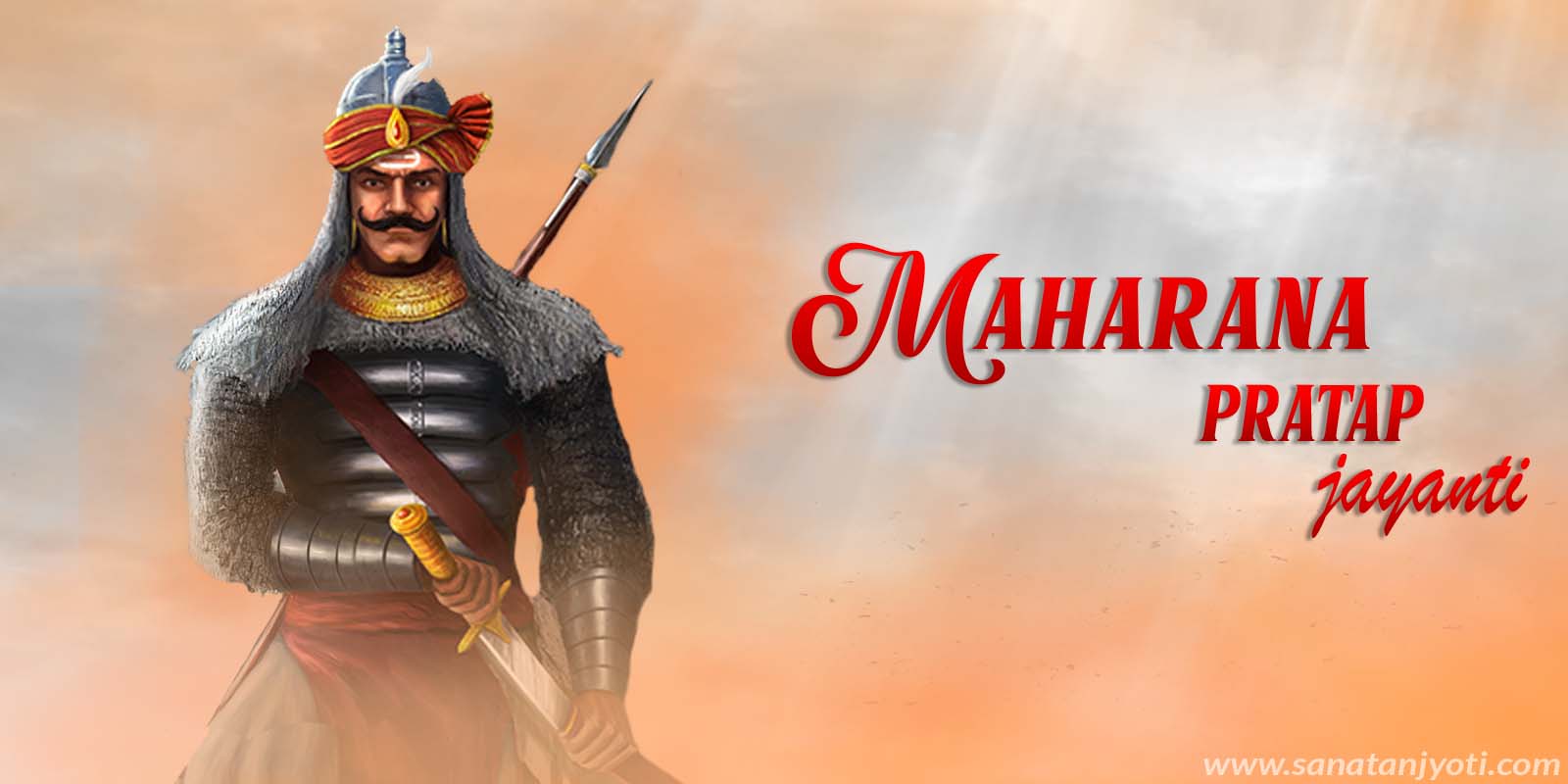
When is Maharana Pratap Jayanti in 2026?
Maharana Pratap was born on the Tritiya tithi of Shukla Paksha in the Jyeshtha month, on 9 May 1540, at Kumbhalgarh Fort in Rajasthan. He was born into the Sisodia dynasty as the son of Maharana Udai Singh. The birth anniversary of this great warrior of Rajasthan is celebrated as Maharana Pratap Jayanti.
Maharana Pratap Jayanti 2026: 9 May or 17 June?
9 May is Maharana Pratap’s birth date according to the Gregorian calendar, while Jyeshtha Shukla Tritiya is his birth tithi according to the Hindu calendar. In Rajasthan and many parts of India, Maharana Pratap Jayanti is traditionally celebrated according to the Hindu tithi rather than the fixed calendar date. Just like the dates of Diwali and Holi change every year in the Panchang, the tithi of Maharana Pratap Jayanti also changes annually.
In 2026, the Jyeshtha Shukla Tritiya tithi falls on 17 June 2026. Therefore, Maharana Pratap Jayanti will be celebrated on 17 June 2026.
Birth and Early Life of Maharana Pratap
During the time when the Mughal Empire ruled Delhi, nearly 200 princely states of Rajputana in Rajasthan accepted the authority of Emperor Akbar and became bound under Mughal rule. However, the Sisodia dynasty of Mewar continued to shine before the world with pride, courage, and self-respect.
At that time, Mewar was ruled by King Udai Singh, who, like his ancestors, refused to accept the dominance or subordination of any ruler. His unwavering spirit of independence later became a strong foundation in shaping the fearless character and ideals of Maharana Pratap.
Why Was Maharana Pratap Called “Kika” in Childhood?
When Maharana Pratap was born, the Mughal Empire was already ruling much of India. Even during his childhood, he displayed extraordinary courage and strength. It is said that he would attack Mughal soldiers passing near Mewar with a slingshot. His physical strength was considered far greater than that of other children of his age. His mother’s name was Jaiwanta Bai.
From an early age, Maharana Pratap was deeply interested in learning the use of weapons and warfare. For this reason, he was sent to a Gurukul for education and training. In the evenings, he practiced spear fighting along with the Bhil community. Because of his close association with the Bhils, he came to be lovingly known as “Kika” during his childhood.
His mother also narrated stories of Lord Krishna and taught him the strategies of warfare described in the Mahabharata. As a result, Maharana Pratap became highly skilled in military tactics and warfare from a young age.
How Did Maharana Pratap Become the Ruler of Mewar?
Maharana Udai Singh had several queens and a total of 33 children. Among all his queens, he was especially fond of Dheer Bai Bhatiyani. Influenced by her wishes, Udai Singh declared her son Jagmal as the future ruler of Mewar, even though Maharana Pratap was his eldest son. According to tradition and royal customs, the eldest son was generally considered the rightful heir to the throne. However, Maharana Pratap accepted his younger brother’s appointment without conflict.
In 1572, Maharana Udai Singh suddenly fell seriously ill and passed away. At the time of his death, the nobles, ministers, and royal family members gathered to pay their respects. However, Jagmal remained absent because he was busy preparing for his own coronation in the palace. This behavior angered the nobles and warriors of Mewar.
As a result, the nobles and soldiers unanimously decided to crown Maharana Pratap as the ruler of Mewar. When Jagmal learned about this, he fled the palace and sought refuge under Emperor Akbar. From that point onward, several conflicts took place between the Mughal Empire and Maharana Pratap. Despite repeated attempts, Akbar was never able to truly defeat Maharana Pratap or break his spirit of independence.
Maharana Pratap’s Bravery and the Battle of Haldighati
On 18 June 1576, the historic Battle of Haldighati took place between the Mughal Empire and the forces of Mewar led by Maharana Pratap. On one side stood the massive Mughal army of nearly 80,000 soldiers, while on the other side was Maharana Pratap’s army of around 20,000 brave warriors from Mewar. Both armies had come face to face on the battlefield of Haldighati, preparing for one of the most famous battles in Indian history.
Maharana Pratap’s Strength and Warfare Skills
As soon as Maharana Pratap stepped onto the battlefield, fear spread throughout the Mughal army. Wherever he advanced, piles of enemy soldiers were left behind. Many Mughal warriors had heard only stories of Maharana Pratap’s bravery before this battle, but during the Battle of Haldighati, they witnessed his power for the first time.
Maharana Pratap is believed to have been around 7 feet 5 inches tall and weighed nearly 110 kilograms. During battles, he carried two swords weighing about 55 kilograms in total — one for himself and another for an unarmed opponent so that the fight could remain fair. Along with this, he wore armor weighing around 72 kilograms and carried a spear weighing nearly 81 kilograms. Altogether, he fought battles while bearing approximately 208 kilograms of weight, which reflected his extraordinary physical strength and endurance.
The Battle Between Bahlol Khan and Maharana Pratap
It is believed that with a single strike of Maharana Pratap’s sword, Bahlol Khan and his horse were split into two parts. Bahlol Khan was one of Emperor Akbar’s commanders and was considered a powerful warrior in the Mughal army.
The Story of Chetak’s Bravery
Maharana Pratap’s loyal horse was named Chetak. He was known for his extraordinary beauty, blue-colored appearance, and immense strength. It is said that Chetak was around 11 feet tall. During battles, he wore an elephant-shaped mask on his face so that enemy elephants would become confused and hesitate during combat. Chetak was also famous for his incredible speed and agility.
As the Mughal army became frightened, many soldiers began retreating toward the valleys of the Aravalli hills. Seeing the army retreat, Mehtar Khan loudly announced that Emperor Akbar himself was arriving on the battlefield with a massive force. Hearing this, the Mughal soldiers became fearful and confused, believing that if they fled, Akbar would punish them, and if they stayed, Maharana Pratap would defeat them.
During the battle, Maharana Pratap riding on Chetak came face to face with Man Singh. In a fearless move, Chetak placed both his front legs upon Man Singh’s elephant. However, the sword attached to the elephant’s trunk severely injured Chetak’s leg. Even after being wounded, Chetak sensed the danger surrounding Maharana Pratap and bravely carried him away from the battlefield to safety.
As Chetak carried Maharana Pratap away, Mughal soldiers chased them. Soon, they encountered a stream nearly 26 feet wide. Despite his severe injury, Chetak gathered all his strength and leaped across the stream. Although he succeeded in saving Maharana Pratap, the wounded horse collapsed on the other side and passed away shortly afterward. Chetak’s sacrifice is remembered as one of the greatest examples of loyalty and bravery in Indian history.
The Bhil Army and the Protection of Mewar
After this, the Bhil warriors took charge of the battlefield and fought bravely against the Mughal army. Together, the Rajput and Bhil forces gave a tough challenge to the Mughal soldiers. Eventually, Man Singh redirected the Mughal army toward Ajmer.
After the Battle of Haldighati, Maharana Pratap returned to Kumbhalgarh. During the war, much of his royal treasury had been exhausted. Only a few months after the battle, Emperor Akbar launched an attack on Kumbhalgarh in 1577. Due to the lack of a sufficiently strong army and resources, the Mughal forces gradually gained the upper hand. As a result, Maharana Pratap was forced to leave the fort, and the Mughals captured Kumbhalgarh.
How Did Maharana Pratap Reclaim Mewar?
A few months later, Maharana Pratap reorganized his army and successfully recaptured Kumbhalgarh. After this victory, he traveled to Gujarat, where he built a stronger military force and began reclaiming the forts of Mewar one by one.
Gradually, Maharana Pratap regained control over 32 forts and once again established the strength of Mewar. His growing power and repeated victories greatly troubled Emperor Akbar.
The Final Years of Maharana Pratap
For the next 12 years, Maharana Pratap continued to rule Mewar and worked tirelessly to restore its lost pride and glory. Through his courage, leadership, and dedication, he once again strengthened the kingdom of Mewar.
On 19 January 1597, at the age of 57, Maharana Pratap suffered a serious injury during a hunting expedition. Due to this injury, the great warrior eventually passed away. His life remains an enduring symbol of bravery, self-respect, and devotion to the motherland.
Significance of Maharana Pratap Jayanti
Maharana Pratap Jayanti is not just a birth anniversary; it is regarded as a symbol of bravery, self-respect, and patriotism. Throughout his life, Maharana Pratap never accepted the dominance of the Mughal Empire and faced even the most difficult circumstances to protect his motherland and honor. This is why he is still remembered as one of the greatest warriors in Indian history.
This Jayanti inspires people with the values of courage, self-respect, struggle, and freedom. Historical and cultural beliefs teach us through Maharana Pratap’s life that no matter how difficult the situation may become, one should never abandon one’s duty, dignity, and principles.
Maharana Pratap Jayanti is celebrated with great respect and devotion across Rajasthan and many parts of India. On this day, people offer flowers to his statues, organize processions, and remember his bravery, sacrifice, and contribution to protecting the pride of Mewar.
Frequently Asked Questions (FAQs)
1. When will Maharana Pratap Jayanti be celebrated in 2026?
In 2026, Maharana Pratap Jayanti will be celebrated on 17 June 2026, on the Tritiya tithi of Shukla Paksha in the Jyeshtha month.
2. When was Maharana Pratap born?
Maharana Pratap was born on 9 May 1540 at Kumbhalgarh Fort in Rajasthan, in the Sisodia Rajput dynasty.
3. What was the name of Maharana Pratap’s horse?
The name of Maharana Pratap’s famous and brave horse was Chetak. Chetak was known for his speed, loyalty, and extraordinary bravery.
4. When did the Battle of Haldighati take place?
The historic Battle of Haldighati was fought on 18 June 1576 between Maharana Pratap and the Mughal army.
5. Which dynasty did Maharana Pratap belong to?
Maharana Pratap belonged to the Sisodia dynasty of Mewar.
6. Why is Maharana Pratap Jayanti celebrated?
Maharana Pratap Jayanti is celebrated to honor his courage, sacrifice, patriotism, and self-respect. This day inspires people with the values of bravery, freedom, and devotion to the motherland.