
When is Govatsa Dwadashi in 2026?
In 2026, Govatsa Dwadashi will be observed on Thursday, November 5. In Sanatan Dharma, this sacred festival is celebrated on the Dwadashi Tithi of Krishna Paksha in the Kartik month and holds special significance for the worship of Gau Mata (the sacred cow) and her calf.
The festival is celebrated with great devotion and enthusiasm, especially in Rajasthan, Gujarat, Uttar Pradesh, Madhya Pradesh, Maharashtra, and several other regions of North India. In many places, it is also popularly known as Bachh Baras.
According to traditional beliefs, worshipping and serving the cow and her calf on this day brings family prosperity, the well-being of children, happiness, and spiritual merit (punya). Devotees also take a pledge to protect and care for cattle, recognizing their importance in both religious and agricultural life.
This festival is particularly celebrated with great enthusiasm in North India on the Dwadashi tithi of the Krishna Paksha in the month of Kartik, where it is widely observed.
Worship Procedure
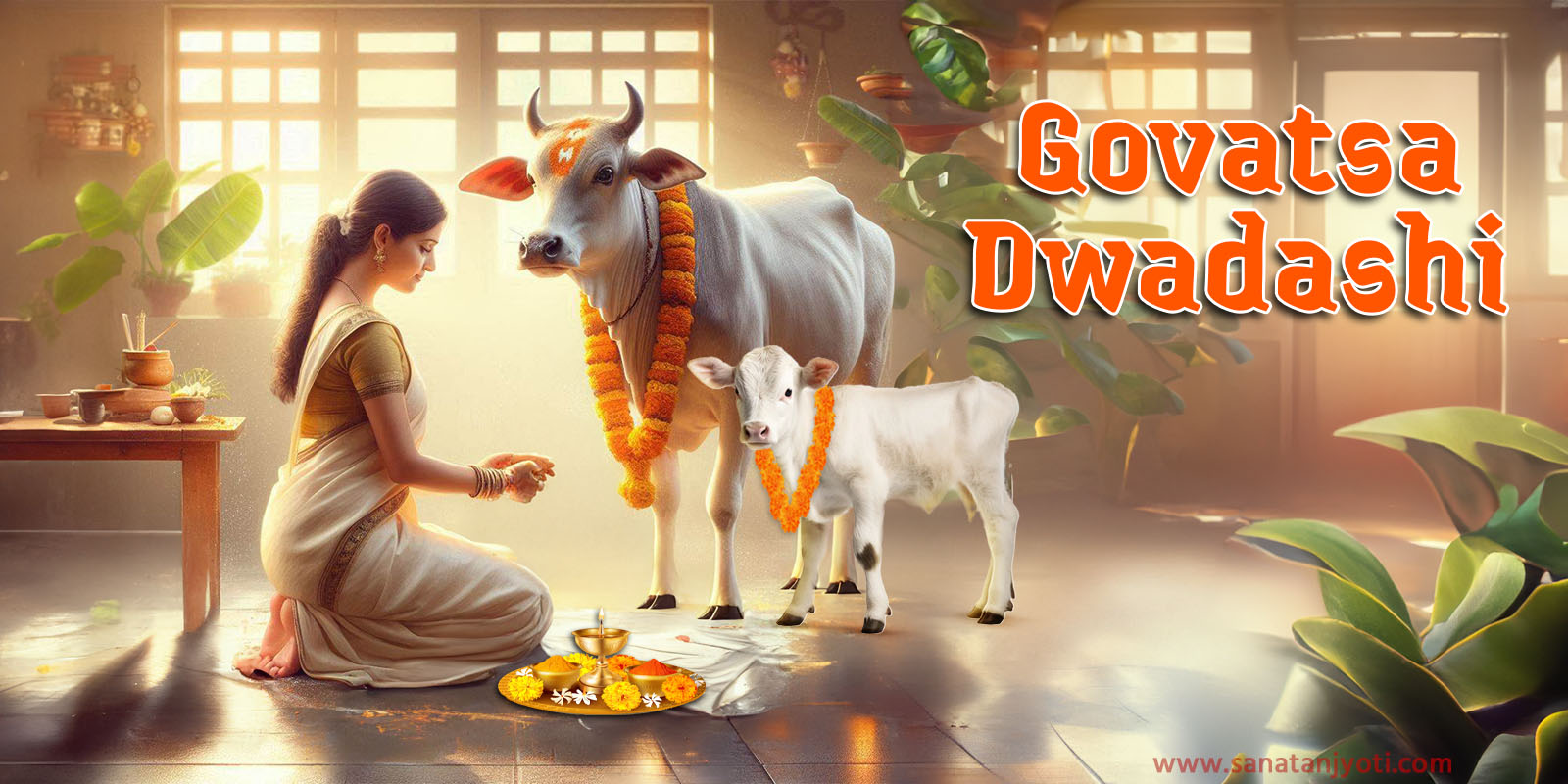
In the morning, take a bath and wear clean and pure clothes. Before the worship, take a vow for the fast and resolve to serve Mother Cow in your heart. If you have a milk-giving cow and her calf, bathe and clean them. Then adorn their horns with turmeric and kumkum, and drape them with garlands. If you do not have access to a cow and calf, create a square space in a clean area of your home by applying cow dung, and place an idol or picture of a cow and calf made of pure clay on it.
Arrange water, sandalwood, incense, lamps, offerings, rice, flowers, and fruits for the worship. Begin the worship ritual by applying a tilak to the cow and calf and offering them rice. After that, light incense and a lamp, perform their aarti, and circumambulate around the cow. After the worship, offer jaggery, green grass, bananas, and other fruits and flowers to the cow and calf.
On this day, especially women refrain from consuming grains and instead take only fruit. It is important to note that the consumption of milk and milk products is prohibited, as the cow's milk is reserved for the calf on this day. At the end of the worship, it is considered highly auspicious to listen to the story of the Govatsa Dwadashi fast. Afterward, if possible, spend the day serving the cow and calf.
If you would like to learn more about Govatsa Dwadashi, Gau Puja, Gau Seva, or the procedures, religious significance, and spiritual benefits of other Vedic rituals: - You can receive free consultation and detailed guidance related to various Anushthans.
Story of Govatsa Dwadashi
According to a legend, a long time ago, there was a benevolent and righteous king ruling the city of Suvarnapur. He had two devoted queens – Sita and Geeta. The king kept a cow, her calf, and a buffalo in his palace. Sita took care of the buffalo, while Geeta served the cow and her calf. Geeta loved her calf as if it were her own child and took great care of it. Her affection for the cow and calf was unique; she tended to them with complete devotion.
One day, the envious buffalo whispered into Queen Sita's ears that Geeta was jealous of her and valued her cow and calf more than Sita. This gossip planted the seed of resentment in Sita’s heart. Blinded by jealousy, Sita seized the opportunity one day and killed the innocent calf, hiding it in a heap of wheat.
That day, when the king sat down for his meal, suddenly there began a rain of meat and blood from the sky. Blood and pieces of meat appeared everywhere inside the palace. Even in the king's plate, excrement manifested. Stunned by this sight, the king was baffled, unable to comprehend this terrifying disaster. He became extremely distressed and could not understand the cause.
Just then, a celestial voice declared, "O King! Your queen Sita has killed the calf of the cow and hidden it in a heap of wheat. Tomorrow is the auspicious day of Govatsa Dwadashi. If you expel the buffalo from the kingdom and worship the cow and her calf, the calf will be revived.
Upon hearing the celestial voice, the king immediately expelled the buffalo from the kingdom and, on the following day, performed the worship of Cow and her calf according to the rituals for Govatsa Dwadashi. The king remembered the calf from his heart and completed the worship with devotion. A miracle happened! As soon as the king remembered the calf, it emerged alive from the heap of wheat. Seeing this, both the king and Queen Geeta's hearts filled with joy.
The king issued a decree in his kingdom that from now on, the fast of Govatsa Dwadashi would be observed every year so that everyone could express their reverence for Mother Cow and her calf. After this incident, the festival began to be celebrated with great enthusiasm in the city of Suvarnapur, and everyone pledged to serve the cow, understanding its glory. Thus, the fast of Govatsa Dwadashi became a sacred tradition throughout the kingdom.
The Importance of Govatsa Dwadashi
In Sanatan tradition, the cow holds a special place of honor and is revered as "Gau Mata" (Mother Cow). The festival of Govatsa Dwadashi is particularly associated with the worship of the cow and her calf. On this day, a pledge is taken to express gratitude towards cows and commit to their protection, which is crucial for Indian agriculture and the environment.
The significance of the cow is not only religious but also stems from its vital role in agriculture and rural life. Organic fertilizers made from cow dung and urine enhance soil fertility, enabling healthy and natural farming. As calves grow into bulls, they assist in plowing fields and other agricultural tasks, strengthening the livelihood of farmers.
If you wish to undertake a special Vedic ritual for the well-being and protection of children, family prosperity, the good health of your children, and the blessings of Lord Krishna: - You can learn more about the Santan Gopal Mantra Jap Anushthan.
Govatsa Dwadashi teaches us that the protection and care of cows are not just a religious tradition but essential for the balance of our agricultural systems and environment. This festival reminds us of our responsibilities towards nature, livestock, and agriculture, which form the foundation of our economic and social life.