

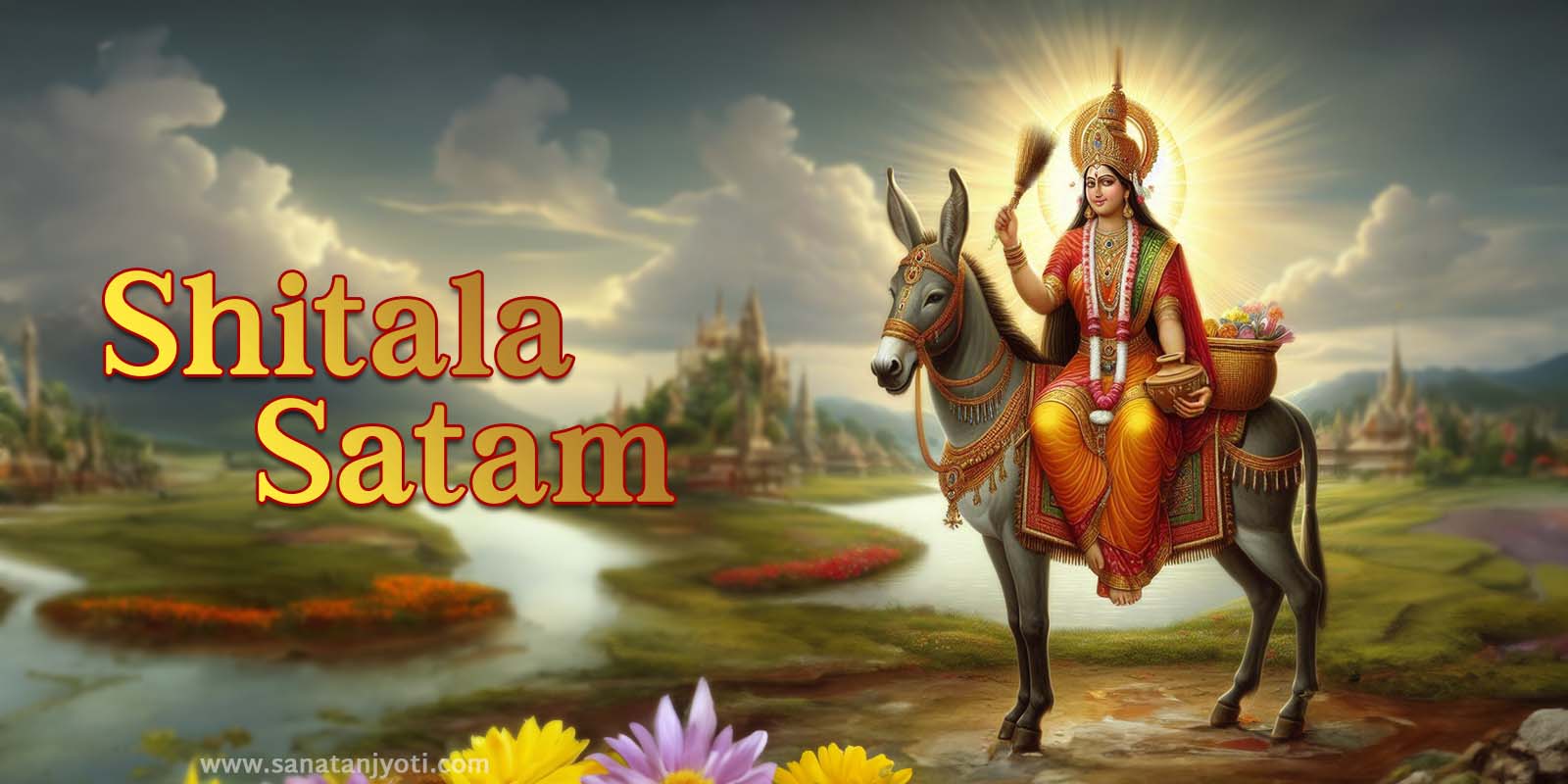
Shitala Satam is an important Hindu festival celebrated in Gujarat and dedicated to Goddess Shitala. The festival is observed on the Saptami Tithi of the Krishna Paksha in the month of Bhadrapada. On this day, devotees worship Goddess Shitala and pray for the good health, happiness, peace and safety of their families.
One of the most distinctive traditions of Shitala Satam is that no fresh food is cooked and the household stove is not lit on this day. Food and offerings for the Goddess are prepared a day earlier, on Shashthi Tithi. The same food is then offered to Goddess Shitala as bhog and later consumed by family members as prasad.
According to religious belief, Goddess Shitala blesses devotees and their families with protection from diseases and good health. The traditional story associated with Shitala Satam also highlights the importance of discipline, cleanliness and caution during illness.
When is Shitala Satam 2026?
Shitala Satam 2026 will be observed in Gujarat on the Saptami Tithi of the Bhadrapada Krishna Paksha. On this day, devotees worship Goddess Shitala and offer the cold food prepared on the previous day as bhog.
Devotees worship Goddess Shitala on this day and pray for the health and well-being of every member of the family.
Why is Shitala Satam Celebrated?
Shitala Satam is a festival associated with the worship of Goddess Shitala and prayers for family health. In Hindu tradition, Goddess Shitala is worshipped with devotion as a deity associated with protection from diseases.
It is traditionally believed that worshipping Goddess Shitala and observing the vrat can protect families from diseases such as smallpox and measles. For this reason, women especially observe Shitala Satam for the good health of their children and family members.
However, such beliefs should be understood in the context of religious faith and tradition. If someone is ill, proper medical advice and treatment should always be sought.
The traditions of Shitala Satam are not limited to worship alone. Cleanliness, discipline and health-related precautions also hold an important place in the observance of this festival.
Why Is Cold or Previously Prepared Food Eaten on Shitala Satam?
One of the best-known traditions of Shitala Satam is eating cold or previously prepared food. On this day, families traditionally avoid lighting the stove or preparing fresh meals.
Food for the family and offerings for Goddess Shitala are prepared on Shashthi Tithi, one day before the festival. Depending on family traditions and individual capacity, dishes such as meethi bhaat, pua, curd, rabri and other preparations may be made.
On Saptami, this food is first offered to Goddess Shitala as bhog. Family members then consume it as prasad.
From a religious perspective, this tradition is associated with devotion to Goddess Shitala and her worship. In modern times, when consuming cold or previously prepared food, it is important to ensure proper hygiene, safe storage and food safety.
Shitala Satam Puja Samagri
Devotees can prepare the puja materials according to their faith, family traditions and capacity. Commonly used items include:
• Idol or image of Goddess Shitala
• Water
• Roli or Kumkum
• Turmeric
• Akshat
• Mehendi
• Kalava
• Flowers
• Incense
• Ghee
• Flour diya
• Cold food prepared on Shashthi
• Curd
• Rabri
• Meethi bhaat
• Pua and other offerings
Shitala Satam Puja Vidhi
Preparations for Shitala Satam traditionally begin on Shashthi Tithi, one day before the festival. On this day, the dishes required for the Goddess's bhog and for the family are prepared.
1. Take a Bath in the Morning
On Saptami, wake up early, take a bath and wear clean clothes. Clean the house and the puja area before beginning the worship.
2. Install the Idol or Image of Goddess Shitala
Place the idol or image of Goddess Shitala at a clean and suitable place for worship. Remember the Goddess with devotion.
3. Offer Water to the Goddess
Offer water to Goddess Shitala. Then prepare a diya using flour, add ghee and light the lamp.
4. Offer the Puja Samagri
Offer roli, mehendi, turmeric, akshat, kalava and flowers to the Goddess. Light incense and a lamp according to your tradition.
5. Offer Cold Food as Bhog
Offer the cold food prepared on Shashthi to Goddess Shitala. Depending on family tradition, dishes such as meethi bhaat, pua, curd and rabri may be offered.
6. Listen to the Shitala Mata Story
After the puja, read or listen to the traditional story of Goddess Shitala. The story is remembered as part of the religious tradition associated with Shitala Satam.
7. Pray for the Family
Finally, pray to Goddess Shitala for the good health, happiness, peace, safety and prosperity of all family members.
Shitala Satam Story
A traditional religious story associated with Shitala Satam describes a king and the son of a poor Brahmin who both suffer from smallpox.
The Brahmin was extremely poor and earned his livelihood by begging. Despite his poverty, he followed religious rules and paid special attention to cleanliness at home.
When his son contracted smallpox, the Brahmin began worshipping Goddess Shitala with devotion and discipline. He stopped preparing fried and hot foods at home. He himself avoided hot food and did not allow his son to eat it either.
The Brahmin worshipped Goddess Shitala every day and prayed for his son's recovery. According to the religious story, the boy eventually recovered through the grace of Goddess Shitala.
Why Did the King's Son's Illness Become Worse?
When the king's son became ill with smallpox, the king also began arranging worship of Goddess Shitala. Havan was performed every day, and the royal priests were instructed to continue worshipping the Goddess.
Although the priests continued the worship, the necessary discipline associated with illness was not being followed properly.
Various types of hot and delicious food were prepared every day in the royal palace. The aroma of the food made the prince crave it, and he repeatedly insisted on eating it. As the only prince, many of his demands were fulfilled.
According to the story, because the required discipline was not followed, the prince's condition continued to worsen. Blisters appeared on his body, accompanied by increasing itching and irritation.
The king made many efforts to help his son recover, but his condition did not improve. The king became deeply worried because despite all the worship and rituals, his son's illness was not subsiding.
How Did the King Learn That the Brahmin's Son Had Recovered?
Seeing the king's distress, the people in the royal court also became worried. Gradually, news of the prince's condition spread throughout the kingdom.
During this time, one of the king's informants learned that a poor Brahmin in the kingdom had also been dealing with the same illness in his son, but the boy had now recovered.
The king became even more concerned. He wondered why his son had not recovered despite performing extensive worship and rituals for Goddess Shitala, while the son of the poor Brahmin had recovered.
Lost in these thoughts, the king eventually fell asleep.
What Message Did Goddess Shitala Give the King?
According to the religious story, while the king was asleep, Goddess Shitala appeared to him in a dream wearing white clothes.
The Goddess told the king that she was pleased with his worship and devotion, and that this was why his son was still alive. However, the main reason for the prince's failure to recover was the lack of discipline and necessary precautions during his illness.
In the story, Goddess Shitala instructed the king to follow certain rules in the royal palace. These included stopping the use of salt, avoiding tempering vegetables with seasoning, and preventing unnecessary movement or visits by the sick person.
The Goddess also explained that during illness, the patient should be kept in an environment where unnecessary temptation for food is avoided and unnecessary contact with others is prevented.
After giving these instructions, Goddess Shitala disappeared, and the king woke up.
How Did the Prince Recover After Following the Goddess's Instructions?
The next morning, the king ordered the royal palace to follow the rules described by Goddess Shitala in his dream. He also followed the instructions himself.
According to the religious story, once these rules and disciplines were followed, the prince's condition gradually began to improve. After some time, he became completely healthy.
The story associated with Shitala Satam highlights the importance of discipline and caution along with religious worship.
Significance of the Shitala Satam Vrat
The Shitala Satam vrat is associated with prayers for the health, happiness and safety of the family. According to religious belief, worshipping Goddess Shitala brings blessings for protection from diseases and a healthy life.
Women especially observe this vrat for the good health of their children and pray to Goddess Shitala for the well-being of all family members.
An important message associated with the festival is cleanliness and discipline. The traditional story places emphasis on food, cleanliness and care of the patient during illness.
Therefore, Shitala Satam is viewed not only as a religious vrat but also as a festival through which families pray for health and well-being.
What Should You Do on Shitala Satam?
Devotees follow different practices according to their family and local traditions. Common observances include:
• Worship Goddess Shitala with devotion.
• Prepare food and prasad one day before the festival.
• Offer cold food as bhog to the Goddess.
• Read or listen to the Shitala Mata story.
• Pray for the health, happiness and peace of the family.
• Maintain cleanliness in the home.
• Observe the vrat or follow a sattvic diet according to one's tradition.
What Should You Avoid on Shitala Satam?
According to the traditional observance, families avoid lighting the stove and preparing fresh food on Shitala Satam. Food is prepared beforehand and offered to Goddess Shitala the following day before being consumed as prasad.
The traditional story also conveys the importance of taking precautions for a sick person and avoiding unnecessary contact with others.
In modern times, it is equally important to ensure that previously prepared food is stored safely. If food appears spoiled or there is any doubt about its safety, it should not be consumed.
What Is the Connection Between Shitala Satam and Shitala Ashtami?
Shitala Satam and Shitala Ashtami are both festivals associated with the worship of Goddess Shitala. Shitala Satam has particular significance in Gujarat, while similar traditions are observed in several parts of North India as Shitala Ashtami or Basoda.
The date and method of observance can vary according to regional Panchang traditions and local customs. Therefore, for a particular region, it is appropriate to follow the Panchang traditionally observed in that area.
Shitala Satam 2026 FAQs
When is Shitala Satam 2026?
Shitala Satam 2026 will be observed in Gujarat on the Saptami Tithi of the Bhadrapada Krishna Paksha. The exact date and Puja Muhurat will be provided according to the SanatanJyoti Panchang.
Why is the stove not lit on Shitala Satam?
According to religious tradition, cold food is offered to Goddess Shitala on Shitala Satam. Therefore, food is prepared a day earlier and the stove is not lit on Saptami.
What should you eat on Shitala Satam?
According to tradition, food prepared on Shashthi is offered to Goddess Shitala and then consumed as prasad. It may include curd, rabri, pua, meethi bhaat and other preparations. Food should always be stored and handled safely.
Who is worshipped on Shitala Satam?
Goddess Shitala is worshipped on Shitala Satam. Devotees pray to her for the good health, happiness, peace and safety of their families.
What illness did the king's son suffer from in the Shitala Satam story?
According to the traditional religious story, the king's son suffered from smallpox. The story emphasizes discipline and caution during illness.
Is it necessary to observe a fast on Shitala Satam?
Observing the vrat depends on one's religious faith and family tradition. Devotees may observe the fast according to their health and personal capacity and worship Goddess Shitala while praying for the well-being of their family.
Shitala Satam is an important religious festival in Gujarat associated with the worship of Goddess Shitala and prayers for the good health of the family. The festival includes the tradition of preparing food a day earlier, offering the cold food to the Goddess and then consuming it as prasad.
The traditional story of Shitala Satam, featuring a king and the son of a Brahmin, highlights the importance of discipline, cleanliness and caution during illness. Women especially observe the vrat and worship Goddess Shitala for the health and safety of their children and family members.
In this way, Shitala Satam is not only an expression of religious faith but also an important tradition centered on prayers for family happiness, health and well-being.