
When is Malayalam New Year 2026?
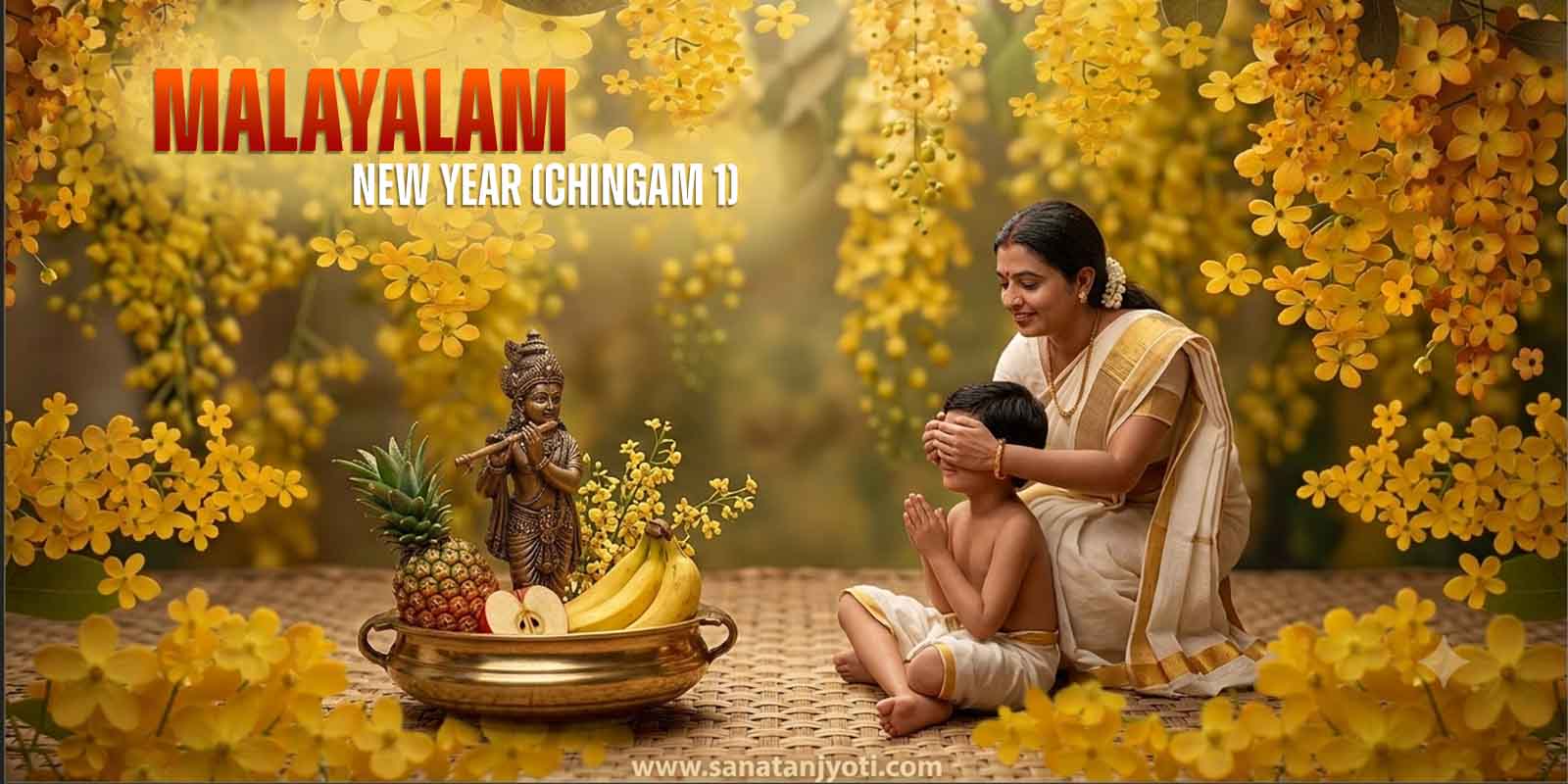
In 2026, Malayalam New Year (Chingam 1) will be celebrated on Monday, 17 August 2026. It marks the first day of Chingam, the opening month of the Malayalam calendar, and the beginning of a new year for the Malayalam-speaking community, especially in Kerala and other parts of South India.
On this special day, people offer prayers at home and in temples. Many families make new resolutions and seek blessings for happiness, good health, prosperity, and peace in the coming year. Charity, temple visits, and traditional rituals are also an important part of the celebration.
Malayalam New Year is more than the start of a new calendar year. It represents fresh beginnings, hope, positive energy, and cultural pride. Across Kerala, families come together to follow age-old customs and celebrate the day with devotion, joy, and a strong sense of tradition.
For more information, date, auspicious timings, and detailed insights related to Malayalam New Year (Chingam 1): -Be sure to check our detailed Panchang.
What is the Malayalam Calendar?
The Malayalam Calendar, also known as the Kollam Era, is one of the oldest solar calendars in India. People in Kerala use it to find the dates of festivals, temple rituals, farming seasons, and other traditional events. It is believed to have started around 825 CE and still plays an important role in the state's culture and daily life.
The calendar has 12 months, and Chingam is the first one. The first day of Chingam marks the Malayalam New Year. It also begins a new season for farming, festivals, and religious activities after the monsoon. That is why Chingam 1 is an important and auspicious day for Malayalis.
Many well-known festivals, including Onam, follow the Malayalam calendar. Temple festivals and many cultural events also use this calendar. Because of this, Malayalam New Year is more than the start of a new year. It is a time to celebrate Kerala's traditions, culture, and community with family and devotion.
What is the Significance of the Chingam Month?
Chingam is the first month of the Malayalam calendar. It marks the start of the Malayalam New Year and usually falls between August and September. In Kerala, people see Chingam as a month of good luck, new beginnings, and hope. After the monsoon, the land turns green, crops begin to grow, and people welcome the new season with joy.
Many people choose this month to start a new job or business, move into a new home, or begin other important work. Families clean their homes, visit temples, and pray for good health, peace, success, and a happy year ahead.
Chingam is also special because Onam, Kerala's biggest festival, is celebrated during this month. This makes Chingam more than the first month of the year. It is a time to celebrate Kerala's traditions, farming life, and family values.
Cultural Significance of Malayalam New Year
Malayalam New Year reminds people that every new year brings new hope and a fresh start. It is a time to set new goals and look forward to better days. Families spend time together, take blessings from elders, help people in need, and pray for a happy and peaceful year.
The festival also teaches children about Kerala's customs, faith, and way of life. It helps keep these old values alive for the future. That is why Malayalam New Year is still an important festival for people across Kerala.
How is Malayalam New Year Celebrated?
Malayalam New Year (Chingam 1) is one of the most important festivals in Kerala. It marks the first day of the Malayalam New Year and brings hope, joy, and a fresh start. On this day, people clean their homes, wear new clothes, visit temples, and celebrate with their families.
Many people wake up during Brahma Muhurta, take a holy bath, and offer prayers. They worship Lord Vishnu, Lord Krishna, Goddess Lakshmi, and their family deity. Families also light lamps at home and pray for good health, peace, happiness, and success in the year ahead.
People share New Year wishes with family, friends, and neighbors. In many places, local groups hold cultural programs, folk dances, music shows, and other celebrations. These events fill Kerala with joy and bring people together.
How Do Families Prepare for Malayalam New Year?
People in Kerala start preparing for Malayalam New Year a few days before the festival. Families clean their homes and decorate them to welcome the new year. In Sanatan tradition, a clean home is believed to bring good luck and positive energy. That is why many people like to begin the year in a clean and peaceful place.
Many families decorate the entrance with flowers, mango leaves, and other traditional items. Women make beautiful Kolam (Rangoli) designs to welcome good luck and happiness into their homes.
Wearing new clothes on Malayalam New Year is also a popular tradition. Many families buy new clothes and give gifts to children, elders, and loved ones. This simple custom shows love, respect, and care for one another.
How is Malayalam New Year Celebrated in Temples?
On Malayalam New Year, many people visit famous temples across Kerala early in the morning. They pray for a happy, peaceful, and successful year. Special prayers take place in temples of Lord Vishnu, Lord Krishna, Goddess Lakshmi, Lord Ayyappa, and other local deities.
Temples hold Vedic chants, Aarti, Abhishekam, flower offerings, and give Prasad to devotees. Many families visit together and pray for good health, peace, safety, and success in the year ahead.
Many people also help those in need on this day. They donate food, clothes, or money to poor families. According to tradition, giving to others on the first day of the new year brings good luck and blessings for the rest of the year.
What is the Relationship Between Chingam 1 and Onam?
Many people ask if Malayalam New Year and Onam are the same festival.
The answer is No.
Malayalam New Year is celebrated on the first day of Chingam, the first month of the Malayalam calendar. Onam is celebrated later in the same month. In simple words, Chingam begins with Malayalam New Year, and Onam is celebrated a few days later.
Because of this, Chingam is a special month for the people of Kerala. It is filled with prayers, cultural events, traditional meals, family gatherings, and community celebrations. The whole month brings joy and a festive spirit across the state.
What is Considered Auspicious on Malayalam New Year?
According to religious and cultural beliefs, the following activities are considered especially auspicious on Malayalam New Year:
• Take a holy bath early in the morning and remember the Almighty.
• Visit a temple for worship and seek divine blessings.
• Welcome the New Year together with your family.
• Donate to the needy and perform charitable acts.
• Begin new ventures, businesses, or auspicious projects.
• Seek blessings from elders.
• Resolve to maintain love, harmony, and positivity within the family.
• Take a pledge to protect nature and the environment.
Performing these auspicious deeds is believed to bring positive energy, mental peace, and progress throughout the year.
If you wish to learn more about the worship rituals, religious traditions, auspicious practices, or the Vedic significance of Kerala's Sanatan culture associated with Malayalam New Year (Chingam 1): -You can receive free consultation and guidance from the experienced Acharyas of Sanatan Jyoti.
Religious Significance of Malayalam New Year
In Sanatan tradition, the start of a new year is a time for new hope, fresh goals, and thanking the Almighty. Malayalam New Year (Chingam 1) follows this belief. It is more than the first day of a new calendar year. It is a time to make a fresh start, take new vows, and pray for a happy future.
On this day, many people in Kerala wake up early, take a holy bath, and offer prayers to Lord Vishnu, Lord Krishna, Goddess Lakshmi, and their family deity. Many believe that praying on the first day of the new year brings peace, good health, happiness, and success in the months ahead.
Many devotees also visit temples, perform Abhishekam, light lamps, and help people in need. According to tradition, good deeds done on the first day of the year bring good results in the days to come. For this reason, Malayalam New Year is not only a festival but also a time to grow in faith and follow the path of Dharma.
Cultural Significance of Malayalam New Year
Malayalam New Year is an important festival in Kerala. It helps people stay connected to their old customs, family values, and way of life. Even today, many families in Kerala follow these traditions and celebrate the day with joy.
The festival brings families together. Many people who live away from home return to celebrate with their loved ones. Children take blessings from elders and learn about the customs followed by their families. Spending time together is one of the best parts of the celebration.
Malayalam New Year also encourages love, kindness, and togetherness. That is why people see it as more than a religious festival. It is also an important part of Kerala's culture and family life.
Relationship Between Malayalam New Year and Agriculture
For centuries, farming and nature have been an important part of life in Kerala. The month of Chingam begins after the monsoon season. By this time, the fields turn green again, and farmers get ready for a new farming season.
Because of this, many people see Malayalam New Year as a sign of a good farming year. Farmers pray for enough rain, healthy crops, and a good harvest. In many villages, people still seek God's blessings before starting the new farming season.
The festival also reminds people to care for nature. It teaches the value of protecting the environment and using natural resources with care. These ideas are an important part of Malayalam New Year.
Importance of Malayalam New Year in Modern Times
For hundreds of years, farming and nature have been a big part of life in Kerala. The month of Chingam begins after the monsoon. The fields turn green again, and farmers get ready to grow new crops.
Because of this, many people see Malayalam New Year as a sign of a good farming season. Farmers pray to God for enough rain, healthy crops, and a good harvest. In many villages, people still pray before they begin work in the fields.
Malayalam New Year also teaches people to care for nature. It reminds everyone to protect the environment and use natural resources wisely. These values are an important part of the festival.
If you wish to perform a special Vedic ritual to seek prosperity, family happiness, abundance, and the blessings of Lord Vishnu in the New Year: -You can learn more about the Vishnu Sahasranama Chanting Ritual (Vishnu Sahasranamam Path Anushthan).
Frequently Asked Questions About Malayalam New Year
1. When will Malayalam New Year 2026 be celebrated?
In 2026, Malayalam New Year (Chingam 1) will be celebrated on Monday, 17 August 2026.
2. Where is Malayalam New Year mainly celebrated?
The festival is primarily celebrated in Kerala and by the Malayali community living across India and around the world.
3. What is Chingam?
Chingam is the first month of the Malayalam calendar, and Malayalam New Year is celebrated on its first day.
4. Are Malayalam New Year and Onam the same festival?
No. Malayalam New Year is celebrated on the first day of Chingam, whereas Onam is a separate and major cultural festival celebrated later during the same month.
5. Which deities are worshipped on Malayalam New Year?
On this day, devotees worship Lord Vishnu, Lord Krishna, Goddess Lakshmi, and their family deity while praying for prosperity and happiness throughout the year.
6. Is charity considered auspicious on Malayalam New Year?
Yes. According to religious beliefs, offering charity, serving others, and helping those in need on Malayalam New Year are considered highly auspicious.
7. What is the main message of Malayalam New Year?
The festival conveys the message of new beginnings, positive thinking, family unity, cultural heritage, respect for nature, and gratitude toward the Almighty.
Malayalam New Year (Chingam 1) is not merely the beginning of a new year but also a symbol of Kerala's rich culture, Sanatan traditions, religious devotion, and social harmony.
The festival inspires us to move forward in life with renewed energy, strengthen our family bonds, respect nature, and express gratitude to the Almighty. When celebrated with devotion, positivity, and a spirit of selfless service, this auspicious occasion becomes much more than a festival- it becomes a path toward new hope, prosperity, and spiritual growth.