
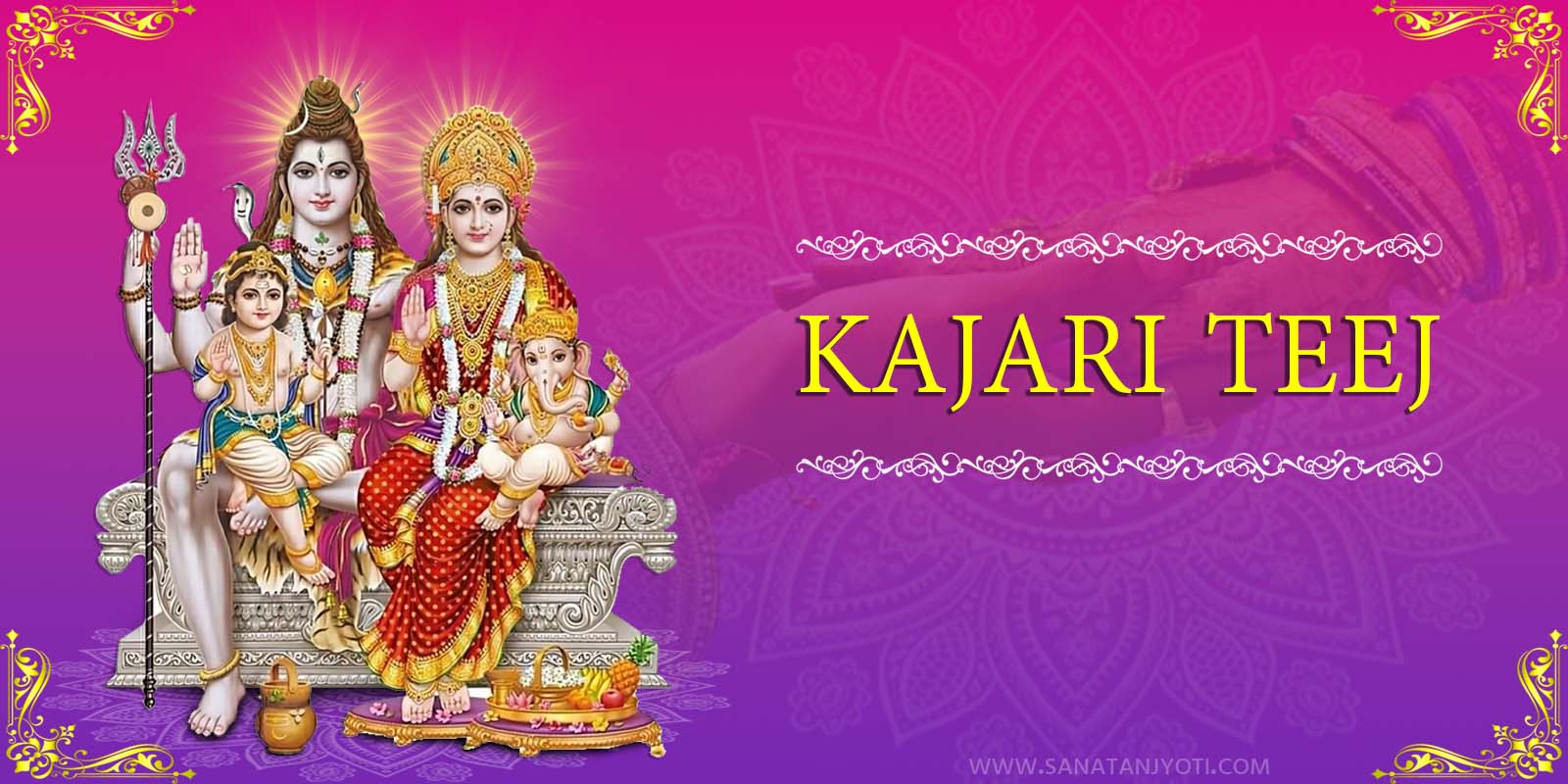
Kajari Teej is one of the most important Hindu festivals observed by married women and unmarried girls with deep faith and devotion. The festival is dedicated to Lord Shiva and Goddess Parvati. According to Hindu beliefs, observing the Kajari Teej Vrat brings blessings for a happy married life, lasting marital happiness, and family prosperity. Unmarried girls also keep this fast to pray for a suitable life partner.
Every year, devotees search for answers to questions such as When is Kajari Teej 2026? How to observe the Kajari Teej fast? What is the Kajari Teej Puja Vidhi? What is the Kajari Teej Vrat Katha? What is the Shubh Muhurat? anKatha?is the religious significance of Kajari Teej?Vidhi?u are looking for complete and authentic information about Kajari Teej 2026, including the date, Puja Vidhi, Vrat rules, Vrat Katha, Shubh Muhurat, and religious significance, this detailed guide will help you understand everything in a simple and easy way.
When is Kajari Teej 2026?
In 2026, Kajari Teej will be celebrated on Monday, 31 August 2026. The festival falls on the Tritiya (third day) of the Krishna Paksha in the Bhadrapada month.
Kajari Teej is celebrated with great devotion in many North Indian states, especially Uttar Pradesh, Bihar, Madhya Pradesh, and Rajasthan.
On this day, women observe a Nirjala fast (without water) or follow their family tradition while worshipping Lord Shiva and Goddess Parvati. According to Hindu beliefs, observing the fast with faith brings happiness in married life, lasting good fortune, and prosperity to the family.
For the Kajari Teej 2026 date, Tritiya Tithi timings, and the detailed Panchang: -Be sure to check our complete Panchang.
What is the Difference Between Kajari Teej and Hartalika Teej?
Many people think Kajari Teej and Hartalika Teej are the same festival, but they are celebrated on different dates.
Kajari Teej is observed on the Tritiya of Krishna Paksha in the month of Bhadrapada. Hartalika Teej is celebrated on the Tritiya of Shukla Paksha in the same month.
Both festivals are dedicated to Lord Shiva and Goddess Parvati, but they differ in their date, rituals, and regional traditions.
What is Kajari Teej?
Kajari Teej is an important fast in the Sanatan tradition. Married women mainly observe this fast for lasting marital happiness and the well-being of their family. On this day, they worship Lord Shiva and Goddess Parvati and pray for a peaceful and happy married life.
In different parts of India, this festival is also known as Kajli Teej or Satudi Teej. The name and a few customs may change from one region to another, but the main purpose remains the same—to worship Lord Shiva and Goddess Parvati and pray for family happiness and prosperity.
Why is Kajari Teej Celebrated?
According to Hindu beliefs, Kajari Teej honors the deep devotion, dedication, and penance of Goddess Parvati. It is believed that she performed severe penance for many years to marry Lord Shiva.
For this reason, Kajari Teej is seen as a symbol of love, trust, devotion, and a strong married life.
Kajari Teej is more than a religious fast. It is also a celebration of Indian family values, womanhood, faith, and marital harmony. On this day, women observe the fast, sing traditional Kajari folk songs, and pray to Lord Shiva and Goddess Parvati for the happiness, peace, and prosperity of their family.
Religious Significance of Kajari Teej
Kajari Teej holds great religious importance in Sanatan Dharma. The festival reminds devotees of the ideal married life of Lord Shiva and Goddess Parvati. It teaches the values of love, trust, commitment, and family harmony.
According to Hindu beliefs, observing the Kajari Teej Vrat and performing the puja with devotion brings the blessings of Lord Shiva and Goddess Parvati.
Married women pray for Akhand Saubhagya (lasting marital bliss), good health for their husbands, and family well-being. Unmarried girls pray for the blessing of a worthy life partner.
If you would like to learn more about the Kajari Teej 2026 Puja Vidhi, Vrat rules, Shubh Muhurat, or the worship of Lord Shiva and Goddess Parvati: -You can get free guidance and detailed advice from the experienced Acharyas at Sanatan Jyoti.
Kajari Teej Puja Vidhi
Kajari Teej is observed with great faith and devotion. On this day, women wake up early, take a bath, wear clean or traditional clothes, and take a vow to observe the fast. They pray to Lord Shiva and Goddess Parvati for a happy married life, family well-being, and good fortune.
If possible, clean the puja area with Gangajal and decorate it before starting the worship. Place the idols or pictures of Lord Shiva, Goddess Parvati, and Lord Ganesha on a clean platform.
The following items are commonly used during the puja:
• Gangajal or clean water
• Kumkum (Vermilion)
• Turmeric
• Akshat (Rice)
• Flowers
• Bel Patra
• Fruits
• Sweets
• Incense sticks
• Oil or ghee lamp
• Coconut
• Seasonal offerings
Offer all the puja items with devotion while praying to Lord Shiva and Goddess Parvati. After the puja, listen to or read the Kajari Teej Vrat Katha and perform the Aarti. Finally, pray for a happy family, good health, prosperity, and lasting marital bliss.
Kajari Teej Vrat Rules
Many devotees ask how to observe the Kajari Teej fast correctly. According to Hindu traditions, following these simple rules is considered auspicious:
• Wake up early and take a bath.
• Wear clean or traditional clothes.
• Observe the fast with devotion.
• Worship Lord Shiva and Goddess Parvati.
• Stay calm and avoid anger or arguments.
• Eat only Satvik food if your family tradition allows it.
• Spend time praying and chanting.
• Read or listen to the Kajari Teej Vrat Katha.
• Respect elders and seek their blessings.
• Help people in need and perform charity according to your ability.
The true purpose of the fast is not only to avoid food but also to maintain purity in thoughts, words, and actions.
What to Eat During Kajari Teej Vrat?
The type of fasting depends on your health, family customs, and personal faith. Many devotees choose one of the following:
• Nirjala Vrat (without food and water)
• Fruit-based fast
• Milk and dairy products
• Dry fruits
• Makhana (fox nuts)
• Coconut water
• Sabudana dishes
• Singhara flour dishes
• Kuttu flour dishes
Follow your family tradition and choose a fasting method that suits your health.
What Should You Avoid During Kajari Teej Vrat?
According to Hindu traditions, devotees usually avoid the following during the fast:
• Non-vegetarian food
• Alcohol
• Tobacco
• Onion and garlic
• Tamasik food
• Anger and arguments
• Harsh words
• Negative thoughts
Kajari Teej is a day of devotion, self-control, and inner peace. Maintaining a positive attitude is considered just as important as observing fast.
Who Can Observe Kajari Teej Vrat?
Kajari Teej is mainly observed by married women, but it is not limited to them. The fast may also be observed by:
• Married women
• Unmarried girls
• Newly married women
• Women praying for family happiness
• Devotees of Lord Shiva and Goddess Parvati
According to Hindu beliefs:
• Married women observe the fast for Akhand Saubhagya, family happiness, and their husband's long life.
• Unmarried girls keep fast to pray for a good and caring life partner.
• Many women also observe it to seek peace, prosperity, and the blessings of Lord Shiva and Goddess Parvati.
Things to Keep in Mind on Kajari Teej
Kajari Teej is not only a fasting day. It is also a day of faith, gratitude, and devotion.
On this day, devotees are encouraged to:
• Worship Lord Shiva and Goddess Parvati with a pure heart.
• Speak politely and avoid conflicts.
• Respect parents and elders.
• Help the poor and needy.
• Spend time in prayer and meditation.
• Keep a peaceful and positive atmosphere at home.
According to Hindu traditions, observing Kajari Teej with faith, discipline, and devotion brings spiritual peace and the blessings of Lord Shiva and Goddess Parvati.
Kajari Teej Vrat Katha
Many stories are connected with Kajari Teej. The most popular one is about Goddess Parvati's deep devotion to Lord Shiva.
According to Hindu beliefs, Goddess Parvati wished to marry Lord Shiva. To fulfill this wish, she performed strict penance for many years. She gave up comfort, lived a simple life, and worshipped Lord Shiva with complete faith and dedication.
Her devotion and determination pleased Lord Shiva. He accepted Goddess Parvati as his wife. Their divine marriage became a symbol of true love, trust, patience, and lifelong commitment.
This is why Kajari Teej is closely linked to Lord Shiva and Goddess Parvati. Married women observe this fast to pray for a happy married life, while unmarried girls seek the blessing of a good life partner.
The story also teaches that true devotion, patience, and faith help a person overcome life's challenges and receive divine blessings.
Auspicious Activities on Kajari Teej
The following activities are considered especially auspicious on Kajari Teej:
• Worship Lord Shiva and Goddess Parvati.
• Offer Bel Patra, flowers, and fruits during the puja.
• Chant "Om Namah Shivaya."
• Recite the Mahamrityunjaya Mantra.
• Read or listen to the Kajari Teej Vrat Katha.
• Perform the Aarti with devotion.
• Donate food, clothes, or other useful items according to your ability.
• Respect elders and seek their blessings.
• Help those in need.
Many devotees also spend time on meditation and prayer to strengthen their spiritual connection.
Special Worship for Lord Shiva
If you wish to seek the special blessings of Lord Shiva for marital happiness, family peace, good health, prosperity, or relief from life's obstacles: - You can also learn more about the Rudrabhishek Anushthan.
According to Hindu tradition, Rudrabhishek is one of the most sacred ways to worship Lord Shiva. It is believed to bring spiritual peace and divine blessings when performed with devotion and proper rituals.
Frequently Asked Questions
1. When is Kajari Teej 2026?
Kajari Teej 2026 will be celebrated on Monday, 31 August 2026.
2. Why is Kajari Teej celebrated?
Kajari Teej is celebrated to worship Lord Shiva and Goddess Parvati. Married women observe this fast for a happy married life, while unmarried girls pray for a suitable life partner.
3. Who can observe the Kajari Teej Vrat?
The fast is mainly observed by married women, but unmarried girls can also keep the vrat with faith and devotion.
4. Can unmarried girls observe Kajari Teej?
Yes. According to Hindu beliefs, unmarried girls observe the fast to pray for a caring and suitable husband.
5. What should be offered during Kajari Teej Puja?
Devotees usually offer:
• Gangajal or clean water
• Flowers
• Bel Patra
• Kumkum
• Akshat (Rice)
• Fruits
• Sweets
• Incense
• Lamp (Diya)
• Coconut
The exact offerings may vary according to family traditions.
6. Which mantra is considered most auspicious on Kajari Teej?
The following mantras are widely chanted during the puja:
• Om Namah Shivaya
• Mahamrityunjaya Mantra
Both are considered highly sacred in the worship of Lord Shiva.
7. Is Nirjala fasting compulsory on Kajari Teej?
No. Some women observe a Nirjala Vrat (without food or water), while others follow their family customs and health needs. The method of fasting depends on personal faith, health, and family tradition.
8. What is the main message of Kajari Teej?
Kajari Teej teaches the values of faith, devotion, patience, love, family harmony, and commitment. The festival reminds devotees of the ideal relationship between Lord Shiva and Goddess Parvati.
Kajari Teej is one of the most sacred festivals dedicated to Lord Shiva and Goddess Parvati. In 2026, the festival will be observed on Monday, 31 August.
According to Hindu beliefs, observing the Kajari Teej Vrat with faith and devotion may bring marital happiness, family peace, prosperity, and spiritual growth. More than a religious fast, Kajari Teej celebrates love, trust, devotion, and strong family values. It also reminds us of the importance of patience, commitment, and faith in everyday life.