
When is Gopashtami in 2026?
Gopashtami will be observed on Tuesday, November 17, 2026. In Sanatan Dharma, this sacred festival is celebrated on the Ashtami Tithi of the Shukla Paksha in the month of Kartik and holds special significance for the worship of Gau Mata (the sacred cow), cattle, and Lord Krishna.
According to religious beliefs, it was on this day that Lord Krishna took up the responsibility of grazing cows for the first time after his childhood years. For this reason, Gopashtami is celebrated as a grand festival of cow worship, cow service, and devotion to Lord Krishna.
The festival is observed with great devotion and grandeur, especially in Mathura, Vrindavan, Govardhan, Barsana, Nandgaon, and the entire Braj region. It is believed that worshipping Gau Mata, performing circumambulation (parikrama), donating cows, and serving cows on this day brings happiness, prosperity, spiritual merit, and the special blessings of Lord Krishna.
At Sanatan Jyoti, experienced Vedic priests perform various deity-specific Anushthans according to authentic Vedic traditions and rituals. If you would like to learn about the procedure, religious significance, or spiritual benefits of any particular Anushthan: - You can receive free consultation and detailed information related to various Anushthans.
What is Gopashtami?
Gopashtami is an important festival in the Sanatan tradition, celebrated on the Ashtami Tithi of the Shukla Paksha in the month of Kartik. This day is primarily dedicated to Gau Mata, cattle, cow service, and the worship of Lord Krishna. The festival is celebrated with great enthusiasm and devotion, especially in Mathura, Vrindavan, and the Braj region of North India.
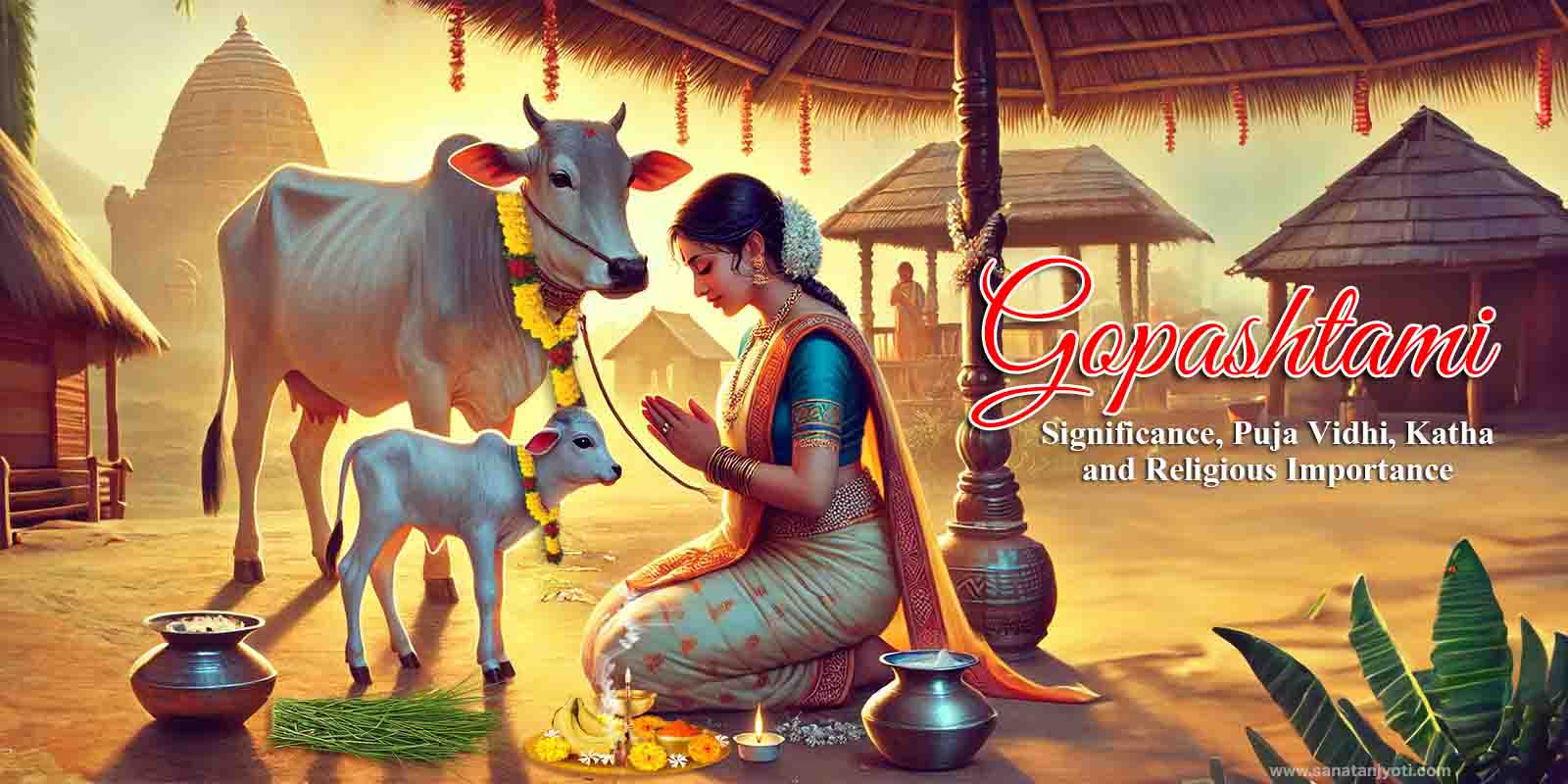
On Gopashtami, Gau Mata and calves are decorated and worshipped with special rituals. Cow service, cow donation, and devotion to Lord Krishna are considered highly significant on this day. It is an occasion to express gratitude and reverence toward cows. The festival also commemorates the divine pastime of Lord Krishna when He lifted Govardhan Hill on His little finger to protect the people of Braj from the wrath of Lord Indra. Indra unleashed torrential rains for seven consecutive days, but eventually accepted defeat on Gopashtami.
On this day, cows and calves are beautifully decorated and worshipped. In Maharashtra, a similar tradition of worshipping cows and calves is observed as Govatsa Dwadashi. Gopashtami is a unique occasion to express devotion, gratitude, and respect toward cows.
Gopashtami Worship Procedure
Wake up early in the morning, take a bath, and wear clean and pure clothes. Before beginning the worship, take a vow (sankalp) and resolve to serve Gau Mata. If you have a milking cow and her calf, bathe and clean them properly. Then decorate their horns with turmeric and vermilion and adorn them with garlands. If a cow and calf are not available, prepare a clean worship area by smearing the ground with cow dung and place an idol or picture of a cow and calf made of pure clay.
Arrange water, sandalwood paste, incense, lamps, offerings, rice grains (akshat), flowers, and fruits for the worship. Begin by applying a tilak to the cow and calf and offering akshat. Then light incense and lamps, perform their aarti, and circumambulate the cow. After the worship, offer jaggery, green grass, bananas, and other fruits and flowers.
On this day, many women observe a fast and consume only fruits. Milk and milk products are generally avoided because the cow’s milk is reserved for the calf. Listening to the divine pastimes of Lord Krishna after the worship is considered highly auspicious. If possible, spend the day serving and caring for cows and calves.
The Story of Gopashtami
During the Dwapara Yuga, the residents of Braj worshipped Lord Indra for timely rainfall, as their crops and cattle depended on it. Over time, Indra became proud because of the worship he received. Seeing this, Lord Krishna advised the people of Braj to worship Govardhan Hill instead of Indra.
Lord Krishna explained that rainfall was Indra’s duty, but it was Govardhan Hill that provided shelter to the people and green fodder for their cows. Therefore, Govardhan was the true benefactor worthy of worship. The people of Braj accepted Krishna’s advice and began worshipping Govardhan Hill.
Enraged by this, Lord Indra unleashed heavy rains upon Braj. The torrential downpour endangered all living beings, and panic spread throughout the region. The people feared that they were suffering because they had stopped worshipping Indra.
Seeing the distress of the people, Lord Krishna lifted Govardhan Hill on His little finger and provided shelter to all the residents of Braj beneath it. For seven days and nights, the people remained safe under Govardhan Hill without suffering from hunger or thirst.
When Lord Brahma witnessed this divine event, he informed Indra that Krishna was none other than Lord Vishnu incarnate, the sustainer of the universe. Realizing his mistake, Indra felt deep remorse. On Gopashtami, he accepted defeat and withdrew his wrath. Since then, the Ashtami Tithi of Kartik Shukla Paksha has been celebrated as the festival of Gopashtami.
Religious Significance of Gopashtami
Gopashtami is closely associated with Gau Mata, cow service, and devotion to Lord Krishna. Worshipping cows, donating cows, and serving cows are considered highly meritorious on this day. According to religious beliefs, serving Gau Mata with devotion on Gopashtami brings happiness, prosperity, spiritual merit, and spiritual advancement. The festival also conveys a message of respect for nature, livestock, and dharma.
The scriptures describe Gau Mata as the abode of all deities. Therefore, it is believed that worshipping and serving cows on Gopashtami grants spiritual merit equivalent to performing many sacred yajnas (Vedic sacrifices).
If you wish to seek the blessings of Lord Krishna and Lord Vishnu for righteousness, spiritual merit, spiritual growth, and positivity in life through a special Vedic practice: - You can learn more about the Vishnu Sahasranama Path Anushthan.