
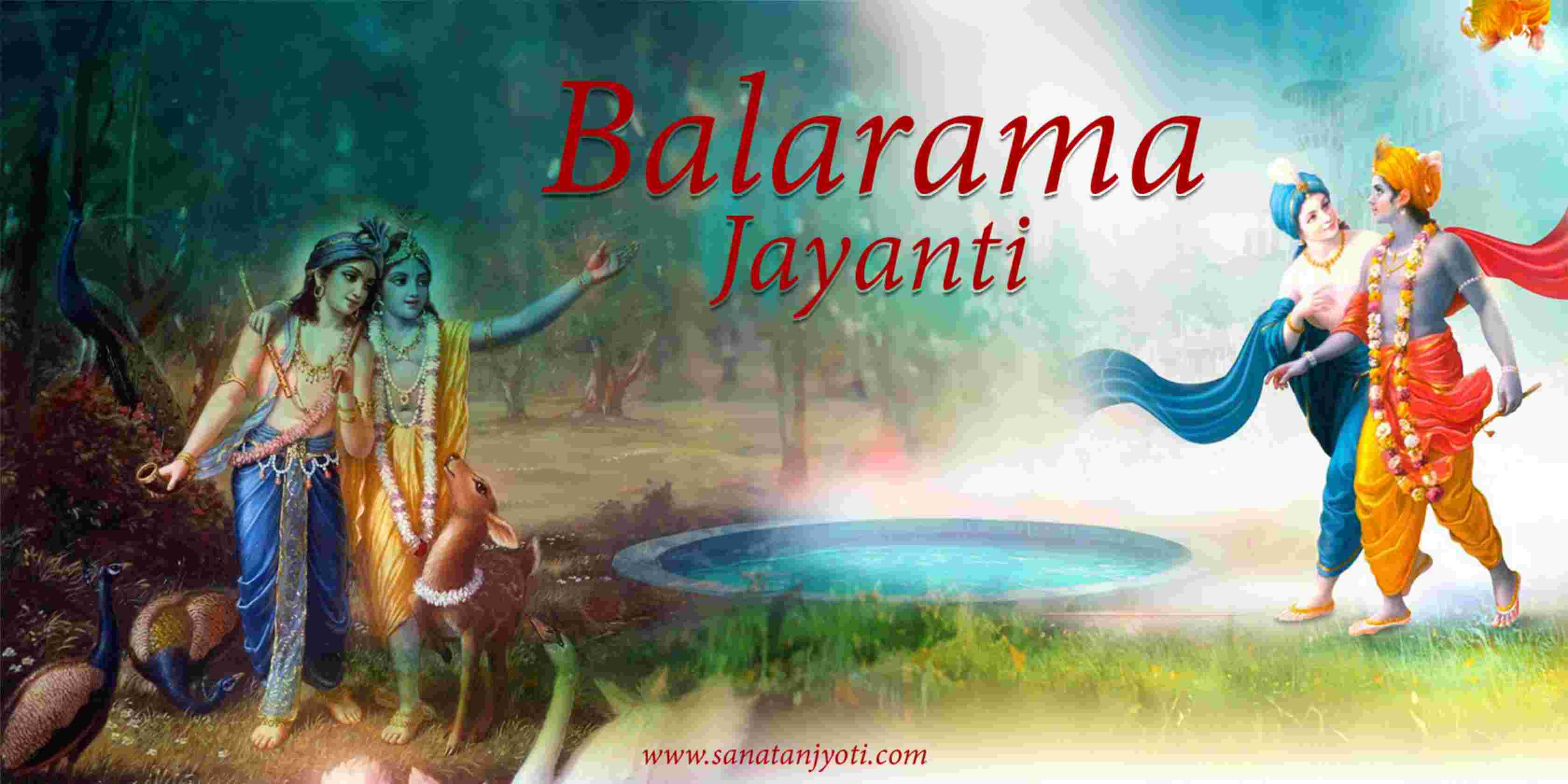
Balarama Jayanti is celebrated as the sacred appearance day of Lord Balarama, the elder brother of Lord Krishna. In Sanatan Dharma, Lord Balarama is revered as the embodiment of strength, righteousness, agriculture, and moral values. Many Vaishnava traditions regard Him as the incarnation of Adi Shesha (Sheshnag). According to Hindu scriptures and religious beliefs, Lord Balarama played a vital role in protecting Dharma, defeating evil, and supporting Lord Krishna in His divine mission.
Every year, devotees search for answers to questions such as When is Balarama Jayanti 2026?” Who is Lord Balarama? Why is Balarama Jayanti celebrated? What is Puja Vidhi? What is His relationship with Lord Krishna? And What is the spiritual significance of this festival?
If you are looking for complete and authentic information about Balarama Jayanti 2026, its date, the life of Lord Balarama, Puja Vidhi, Vrat, religious significance, and scriptural beliefs, this detailed guide will help you understand everything in one place.
When is Balarama Jayanti 2026?
Balarama Jayanti in 2026 will be celebrated on Wednesday, 2 September 2026. The festival falls on the Shashthi Tithi of Shukla Paksha in the month of Bhadrapada according to the Hindu calendar.
On this auspicious day, devotees worship Lord Balarama, observe fasts, offer prayers, perform charitable acts, and remember the divine pastimes of Lord Krishna and Lord Balarama.
Followers of the Vaishnava tradition especially celebrate this day with great devotion, praying to Lord Balarama for strength, courage, righteousness, and prosperity for their families.
For the exact Shashthi Tithi timings, Panchang details, and other auspicious timings for Balarama Jayanti 2026: -Please refer to our detailed Sanatan Panchang.
Who is Lord Balarama?
Lord Balarama is one of the most revered deities in Sanatan Dharma. He is known as the elder brother of Lord Krishna, and His divine life and pastimes are described in detail in the Shrimad Bhagavatam and several other Vaishnava scriptures.
According to Hindu tradition, Lord Balarama was originally conceived in the womb of Devaki and Vasudeva. By the divine arrangement of Yogamaya, the unborn child was transferred to the womb of Rohini, which is why He is also lovingly known as Rohininandan.
Lord Balarama is also known by several other names, including Balabhadra, Haladhara, Halayudha, and Sankarshana. Carrying a plough (hala) and a mace (musala), He symbolizes strength, simplicity, truthfulness, discipline, and righteousness.
The Relationship Between Lord Krishna and Lord Balarama
The bond between Lord Krishna and Lord Balarama is much more than that of two brothers. Together, they played an important role in protecting Dharma and defeating evil forces. The Shrimad Bhagavatam describes many divine pastimes where Lord Balarama stood beside Lord Krishna in fulfilling His divine mission.
From the sacred lands of Gokul, Vrindavan, and Mathura, the two brothers defeated many demons and restored righteousness. Lord Balarama represents strength and unwavering support, while Lord Krishna symbolizes divine love and supreme wisdom. Because of this, Vaishnava traditions place great importance on their combined worship.
Religious Significance of Balarama Jayanti
Balarama Jayanti is not just the celebration of Lord Balarama's appearance day. It is also a festival that inspires devotes to follow the values of strength, righteousness, humility, service, and responsibility.
According to Hindu beliefs, worshipping Lord Balarama with devotion, observing a fast, and performing charity on this day brings courage, inner strength, patience, and positive energy into one's life. The festival also reminds us that true strength should always be used to uphold justice, protect righteousness, and serve society.
The Different Names and Forms of Lord Balarama
Lord Balarama is worshipped by many names, including Balabhadra, Haladhara, Halayudha, Sankarshana, and Rohininandan. Each of these names reflects a unique aspect of His divine personality and sacred pastimes.
In many Vaishnava traditions, Lord Balarama is also regarded as the incarnation of Adi Shesha (Sheshnag) and the eternal companion of Lord Krishna.
Balarama Jayanti Puja Vidhi
On the sacred occasion of Balarama Jayanti, devotees should wake up during Brahma Muhurta, take a holy bath, and wear clean, traditional clothes. Begin the day by remembering Lord Balarama and taking a sincere vow (Sankalpa) to observe the festival with devotion.
Clean the place of worship and install an idol or image of Lord Balarama or Lord Krishna and Lord Balarama together. Light a lamp, offer incense, sandalwood paste, rice grains (Akshata), flowers, Tulsi leaves, fruits, and Naivedya.
Offer prayers to Lord Balarama and chant His sacred names or recite prayers dedicated to Lord Krishna and Lord Balarama. Conclude the worship with Aarti and pray for strength, righteousness, peace, and prosperity for yourself and your family.
If possible, devotees may also read or listen to the Shrimad Bhagavatam, as it beautifully describes the divine pastimes of Lord Krishna and Lord Balarama.
Significance of the Balarama Jayanti Vrat
Many devotees observe a fast on Balarama Jayanti to seek the blessings of Lord Balarama. According to Hindu beliefs, this Vrat symbolizes devotion, self-discipline, purity, and spiritual commitment.
Depending on family traditions and personal faith, devotees may observe a complete fast or consume only fruits and sattvic food throughout the day. Chanting the names of Lord Krishna and Lord Balarama, reading sacred scriptures, singing devotional hymns, and performing charitable acts are also considered highly auspicious.
The true purpose of the Vrat is not merely to abstain from food but to purify the mind, speech, and actions while strengthening one's commitment to a righteous life.
Puja Samagri for Balarama Jayanti
The following items are commonly used during the worship of Lord Balarama:
• Idol or image of Lord Balarama or Lord Krishna–Balarama
• Sandalwood paste
• Akshata (unbroken rice)
• Kumkum or sacred vermilion
• Tulsi leaves
• Yellow or white flowers
• Incense sticks and a ghee lamp
• Ghee
• Seasonal fruits
• Panchamrit
• Butter, curd, or other sattvic offerings (according to family traditions)
• Pure water
• Aarti plate
Families may also include additional offerings based on their local customs and traditions.
The Symbolic Meaning of Lord Balarama's Weapons
Lord Balarama is traditionally depicted holding a plough (Hala) and a mace (Musala).
In Hindu philosophy, the plough symbolizes agriculture, honest labor, prosperity, and humanity's connection with nature. The mace represents strength, courage, and the protection of Dharma against injustice.
For this reason, Lord Balarama is also regarded as a symbol of hard work, integrity, and the dignity of labor. His life teaches that true strength should always be used for righteousness and the welfare of society.
Is Lord Balarama an Incarnation of Adi Shesha?
Many Vaishnava traditions believe that Lord Balarama is the incarnation of Adi Shesha (Sheshnag), the divine serpent associated with Lord Vishnu.
The Shrimad Bhagavatam and Vaishnava traditions describe a close spiritual connection between Lord Vishnu, His divine incarnations, and Adi Shesha. However, interpretations vary among different Vaishnava sampradayas (traditions), so this belief should be understood within the context of those scriptural traditions.
Lord Balarama's Place in the Dashavatara of Lord Vishnu
Different Vaishnava traditions present slightly different lists of the Dashavatara (Ten Incarnations of Lord Vishnu).
Some traditions consider Lord Buddha as the ninth incarnation, while others regard Lord Balarama as the ninth avatar of Lord Vishnu. Because of these traditional differences, both views are respected within Sanatan Dharma.
Regardless of the variation, Lord Balarama is universally revered as a highly respected divine personality and the eternal companion of Lord Krishna.
What Should You Do on Balarama Jayanti?
The following spiritual practices are considered especially auspicious on Balarama Jayanti:
• Worship Lord Balarama and Lord Krishna with devotion.
• Read or listen to Shrimad Bhagavatam.
• Chant the holy names of the Lord.
• Donate food, clothes, or other essentials according to your capacity.
• Participate in cow service (Gau Seva) and charitable activities.
• Resolve to follow the path of truth, hard work, and righteousness.
Life Lessons from Lord Balarama
The life of Lord Balarama is not only a symbol of strength and courage but also an example of righteousness, duty, simplicity, and selfless service. As the elder brother of Lord Krishna, He inspired people to uphold Dharma, perform their responsibilities sincerely, and lead a disciplined life.
Lord Balarama's life teaches us many valuable lessons:
• Use strength only to protect righteousness and justice.
• Achieve success through honesty, hard work, and dedication.
• Fulfil your responsibilities towards your family, society, and culture.
• Practice humility, self-control, and compassion in everyday life.
• Remember that true Dharma is reflected through good conduct as much as through worship.
These timeless values make Lord Balarama an enduring symbol of strength, integrity, and moral character in Sanatan Dharma.
Spiritual Significance of Balarama Jayanti
Balarama Jayanti is more than a celebration of Lord Balarama's appearance day. It is an occasion to strengthen one's commitment to truth, self-discipline, and righteous living.
Spiritually, Lord Balarama reminds devotees that physical strength is meaningful only when guided by wisdom, humility, and compassion. This is why devotees observe this festival through worship, self-reflection, charity, and the practice of virtuous values.
The festival encourages people to develop inner strength while living a life based on Dharma and selfless service.
Lord Balarama's Importance in Agriculture and Rural Life
Lord Balarama is widely known as Haladhara, meaning "the One who carries the plough." In Indian tradition, the plough is not merely an agricultural tool but a symbol of hard work, prosperity, food production, and harmony with nature.
For this reason, Lord Balarama is especially revered by farming communities in many parts of India. His life teaches that sincere effort, respect for nature, and honest work form the foundation of a prosperous society.
Even today, His association with agriculture reminds devotees of the dignity of labour and the importance of living in balance with nature.
Lord Balarama in the Vaishnava Tradition
Lord Balarama holds a special place in the Vaishnava tradition. He is worshipped as the eternal companion of Lord Krishna and, in many Vaishnava traditions, as the incarnation of Adi Shesha (Sheshnag).
The Shrimad Bhagavatam describes many divine pastimes in which Lord Balarama assisted Lord Krishna in protecting Dharma and defeating evil. As a result, the combined worship of Lord Krishna and Lord Balarama occupies a significant place in Vaishnava devotional practices.
Learn More About Lord Krishna
The life of Lord Balarama is closely connected with the divine pastimes of Lord Krishna. If you would like to learn more about Lord Krishna's birth, Krishna Janmashtami, His childhood pastimes, and their spiritual significance, be sure to read our detailed guide on Krishna Janmashtami.
(Place the internal link to your Krishna Janmashtami article here.)
If you would like to learn more about Lord Balarama's worship, Vaishnava traditions, Krishna-Balarama devotion, or special Vedic rituals: -You can receive free guidance from the experienced Acharyas at Sanatan Jyoti.
Frequently Asked Questions
1. When is Balarama Jayanti 2026?
Balarama Jayanti 2026 will be celebrated on Wednesday, 2 September 2026. The festival falls on the Shashthi Tithi of Shukla Paksha in the month of Bhadrapada.
2. Who is Lord Balarama?
Lord Balarama is the elder brother of Lord Krishna and one of the most revered deities in Sanatan Dharma. In many Vaishnava traditions, He is regarded as the incarnation of Adi Shesha (Sheshnag).
3. Why is Balarama Jayanti celebrated?
Balarama Jayanti commemorates the divine appearance of Lord Balarama and celebrates His teachings of strength, righteousness, humility, and selfless service.
4. Who is worshipped on Balarama Jayanti?
Devotees primarily worship Lord Balarama on this day. Many also offer prayers to Lord Krishna and Lord Balarama together, following Vaishnava traditions.
5. Do devotees observe a fast on Balarama Jayanti?
Yes. Many devotees observe Balarama Jayanti Vrat according to their family traditions and spiritual practices to seek the blessings of Lord Balarama.
6. Is Lord Balarama an incarnation of Adi Shesha?
According to many Vaishnava traditions, Lord Balarama is regarded as the incarnation of Adi Shesha (Sheshnag). This belief is based on scriptural traditions and religious interpretations.
7. What are the other names of Lord Balarama?
Lord Balarama is also known as Balabhadra, Haladhara, Halayudha, Sankarshana, and Rohininandan, each reflecting a unique aspect of His divine personality and pastimes.
Balarama Jayanti is not just a celebration of Lord Balarama's appearance but also a reminder of the timeless values of strength, righteousness, discipline, humility, and selfless service.
In 2026, the festival will be observed on Wednesday, 2 September. By worshipping Lord Balarama with devotion, observing the Vrat, performing charity, and remembering the divine pastimes of Krishna and Balarama, devotees seek spiritual strength, inner peace, and the inspiration to lead a righteous life.
This sacred festival encourages us to combine strength with compassion, responsibility with humility, and devotion with noble actions, the very qualities that Lord Balarama represents in Sanatan Dharma.