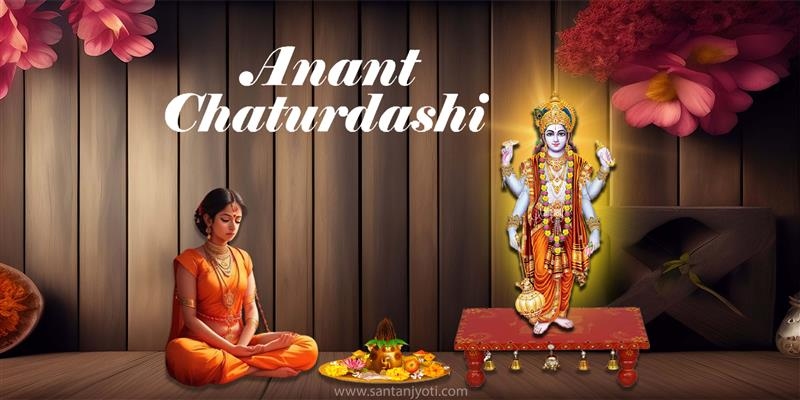
Anant Chaturdashi is an important Hindu festival observed on the Chaturdashi Tithi of the Shukla Paksha in the month of Bhadrapada. It is also known as Anant Chaudas. The day is associated with the worship of Lord Vishnu in his Anant form, observing the Anant Vrat, and wearing the sacred Anant Sutra with 14 knots.
According to Hindu religious belief, worshipping Lord Anant and observing the vrat on this day is associated with happiness, prosperity, peace and well-being. Devotees worship Lord Vishnu, listen to the Anant Vrat Katha and wear the Anant Sutra after completing the puja.
Anant Chaturdashi also has a special cultural significance because in many parts of India, Ganesh Utsav concludes and Lord Ganesha's idol is immersed on this day. However, Anant Vrat and Ganesh Visarjan are separate religious traditions that happen to fall on the same date.
When is Anant Chaturdashi in 2026?
Anant Chaturdashi is observed on Bhadrapada Shukla Chaturdashi. In 2026, Anant Chaturdashi will be observed on Friday, September 25. The exact puja muhurat can vary depending on the location.
For the exact Anant Chaturdashi date and puja muhurat, devotees should refer to: - A Panchang according to their city and location.
Significance of Anant Chaturdashi
Anant Chaturdashi is dedicated to Lord Vishnu in his Anant form. The word Anant means that which has no end. On this day, devotees worship Lord Anant and pray for happiness, prosperity, family well-being and stability in life.
One of the most important traditions of Anant Chaturdashi is wearing the Anant Sutra, a sacred thread with 14 knots. It is worshipped and then tied around the arm. According to religious belief, these 14 knots represent the 14 Lokas described in Hindu tradition.
The traditional Anant Vrat is also associated with a period of 14 years. According to the vrat tradition, Lord Anant instructed Sage Kaundilya to observe the Anant Vrat for 14 years or according to his capacity and religious practice.
What is the Anant Sutra?
The Anant Sutra, also known as Anant Dora, is a sacred thread traditionally worn after worshipping Lord Vishnu on Anant Chaturdashi.
The thread is generally made from cotton or another suitable thread and contains 14 knots.
According to religious tradition, the Anant Sutra represents faith, devotion and the vow made to Lord Anant. It is worn on the arm after the puja, while its 14 knots are traditionally associated with the 14 Lokas.
Which hand should the Anant Sutra be tied on?
According to the commonly followed tradition:
• Men wear the Anant Sutra on their right arm.
• Women wear the Anant Sutra on their left arm.
However, practices can vary according to regional and family traditions.
What is the significance of the 14 knots?
According to Hindu religious belief, the 14 knots of the Anant Sutra represent the 14 Lokas. This is why the number 14 has special significance in the Anant Chaturdashi tradition.
Different religious traditions may offer different symbolic interpretations of these knots. Therefore, their meaning should not be restricted to only one interpretation.
How is the Anant Chaturdashi Vrat observed?
On Anant Chaturdashi, devotees observe a vrat while worshipping Lord Vishnu in his Anant form. Some devotees observe a complete fast throughout the day, while some families follow their own traditions of consuming fruits or sattvic food.
The rules of the vrat may differ according to regional and family traditions. Therefore, fasting practices can vary from one household to another.
Anant Chaturdashi Puja Vidhi
The method of performing Anant Chaturdashi puja may vary slightly across different regions and families. A commonly followed puja procedure is given below.
1. Take a Bath and Prepare the Puja Area
Take a bath in the morning and wear clean clothes. Clean the puja area and place an idol or image of Lord Vishnu or Lord Anant at the designated place.
2. Kalash Sthapana
Set up a Kalash according to your family tradition. An idol of Lord Vishnu or another prescribed religious symbol may be placed as a representation of Lord Anant.
3. Worship Lord Vishnu
Offer chandan, akshat, flowers, fruits, naivedya, sweets and other available puja items to Lord Vishnu.
4. Worship the Anant Sutra
Place the 14-knotted Anant Sutra in the puja area and worship it before the deity. After the puja, devotees traditionally wear it on their arm.
5. Listen to the Anant Vrat Katha
The Anant Chaturdashi Vrat Katha is traditionally read or heard during the puja. The story of Sage Kaundilya and his wife Sushila is particularly associated with this vrat.
6. Chant Mantras and Recite Vishnu Stotras
Devotees may chant the mantra:
“Om Anantaya Namah”
According to their family tradition, devotees may also recite the Vishnu Sahasranama and other Vishnu stotras.
7. Perform Aarti and Donate
Complete the puja by performing Lord Vishnu's Aarti. Devotees may then donate food, clothes, fruits, sweets or other useful items according to their faith and capacity.
Anant Chaturdashi Vrat Katha
The famous Anant Chaturdashi Vrat Katha is associated with Sage Kaundilya and his wife Sushila. The story highlights the significance of the Anant Vrat and the importance of faith and devotion.
According to the traditional story, Sushila learned about the Anant Vrat from some women. She performed the vrat according to the prescribed tradition and wore the 14-knotted Anant Sutra.
When Sage Kaundilya saw the thread tied around her arm, he removed it without understanding its significance. According to the religious story, difficult circumstances subsequently entered their lives and their prosperity was lost.
Sushila later explained that disrespecting the Anant Sutra was believed to be the reason for their difficulties. To atone for his mistake, Kaundilya set out in search of Lord Anant.
According to the story, Lord Anant appeared before him and explained his mistake. He instructed Kaundilya to observe the Anant Vrat for 14 years or according to his capacity and religious practice. After following the vrat, his difficulties were resolved and prosperity returned to the family.
This story is part of the religious tradition surrounding Anant Chaturdashi and conveys the values of faith, commitment, humility and devotion to God.
Rules for Wearing the Anant Sutra
The rules associated with the Anant Sutra can vary among different regions and families. Commonly followed traditions include:
• The Anant Sutra is traditionally worn after it has been worshipped.
• Men generally tie it on the right arm.
• Women generally tie it on the left arm.
• The thread contains 14 knots.
• It is considered a symbol of devotion to Lord Anant and the vow associated with the vrat.
• Those observing the vrat may follow their family tradition of fasting, consuming fruits or eating sattvic food.
Which Mantra Should Be Chanted While Tying the Anant Sutra?
While wearing the Anant Sutra, devotees may remember Lord Anant and chant:
“Om Anantaya Namah”
This mantra and the Anant Sutra are traditionally associated with the worship of Lord Vishnu in his Anant form.
What Should You Eat on Anant Chaturdashi?
Food practices during the Anant Chaturdashi vrat are not the same everywhere. Some devotees observe a complete fast, while others consume fruits or sattvic food according to their family tradition.
In some families, pua, sweets, fruits and other naivedya items are prepared and offered to the deity.
Therefore, rather than considering one particular food mandatory for everyone, devotees should follow the fasting and dietary practices followed in their family and regional tradition.
Should the Anant Chaturdashi Vrat Be Observed for 14 Years?
The traditional Anant Chaturdashi Vrat Katha mentions observing the Anant Vrat for 14 years. According to the story, Lord Anant instructed Sage Kaundilya to observe the vrat for 14 years or according to his capacity.
Thus, the 14-year tradition is connected with the religious story and traditional practice of the Anant Vrat. It should not necessarily be presented as a universally compulsory rule for every devotee.
For the duration of the vrat and the proper Udyapan procedure, devotees may follow their family tradition or guidance from a local religious scholar.
Anant Chaturdashi Vrat Udyapan
Traditionally, Udyapan is performed after completing the prescribed period of the Anant Vrat.
The Udyapan may include:
• Worship of Lord Anant
• Kalash Sthapana
• Havan
• Mantra chanting
• Donations
• Feeding people as part of the religious observance
The exact Udyapan procedure can vary according to different traditions.
Traditional accounts also mention practices involving 14 Anant Sutras, 14 types of auspicious items, donations in sets of 14, and feeding 14 Brahmin couples.
Therefore, the exact Udyapan procedure should be performed according to one's family tradition and local religious practice.
What Is the Connection Between Anant Chaturdashi and Ganesh Visarjan?
Anant Chaturdashi is also associated with the conclusion of Ganesh Utsav in many parts of India. Several household and public Ganesh celebrations that begin on Ganesh Chaturthi conclude with the immersion of Lord Ganesha's idol on Anant Chaturdashi. In 2026, September 25 is also observed as the date for Ganesh Visarjan.
However, it is important to understand that Anant Chaturdashi Vrat and Ganesh Visarjan are separate religious traditions.
• Anant Chaturdashi is associated with the worship of Lord Vishnu in his Anant form and the Anant Vrat.
• Ganesh Visarjan marks the conclusion of the Ganesh festival.
• Since both traditions are observed on the same date, Anant Chaturdashi has special religious and cultural significance.
Spiritual Message of Anant Chaturdashi
Anant Chaturdashi is not only an occasion for fasting and worship. In Hindu religious tradition, it is also associated with faith, commitment and patience.
Faith and Devotion
The Anant Sutra is considered a symbol of faith and devotion toward Lord Anant.
Commitment and Continuity
The traditional practice of observing the vrat for 14 years represents the importance of commitment and continuity in religious life.
Humility
The story of Sage Kaundilya highlights the importance of faith and humility.
Happiness and Prosperity
According to religious belief, worshipping Lord Anant and observing the vrat are associated with prayers for happiness, peace, prosperity and family well-being.
Important Facts About Anant Chaturdashi
• Anant Chaturdashi is observed on Bhadrapada Shukla Chaturdashi.
• It is also known as Anant Chaudas.
• The festival is dedicated to Lord Vishnu in his Anant form.
• Wearing the Anant Sutra is an important tradition of the day.
• The Anant Sutra generally contains 14 knots.
• According to religious belief, the 14 knots represent the 14 Lokas.
• Men generally wear the Anant Sutra on the right arm, while women wear it on the left arm.
• The traditional Anant Vrat Katha mentions observing the vrat for 14 years.
• The main vrat story is associated with Sage Kaundilya and Sushila.
• In many places, Ganesh Utsav concludes and Ganesh Visarjan takes place on this day.
• The Anant Vrat and Ganesh Visarjan are separate religious traditions.
Frequently Asked Questions on Anant Chaturdashi
1. What is Anant Chaturdashi?
Anant Chaturdashi is a Hindu festival observed on Bhadrapada Shukla Chaturdashi. The day is associated with the worship of Lord Vishnu in his Anant form and the observance of the Anant Vrat.
2. Which God is worshipped on Anant Chaturdashi?
Devotees primarily worship Lord Vishnu in his Anant form on Anant Chaturdashi.
3. Why does the Anant Sutra have 14 knots?
According to religious belief, the 14 knots of the Anant Sutra represent the 14 Lokas.
4. Which hand should men and women wear the Anant Sutra on?
According to the commonly followed tradition, men wear the Anant Sutra on the right arm, while women wear it on the left arm. Regional traditions may differ.
5. How many years should the Anant Chaturdashi Vrat be observed?
The traditional vrat story mentions observing the Anant Vrat for 14 years. However, the practice can vary according to family and regional traditions.
6. Which mantra should be recited while tying the Anant Sutra?
Devotees may chant “Om Anantaya Namah” while wearing the Anant Sutra.
7. Is Ganesh Visarjan performed on Anant Chaturdashi?
Yes. In many parts of India, Ganesh Utsav concludes with Ganesh Visarjan on Anant Chaturdashi. However, it is a separate religious tradition from the Anant Vrat.
8. Is fasting compulsory on Anant Chaturdashi?
Fasting has special significance in the religious tradition of Anant Chaturdashi, but the method of fasting can vary. Some devotees observe a complete fast, while others consume fruits or sattvic food according to their tradition.
9. When is Anant Chaturdashi Vrat Udyapan performed?
If a devotee has taken a vow to observe the Anant Vrat for a prescribed period, Udyapan is traditionally performed after completing that period. The exact procedure can vary according to regional and family traditions.
Anant Chaturdashi is an important Hindu festival associated with the worship of Lord Vishnu in his Anant form and the observance of the Anant Vrat. The day is marked by the worship of Lord Anant, listening to the vrat katha and wearing the 14-knotted Anant Sutra.
According to religious belief, the Anant Sutra symbolizes faith, devotion and commitment, while its 14 knots are associated with the 14 Lokas. The Anant Chaturdashi Vrat Katha, centered on Sage Kaundilya and Sushila, highlights the importance of devotion and the Anant Vrat tradition.
On the same day, Ganesh Utsav concludes in many parts of India with the immersion of Lord Ganesha's idol. Thus, Anant Chaturdashi holds an important place in Hindu religious tradition and cultural celebrations, bringing together faith, fasting, worship, sacred traditions and festive observances.