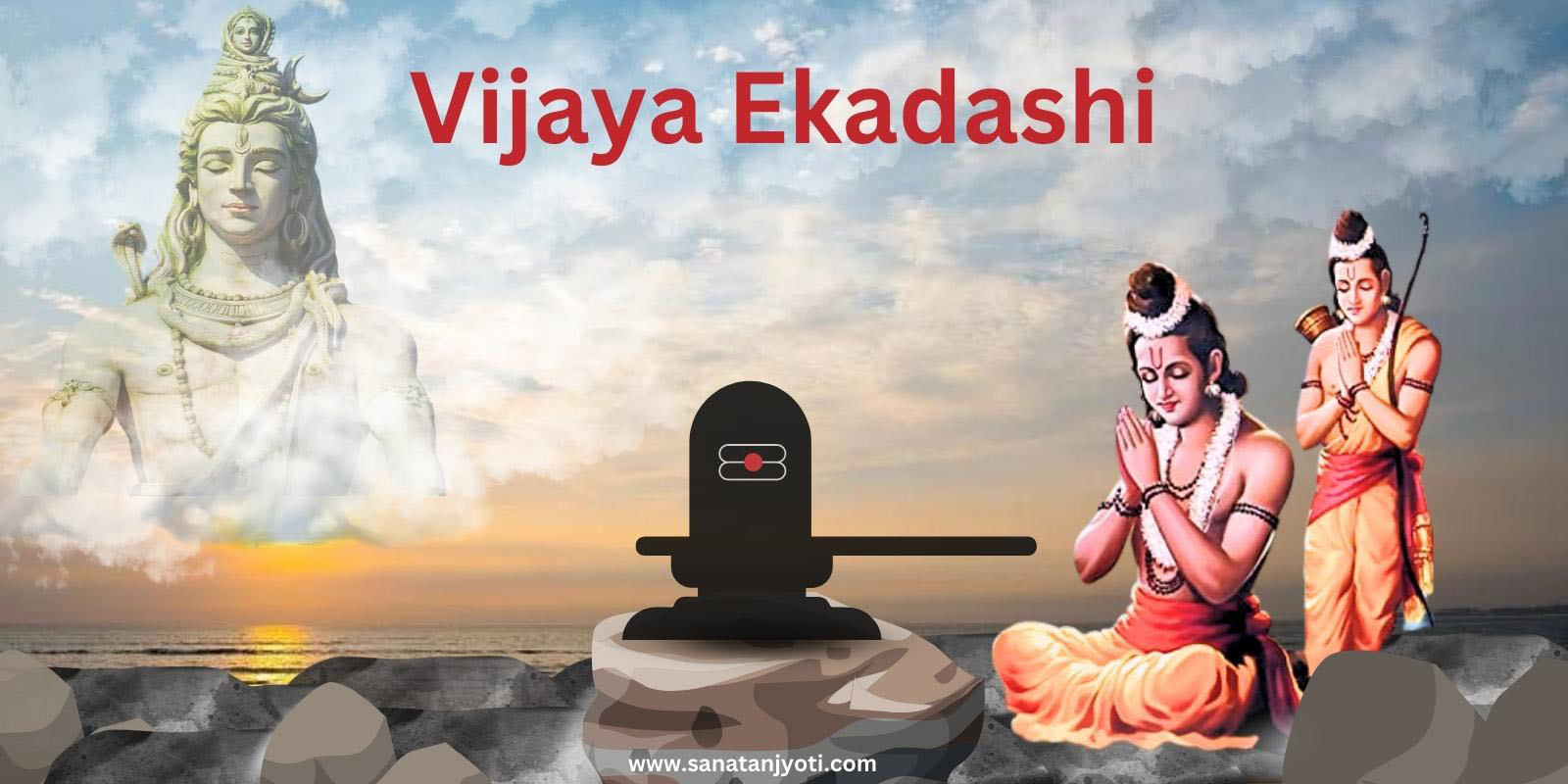
The Ekadashi that falls during the Krishna Paksha of the Phalguna month is known as Vijaya Ekadashi. In Sanatan Dharma, this Ekadashi is considered to have special religious significance. According to mythological beliefs, Lord Shri Rama also observed the Vijaya Ekadashi Vrat before achieving victory over Lanka.
Vijaya Ekadashi is considered an important Vrat associated with the worship of Lord Vishnu, victory, success and overcoming obstacles. It is also known as Vaishnava Vijaya Ekadashi.
When is Vijaya Ekadashi 2027?
Vijaya Ekadashi 2027 will be observed on Thursday, March 4. It falls during the Krishna Paksha of the Phalguna month. According to the Panchang, the Ekadashi Tithi will begin at 4:47 AM on March 3, 2027, and end at 7:26 AM on March 4, 2027.
Vijaya Ekadashi 2027: March 4, 2027, Thursday
Ekadashi Tithi Begins: March 3, 2027, at 4:47 AM
Ekadashi Tithi Ends: March 4, 2027, at 7:26 AM
Vijaya Ekadashi Vrat Katha
Yudhishthira said, “O Vasudeva! Which Ekadashi occurs during the Krishna Paksha of the Phalguna month? Please tell me about it.”
Lord Shri Krishna said: “O Yudhishthira! Once, Narada Ji asked Lord Brahma, who is seated on the lotus seat:
‘O Supreme among the Devas! Please tell me about the Ekadashi known as Vijaya, which falls during the Krishna Paksha of the Phalguna month.’”
Story of Vijaya Ekadashi
Lord Brahma said, “Listen! I will narrate a sacred story that destroys sins. This Vrat is very ancient, sacred and believed to destroy sins. This Ekadashi, known as Vijaya, grants victory to kings. It is also known as Vaishnava Vijaya Ekadashi. There is no doubt about this.”
In ancient times, Lord Shri Ramachandra went into exile for 14 years and lived in Panchavati with Sita and Lakshmana. While they were living there, Ravana abducted Sita, the devoted wife of Lord Shri Rama. Shri Rama became deeply distressed by this and began wandering through the forest in search of Sita.
During his search, he met Jatayu, whose life was nearing its end. After this, Shri Rama killed the demon Kabandha in the forest. He then became friends with Sugriva. Subsequently, an army of Vanaras was gathered to assist Shri Rama.
Hanuman Ji went to Lanka and met Sita in the Ashoka Vatika. He gave her Lord Shri Rama's ring as a symbol of identification. After returning from Lanka, Hanuman Ji met Lord Shri Rama and told him everything about Sita and Lanka.
After hearing Hanuman Ji's account, Shri Rama decided to proceed toward Lanka with Sugriva's permission. When he reached the seashore, he asked Lakshmana:
“O Son of Sumitra, through what merit or means can this ocean be crossed?”
Lakshmana replied, “O King! You are the primordial Lord and the Supreme Being mentioned in the Puranas. What is unknown to you? At a distance of half a Yojana from here is the Ashram of a sage named Bakadalbhya. You should ask him about the way to cross the ocean.”
Hearing these beautiful words from Lakshmana, Shri Ramachandra went to meet the great sage Bakadalbhya. Upon reaching the Ashram, he bowed respectfully before the sage.
As soon as the sage saw him, he recognized him as the Supreme Being Shri Rama, who had incarnated in human form for a divine purpose. The sage asked, “O Shri Rama! What brings you here?”
Shri Rama replied, “O Brahmana! With your blessings, I have come with an army to the seashore to defeat Lanka and its demons. Please tell me how I can cross the ocean. Kindly show me the way.”
Sage Bakadalbhya said, “O Shri Rama! The Ekadashi known as Vijaya, which falls during the Krishna Paksha of the Phalguna month and is also known as Vaishnava Vijaya Ekadashi, should be observed. By observing this Vrat, you will attain victory. Without doubt, you will be able to cross the ocean with your Vanara army.”
Lord Brahma said, “After hearing this, Shri Ramachandra observed the Ekadashi Vrat according to the instructions of the sage. As a result of observing this Vrat, Shri Rama achieved victory. He defeated Ravana in battle, conquered Lanka and was reunited with Sita.
Those who observe this Vrat according to the prescribed method are believed to attain victory in this world, while also gaining lasting spiritual merit in the afterlife.”
To learn more about the origin of the Ekadashi Vrat and its mythological significance : - Read our article on the Origin of Ekadashi.
Also learn how the connection between Lord Vishnu and the Ekadashi Vrat was established.
Vijaya Ekadashi Puja Vidhi
Now listen to the traditional method of observing this Vrat.
On Dashami Tithi, establish a Kalash. It may be made of gold, silver, copper or clay. Fill the Kalash with water and place leaves in it. Install a golden image of Lord Narayana on top of the Kalash.
On Ekadashi, take a bath in the morning and properly place the Kalash again. Place Saptadhanya and barley over the Kalash. Worship the Lord by offering sandalwood paste, incense, a lamp and various types of Naivedya.
Sit before the Kalash and spend the day listening to sacred stories and engaging in religious discussions. Stay awake at night at the Puja place and keep a Ghee lamp lit.
On Dwadashi, after sunrise, take the Kalash near a river and place it there. Worship it according to the prescribed rituals and donate the Kalash along with the deity's image to a Brahmana well-versed in the Vedas.
O King! Along with the Kalash, one should also make other forms of generous donations according to one's faith and capacity.
Do you have any questions related to the Vijaya Ekadashi Vrat, Puja Vidhi, Sankalp, Parana or any religious ritual?
Get a free consultation from our Acharya Ji today and find answers to your Puja-related questions.
Religious Significance of Vijaya Ekadashi
Vijaya Ekadashi is considered an important Vrat associated with victory and success according to religious beliefs. Its mythological story is connected with the battle between Lord Shri Rama and Ravana. According to the story, Lord Shri Rama observed this Ekadashi Vrat before crossing the ocean and achieving victory over Lanka.
For this reason, devotees worship Lord Vishnu on Vijaya Ekadashi and pray for the removal of obstacles and success in their endeavors.
What to Do on Vijaya Ekadashi?
On Vijaya Ekadashi, devotees can worship Lord Vishnu and observe the Vrat according to their faith and capacity.
• Take a bath in the morning and take the Vrat Sankalp.
• Worship Lord Vishnu or Lord Narayana.
• Offer incense, a lamp, flowers and Naivedya.
• Chant Lord Vishnu's Mantras.
• Read or listen to the Ekadashi Vrat Katha.
• Observe a fast or have fruits and other permitted foods according to your capacity.
• Spend the night remembering Lord Vishnu and observing a night vigil.
• Perform Parana at the appropriate time on Dwadashi.
• Make donations and perform charitable acts according to your faith.
Why Is the Vijaya Ekadashi Vrat Observed?
According to religious beliefs, the Vijaya Ekadashi Vrat is observed with the intention of attaining victory, success and overcoming obstacles in life. Since the Vrat is associated with the story of Lord Shri Rama, it is considered to have special religious significance.
However, fasting and Puja are matters of faith and should therefore be observed with devotion and according to one's physical capacity.
Vijaya Ekadashi is an important Ekadashi observed during the Krishna Paksha of the Phalguna month. In 2027, Vijaya Ekadashi will be observed on Thursday, March 4. Its mythological story associated with Lord Shri Rama gives this Ekadashi special religious significance. Devotees express their faith by worshipping Lord Vishnu, observing the Vrat, listening to the Vrat Katha and performing charitable acts.
The message of Vijaya Ekadashi inspires devotees to move forward on the path of Dharma, self-discipline, devotion and determination.