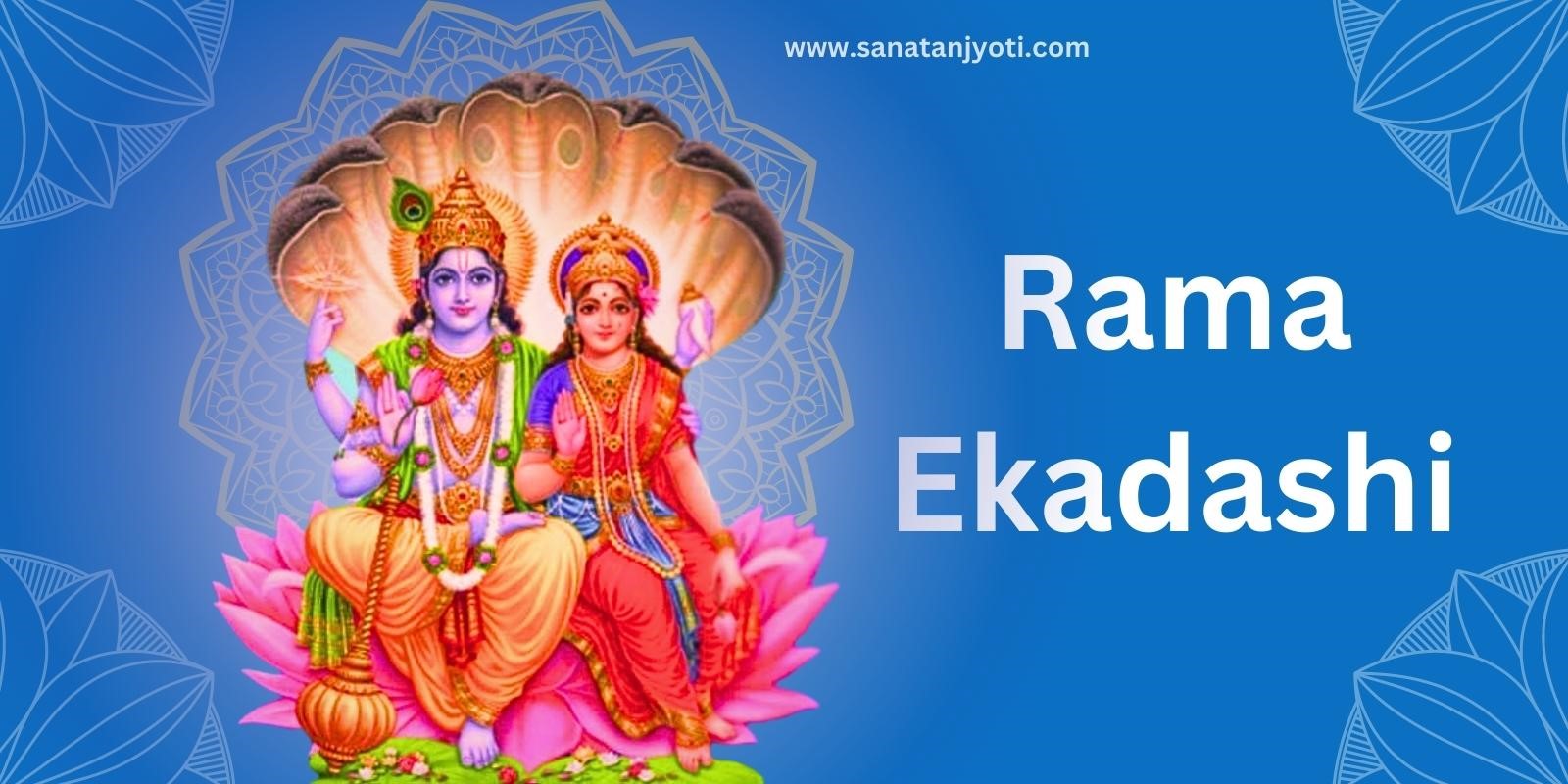
Rama Ekadashi 2026 will be observed on November 5, 2026, Thursday. This Ekadashi falls during the Krishna Paksha of the Kartik month and is known as Rama Ekadashi. According to religious beliefs, this Ekadashi is considered capable of destroying major sins and fulfilling the wishes of devotees.
The Rama Ekadashi fast is dedicated to Lord Shri Hari Vishnu. On this day, devotees worship Lord Vishnu and observe a fast according to their capacity. Lord Krishna is said to have explained the significance of the Ekadashi fast to Yudhishthira.
If you want to know when Rama Ekadashi 2026 will be observed, when the Ekadashi Tithi begins and ends, when the fast will be broken, and what the Rama Ekadashi puja vidhi and vrat katha are, this article provides detailed information.
When is Rama Ekadashi 2026?
Rama Ekadashi 2026 will be observed on November 5, 2026, Thursday. It falls on the Ekadashi Tithi of the Krishna Paksha of the Kartik month. The Ekadashi Tithi will begin at 11:05 AM on November 4, 2026, and end at 10:36 AM on November 5, 2026.
Rama Ekadashi 2026 Date and Time
• Rama Ekadashi: November 5, 2026, Thursday
• Ekadashi Tithi Begins: November 4, 2026, at 11:05 AM
• Ekadashi Tithi Ends: November 5, 2026, at 10:36 AM
• Parana: On November 6, 2026, during Dwadashi Tithi, after sunrise
• Parana Time: May vary according to location
The Ekadashi and Parana timings may vary depending on the location. Therefore, it is advisable: -To check the local Panchang for the exact Parana time according to your city.
Significance of Rama Ekadashi
Yudhishthira asked Lord Krishna about the Ekadashi that falls during the Krishna Paksha of the Kartik month. Lord Krishna explained that this highly auspicious Ekadashi is known as Rama Ekadashi.
According to Lord Krishna, Rama Ekadashi is highly sacred and is believed to destroy major sins. It is also described as being capable of fulfilling wishes, similar to Chintamani and Kamadhenu.
Lord Krishna also explained that there should be no distinction between Ekadashis that fall during the Krishna Paksha and Shukla Paksha. Just as the milk of a white or black cow is considered the same, both types of Ekadashi are believed to provide spiritual benefits.
According to religious belief, a person who listens to or reads the significance of the Ekadashi fast is believed to become free from sins and attain the abode of Lord Vishnu.
Want to know about the origin of Ekadashi? Discover how the Ekadashi fast originated and learn about its religious significance, traditions, and importance in Hinduism.
Read the complete guide to the origin of Ekadashi.
Rama Ekadashi Vrat Katha
In ancient times, there was a king named Muchukunda. He was a devotee of Lord Vishnu and was known for keeping his promises. He ruled a prosperous and peaceful kingdom. His daughter was Chandrabhaga, who was considered superior among rivers and was born in human form.
King Muchukunda married his daughter Chandrabhaga to a young man named Shobhana.
Once, Shobhana visited his father-in-law's home. On Ekadashi, everyone in the kingdom was expected to observe a fast. An announcement was made throughout the city that on Ekadashi, not only humans but also elephants, horses, and other animals would not be given food, grass, or water.
After hearing this, Shobhana asked his wife Chandrabhaga what he should do.
Chandrabhaga told him that nobody was allowed to eat at her father's home on Ekadashi. If Shobhana ate food, he would face criticism. Therefore, she advised him to remain firm in his decision.
Shobhana accepted his wife's advice and resolved to observe the Ekadashi fast.
He followed the rules of the fast, but severe hunger caused him great physical suffering. He became extremely weak and distressed. The day passed and night arrived. While the night was considered joyful for devotees who spent it worshipping and staying awake in devotion to Lord Vishnu, it was extremely difficult for Shobhana.
By sunrise, Shobhana passed away.
King Muchukunda performed Shobhana's last rites according to royal customs. Chandrabhaga also completed the required rituals for her husband and continued to live at her father's home.
Due to the spiritual merit of observing Rama Ekadashi, Shobhana received a beautiful divine city situated on the peak of Mount Mandarachala. He appeared there with great wealth and splendor, like another Kubera.
A Brahmin named Soma Sharma, who lived in King Muchukunda's kingdom, later reached Mount Mandarachala during a pilgrimage. There, he saw Shobhana and recognized him.
Shobhana rose from his seat, greeted Soma Sharma, and asked about the well-being of his father-in-law King Muchukunda, his wife Chandrabhaga, and the people of the kingdom.
Soma Sharma asked Shobhana how he had received such a beautiful and extraordinary city.
Shobhana explained that he had received the city through the merit of observing Rama Ekadashi during the Krishna Paksha of the Kartik month. However, he had observed the fast without complete faith, so he believed that the city might not remain permanent.
He requested Soma Sharma to tell his wife Chandrabhaga everything that had happened.
Soma Sharma returned to Muchukundapur and told Chandrabhaga the entire story. Chandrabhaga expressed her desire to see her husband and said that she wanted to make the city permanent through the spiritual merit of her Ekadashi fasts.
Soma Sharma then took Chandrabhaga to the ashram of Sage Vamadeva near Mount Mandarachala. Through the power of the sage's mantra and the merit of her Ekadashi fasts, Chandrabhaga's body became divine and she attained divine spiritual power.
Chandrabhaga then reached her husband Shobhana. Shobhana was extremely happy to see his wife and seated her beside him on the throne.
Chandrabhaga told her husband that from the age of eight, while living at her father's home, she had observed many Ekadashi fasts. Through the merit gained from these fasts, she said that the city would remain stable until the end of the Kalpa and would remain prosperous with all kinds of desired wealth.
Thus, through the merit of Rama Ekadashi, Chandrabhaga attained a divine form and ornaments and began living with her husband Shobhana on Mount Mandarachala.
Rama Ekadashi Puja Vidhi
What to Do on Dashami?
On Dashami Tithi of the Krishna Paksha of Kartik month, devotees should take a bath in the morning with devotion. After taking a bath again at midday, they should eat one meal while keeping their mind focused. At night, the tradition is to sleep on the floor.
Ekadashi Vrat Vidhi
On Ekadashi, complete your daily routine, take a bath, and make a vow to observe the fast before Lord Vishnu.
Adya sthitva niraharah Sarva-bhoga-vivarjitah.
Shvo bhokshye Pundarikaksha Sharanam me Bhavachyuta.
The meaning of this prayer is: O Lotus-Eyed Lord Narayana, today I will remain without food and stay away from all worldly pleasures. I will eat tomorrow. O Achyuta, please become my refuge.
After this, worship Lord Hari with incense, fragrance, and other traditional offerings. The tradition also includes staying awake at night near the Lord and spending the night in devotion.
Dwadashi Parana Vidhi
On Dwadashi Tithi, worship Lord Shri Hari again in the morning with devotion. After this, offer food to Brahmins.
After feeding the Brahmins, the devotee may have food with family members, relatives, grandchildren, sons, and others.
Looking for guidance on Ekadashi Puja Vidhi or Anushthan?
Consult an expert today.
What to Do During Rama Ekadashi Vrat?
On Rama Ekadashi, devotees may follow their traditions and capacity to:
• Worship Lord Shri Hari Vishnu.
• Take a vow to observe the Ekadashi fast.
• Offer incense, fragrance, and other traditional items to Lord Vishnu.
• Observe the Ekadashi fast.
• Remember Lord Vishnu and sing devotional songs.
• Stay awake near the Lord at night.
• Listen to or read the Rama Ekadashi vrat katha.
• Worship Lord Vishnu on Dwadashi.
• Offer food to Brahmins.
• Have food after Parana.
Things to Keep in Mind During Rama Ekadashi Vrat
Rama Ekadashi is traditionally observed with devotion and determination. While fasting, devotees should consider their physical capacity and family traditions.
The Ekadashi tradition includes following certain food-related rules from Dashami itself. The fast is broken at the appropriate time on Dwadashi.
Spiritual Message of Rama Ekadashi
The story of Rama Ekadashi gives a message of faith, determination, and devotion to Lord Vishnu. Despite difficult circumstances, Shobhana observed the Ekadashi fast, and through its spiritual merit, he received a divine city.
The merit gained by Chandrabhaga through her Ekadashi fasts gave stability to Shobhana's city. Thus, the story highlights the importance of Ekadashi fasting, devotion to Lord Vishnu, and religious acts performed with faith.
Want to perform Vishnu Sahasranama Anushthan? If you wish to get Vishnu Sahasranama Anushthan performed or want more information about the ritual: -
Book your Anushthan now and get the necessary guidance for your puja.
Frequently Asked Questions About Rama Ekadashi 2026
1. When is Rama Ekadashi 2026?
Rama Ekadashi will be observed on November 5, 2026, Thursday. It falls on the Ekadashi Tithi of the Kartik Krishna Paksha.
2. When does the Rama Ekadashi Tithi begin?
According to the Mumbai timings, the Rama Ekadashi Tithi begins on November 4, 2026, at 11:05 AM.
3. When does the Rama Ekadashi Tithi end?
The Ekadashi Tithi ends on November 5, 2026, at 10:36 AM.
4. Which God is Rama Ekadashi dedicated to?
The Rama Ekadashi fast is dedicated to Lord Shri Hari Vishnu. Devotees worship and pray to Lord Vishnu on this day.
5. Who narrated the Rama Ekadashi vrat katha?
In the Rama Ekadashi story, Lord Krishna explained the significance and story of this Ekadashi to Yudhishthira.
6. Who was Shobhana in the Rama Ekadashi story?
Shobhana was the son-in-law of King Muchukunda and the husband of Chandrabhaga. He observed the Rama Ekadashi fast.
7. When is the Rama Ekadashi fast broken?
The Ekadashi fast is generally broken on the next day during Dwadashi Tithi after sunrise.
8. What can be eaten during Rama Ekadashi?
During an Ekadashi fast, grains and food items made from grains are generally avoided. The type of fast may be decided according to one's faith, preference, and physical capacity.
Rama Ekadashi will be observed on November 5, 2026, Thursday.
It falls during the Krishna Paksha of the Kartik month. The Ekadashi Tithi will begin at 11:05 AM on November 4 and continue until 10:36 AM on November 5.
Rama Ekadashi is associated with the worship of Lord Vishnu, fasting, prayers, and night vigil. On this day, devotees worship Lord Shri Hari and listen to the Rama Ekadashi vrat katha. On the following day, they worship Lord Vishnu on Dwadashi and then perform Parana to conclude the fast.