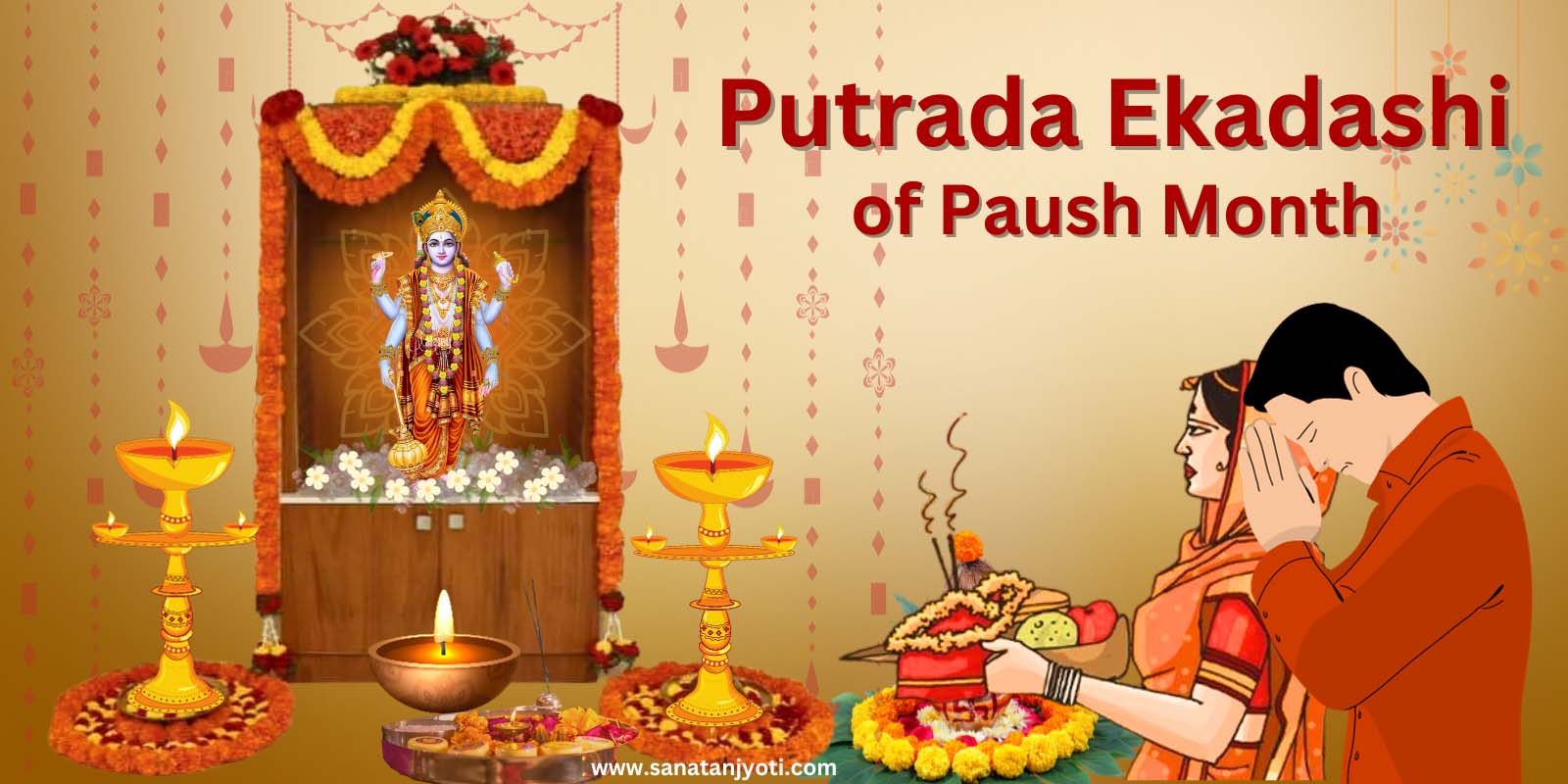
The Ekadashi that falls during the Shukla Paksha of the Paush month is known as Putrada Ekadashi. In Sanatan Dharma, this Ekadashi is considered to have special religious significance. Dedicated to Lord Vishnu, this Vrat is associated with prayers for the blessings of children and the well-being of the family.
According to mythological beliefs, Lord Shri Krishna explained the significance of Paush Shukla Ekadashi to Dharmaraj Yudhishthira. He said that this Ekadashi is considered to help destroy sins and support a person's religious and spiritual progress. Lord Narayana is regarded as the presiding deity of this Ekadashi.
Putrada Ekadashi is especially observed with devotion by couples who wish to have children. According to religious beliefs, devotees observe this Vrat with the hope of being blessed with children and for happiness and prosperity in the family.
To learn more about the origin of the Ekadashi Vrat, its mythological story and religious significance associated with Lord Vishnu: -Read our article on the Origin of Ekadashi.
When is Putrada Ekadashi 2027?
Paush Putrada Ekadashi 2027 will be observed on Monday, January 18. According to the Panchang, the Paush Shukla Ekadashi Tithi will begin on January 18, 2027, at 10:29 AM and end on January 19, 2027, at 7:51 AM.
According to some Vaishnava calculations, January 19 is also observed as Gauna/Vaishnava Putrada Ekadashi.
Paush Putrada Ekadashi 2027: January 18, 2027, Monday
Ekadashi Tithi Begins: January 18, 2027, at 10:29 AM
Ekadashi Tithi Ends: January 19, 2027, at 7:51 AM
The Tithi and Parana timings may vary depending on the location.
Putrada Ekadashi Vrat Katha
Long ago, King Suketuman ruled over the kingdom of Bhadravati Puri. His wife's name was Champa. The king and queen were blessed with all kinds of comforts, but they had no children. Because they were childless, both of them remained worried.
The king's ancestors were also believed to be saddened by the fact that there was no son to carry forward their lineage. One day, King Suketuman went into the forest on horseback.
As he wandered through the forest, he became extremely thirsty. While searching for water, the king came across a beautiful lake. Several sages had their Ashrams near the lake. The king saw the sages reciting the Vedas and respectfully approached them.
The sages blessed the king and asked him the reason for his visit. The king introduced himself and told them about his concerns regarding having a child.
The sages identified themselves as the Vishwadevas and said that they had come there to take a sacred bath as the month of Magha was approaching. They told the king that it was Putrada Ekadashi that day and that observing this Vrat could help fulfill his wish for the blessings of a child.
The king asked the sages for a way to have a son. The sages then advised him to observe the Putrada Ekadashi Vrat according to the prescribed rituals. They told him that with the blessings of Lord Keshava, his wish for a child could be fulfilled.
The king faithfully observed the Putrada Ekadashi Vrat according to the instructions of the sages. After this, Queen Champa conceived and, in due course, gave birth to a radiant son. The son grew up to be virtuous and became a capable ruler who cared for his people.
This is why Lord Shri Krishna told Dharmaraj Yudhishthira that Putrada Ekadashi should be observed with devotion. According to religious beliefs, observing this Vrat is associated with the blessings of children and spiritual merit.
Putrada Ekadashi Puja Vidhi
The Putrada Ekadashi Vrat is observed with devotion and faith. One day before the Vrat, on Dashami Tithi, having a Satvik meal and observing self-restraint is considered auspicious.
On Ekadashi, wake up early in the morning, take a bath, meditate on Lord Vishnu and take the Sankalp to observe the Vrat. After this, light a lamp before the idol or image of Lord Vishnu and offer incense, flowers, sandalwood paste, Naivedya and other Puja offerings.
While taking the Vrat Sankalp, pray to Lord Vishnu:
“Adya sthitva niraharah sarvabhogavivarjitah.
Shvo bhokshye Pundarikaksha sharanam me bhavachyuta.”
Meaning: O Lotus-Eyed Lord Narayana! Today, I will stay away from all worldly pleasures and remain without food, and I will have food tomorrow. O Achyuta, please accept me as my refuge.
On Ekadashi, devotees can worship Lord Vishnu, chant His Mantras, recite the Vishnu Sahasranama and listen to the religious story associated with the Vrat. Devotees may observe a complete fast or have fruits and other permitted foods according to their capacity.
There is also a religious tradition of staying awake at night near Lord Vishnu and engaging in Bhajan and Kirtan.
On Dwadashi Tithi, take a bath and worship Lord Vishnu again. After this, according to your faith and capacity, offer food to Brahmins and make donations. Then complete the Vrat by performing Parana at the appropriate time.
Do you have any questions related to the Putrada Ekadashi Vrat, Puja Vidhi, Parana or religious rituals associated with the blessings of children?
Get a free consultation from our Acharya Ji today and find answers to your Puja-related questions.
What Should You Keep in Mind During the Putrada Ekadashi Vrat?
During the Putrada Ekadashi Vrat, devotees should try to follow a Satvik and disciplined lifestyle. The form of the Vrat can be determined according to an individual's capacity and health.
• Meditate on and worship Lord Vishnu.
• Follow a Satvik lifestyle on Ekadashi.
• Chant Lord Vishnu's Mantras.
• Recite the Vishnu Sahasranama or other religious scriptures.
• Donate to people in need.
• Perform Parana at the appropriate time on Dwadashi.
• Avoid strict fasting if you have any health-related concerns.
Religious Significance of Putrada Ekadashi
Putrada Ekadashi is considered an important Vrat associated with the worship of Lord Vishnu and prayers for the blessings of children. The mythological story describes King Suketuman's desire for a child and the religious significance associated with observing the Putrada Ekadashi Vrat.
According to religious beliefs, observing this Vrat with devotion is associated with the blessings of Lord Vishnu and prayers for children, family happiness and spiritual progress.
In addition, the Ekadashi Vrat is also considered a means of practicing self-control, devotion and surrender to Lord Vishnu.
Who Should Observe the Putrada Ekadashi Vrat?
Putrada Ekadashi is especially observed with devotion by couples who wish to have children. However, the Ekadashi Vrat is not limited only to the desire for children. Devotees of Lord Vishnu may also observe this Vrat as an expression of religious faith and spiritual practice.
Before observing the Vrat, one's physical capacity and health should be taken into consideration. Pregnant women, elderly people or those suffering from any illness should avoid strict fasting and follow religious practices according to their individual circumstances.
How to Worship Lord Vishnu on Putrada Ekadashi?
On Putrada Ekadashi, take a bath in the morning and wear clean clothes before worshipping Lord Vishnu. Clean the Puja area and place an idol or image of Lord Vishnu there.
After this, offer flowers, Tulsi leaves, incense, a lamp, Naivedya and fruits to the Lord. Chant Lord Vishnu's Mantra and read or listen to the Putrada Ekadashi Vrat Katha.
Remember Lord Vishnu throughout the day and observe the Vrat or have fruits and other permitted foods according to your faith. Engaging in Bhajan, Kirtan and remembrance of Lord Vishnu's name at night is also considered auspicious.
Putrada Ekadashi and the Belief in the Blessings of Children
One of the main religious aspects of Putrada Ekadashi is associated with prayers for the blessings of children. In the mythological story, King Suketuman was blessed with a son after observing the Vrat, which is why this Ekadashi is especially associated with the desire to have children.
However, this is a religious belief. For any health-related or reproductive concern, it is important to seek advice from a qualified medical professional. Religious fasting and Puja can be observed as an expression of faith and spiritual practice.
Paush Putrada Ekadashi is an important Ekadashi dedicated to Lord Vishnu. In 2027, this Vrat will be observed on Monday, January 18, while the Ekadashi Tithi will continue from 10:29 AM on January 18 until 7:51 AM on January 19. The Vrat date may vary according to the region and Vaishnava traditions, so it is advisable to follow the local Panchang for the Vrat and Parana.
The story of Putrada Ekadashi is associated with King Suketuman, and according to religious beliefs, this Vrat is observed for prayers for the blessings of children, family well-being and the blessings of Lord Vishnu.
Observing this Vrat with faith, self-discipline and devotion is considered religiously significant.