The Ekadashi Vrat holds special religious significance in Sanatan. The Ekadashi Tithi of the Shukla Paksha in the month of Bhadrapada is known as Parshva Ekadashi. It is also known as Padma Ekadashi and Parivartini Ekadashi. On this day, devotees traditionally worship Lord Vishnu and observe a fast.
To learn more about the origin of the Ekadashi Vrat, its religious significance, and the different Ekadashis observed throughout the year: -You can also read our special article on the origin of Ekadashi.
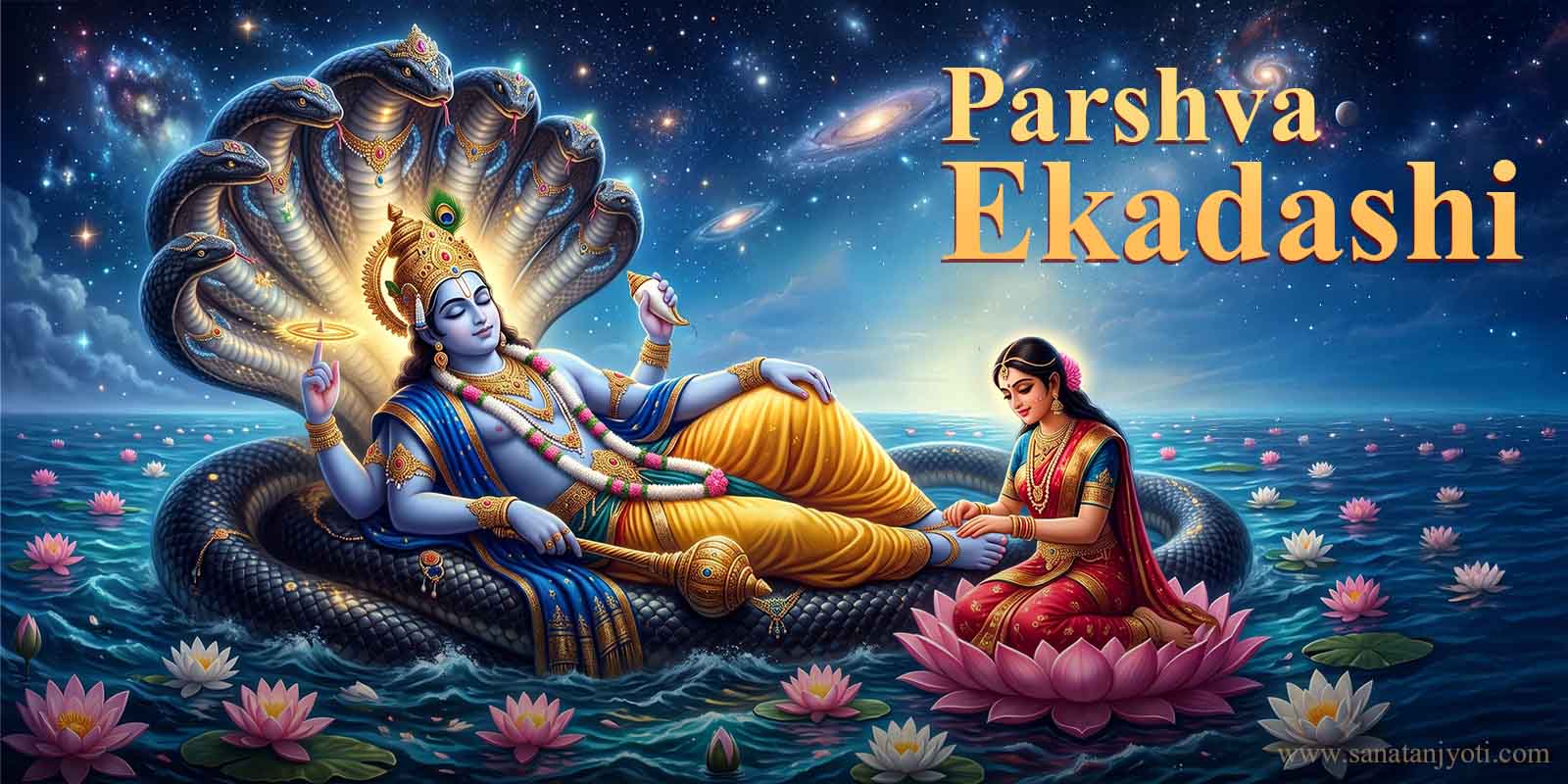
According to religious beliefs, on Parshva Ekadashi, Lord Vishnu changes his sleeping position while resting in the cosmic ocean. This is why the day is also known as Parivartini Ekadashi. The day is considered especially significant for worshipping Lord Vishnu, observing the Vrat, performing Puja, and engaging in charity.
In 2026, Parshva Ekadashi will be observed on Tuesday, September 22. On this day, devotees perform Lord Vishnu's Puja according to tradition, observe the Ekadashi Vrat, and read or listen to the Parshva Ekadashi Vrat Katha.
When Is Parshva Ekadashi 2026?
In 2026, the Ekadashi Tithi of the Bhadrapada Shukla Paksha falls on Tuesday, September 22. The Parshva Ekadashi Vrat will be observed on this day. According to the Panchang, the Ekadashi Tithi will begin on the night of September 21 and continue until the night of September 22.
Parshva Ekadashi 2026: September 22, 2026, Tuesday
Month: Bhadrapada
Paksha: Shukla Paksha
Tithi: Ekadashi
Parshva Ekadashi is also known as Padma Ekadashi and Parivartini Ekadashi. Different religious traditions mention different names for this Ekadashi.
Parshva Ekadashi 2026 Date and Time
Parshva Ekadashi: September 22, 2026, Tuesday
• Ekadashi Tithi Begins: September 21, 2026, at 8:00 PM
• Ekadashi Tithi Ends: September 22, 2026, at 9:43 PM
• Vrat Parana: September 23, 2026, after sunrise
The Ekadashi Tithi and Vrat Parana time may vary depending on the location.
Therefore: -It is advisable to check the local Panchang to know the exact Ekadashi and Parana timings for your city.
Religious Significance of Parshva Ekadashi
The Ekadashi of the Bhadrapada Shukla Paksha is considered particularly significant from a religious perspective. Lord Vishnu is worshipped on this day. According to religious beliefs, during Chaturmas, Lord Vishnu rests in the Kshira Sagar, and on this Ekadashi, he changes his sleeping position. This is why it is known as Parivartini Ekadashi.
The Vrat Katha of Parshva Ekadashi features the story of King Mandhata and Sage Angira. According to the story, there was no rainfall in King Mandhata's kingdom for three years. Seeing the suffering of his people, the king tried to find the reason for the crisis. During this time, he received guidance from Sage Angira, who advised him to observe the Padma or Parshva Ekadashi Vrat of the Bhadrapada Shukla Paksha.
The king observed the Ekadashi Vrat with devotion along with his subjects and family members. According to the story, rainfall followed, and the people of the kingdom became happy and prosperous.
If you wish to understand the Puja Vidhi, Vrat, and religious beliefs associated with Parshva Ekadashi according to your tradition: -You can take a free consultation from our Acharya Ji and get answers to your questions related to the Puja.
Parshva Ekadashi Vrat Katha
In the Solar dynasty, there lived a powerful and righteous emperor named Mandhata, who was known for keeping his promises. During his reign, there were no famines, people were free from constant worries, and there was no fear of robbers. His subjects lived fearlessly and prospered with abundant wealth and food.
The king's treasury contained only wealth earned through righteous means. In his kingdom, people belonging to different Varna and Ashrama traditions followed their respective duties. The people enjoyed great happiness during King Mandhata's reign.
Once, however, there was no rainfall in his kingdom for three consecutive years. Due to the lack of rain, the people began suffering from hunger. The entire population approached the king and requested him to find a solution to the crisis.
The people told the king that Lord Narayan takes the form of clouds and brings rain. Rain produces food, and food sustains life. Therefore, the absence of rain had placed the lives of the people in great difficulty.
The king listened to his subjects and tried to discover the reason behind the problem. During this time, he met Sage Angira, the son of Brahma.
The king bowed at the sage's feet and explained the problem of the lack of rainfall in his kingdom. Sage Angira advised him to observe the Ekadashi Vrat of the Shukla Paksha in the month of Bhadrapada.
The sage explained that this Ekadashi is known as Padma, Parshva, and Parivartini Ekadashi. He advised the king to observe this sacred Vrat along with his subjects and family members.
After hearing the sage's advice, the king returned to his kingdom and observed the Padma or Parshva Ekadashi Vrat along with his people. According to the story, the clouds began to rain as a result of the Vrat, and the earth became green and fertile again. The people of the kingdom became happy.
Lord Shri Krishna told Yudhishthira that devotees should therefore observe this sacred Ekadashi Vrat with faith and devotion.
Parshva Ekadashi Puja Vidhi
On the day of Dashami Tithi, take a bath in the morning and remember Lord Vishnu with devotion. It is traditionally prescribed to have one meal during the day and sleep on the floor at night.
On Ekadashi, complete your morning routine, take a bath, and then take a Sankalp for the Vrat before Lord Vishnu.
The following Mantra is traditionally chanted while taking the Sankalp:
“Adya Sthitva Niraharah Sarvabhogavivarjitah.
Shvo Bhokshye Pundarikaksha Sharanam Me Bhavachyuta.”
Meaning of the Mantra:
O lotus-eyed Lord Narayan! Today, I will remain without food after giving up all worldly enjoyments, and I will eat tomorrow. O Achyuta, please be my refuge.
After this, worship Lord Narayan with Dhoop, Gandha, flowers, and other Puja items. Meditate on Lord Vishnu and chant his Mantras. There is also a tradition of staying awake near the Lord at night and spending the night in devotion.
On the following day, during the Dwadashi Tithi, worship Lord Shri Hari again. After this, feed Brahmins and offer Daan-Dakshina according to your capacity. Finally, break the fast with family members according to the prescribed tradition.
What Should You Donate on Parshva Ekadashi?
On Padma Ekadashi, there is a tradition of donating a water-filled pot covered with cloth, along with curd and rice, to a Brahmin. Donating an umbrella and footwear is also mentioned.
According to religious beliefs, reading or listening to the Vrat Katha of this Ekadashi helps a person become free from sins.
What to Do on Parshva Ekadashi?
Devotion and worship of Lord Vishnu are given special importance on Parshva Ekadashi. According to their faith and capacity, devotees can perform the following religious activities:
• Worship Lord Vishnu according to the prescribed rituals.
• Take a Sankalp to observe the Ekadashi Vrat.
• Chant Lord Vishnu's Mantras.
• Read or listen to the Parshva Ekadashi Vrat Katha.
• Stay awake at night in devotion to Lord Vishnu and participate in Bhajan-Kirtan.
• Perform Daan-Punya according to your capacity.
• Complete the Vrat Paran properly on the Dwadashi Tithi.
What Should You Avoid on Parshva Ekadashi?
During the Ekadashi Vrat, religious traditions generally prohibit the consumption of food grains and cereals. Those observing the Vrat are expected to maintain a Sattvic lifestyle and conduct.
On this day, it is considered auspicious to stay away from anger, arguments, and negative thoughts and devote one's mind to Lord Vishnu.
Message of Parshva Ekadashi
Parshva Ekadashi is an important festival dedicated to the worship of Lord Vishnu and the observance of the Ekadashi Vrat. The story of King Mandhata associated with this Vrat highlights the importance of Dharma, devotion, and faith in God.
The festival inspires devotees to follow a path of self-discipline, Sattvic living, charity, and religious faith.
Parshva Ekadashi will be observed on Tuesday, September 22, 2026. The Ekadashi of the Bhadrapada Shukla Paksha is also known as Padma Ekadashi and Parivartini Ekadashi.
On this day, devotees traditionally worship Lord Vishnu, observe the Vrat, chant Mantras, listen to the Vrat Katha, and perform Daan-Punya. The story of Parshva Ekadashi is associated with King Mandhata and Sage Angira and describes the religious significance of observing the Ekadashi Vrat.
Devotees worship Lord Vishnu on this day and pray for happiness, peace, and spiritual growth.